How to Draw a Barbell (Easy Step by Step)
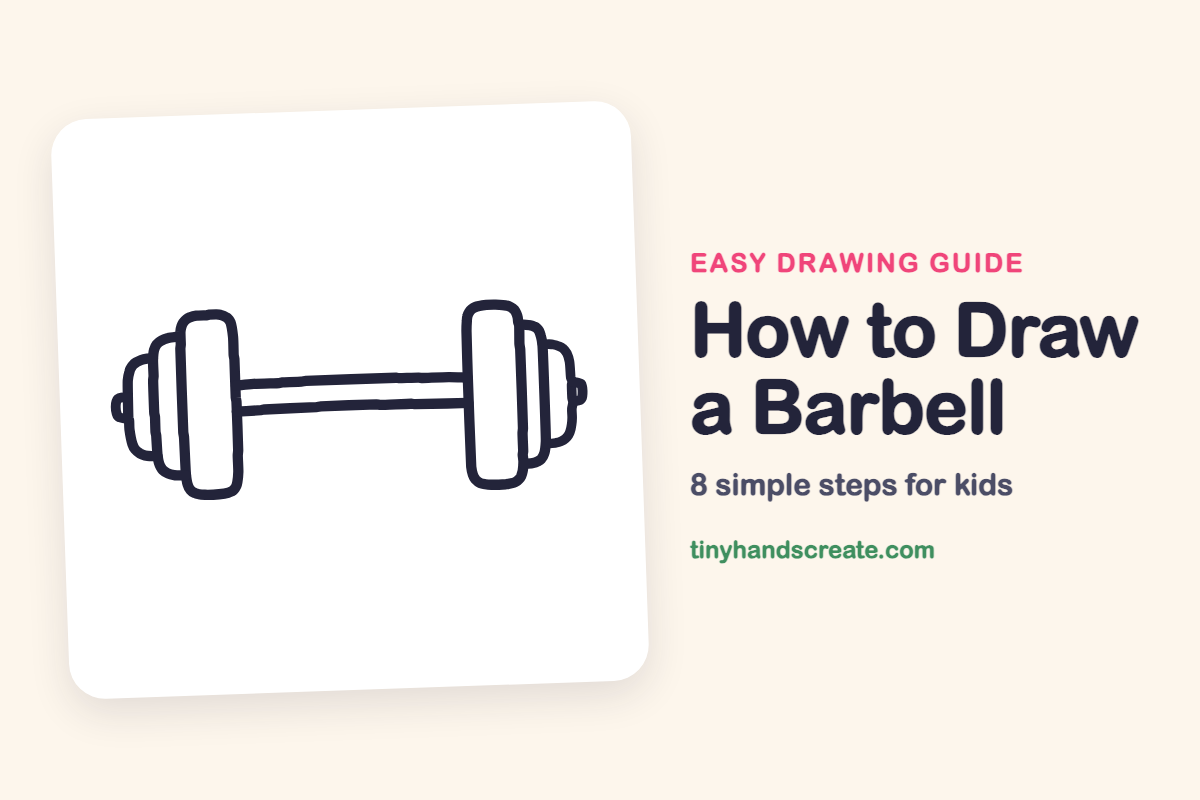
Learn to draw a barbell using simple shapes like rounded rectangles, lines, and curved brackets. You'll discover how its symmetrical design makes it easy to draw by copying one side.
- Begin your barbell drawing with simple shapes.
- Utilize rounded rectangles, long lines, and curved brackets.
- Draw one side, then mirror it for the other due to symmetry.
- Practice drawing symmetrical objects with this easy guide.
This post contains affiliate links. As an Amazon Associate I earn from qualifying purchases.
A barbell is a fun first drawing because it is built from simple shapes: tall rounded rectangles, two long lines, and a few curved brackets. It is the same on both sides, so once you learn the left end, you can copy it on the right. It is a great way to practice drawing things that match.
- Easy
- 10 minutes
- 8 steps
You need: paper, a pencil, an eraser, and crayons or markers for coloring.
Start drawing
In this article (7 sections)
How to draw a barbell step by step
How to Draw a Barbell · tinyhandscreate.com
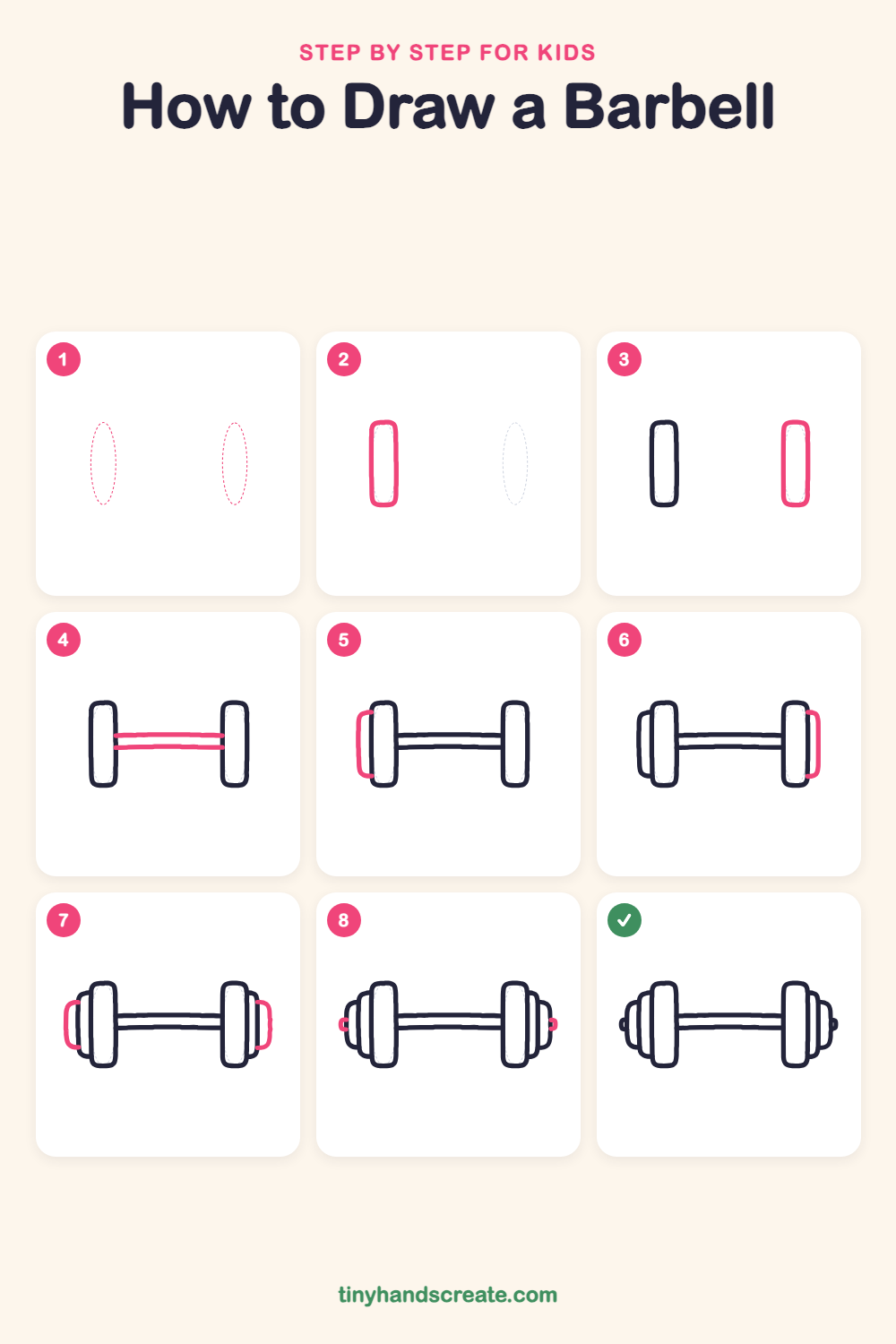
Step 1: Guide shapes
Lightly sketch these 2 ovals. They only show where the big parts go, so press softly. You will erase them at the end.
Step 2: The big left weight
Draw a tall rounded rectangle on the left side, like a fat pill standing up. This is the biggest weight plate, so make it nice and tall.
Step 3: The big right weight
On the right side, draw another tall rounded rectangle the same height as the first one. Try to match its size so the barbell looks balanced.
Step 4: The long bar
Join the two weights with two long, almost straight lines, one on top of the other. They start at the left weight and end at the right weight, like a skinny tunnel.
Step 5: Left middle plate
Next to the big left weight, on its outer side, draw a smaller curved shape that is shorter than the big plate. It tucks right behind the big weight like a rounded bracket.
Step 6: Right middle plate
Do the same on the right side. Draw a smaller curved shape behind the big right weight, shorter than the big plate.
Step 7: Outer plates
Add one more curved shape on the outside of each middle plate. Make them a little smaller again, like steps getting shorter.
Step 8: End caps
At the very tip of each side, draw a tiny rounded bump. These are the little caps that hold the weights on the bar.
All done!
Erase the guide shapes, go over your lines, then color it in.
Finished your barbell? Keep the pencils out and learn how to draw a rocket or how to draw a shooting star next.
Tips for drawing a barbell
- Draw the two big weights first and check that they are about the same height. Step back from your paper to compare them.
- The long bar is the trickiest part because it needs to stay smooth. Draw each line in one slow, steady stroke instead of tiny pieces.
- For the smaller plates, make each one a little shorter than the one before it. Keeping them lined up with the middle of the bar helps both ends match.
Free barbell coloring page
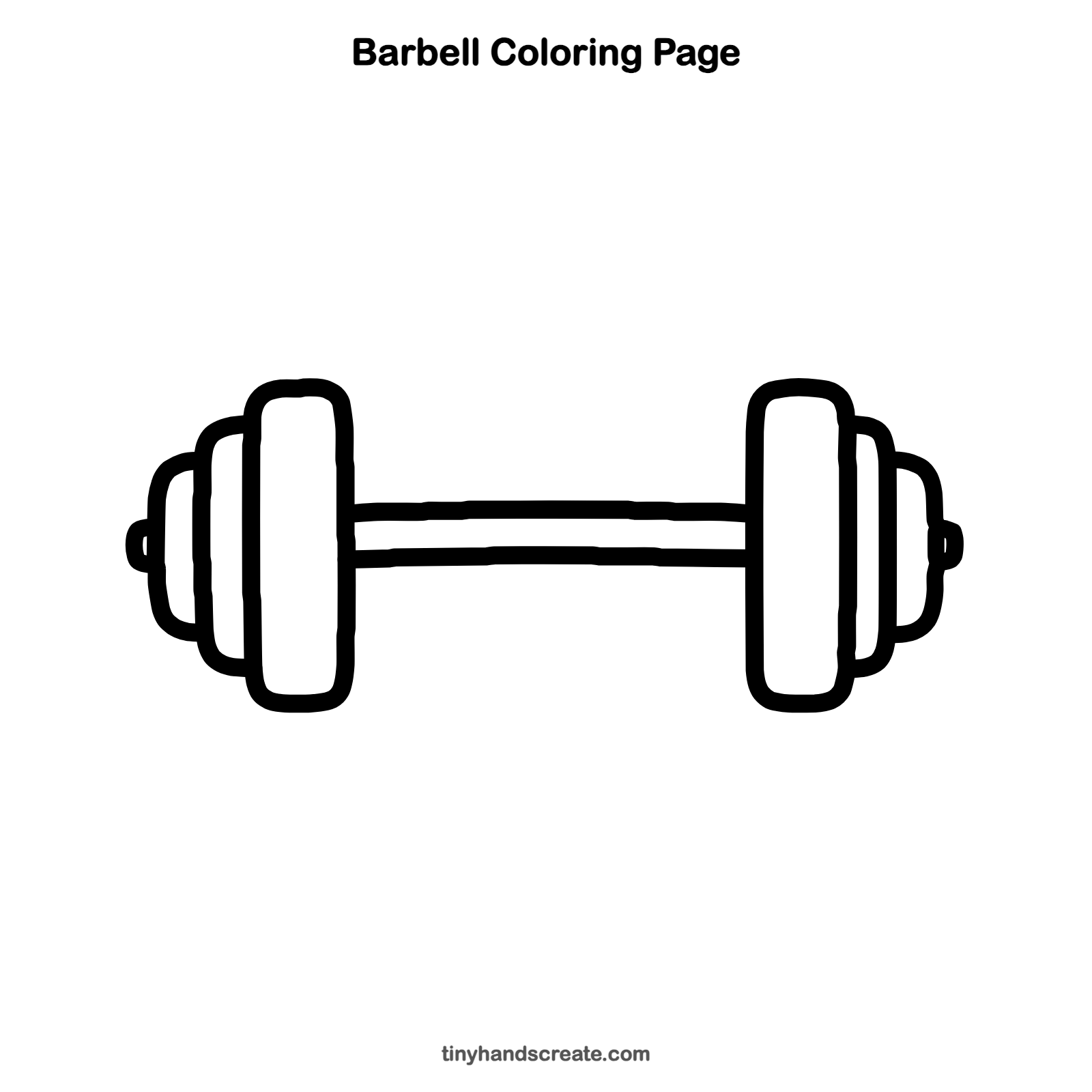
Want to go straight to coloring? Open this barbell coloring page at full size and print it. It is the same drawing you just learned, with clean lines ready for crayons or markers.
How to color your barbell drawing
Try dark gray or silver for the weights and a lighter gray for the bar. For a creative twist, color each plate a different bright color to make a rainbow barbell.
Barbell fun fact for kids
The bar in the middle of a barbell is often made of steel, and the round weights slide on at each end and are held in place by a small collar or cap.
Questions about drawing a barbell
What shapes do I need to draw a barbell?
You need two tall rounded rectangles, two long straight lines, and a few curved brackets that get smaller. Tiny bumps finish each end.
How do I make both sides of my barbell match?
Draw the big weights first and make them the same height. Then add the smaller plates on each side one step at a time so the two ends stay even.
How do I draw a straight bar?
Go slowly and draw each line in one smooth stroke from one weight to the other. Resting your hand lightly on the paper can help.