How to Draw a Mudskipper (Easy Step by Step)
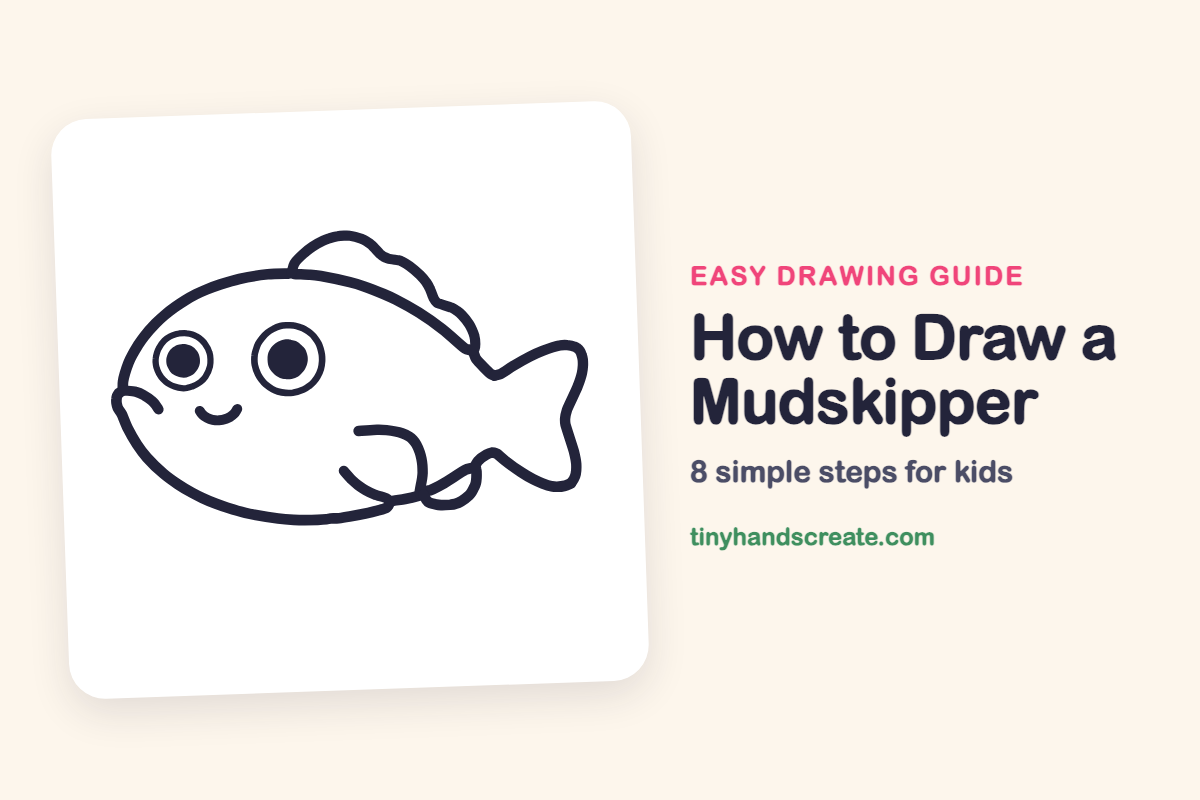
You will learn to draw a cute mudskipper with big round eyes and a happy smile using simple shapes like ovals, circles, and curvy lines. This easy step-by-step guide is perfect for beginners and can be completed quickly.
- Learn to draw a mudskipper using simple shapes.
- Start with a big oval for the body and circles for the eyes.
- Add curvy lines to create the fins and tail.
- Complete your mudskipper drawing quickly, even as a beginner.
This post contains affiliate links. As an Amazon Associate I earn from qualifying purchases.
A mudskipper is a funny little fish that can climb out of the water, and this one has big round eyes and a happy smile. It is built from simple shapes: a big oval for the body, circles for the eyes, and a few curvy lines for the fins and tail. Even beginners can finish it in one sitting.
- Easy
- 10 minutes
- 8 steps
You need: paper, a pencil, an eraser, and crayons or markers for coloring.
Start drawing

In this article (7 sections)
How to draw a mudskipper step by step
How to Draw a Mudskipper · tinyhandscreate.com
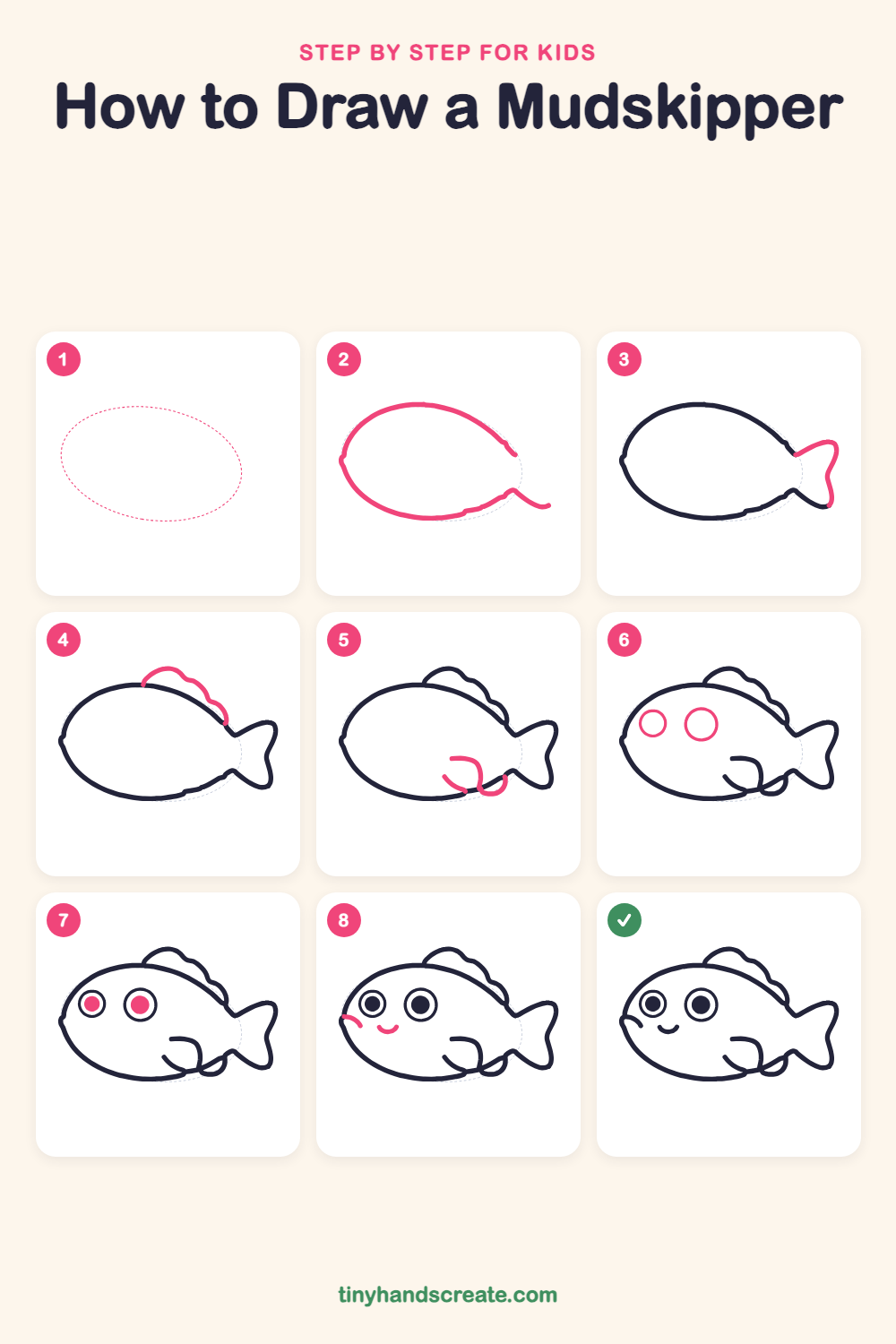
Step 1: Guide shapes
Lightly sketch this oval. It only shows where the big parts go, so press softly. You will erase it at the end.
Step 2: The body
Draw a big rounded oval for the body, like a plump egg lying on its side, with a tiny bump on the far left. Leave the narrow right end open, and curve the bottom line a little past it to start the tail.
Step 3: The tail
Start at the top of the narrow right end of the body and draw a line out and up to a point. Curve it in a little, then bring it down to a second point near the bottom to finish a fan-shaped tail.
Step 4: The top fin
On top of the body, start a wavy line and bump it up and over like a little hill. Let it ripple down toward the tail and meet the body again.
Step 5: Side and belly fins
Near the bottom of the body, draw a curved hook shape for the side fin. Add a short slanted line to the left of it, then a small rounded fin under the belly on the right.
Step 6: The eye rings
Draw two circles on the head, side by side. Make the front one a little smaller than the one behind it.
Step 7: The pupils
Draw a smaller circle inside each eye ring and color it in solid. Leave a ring of white around each one.
Step 8: Smile and mouth
Under the eyes, draw a small curved smile like a tiny bowl. Then add a short curved line at the front of the face for the mouth.
All done!
Erase the guide shapes, go over your lines, then color it in.
Finished your mudskipper? Keep the pencils out and learn how to draw a dolphin or how to draw a shark next.
Tips for drawing a mudskipper
- Sketch the body oval lightly first. If it looks too skinny, just draw a rounder one over it.
- Draw the two eye circles close to each other, with the front one a little smaller. Trace around a small coin or bottle cap if circles feel wobbly.
- For the tail, think of a fan with two soft points, and round off the corners so it looks gentle.
Free mudskipper coloring page
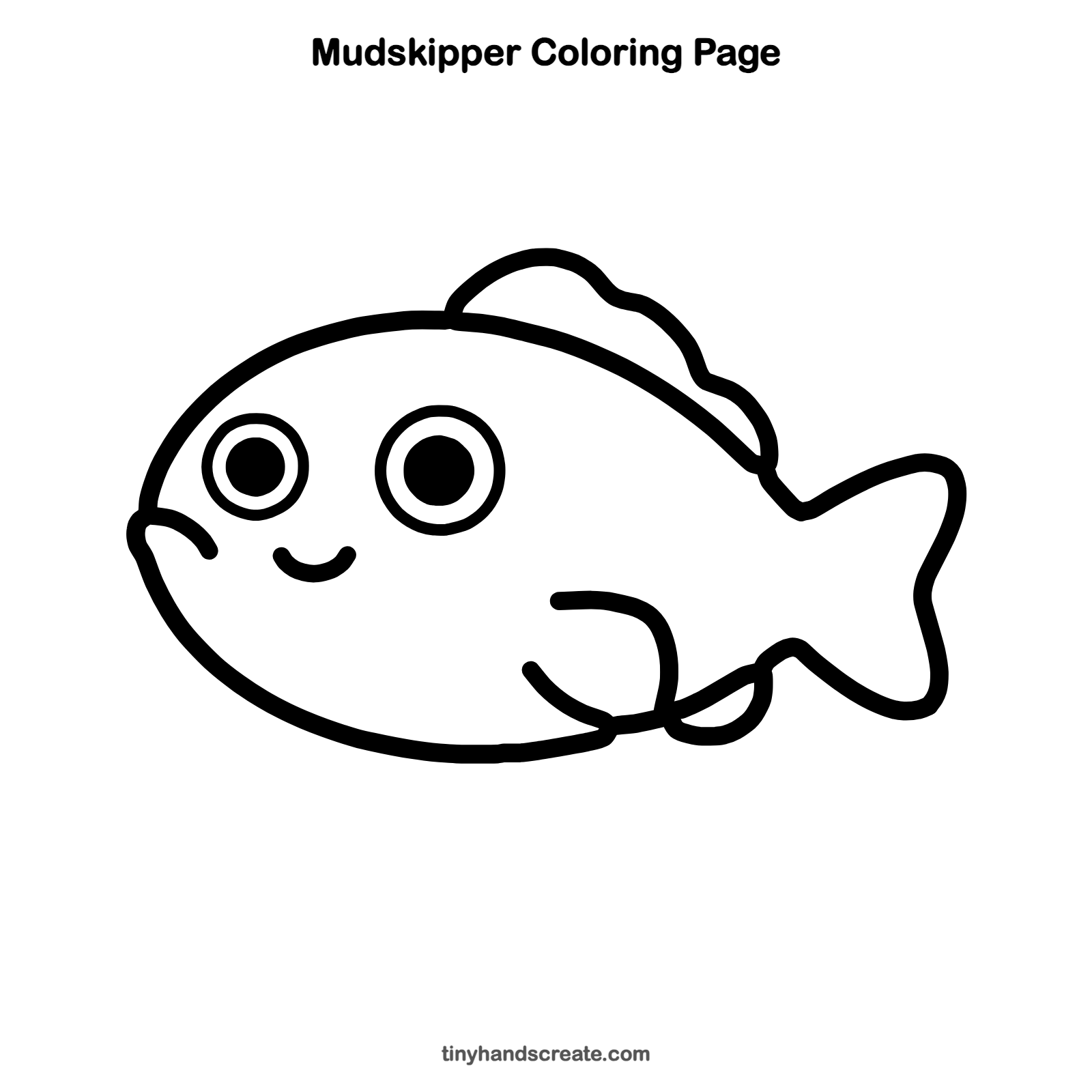
Want to go straight to coloring? Open this mudskipper coloring page at full size and print it. It is the same drawing you just learned, with clean lines ready for crayons or markers.
How to color your mudskipper drawing
Try olive green and brown on the body with a lighter belly, and bright orange or yellow on the fins. For a creative twist, draw a muddy shore and a few puddles around your mudskipper.
Mudskipper fun fact for kids
Mudskippers are fish that can live out of water for a while. They breathe through their skin and the lining of their mouth, and they use their strong front fins to hop and crawl across the mud.
Questions about drawing a mudskipper
What shapes do I need to draw a mudskipper?
You need a big oval for the body, two circles for the eyes, and a fan shape for the tail. The fins are just curved lines and small bumps.
How do I make my mudskipper look cuter?
Draw the eyes big and the pupils round, then add a little smile. Leaving a white ring around each pupil makes the eyes look shiny.
Why do mudskippers have eyes on top of their heads?
Their raised eyes let them see around while most of the body stays low in the mud or water. They can also pull their eyes down to keep them wet.