How to Draw a Kiwi Bird (Easy Step by Step)
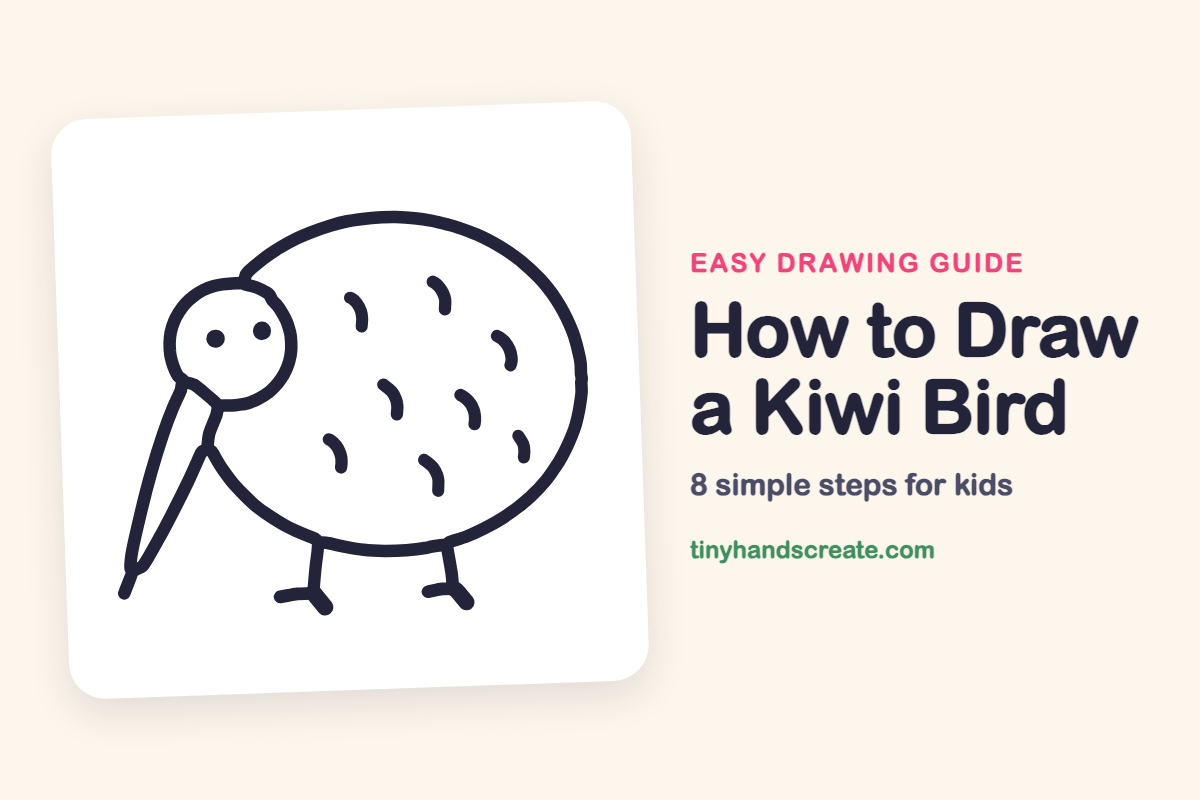
Learn to draw a kiwi bird using simple shapes like ovals, circles, and triangles. This step-by-step guide will show you how to create this funny bird with its distinctive long beak.
- Identify the basic shapes: a big oval, small circle, and skinny triangle.
- Construct the kiwi's body and head using an oval and a circle.
- Draw the distinctive long, thin beak with a skinny triangle.
- Add a few small curved lines to finish your kiwi drawing.
This post contains affiliate links. As an Amazon Associate I earn from qualifying purchases.
A kiwi is a fluffy ball with a very long, thin beak, which makes it one of the funniest birds to draw. It is built from a big oval, a small circle, a skinny triangle and a few little curved lines. Once you know the shapes, you can draw a whole family of kiwis.
- Easy
- 10 minutes
- 8 steps
You need: paper, a pencil, an eraser, and crayons or markers for coloring.
Start drawing
In this article (7 sections)
How to draw a kiwi bird step by step
How to Draw a Kiwi Bird · tinyhandscreate.com
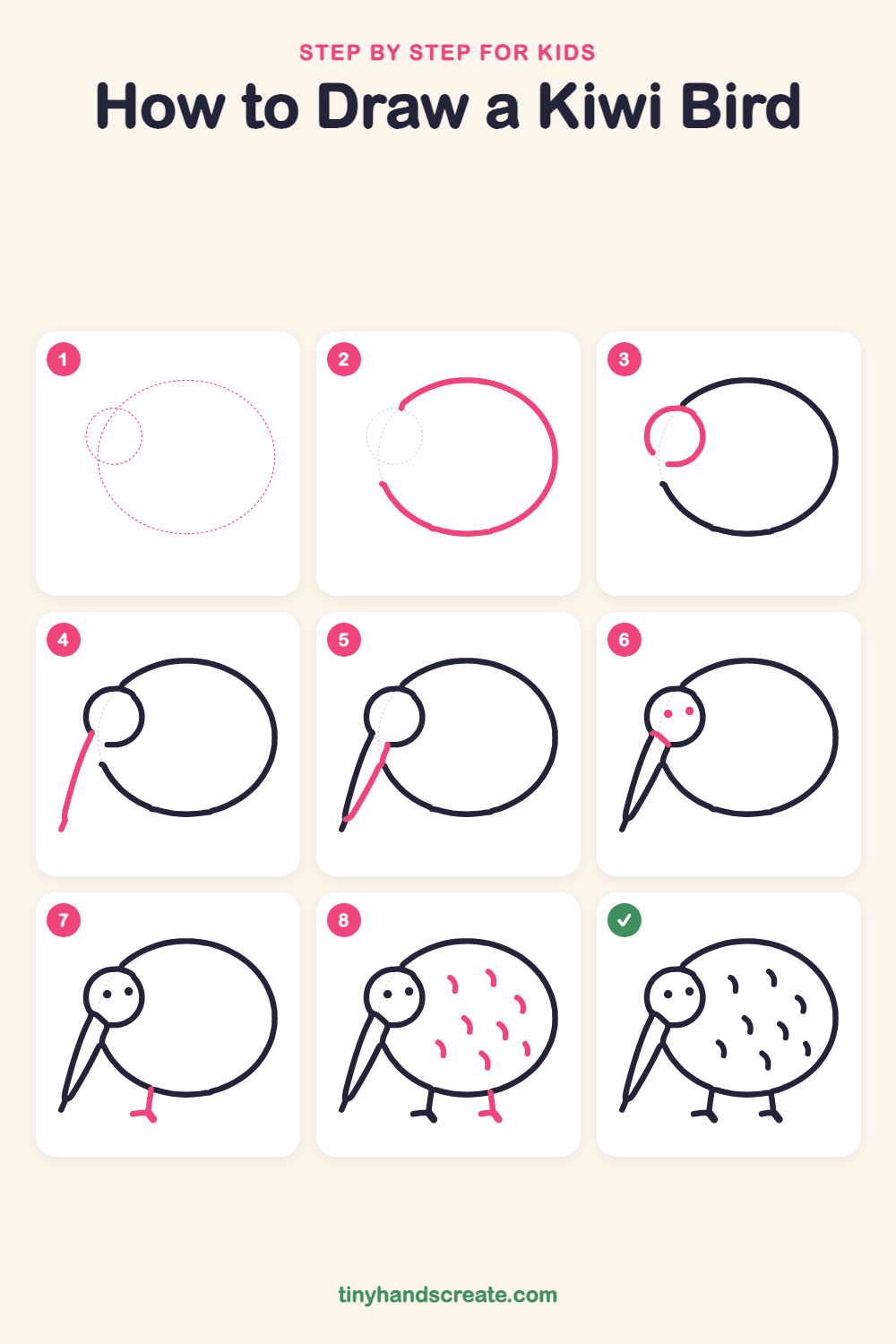
Step 1: Guide shapes
Lightly sketch these 2 ovals. They only show where the big parts go, so press softly. You will erase them at the end.
Step 2: The round body
Draw a big, plump oval for the body, wider than it is tall. Leave a gap on the left side, near the top, where the head will go.
Step 3: The small head
Draw a smaller circle on the left, filling the gap in the body. Start and end the circle close to the ends of the body line so the two shapes join.
Step 4: Front of the beak
Start at the left side of the head and draw one long, slightly curved line that slants down and to the left. Stop near the bottom left of your page.
Step 5: Back of the beak
Start at the bottom of the head and draw a second long line that slants down and to the left. Make it meet the first line at the point so the beak looks like a long skinny triangle.
Step 6: Eyes and beak line
Add two round dots for eyes inside the head, side by side. Then draw a short slanted line across the beak where it joins the head.
Step 7: First leg and foot
Draw a short straight line going down from the bottom of the body. At the end, add a tiny foot by drawing a short line to the side, with one small toe.
Step 8: Second leg and feathers
Draw a second short leg with a tiny foot, a little to the right of the first one. Then add short curved dashes all over the body, all bending the same way, to make it look soft and shaggy.
All done!
Erase the guide shapes, go over your lines, then color it in.
Finished your kiwi bird? Keep the pencils out and learn how to draw a kid riding a pony or how to draw a snowshoe hare next.
Tips for drawing a kiwi bird
- Draw the body big first, then fit the smaller head against it. This keeps your kiwi looking round and chubby.
- The beak is the trickiest part. Draw one long line from the head, then a second line that meets it at one sharp point, without crossing.
- Make all the feather dashes curve the same direction, and leave space between them so the body does not look crowded.
Free kiwi bird coloring page
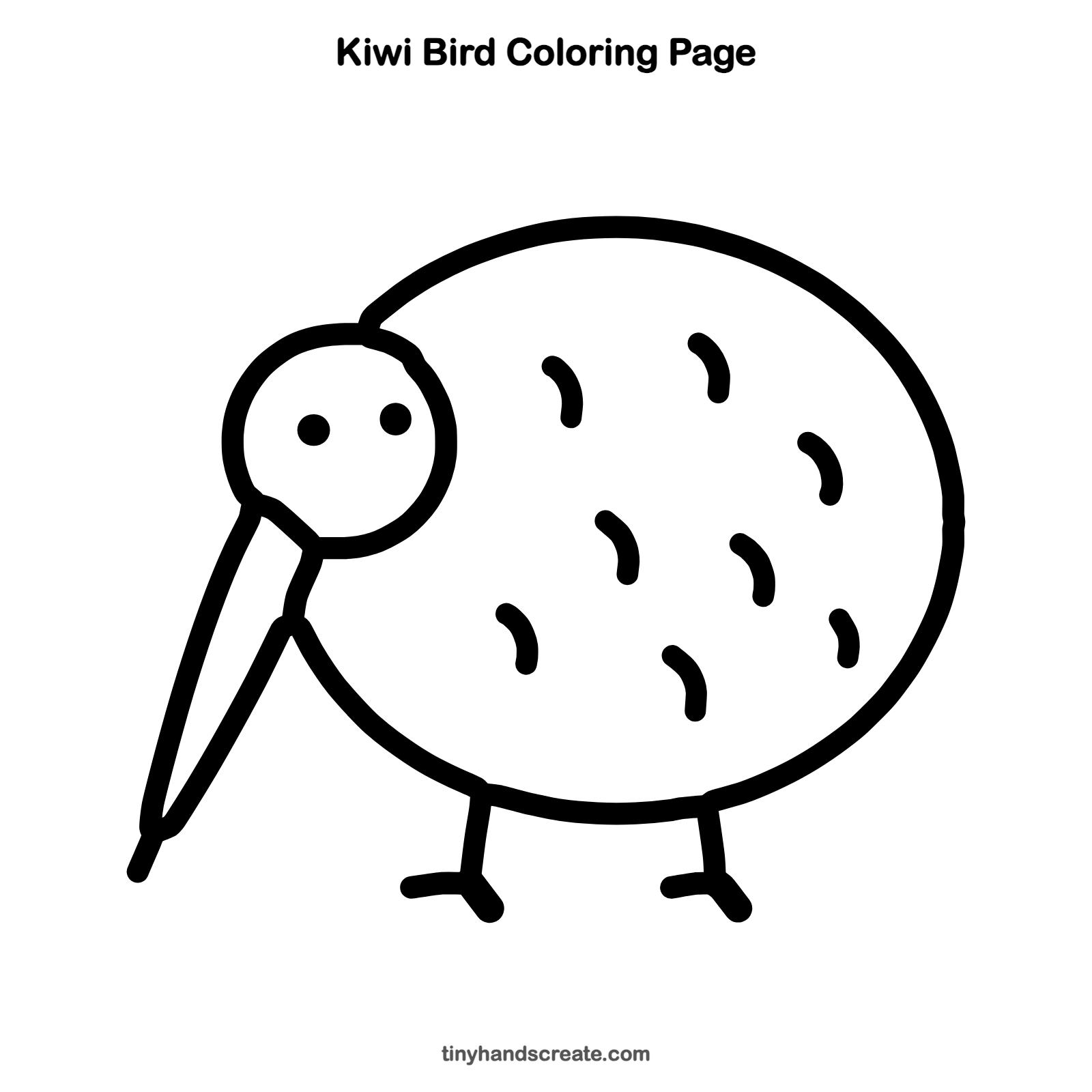
Want to go straight to coloring? Open this kiwi bird coloring page at full size and print it. It is the same drawing you just learned, with clean lines ready for crayons or markers.
How to color your kiwi bird drawing
Try warm brown for the body and a light tan for the beak, with little darker dashes for feathers. Color the legs and feet a soft gray or tan.
Kiwi bird fun fact for kids
Kiwi birds come from New Zealand and cannot fly. They have nostrils at the tip of their long beaks, and they use them to sniff out worms in the dirt.
Questions about drawing a kiwi bird
What shapes do I need to draw a kiwi?
You need a big oval for the body, a smaller circle for the head, and a long skinny triangle for the beak. Short lines and tiny dots finish the legs, feet and eyes.
How do I make my kiwi look cuter?
Make the body extra round and the eyes small dots set close together. A very long beak and tiny legs also add to the charm.
Why does a kiwi have such a long beak?
A kiwi pokes its beak into the ground to find worms and bugs. Its nostrils sit near the tip, so it can sniff out food underground.