How to Draw a Civet (Easy Step by Step)
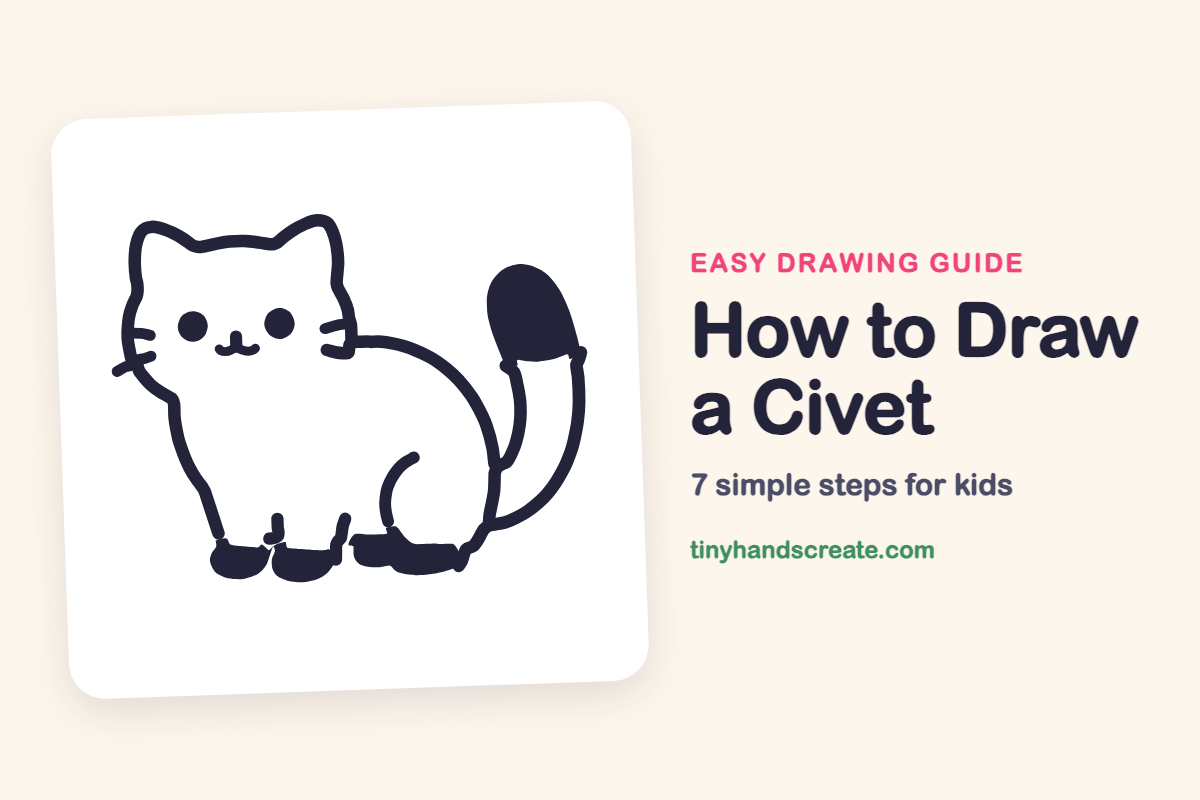
You will learn to draw a cute civet using simple shapes like a head with pointy ears, a hill-shaped body, and a long curving tail. This easy guide shows you how to create a friendly creature, even with a simple face.
- Construct your civet using simple shapes.
- Form the head with pointy ears and a hill-shaped body.
- Add a long, curving tail, remembering the dark tip.
- Create a friendly face with just two dots and a tiny smile.
- Focus on the tail for a great final touch.
This post contains affiliate links. As an Amazon Associate I earn from qualifying purchases.
This cute civet is built from simple shapes: a head with two pointy ears, a big hill-shaped body, and a long curving tail with a dark tip. It is a great first animal because the face is just two dots and a tiny smile. Take your time with the tail, and you will end up with a friendly little creature.
- Easy
- 12 minutes
- 7 steps
You need: paper, a pencil, an eraser, and crayons or markers for coloring.
Start drawing
In this article (7 sections)
How to draw a civet step by step
How to Draw a Civet · tinyhandscreate.com
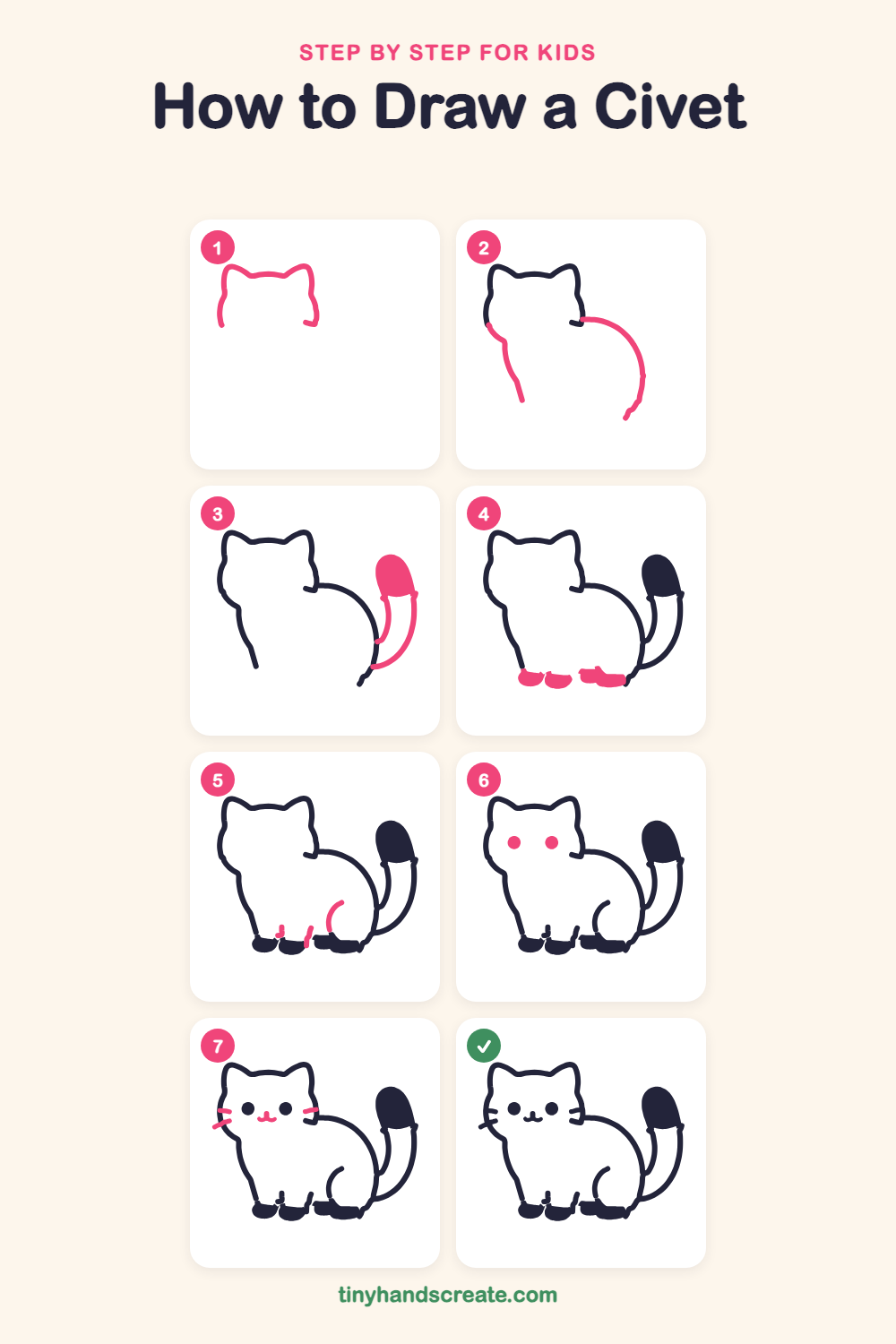
Step 1: Ears and head top
Start at the left side of the face and draw a line going up, then add a pointy ear. Draw a gently wavy line across the top to a second pointy ear, then curve down the right side of the face.
Step 2: Chest and back
From the left cheek, draw a line curving down for the chest and front leg. Then start at the right cheek and sweep a big curve over the back and down toward the ground, like a hill.
Step 3: The long tail
Draw two long curved lines rising from the back of the body, side by side, like a bendy ribbon. Close the top with a rounded tip and fill it in with a dark color.
Step 4: Paws
Draw two little rounded paws on the ground at the bottom of the front legs, and a longer flat paw under the back of the body. Fill them in solid.
Step 5: Leg lines and haunch
Add a few short lines between and beside the front paws to show the legs. Then draw a small curl, like a question mark, on the side of the body for the back leg.
Step 6: The eyes
Draw two round dots for eyes, side by side on the face with a gap between them. Color them in completely.
Step 7: Nose, mouth, and whiskers
Between the eyes, draw a tiny nose with a little curvy smile under it. Finish with short whisker lines on the cheeks, two on the left and one on the right.
All done!
Go over your lines with a marker, then color it in.
Finished your civet? Keep the pencils out and learn how to draw a fox or how to draw a hedgehog next.
Tips for drawing a civet
- Start with the ears and the wavy line between them. Keep both ears about the same size so the face looks balanced.
- The tail is the trickiest part. Draw the two side lines so they curve the same way, and keep them about the same distance apart all the way up.
- Keep the paws as low, flat, rounded blobs on the ground. Color them in dark to make your civet look like it is standing firmly.
Free civet coloring page
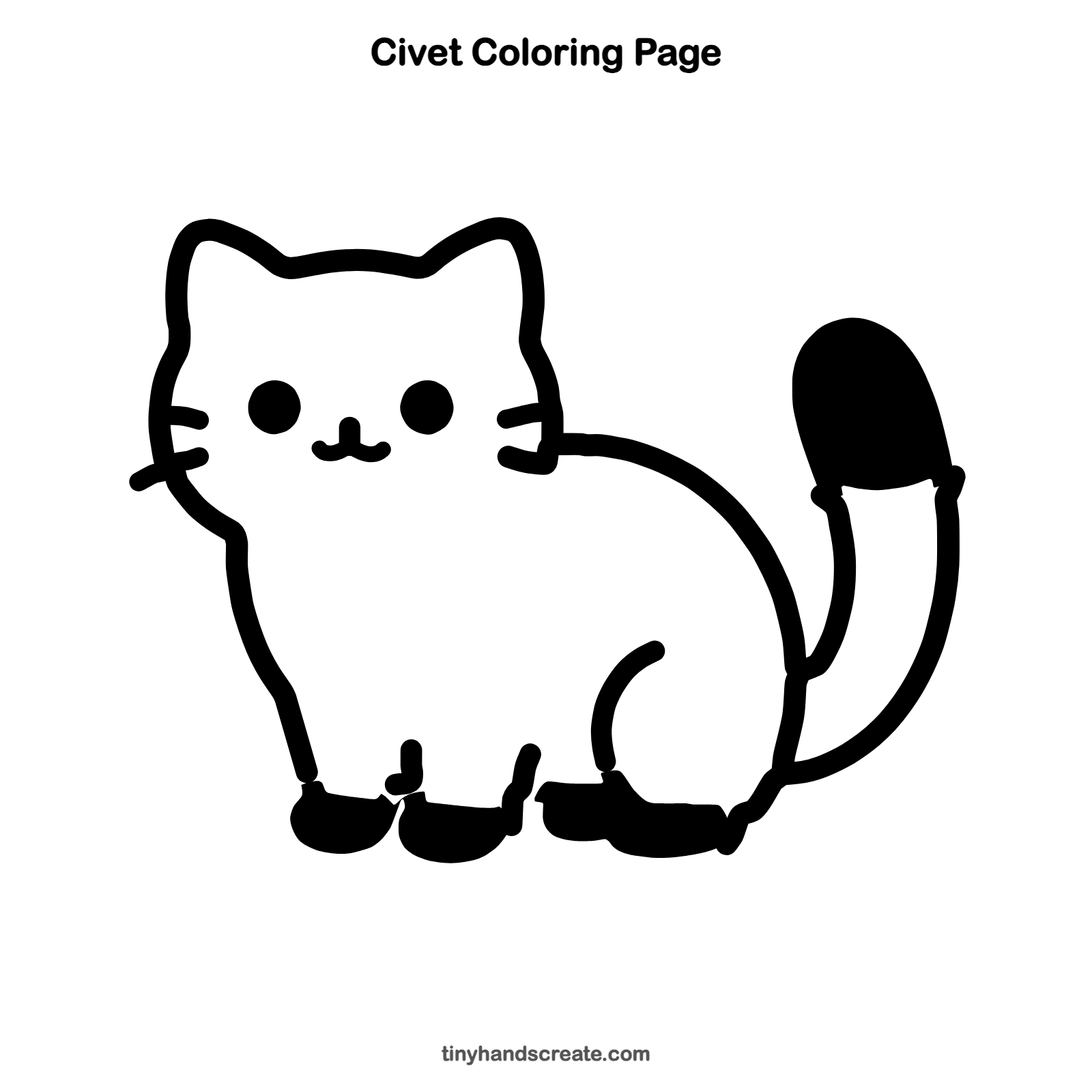
Want to go straight to coloring? Open this civet coloring page at full size and print it. It is the same drawing you just learned, with clean lines ready for crayons or markers.
How to color your civet drawing
Try warm gray or tan for the body, with dark brown or black for the paws and the tail tip. For a creative twist, give your civet a stripy tail like a raccoon, or draw a moonlit night sky behind it.
Civet fun fact for kids
Civets look a bit like cats, but they are not cats. They belong to their own family, the Viverridae, and many of them are active at night and eat fruit.
Questions about drawing a civet
What shapes do I need to draw a civet?
You need a head with two pointy ears, a large rounded hill shape for the body, and a long curved tube for the tail. Small round dots make the eyes, and rounded blobs make the paws.
How do I make my civet look cuter?
Keep the eyes round and set apart, and keep the smile tiny. Rounded paws and a dark tail tip also help a lot.
Is a civet the same as a cat?
No. A civet looks a bit like a cat, but it belongs to a different animal family. Civets have longer bodies, pointier faces, and often a long tail.