Free Printable Nature Scavenger Hunt Checklist for Preschoolers
Get your free printable nature scavenger hunt checklist featuring 12 picture icons, perfect for preschoolers. Learn how to effectively run the hunt with ages 3-6, adapt it for your yard, and discover follow-up crafts.
- Download your free 12-picture nature scavenger hunt checklist for preschoolers.
- Learn how to effectively run the hunt with children aged 3 to 6.
- Adapt the scavenger hunt for your specific yard and different seasons.
- Find safety rules and fun follow-up craft ideas to extend the activity.
This post contains affiliate links. As an Amazon Associate I earn from qualifying purchases.
Last spring I handed my four-year-old a scavenger hunt list I had typed up in a very proud, very organized moment. She turned it upside down, “read” it to the dog, picked up a single dandelion, declared the whole hunt finished, and asked for a snack.
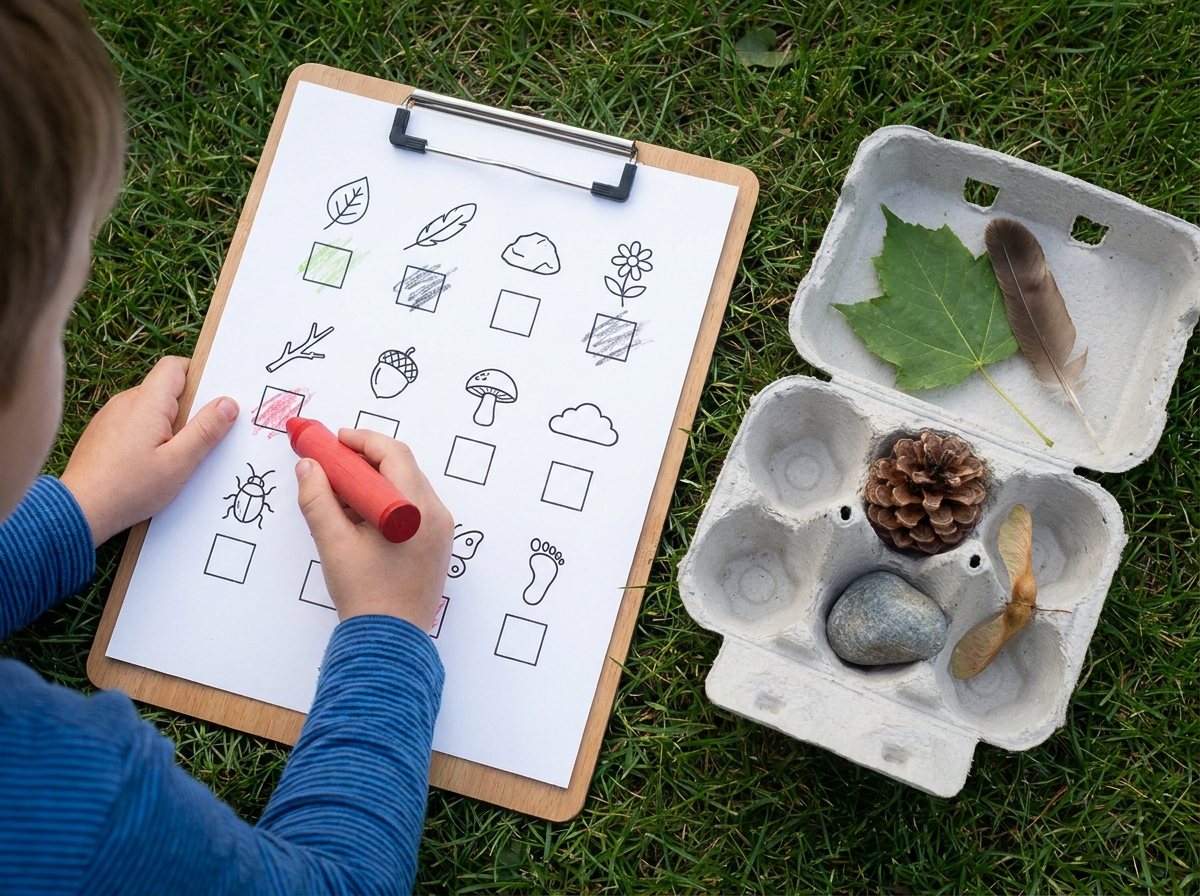
The problem was the list, not my kid. A preschooler can’t read a text checklist, so every item needs an adult narrator. This free printable nature scavenger hunt checklist for preschoolers uses 12 picture icons and big checkboxes instead.
Below: how to run it with ages 3 to 6, swaps for yards without acorns, safety rules, seasonal tweaks, and follow-up crafts. Expect mud and at least one rock that is “definitely a dinosaur egg.”
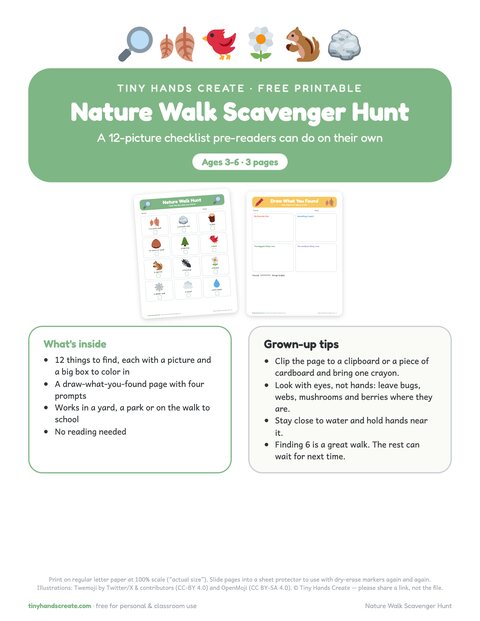
Free printable · 3 pages
Nature Walk Scavenger Hunt
A 12-picture nature checklist with a big box to color for each find, plus a draw-what-you-found page.
Free. Your download link appears right here. You'll also join the Daily Printable Drop. Unsubscribe anytime. Privacy
In this article (15 sections)
- What You Get: The 12-Item Illustrated Nature Checklist
- Safety Notes for Little Hunters
- Running the Hunt: A Step-by-Step Walkthrough
- What If Your Yard Doesn’t Have Half of This List?
- Why Picture Icons Beat Text Lists for Pre-Readers
- How to Print, Prep, and Pack (Five Minutes, Tops)
- Look-and-Check vs. Collect-and-Check: Pick Your Style Before You Go
- Seasonal Versions: One Checklist, Four Seasons
- Quick Learning Wins on a Nature Hunt
- Nature Scavenger Hunt Ideas by Age (3 to 6)
- Nature Hunt Follow-Up Crafts: Using Your Finds
- Group Hunts: Playdates, Classrooms, and Birthday Parties
- Troubleshooting: When the Hunt Goes Sideways
- Frequently Asked Questions
- Ready to Print and Go
What You Get: The 12-Item Illustrated Nature Checklist
So I drew a new list, with a big checkbox beside every picture. My daughter could spot the feather icon, hunt for a feather, and check the box all by herself. I drank my coffee while it was still warm, which almost never happens.
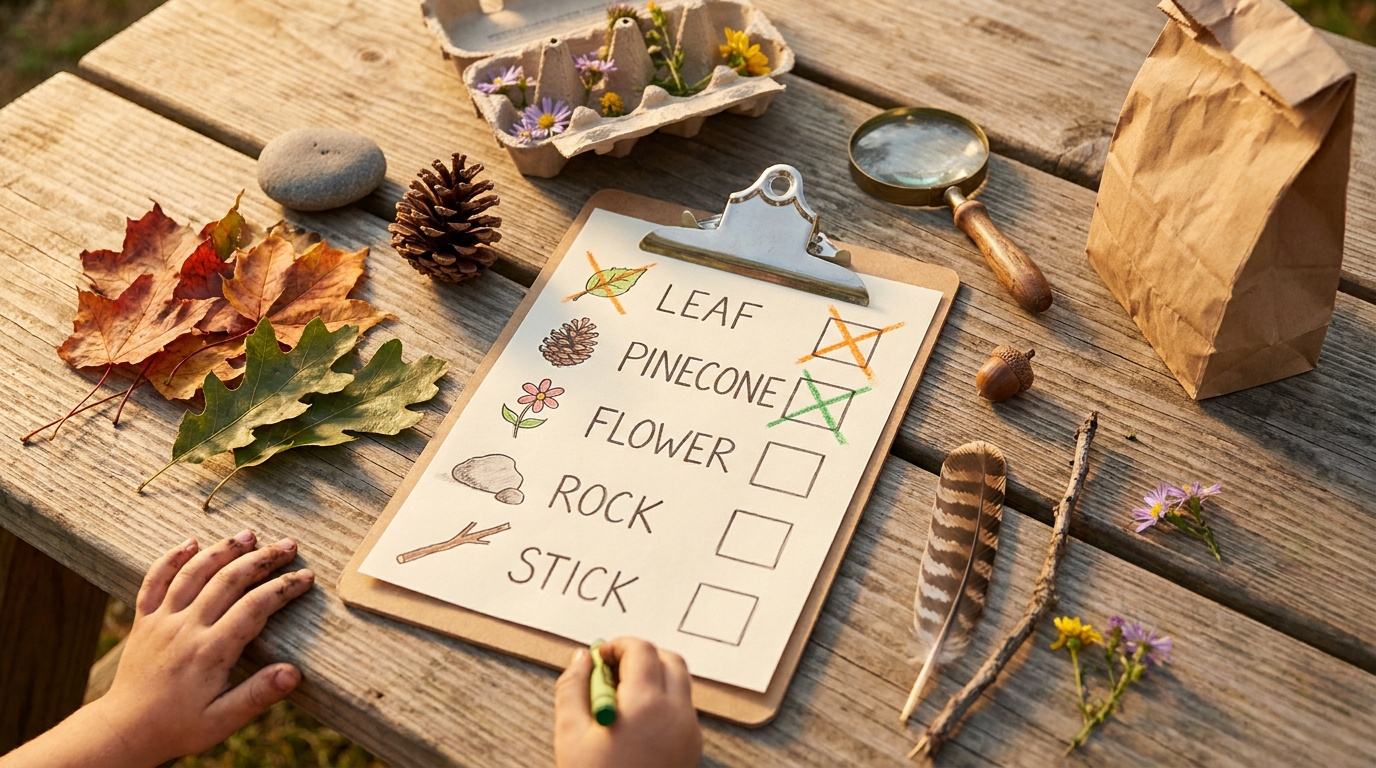
The free PDF is a single page, designed to print on regular letter paper in black and white (or color, if you want to give the icons a head start). Each of the 12 items has a simple, bold line-drawing icon and a big square checkbox next to it. There’s no reading required.
Here’s what’s on the page:
| # | Icon | What to find | Why it’s on the list |
|---|---|---|---|
| 1 | Leaf | Any leaf, any shape, once an adult has checked it | Nearly guaranteed win to start |
| 2 | Pinecone | A pinecone (or a stick if you have none) | Great texture to touch |
| 3 | Feather | A feather, any size | The “ooh” item that gets kids hunting |
| 4 | Rock | A smooth or interesting rock | Always findable, always loved |
| 5 | Flower | A flower (looking, not picking, is fine) | Color hunting |
| 6 | Bug | A bug, spider, or butterfly | Teaches gentle observing |
| 7 | Bird | A bird or a bird sound | Listening skills |
| 8 | Stick | A stick about as long as your hand | Easy middle-of-the-hunt win |
| 9 | Snail/worm | A snail, worm, or slug trail | Damp-day bonus find |
| 10 | Cloud | A cloud in the sky | Look up, not down |
| 11 | Acorn/seed | An acorn, seed, or helicopter seed | Small-treasure hunting |
| 12 | Puddle/water | Water: a puddle, a sprinkler splash, a dewy leaf | Splash potential |
A few design choices are intentional, because they change how you use the page.
The icons are simple on purpose. A detailed oak leaf drawing leaves a four-year-old wondering whether the maple leaf on the ground “matches.” A simple leaf icon says “a leaf,” so any leaf you’ve okayed counts and there are fewer rules to melt down over.
The checkboxes are huge. Each one is about an inch square, big enough for a scribble, a checkmark, a smiley face, or an enthusiastic dot, and all of those count. Small checkboxes are hard for little hands to hit, and “I did it wrong” ends the game.
Twelve is the sweet spot. Eight items can run out before a warmed-up kid is ready to stop, and twenty starts to feel like a chore. Twelve fills the page in a satisfying way and fits a 15 to 40 minute walk.
Several items are “or” items. Pinecone or stick; bug, spider, or butterfly; bird or bird sound. Nothing flattens a hunt like a list built for conditions you don’t have, and that flexibility keeps it winnable even in a neighborhood of palm trees and pavement.
If your crew is mostly in it for the creepy-crawlies, our bug hunting activities for kids make a great next hunt.
Safety Notes for Little Hunters
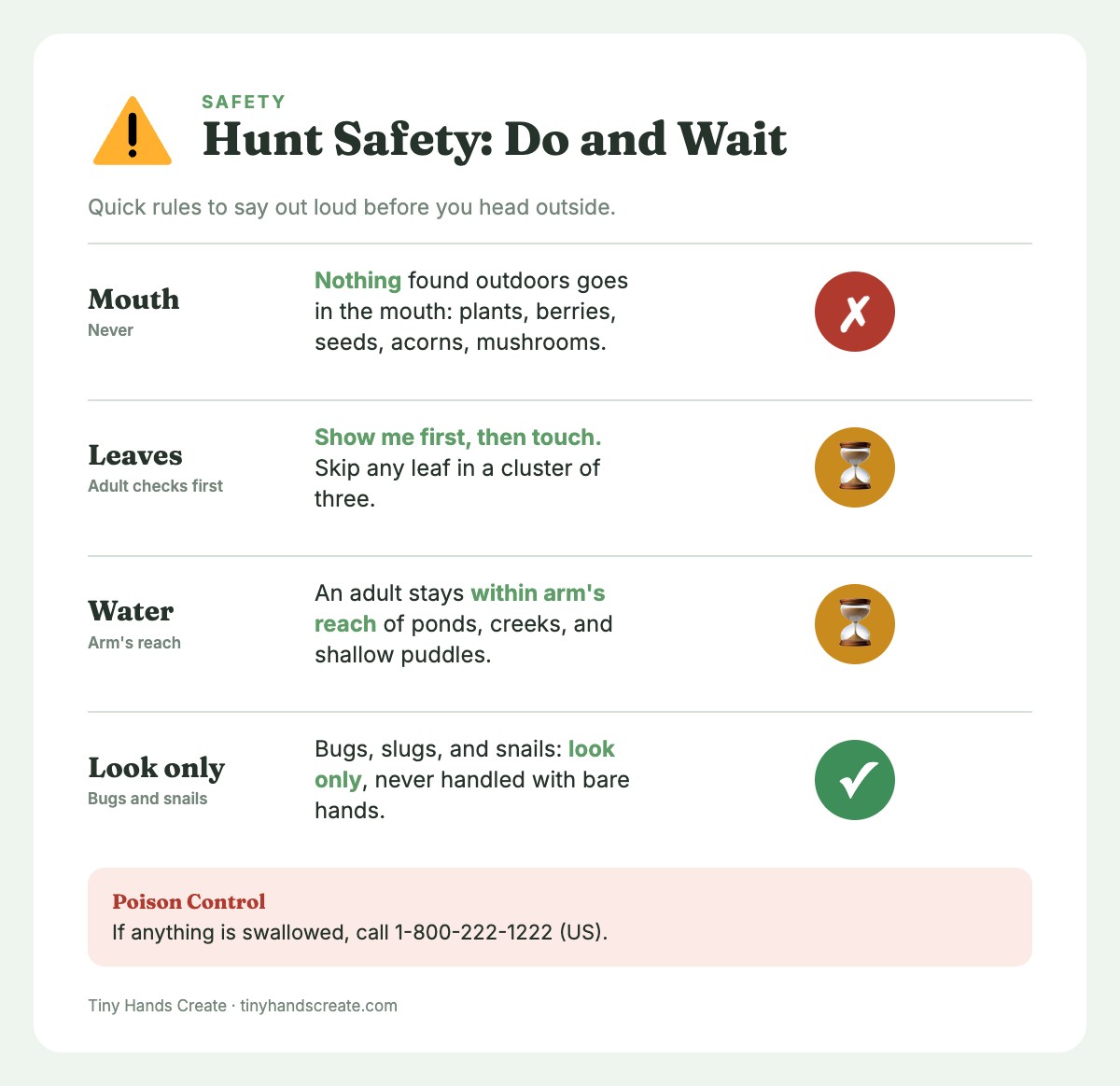
Safety firstNothing found outdoors goes in the mouth: no plant, berry, seed, acorn, or mushroom. Pebbles, seeds, and acorn caps are choking hazards for children under 4, so an adult supervises all collecting and keeps small items away from a toddler’s mouth. If anything is swallowed, call Poison Control at 1-800-222-1222 (US).
- Sticks: carry them pointing down, never run with them, and keep them away from faces.
- Under rocks and pots: an adult lifts, looks, and puts it back. In snake, scorpion, or black-widow regions, kids never reach under objects.
- Bugs, slugs, and snails: look only, never handled with bare hands. Bees, wasps, and some spiders are best admired from a distance (“quiet eyes”).
- Leaves and plants: an adult checks every leaf before kids touch or collect it, because fallen poison ivy leaves can still cause a rash. Skip any leaf in a cluster of three (poison ivy and poison oak), anything you can’t identify, and nettles. Before the first hunt, learn what poison ivy, oak, and sumac look like where you live.
- Water: an adult stays within arm’s reach of any open water, including ponds, creeks, and shallow puddles.
- Sun and heat: shade, water, and sunscreen on hot days.
- Ticks: in tick areas, check the scalp, behind the ears, armpits, and groin after grassy or wooded hunts. Remove ticks with fine-tipped tweezers and call the pediatrician if a rash or fever develops.
- Hands: wash them after every hunt.
Running the Hunt: A Step-by-Step Walkthrough
Here’s how a typical hunt goes at our house, with the parts I’ve learned to build in. The five-minute print-and-pack list is further down.
- Preview (two minutes). Sit down with the checklist and “read” it together. Point at each icon and ask, “What do you think this is?” This primes their eyes and catches misreads. (The snail icon has been called a “swirly cake” more than once.)
- Set boundaries. For a yard hunt, “stay where I can see you” is enough. For a park, agree on a landmark: “Stay between me and the big blue slide.” Preschoolers do well with a boundary they can see. Tell them today’s collecting rule now, too (look-only or collect, covered below), plus the leaf rule: “Show me first, then touch.”
- Let them lead. Resist pointing out where the pinecone is. If they walk past a feather, they’ll circle back or find another. When they’re truly stuck, hint with a question: “What might a bird leave behind?”
- Check boxes together, then alone. For the first few finds, check the box together: find it, hold it up, check it. By the fourth or fifth find, most kids want to go solo. Hand over the crayon and step back.
- Celebrate the weird finds. If a bottle cap becomes “a flower,” I just say, “Tell me about your flower.” Kids often self-correct (“it’s metal”), which opens a chat about natural versus man-made things.
- End with show-and-tell. Spread the finds on the porch or a blanket. Have the child hold up each one while you say the item name together. It turns a walk into a mini science lesson.
TipPrint two copies per child. The first one usually gets muddy, crumpled, or chewed, and a fresh spare keeps the hunt going.
What If Your Yard Doesn’t Have Half of This List?
Not everyone lives near a forest, and not every neighborhood has acorns. Here’s how to adapt.
| If you can’t find… | Swap in… |
|---|---|
| A pinecone | A stick, a bark chip, or a dried seed pod |
| A feather | Ask about “something soft” or find a fluffy dandelion seed head |
| A snail or worm | An adult lifts a flowerpot or rock (or uses a stick), looks, and puts it back. Kids never reach under objects. |
| A bird | Listen for bird sounds instead and check the box for hearing one |
| An acorn or seed | Any seed: a maple helicopter, a sunflower seed, a grass seed head (look-only for kids under 4) |
| A flower | A weed with a bloom, a clover, a dandelion (dandelions count, fiercely) |
| Water | A sprinkler puddle, a wet spot on a leaf, the hose (we’ll allow it) |
If you’re in an apartment with no yard, your hunt can happen at a local park, a school playground, or even a tree-lined sidewalk. A single planter box outside a store can offer a leaf, a bug, and a rock. I’ve had perfectly happy hunts at the edge of a parking lot, mostly because nobody told my kids the location was supposed to be limiting.
TipMake a wild card rule: each hunt gets one wild card, so your child can swap any item they can’t find for an interesting find of their choice. It keeps the hunt from stalling, and wild-card finds often become the most talked-about part of the day.
Why Picture Icons Beat Text Lists for Pre-Readers
Once kids can read, a word-based hunt is great reading practice. For pre-readers, pictures win for three reasons.
- Kids run the hunt. With a word list, every item passes through the adult reader. With icons, the child holds the page, decides what to look for, and makes the call. That ownership keeps a three-year-old going past the first five minutes.
- You narrate less. On text lists, I talked constantly: “No, that’s a twig, we’re looking for a stick.” With icons, kids narrate to themselves, to the dog, or to a passing squirrel, which is the real goal of outdoor play.
- Matching comes naturally. Holding up a feather and pointing at the feather icon is the whole skill, and nobody has to teach it.
How to Print, Prep, and Pack (Five Minutes, Tops)
Printing is simple, but a couple of small choices make the hunt more durable.
- Pick your paper. Cardstock survives damp hands and mild drizzle better. Regular paper is fine on a dry day.
- Print two per child. Sharing a single sheet is a fast route to a fight, and the spare covers mud and chewing.
- Clip it to something. A cheap clipboard or a stiff piece of cardboard with a binder clip both work. A clipboard also makes kids feel like official scientists, which is worth more than it should be.
- Bring chunky crayons. Tie one to the clipboard with a short piece of string, tape one on with washi tape, or toss two or three into a pocket. Crayons beat markers outdoors because they don’t bleed on damp paper or dry out.
- Grab a bag. A paper lunch bag, a small bucket, or an old egg carton for tiny treasures. Collecting versus looking is covered in the next section.
- Bring a blank sheet for kids who want to draw their finds.
The Egg Carton Trick
An egg carton is the best scavenger hunt tool I own, and it’s free. Each cup holds one small find, like an acorn, a pebble, or a petal, so treasures stay contained and your pockets don’t become a compost pile. Twelve cups, twelve checklist items.
For kids under 4, fill the cups with bigger finds like leaves and petals, and leave pebbles, seeds, and acorn caps on the ground.
What to Pack: The Realistic Hunt Kit
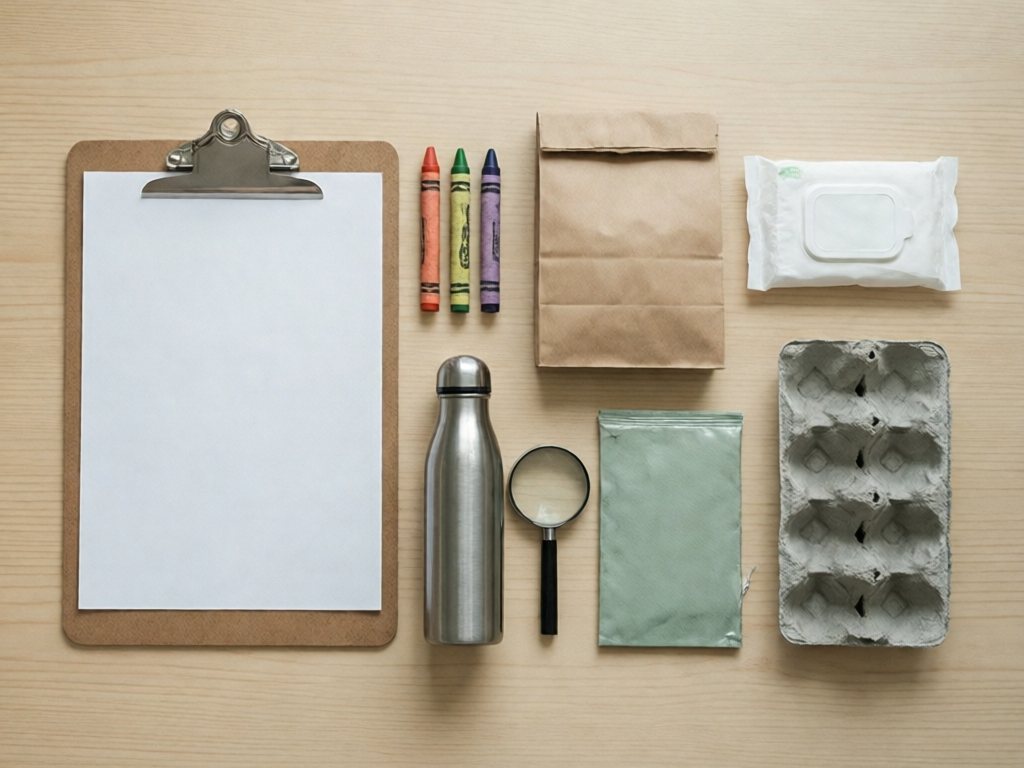
You don’t need much, and over-packing makes the whole thing feel like a production. Here’s my actual kit.
- The clipboard, crayons, and bag or egg carton from the steps above
- Water bottle
- Summer: hats and sunscreen
- Spring: a towel and a spare pair of socks
- Winter: mittens (and a warm, not hot, drink in a spill-proof lidded cup)
- Optional: a small magnifying glass (cheap, endlessly satisfying)
- Optional: a zip bag for muddy finds
- Optional: wet wipes
- Optional: a snack, because every outdoor adventure becomes a snack adventure
If you buy only one extra thing, make it a magnifying glass. It turns “a bug” into “a whole creature with a face,” and slow looking is the whole point of a nature walk.
Look-and-Check vs. Collect-and-Check: Pick Your Style Before You Go
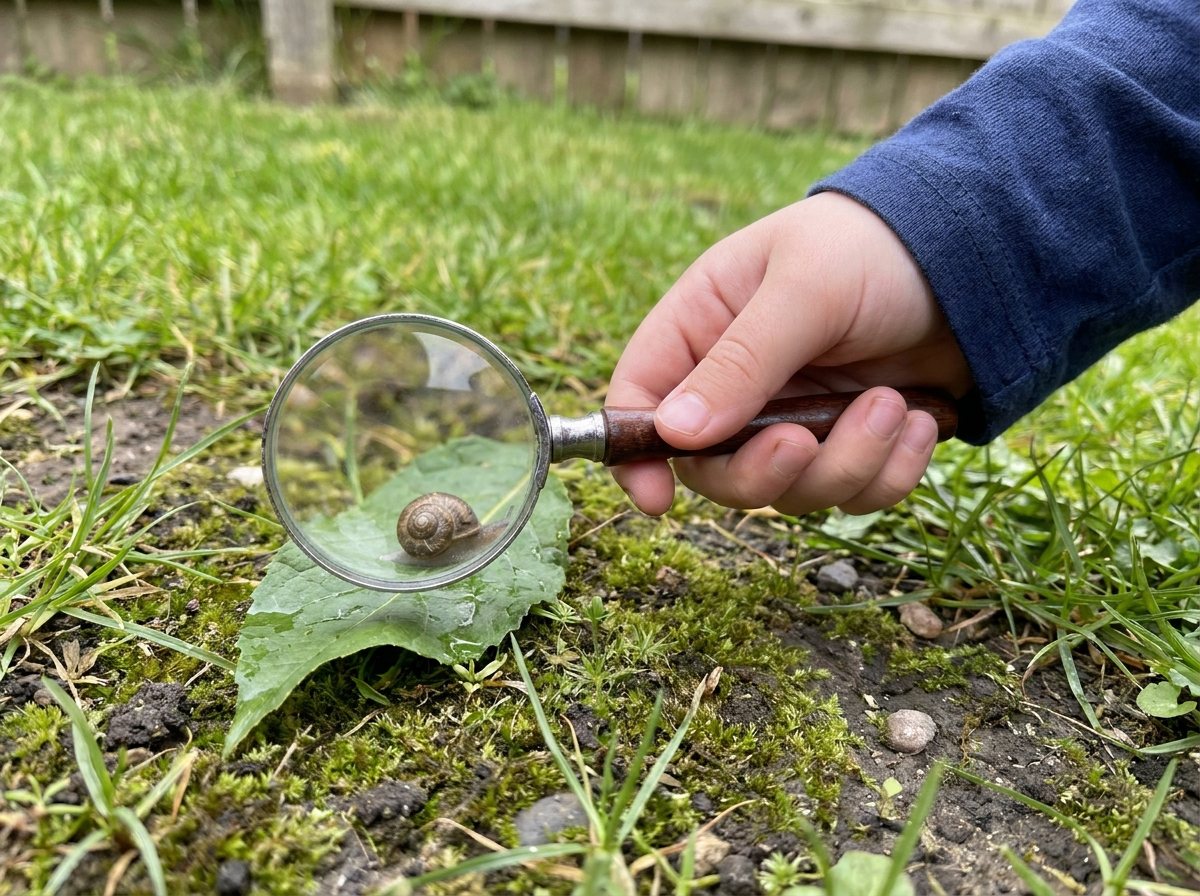
Decide this before you leave the house and tell your kids the rule up front.
| Style | How it works | Best for | Watch out for |
|---|---|---|---|
| Look-and-check | Kids spot the item, point to it, and check the box. Nothing leaves the ground. | Parks, nature preserves, anywhere with leave-no-trace rules; kids who tend to pocket everything | Some kids need to touch to believe it |
| Collect-and-check | Kids gather the item into a bag or egg carton, then check the box. | Your own yard, a friend’s yard where it’s allowed, fall leaf-fall season | Pockets full of treasures; an adult checks every leaf first; slugs and snails are look-only; for kids under 4, pebbles, seeds, and acorns are look-only too |
| Photo-and-check | Take a picture of each find with a phone, then check the box. | Kids who want to keep things but shouldn’t, or items like birds and clouds | Phone becomes the focus; keep it for the adult |
My own default is a mix. Inanimate things (leaves, sticks, rocks, pinecones, acorns) are collect-friendly in a yard. I check every leaf before it goes in the bag, and an adult handles anything small for kids under 4. Living things (bugs, birds, flowers, snails) are look-only. I tell my kids: “We take what’s fallen. We leave what’s alive.” It’s short enough for a four-year-old to repeat, and she does, loudly, to strangers.
If you’re hunting somewhere with rules, like a state park or protected preserve, go look-and-check across the board. Kids adapt faster than adults expect. “We’re just looking today” becomes normal quickly if you say it cheerfully and early.
Seasonal Versions: One Checklist, Four Seasons
The printable works in every season, but what you’ll find changes. Here’s what to expect, and how to tweak the hunt.
Spring
Spring is peak hunting season: new leaves, buds, flowers, worms after rain, birds singing at full volume, muddy puddles. If you’re searching for a spring scavenger hunt printable for preschool, this checklist fits perfectly because the flower, bug, bird, worm, and puddle icons all show up reliably. Expect wet shoes. Pack a towel for the car seat.
Summer
Summer finds lean toward flowers, bugs, clouds, and water. It’s also hot, so keep hunts short, early in the day, and in the shade, and bring water bottles. Summer is the best time for the cloud icon because the sky is big and busy. Take a “cloud finding” break on a blanket halfway through. Reapply sunscreen, and remind kids never to look directly at the sun.
Fall
Fall is the easiest season of all: leaves in every color, acorns, pinecones, sticks, feathers from migrating birds. If your toddler is in the mix too, our fall scavenger hunt printable for toddlers is built around leaves and acorns specifically and works nicely alongside this page. For fall hunts, bring a bigger bag because kids will want to keep everything. Poison ivy turns bright red and orange in fall, right when kids want the prettiest leaves, so the adult-checks-every-leaf rule matters most this season.
Winter
Winter hunts are shorter, but they work. Bare sticks, pinecones, bird tracks in snow, frost on a leaf, a cloud, a cold puddle with ice. Skip hairy-looking vines on tree trunks, since leafless poison ivy vines can still cause a rash. Many of the icons shift meaning in winter. The “water” box becomes “ice,” the “flower” box becomes “something green” or “a bud on a branch,” and the “bug” box often turns into “a bird” or “an animal track.” Let kids make the substitutions. They’re more creative than we are.
The sheet is reusable, so print a fresh one, date it, and repeat the hunt on a regular day. Kids love noticing change (“Last time there were no flowers!”), and that is early science. For a yard-only version, try our backyard scavenger hunt for kids.
Quick Learning Wins on a Nature Hunt
You can slip a lot of early learning into this hunt without it feeling like school.
- Counting: “How many leaves did we find?” Count them together, then count the checked boxes at the end. Twelve is a nice number for skip counting by two.
- Comparing and sorting: “Which pile is bigger, sticks or rocks?” Then line up the rocks from smallest to biggest.
- New words: describe finds as smooth, bumpy, crunchy, damp, feathery, or spiky, and ask open questions like “What does the bark feel like?”
- Fine motor: pinching up leaves and petals, tucking finds into egg cups, and gripping a crayon to check a box are all real hand practice.
Science sneaks in, too. Does the leaf float or sink in a puddle? Which rock is heavier? Which side of the tree is mossy? To extend it, the leaf sun print science activity for preschoolers turns the leaves you collect into art that also teaches about light.
Nature Scavenger Hunt Ideas by Age (3 to 6)
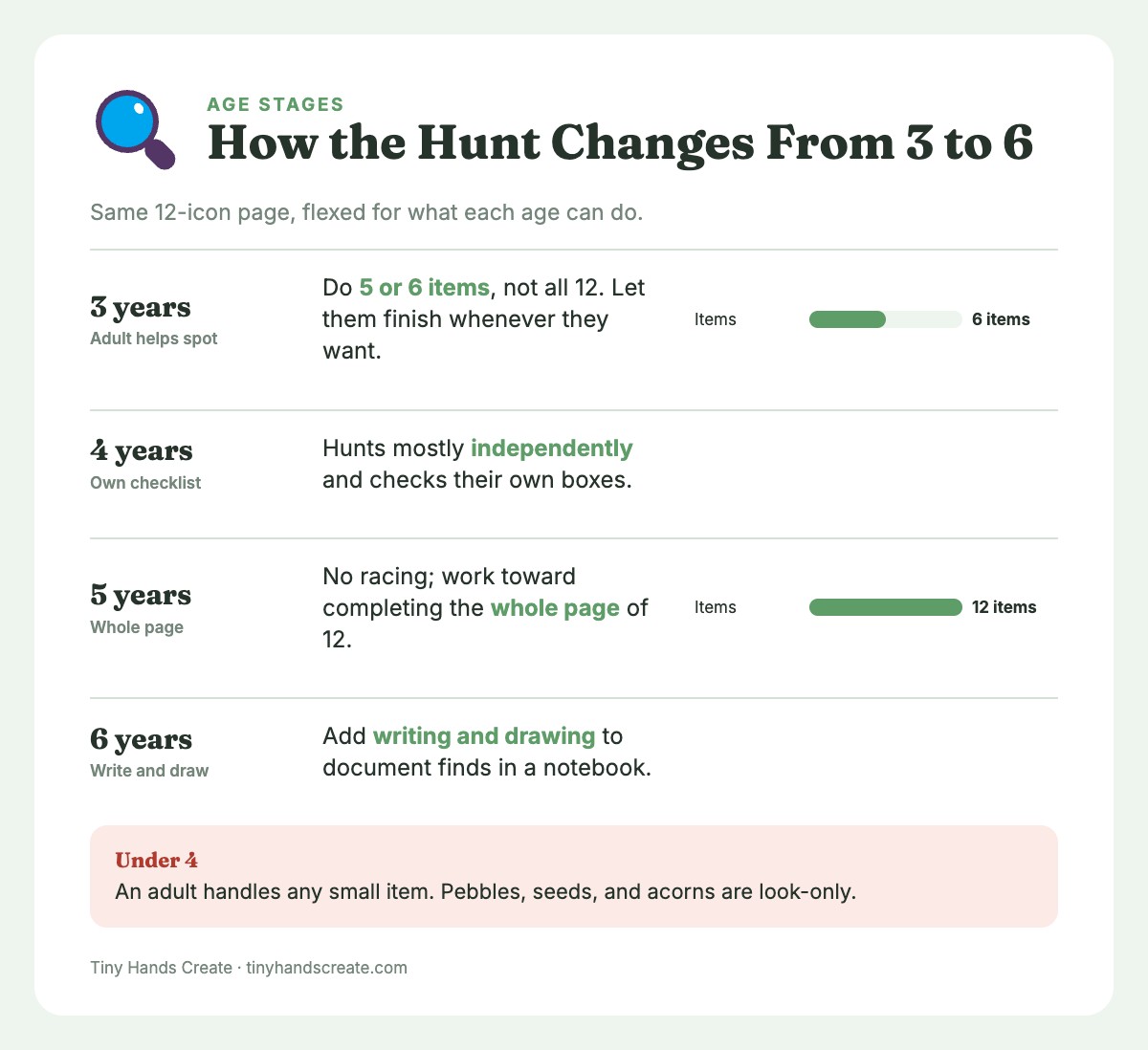
Your 3-year-old and your 6-year-old do not want the same hunt. Here’s how to flex it.
| Age | What works | Tweaks |
|---|---|---|
| 3 years | Look at one icon at a time; adult helps spot; celebrate every find | Do 5 or 6 items, not all 12; let them “finish” whenever they want; adult handles any small item; look-and-check for pebbles, seeds, and acorns |
| 4 years | Hold own checklist; hunt mostly independently; check own boxes | Add a “tell me about it” moment for each find |
| 5 years | No racing; work toward completing the whole page | Ask them to write the first letter of each item next to the icon |
| 6 years | Add writing and drawing; document finds | Have them draw each find in a notebook or add descriptive words |
For Older Kids Who Want More
If your 6-year-old rolls their eyes at “just a checklist,” give them a challenge layer:
- Find two of each. Doubles the hunt.
- Find something new. One item per round that wasn’t there last week.
- Draw one find. Choose a favorite, and sketch it with a pencil.
- Time it. A gentle, non-competitive timer: “How many can you find while this song plays?”
- Add a sound or smell round. Find something that smells good, makes a sound, feels rough.
For the Toddler Tagalong
If a little sibling is along for the ride, hand them a bag and a job: “You’re the bringer. Bring big leaves to your sister.” Point them toward leaves you’ve already checked, keep to large, safe items, and watch closely for anything small that could go in their mouth. Our outdoor nature activities for kids collection has plenty of low-prep ideas that suit mixed-age groups once the hunt is done and everyone still has energy.
Nature Hunt Follow-Up Crafts: Using Your Finds
The hunt doesn’t have to end at the door. Here are a few easy follow-ups that use what you found, and our nature crafts for kids has plenty more.
Nature Collage
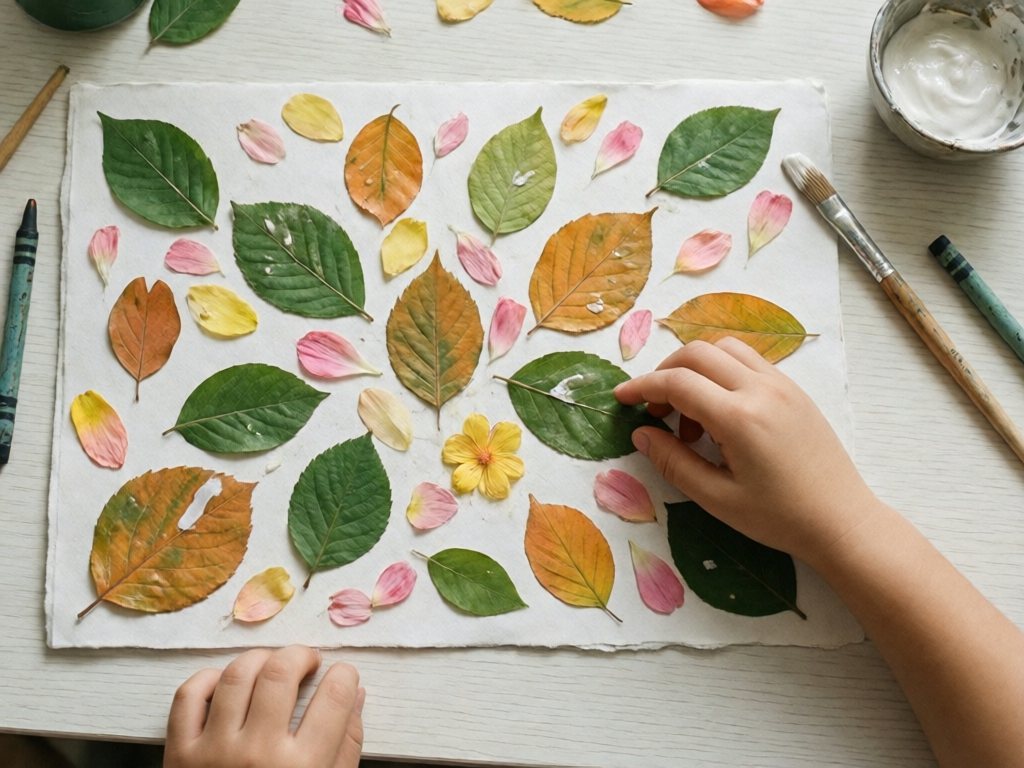
Glue leaves, petals, and small seeds onto a piece of cardboard or heavy paper. Use white school glue brushed on with a paintbrush or a clean finger. Let it dry flat for a day, then frame it or tape it to a window.
Safety firstFor children under 4, use only leaves and petals. An adult handles and glues any seeds, and the finished collage stays out of reach of mouths, because dried seeds can be picked off.
Rock Painting
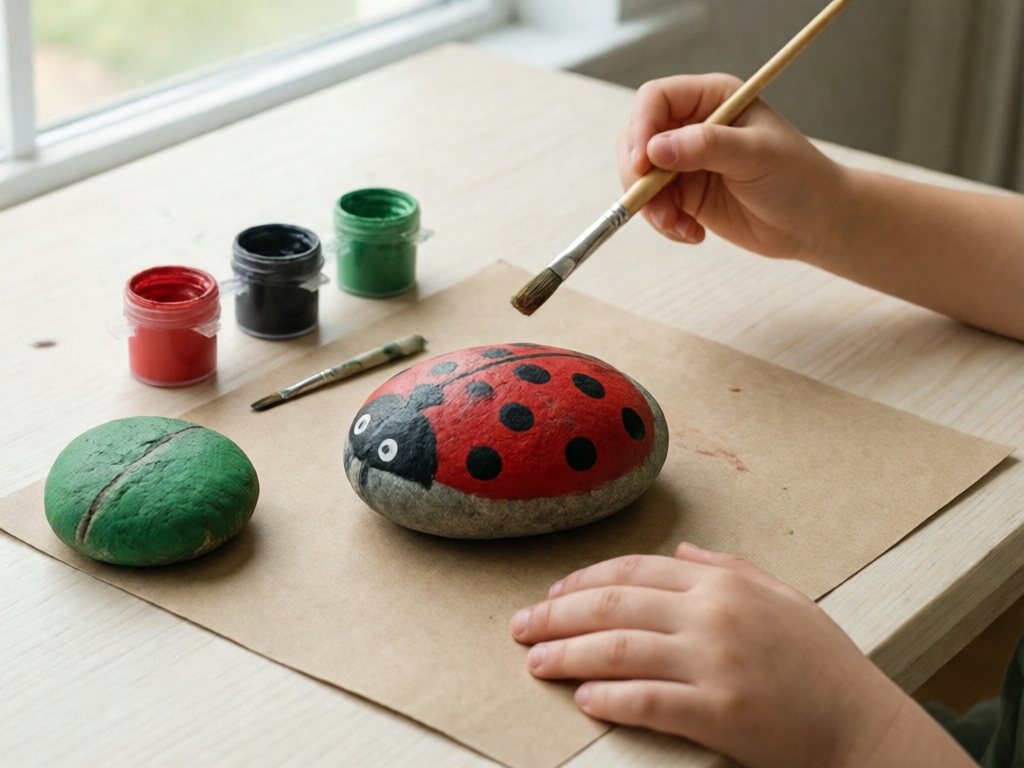
The smooth rock from the list becomes a canvas. Wash it, let it dry, and let kids paint it as a “pet rock,” a dinosaur egg, or a ladybug. Use washable, non-toxic paint or paint markers. An adult can seal the dry rock with a clear sealer such as Mod Podge, in a ventilated area, if you want it to last outdoors. Keep small painted rocks away from children under 4. For more designs, see our rock painting ideas for kids.
Leaf Rubbings
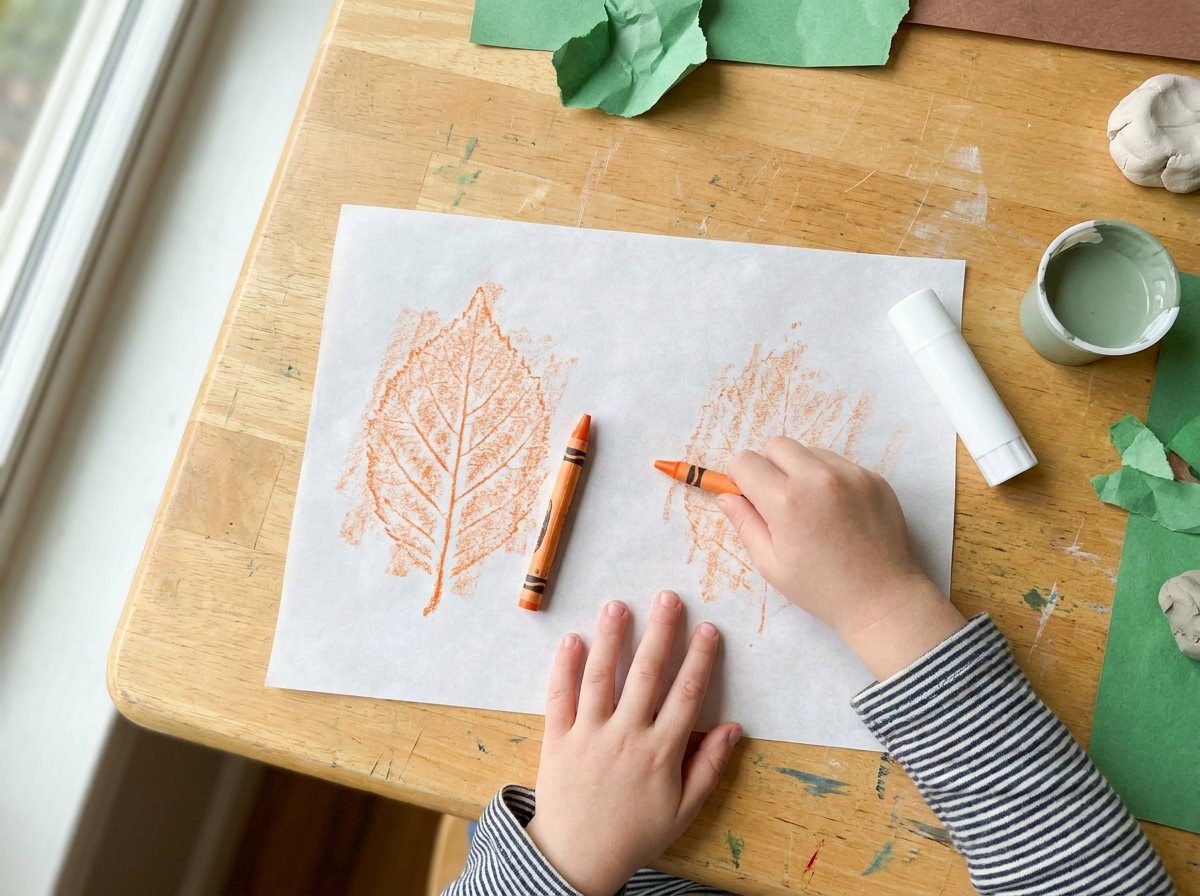
Place a leaf under a thin sheet of paper, vein side up, and rub the side of a peeled crayon across it. The leaf pattern appears like magic. Kids love this one, and it takes thirty seconds to set up.
Sticks and Clay Sculptures
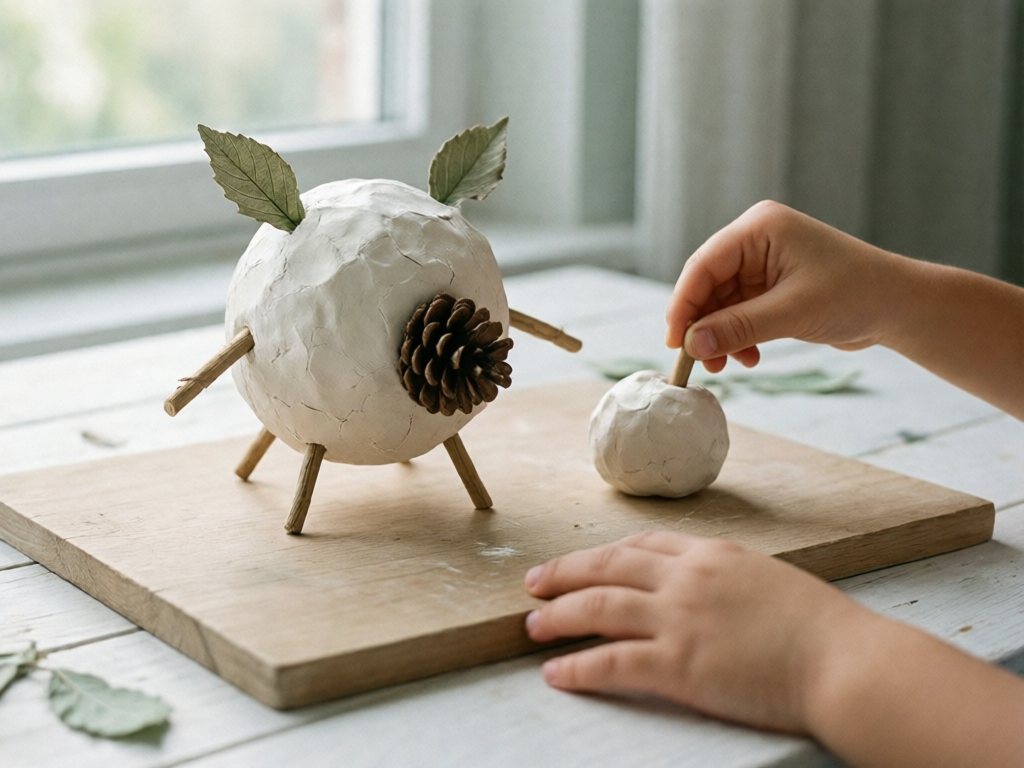
Poke sticks and pinecones into a ball of air-dry clay to create nature creatures or fairy houses. If you want a beginner-friendly clay idea, our air-dry clay projects for preschoolers has simple starting points.
Nature Sensory Bin
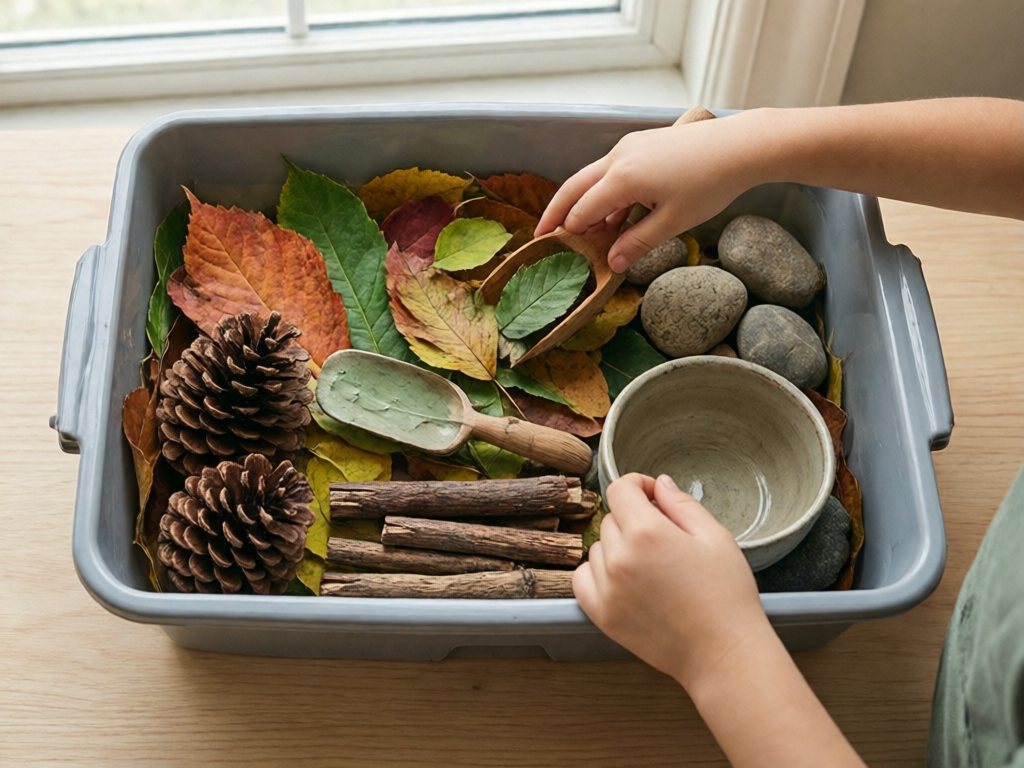
Dump your collected treasures into a bin with scoops and bowls. Kids sort, pour, and explore for another half hour. Keep this to ages 3 and up with an adult watching the whole time, and for children under 4, leave out pebbles, seeds, acorns, acorn caps, and small pinecones. For a themed bin, see our fall sensory bin for toddlers for ideas using acorns and pinecones, with the same under-4 small-parts rule.
Nature Journal Page
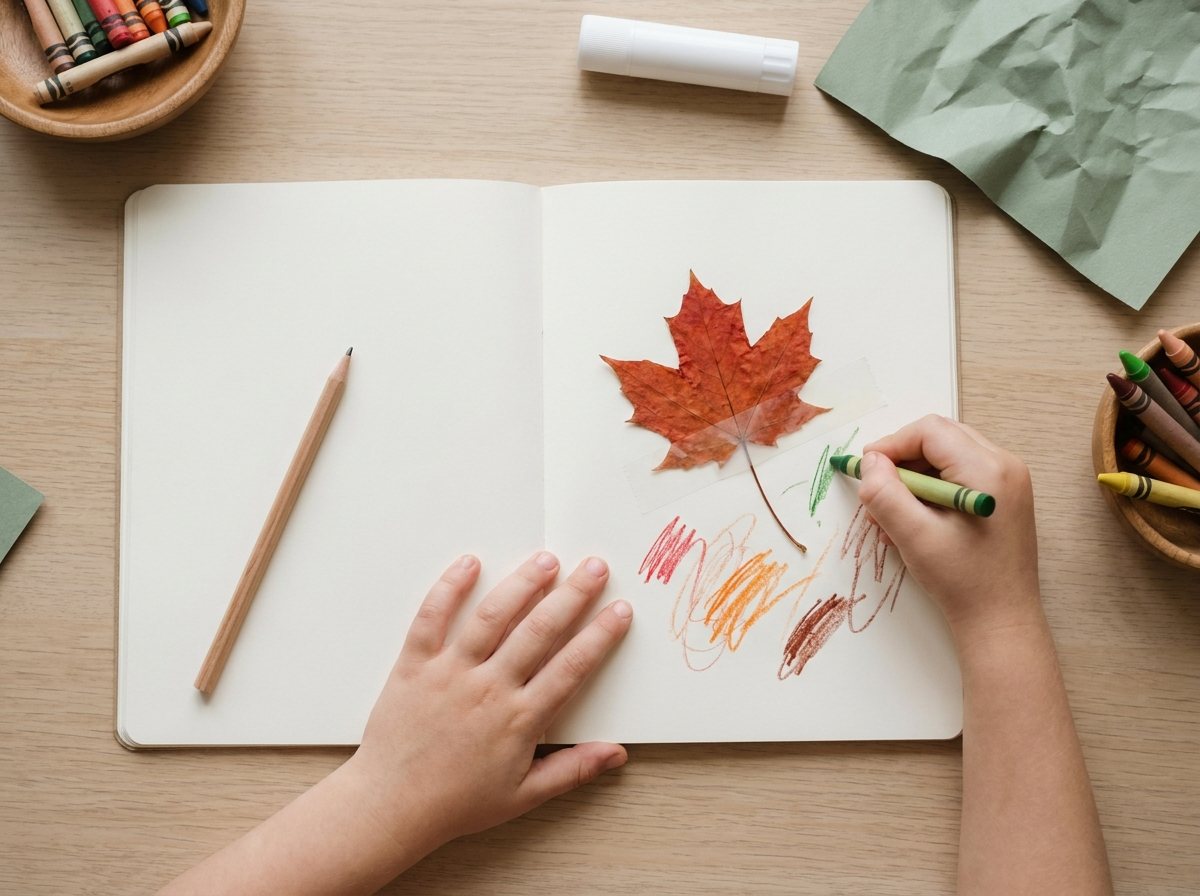
Tape one tiny find per page into a blank notebook and let kids dictate a sentence to you, or write their own letters. After a few hunts, you have a keepsake that tells the story of their year outdoors.
Group Hunts: Playdates, Classrooms, and Birthday Parties
The checklist scales nicely for groups. Groups work best when every child has their own page and a clear job.
Playdate Version
Give each child their own printed list and a different colored crayon. Nobody needs to compete. At the end, compare finds. “You found a feather! Where was it?” Kids love telling the story of a find.
Classroom or Preschool Version
For teachers, the single-page format is easy to copy and hand out. A few adaptations:
- Pair kids into buddy teams so early readers can help.
- Tape the checklist to a clipboard before you go outside, so no one fumbles with loose paper in the wind.
- Walk the area before class and check for poison ivy, oak, and sumac, so the leaf rule is easy to keep with a group.
- Use the closing show-and-tell as a circle time activity.
- Send one copy home so families can repeat the hunt on the weekend.
Birthday Party Version
An outdoor party with a scavenger hunt is a low-cost, high-fun idea. Give each guest a clipboard (or a paper plate with a crayon attached), and let them hunt in the backyard. Prizes can be simple: a sticker for every checked box, or a seed packet to plant at home. No one will miss the loot bags.
Troubleshooting: When the Hunt Goes Sideways
Even a well-designed hunt hits snags. Here’s how I handle the usual ones.
| Problem | What I do |
|---|---|
| Child loses interest after three items | Count it as a win. Come back to it later. A short hunt is still a hunt. |
| Child melts down over a missing item | Play the wild card (see the tip above), or change the item: “Let’s find something like a pinecone.” |
| Two kids fight over a find | Each child gets their own list and their own finds. “Let’s find another one for you.” |
| Child wants to keep everything | Set a rule before you start: one egg-carton cup per item. When full, trade up. |
| Child checks all boxes without finding anything | Shrug and smile. Do a “prove it” round at the end together, which is fun and easy. |
| Bad weather | Switch to the indoor backup plan below. |
| Everything is brown (late fall or winter) | Shift the focus to textures and shapes: “Find something bumpy.” |
A few mess realities to expect:
- Mud and wrinkles. Someone will find the one wet patch, and the list may get torn or chewed. Print two.
- Questionable treasures. Empty pockets over a trash can before the washing machine, or you’ll be pulling acorn caps out of the filter later.
- Someone will want to keep a bug. Look at it in a clear cup or with the magnifier for a few minutes, then let it go where you found it, with no sealed jars.
- The hunt will not go as planned. A rock obsession, a lost crayon, or a detour to the swings can end it early, and that’s fine: the checklist is a tool, not a test.
If mess is a big concern for you, our mess-free art activities for toddlers pair well with an outdoor hunt and keep the craft part tidy afterward.
The Indoor Backup Plan
On a rainy day, I hide natural objects around the living room: a pinecone behind a cushion, a leaf in a book, a rock under a blanket. Kids hunt the house with the same checklist. It’s not the same as being outside, but it’s a great backup, and it keeps the printable useful year-round. For more ways to keep kids busy when the weather turns, try our rainy day indoor activities for kids.
Frequently Asked Questions
What age is this nature scavenger hunt printable best for?
It’s designed for ages 3 to 6. Three-year-olds usually do best with an adult helping them spot items and with a shorter hunt of five or six finds. Four- and five-year-olds can typically run the hunt on their own with occasional help. Six-year-olds often want extra challenges, like finding two of each item or drawing their favorite find. Because the checklist uses pictures instead of words, even kids who can’t read yet can use it independently.
Can I use this checklist if I don’t have a yard?
Absolutely. A local park, school playground, tree-lined street, or even the edge of a parking lot can offer a leaf, a rock, a stick, a cloud, and a bug. Most of the 12 items are flexible, with “or” options so you can adapt. If you can’t get outside at all, hide natural objects around your home and do an indoor version using the same sheet.
Should my child collect the items or just look at them?
It depends on where you are. In your own yard or anywhere collecting is allowed, gathering fallen leaves, sticks, rocks, and acorns is fine, and kids love it. An adult checks leaves before kids pick them up (skip clusters of three and anything you can’t identify). For kids under 4, an adult handles anything small. In parks, preserves, or anywhere with rules, use a look-and-check approach. A good family rule is “we take what’s fallen and leave what’s alive,” which means living things like flowers, bugs, and snails stay put.
What do we do if we can’t find everything on the list?
That’s completely normal. The list includes swaps for many items, like a stick instead of a pinecone or a bird sound instead of a bird sighting. You can also use a “wild card” rule that lets kids substitute a favorite discovery for an item they can’t find. The goal is exploring and noticing, not filling every box. A half-checked sheet from a happy walk beats a fully checked one from a frustrated afternoon.
Can I use this printable for a spring scavenger hunt?
Yes, and spring is one of the best times to use it. Flowers, buds, worms after rain, birds, and puddles are all easy to find in spring, and the checklist icons match those items closely. The same sheet works in summer, fall, and winter, too. Just expect different finds in each season, and let kids adjust items to fit what’s around, like treating the “water” box as “ice” in winter.
How long does a typical hunt take?
Most hunts with preschoolers run 15 to 40 minutes, depending on age and interest. Younger kids may be done sooner, which is perfectly fine. If your child is really engaged, the hunt can stretch to an hour, especially if you add a magnifying glass or follow-up activities. Let your child set the pace, and stop when the energy fades.
What can we do with the items we collect?
There are lots of easy follow-ups: make a nature collage, do leaf rubbings with crayons, paint a rock, press sticks and pinecones into air-dry clay, or add your treasures to a sensory bin. You can also tape one find per page in a simple nature journal. If you don’t want to keep the items, return them to the yard or compost pile at the end of the day.
Ready to Print and Go
The best scavenger hunt is the one that actually happens. You don’t need a perfect yard, perfect weather, or a perfectly laminated list. You need a printed page, a couple of crayons, and a kid who’s willing to look closely at the ground for a while.
Print the checklist, grab a clipboard, and let your little one lead. Expect mud, expect odd treasures, and expect at least one very serious conversation about whether a rock is a dinosaur egg. Those are the hunts they’ll remember.