Printable Advent Calendar With Activities for Toddlers
Discover 24 free, five-minute holiday countdown activities for toddlers that use household items and flex with your daily routine.
- Choose five-minute, immediate activities instead of candy or trinkets.
- Swap cards by type—Wiggly, Calm, or Messy—to match your toddler's daily mood.
- Use household items and quick doodles so toddlers can 'read' each card.
- Rely on a built-in catch-up plan to remove guilt when days get derailed.
This post contains affiliate links. As an Amazon Associate I earn from qualifying purchases.
Last December my two-year-old opened every drawer of our fancy advent calendar by December 6th. So I switched to cards: one tiny activity a day, all using things we already owned.
Below are 24 five-minute advent calendar activities for toddlers aged 2-4, sorted Wiggly, Calm or Messy, using household items. Print the free cards or copy them by hand, pull one a day, and use the catch-up plan when a day falls apart. I’ll tell you exactly where the mess is.
In this article (15 sections)
- Why Activities Beat Candy and Trinkets for Ages 2-4
- How the Countdown Card Set Works
- Print the Cards or Make Your Own
- Printable 24-Day Advent Calendar Activities for Toddlers
- The 30-Second Gather: What to Pull From Around the House
- Day-by-Day Tips for the Trickier Cards
- Ways to Display Your Countdown
- Adapting for Ages 2, 3, and 4
- What About the Mess? An Honest Look
- Safety Notes for Ages 2-4
- What to Do When You Miss a Day (You Will)
- Making It a Daily Ritual (Without the Pressure)
- Mixing In Other Activities When You Want More
- Frequently Asked Questions
- Your Countdown, Your Pace
Why Activities Beat Candy and Trinkets for Ages 2-4
Most store-bought advent calendars are built for kids who can wait, count, and understand that tomorrow is a different day. A two-year-old does not live in tomorrow. A three-year-old is starting to. A four-year-old might get it, then lose the thread by December 12th.
Here’s what that means for how you design a toddler countdown:
- The reward needs to be immediate. Opening a card and doing the thing within a few minutes works far better than “we’ll do this after dinner.”
- The activity needs to be short. Five minutes is the sweet spot. If they want more, great. If they wander off at minute three, that’s a complete success, not a failure.
- The whole thing needs to survive a missed day. Any December has sick days, travel days, and days where everyone melts down at 4 p.m. A countdown with no catch-up plan creates guilt. Ours has a built-in catch-up plan (more on that below).
- It should cost nothing. By late November, your budget is already stretched. Gifts, travel, and holiday food all take their cut. Free activities leave room for the things that actually need buying.
Bonus: an activity calendar answers “what do we do right now?” at 3:45 p.m., when everyone is cranky.
How the Countdown Card Set Works
The set is simple. There are 24 cards, one per day from December 1 through December 24. Each card has:
- A short name the toddler can learn (“Sock Snowballs,” “Kitchen Band”)
- One 5-minute activity
- Items from around the house, listed so you can grab them in 30 seconds
- A type, either Wiggly (burns energy), Calm (quiet focus), or Messy (needs a floor you can wipe)
That last part matters. Instead of numbering the days strictly, you can swap cards around based on how the day is going. Meltdown morning? Pull a Calm card. Stuck inside because of snow or sleet? Pull a Wiggly one. The numbers are a suggestion, and the types are what make this flexible enough to survive real life.
TipPrint the free card set (Toddler Activity Advent Calendar: 24 Printable Cards) from this page, or copy the table below by hand. Either way, swap cards by type: Calm on a meltdown morning, Wiggly on a stuck-inside day, Messy only when you have the energy.
Print the Cards or Make Your Own
The quickest route is the printable card set on this page: print, cut, and you’re done. It includes 24 cards, numbers 1-24 for envelopes or clothespins, and a one-page fridge checklist with a catch-up row. Prefer hand-made? Copying the cards yourself takes about 15 minutes and is honestly part of the fun:
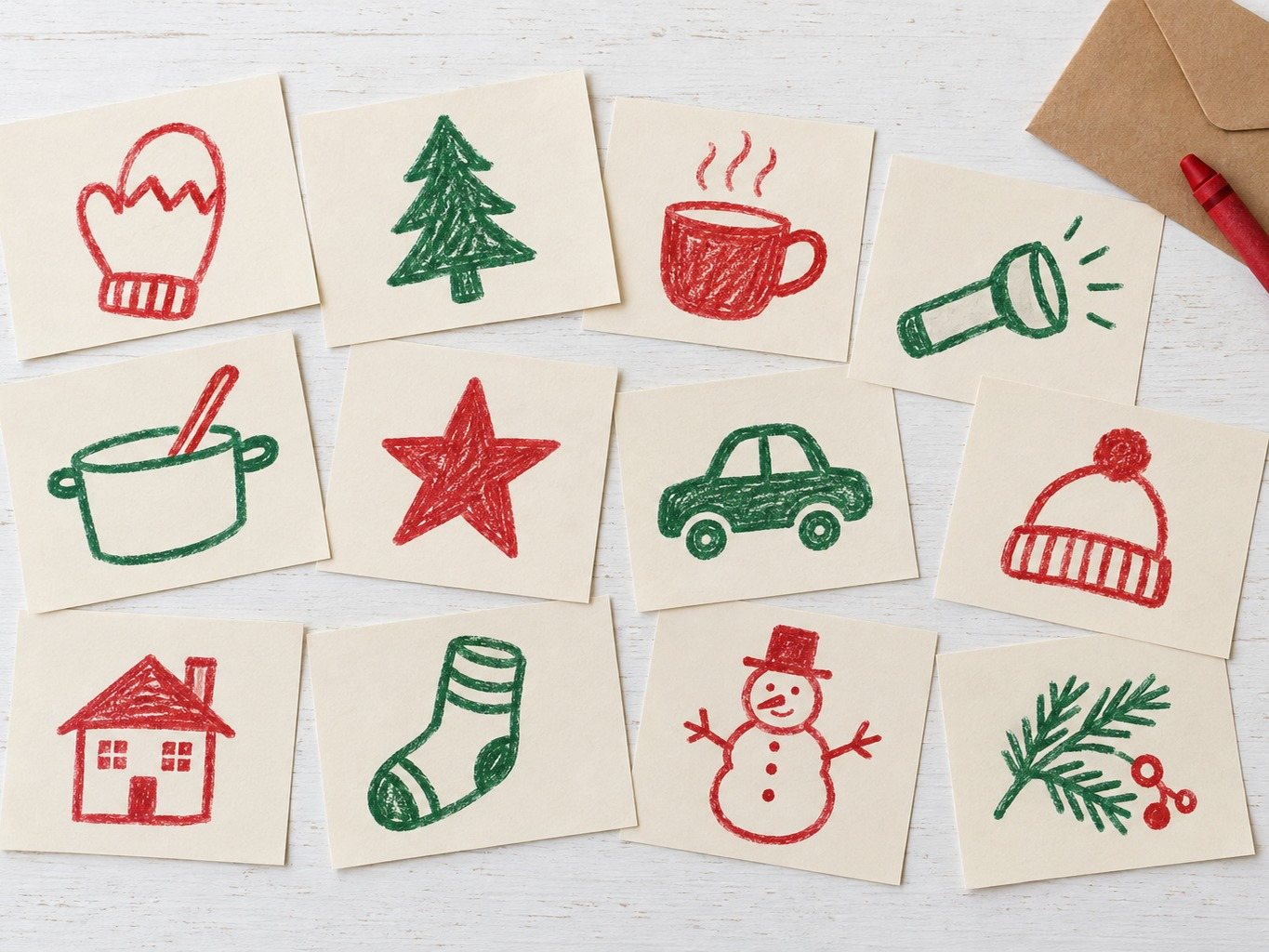
- Index cards: Write the day number big in the corner, the activity name in the middle, and draw a quick doodle (a sock, a pot, a star). Toddlers “read” the picture, not the words.
- Paper scraps: Cut 24 rectangles from the back of junk mail or the cereal box. Use a marker.
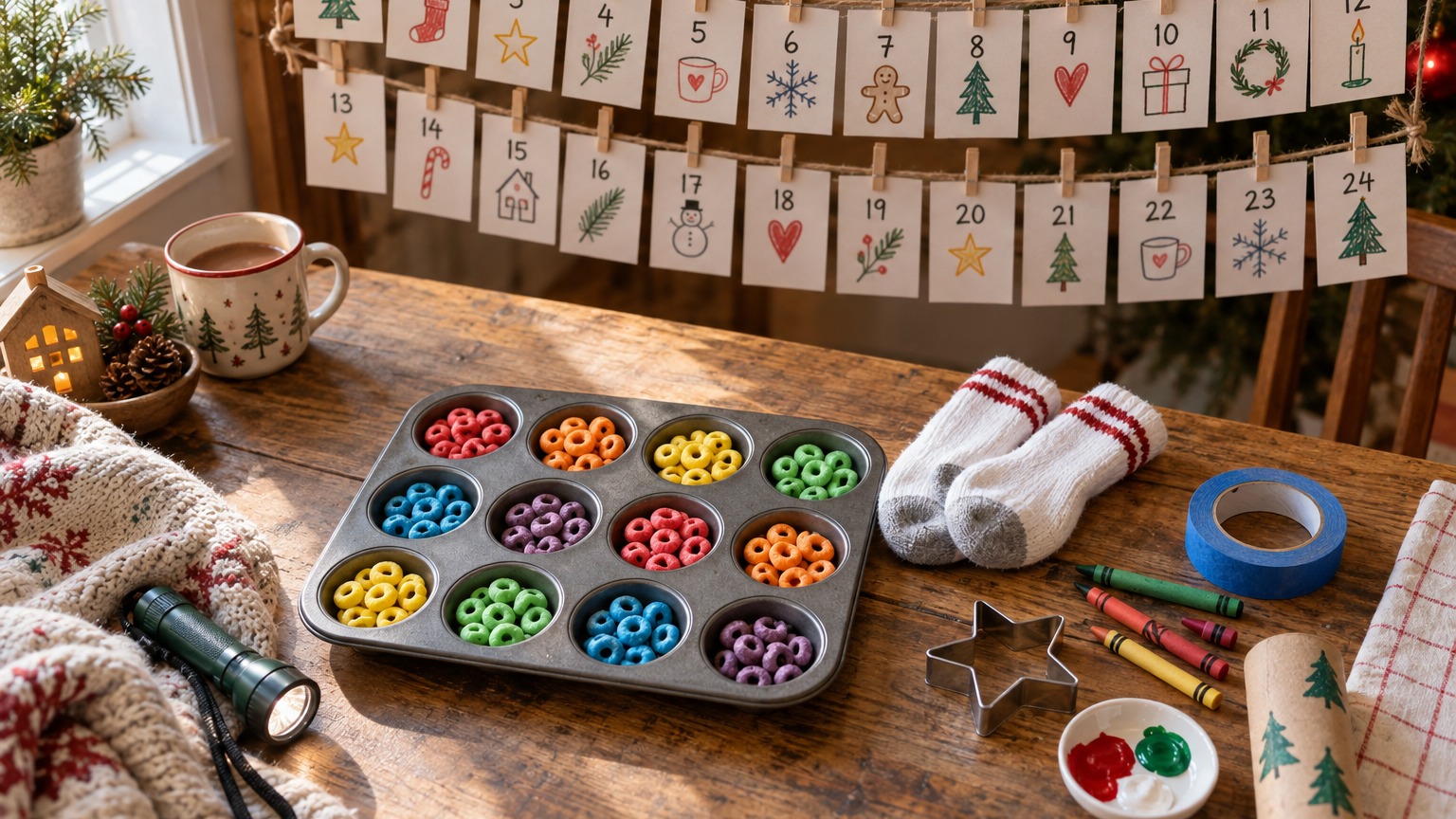
- Envelopes: Tuck each card in a used envelope and number the front. Keep them in a basket, or clip them to a taut string hung well above your toddler’s reach.
A card they can hold becomes a little ritual: “Today’s card!” beats “Mom’s checking her phone again.”
Printable 24-Day Advent Calendar Activities for Toddlers
The printable card set on this page has all 24 cards ready to print, cut and hang. The table below is the text version of the same cards, handy if you’d rather copy them onto index cards.
Safety firstThis set is for ages 2+, not for 1-year-olds. Keep an adult within arm’s reach for small items, ice, water and flashlights. Skip any card with mouthable items if your child still mouths objects.
Nearly everything below is in a typical toddler household. A few items (like cotton balls or a paper plate) might need a quick drawer check, but nothing requires a store run.
| Day | Card Name | The 5-Minute Activity | What You Need | Type |
|---|---|---|---|---|
| 1 | Sock Snowballs | Roll up clean socks into “snowballs” and toss them into a laundry basket or box. | Rolled socks, basket | Wiggly |
| 2 | Paper Snowstorm | Tear scrap paper into larger pieces, toss them up, then sweep and gather the “snow.” Stay close and discourage mouthing. | Scrap paper | Messy |
| 3 | Flashlight Fort | Drape a blanket over a table and read one book inside with a flashlight. Stay with your child (rigging tips below). | Blanket, flashlight, book | Calm |
| 4 | Paper Chain Start | Make a tape-loop chain with strips of paper, one loop per child. Adult handles the tape and picks up scraps. | Paper strips, tape | Calm |
| 5 | Freeze Dance | Play one holiday song. Dance until the music stops, then freeze. | Music | Wiggly |
| 6 | Crayon Rubbing Tree | Put a leaf, a large flat plastic lid or textured cardboard under paper and rub the side of a crayon on top. | Paper, crayon, leaf | Calm |
| 7 | Muffin Tin Sort | Sort large colorful items (big blocks or large toys) by color into muffin tin cups. Adult within arm’s reach; skip if your child still mouths things. | Muffin tin, large blocks or toys | Calm |
| 8 | Bubble Mailer Stomp | Stomp on bubble wrap or a bubble mailer from your recent packages. Adult within arm’s reach, keep plastic off faces, and pick up popped pieces. | Bubble wrap | Wiggly |
| 9 | Cookie Cutter Stamps | Dip cookie cutters in washable paint and stamp onto paper. | Cookie cutters, paint, paper | Messy |
| 10 | Wrap a Teddy | Wrap a stuffed animal in a dish towel, then “unwrap” the gift together. | Stuffed animal, towel | Calm |
| 11 | Ice Rescue | Drop toy animals (bigger than a toilet-paper tube opening) in a bowl of ice cubes. Use lukewarm tap water in a cup to “rescue” them. Stay within arm’s reach; ice can go in mouths. | Ice, bowl, toys | Messy |
| 12 | Foil Star Squish | Crinkle a sheet of aluminum foil into a star and shape it. Supervise, discard torn foil bits, and skip if your child mouths things. | Aluminum foil | Calm |
| 13 | Reindeer Binoculars | Tape two cardboard tubes together and “spot” reindeer around the house. | Paper towel tubes, tape | Wiggly |
| 14 | Cotton Ball Beard | Glue torn tissue paper onto a paper plate with washable school glue to make a Santa beard. Cotton balls are an option for kids who don’t mouth things. Adult stays close. | Paper plate, tissue paper (or cotton), glue | Messy |
| 15 | Kitchen Band | Play pots, wooden spoons, and plastic bowls like a drum set. | Pots, spoons, bowls | Wiggly |
| 16 | Baking Soda Snow | Mix baking soda and a little conditioner to make moldable fake snow. Adult supervises; not for kids who mouth their hands (use crumpled white paper instead). Wash hands after. | Baking soda, conditioner | Messy |
| 17 | Cozy Story Time | Pour lukewarm milk (test a drop on your wrist) into a spill-proof cup, snuggle under a blanket, and read two books. Keep your own hot drink out of reach and off your lap. | Blanket, books, lukewarm milk | Calm |
| 18 | Wrapping Paper Collage | Tear leftover wrapping paper scraps and stick them on paper with a glue stick. | Wrapping scraps, glue stick | Calm |
| 19 | Tape Tree on the Wall | Make a tree outline with painter’s tape. Stick paper “ornaments” on it. Adult handles the tape and picks up scraps; stay close and discourage mouthing. | Painter’s tape, paper | Calm |
| 20 | Mitten Match | Match pairs of mittens or socks from the laundry pile. | Mittens or socks | Calm |
| 21 | Picture for Someone | Draw a picture for a grandparent or neighbor and tuck it in an envelope. | Paper, crayons, envelope | Calm |
| 22 | Hide the Elf | Hide a stuffed animal “elf” around the room. Count down while they find it. | Stuffed animal | Wiggly |
| 23 | Blanket Sleigh Ride | Pull your seated toddler across a hard floor on a blanket as a “sleigh.” Clear the path, stay away from stairs, and stop if they stand. | Blanket, smooth floor | Wiggly |
| 24 | Tree Lights Tour | Leave a lamp or hall light on, walk through the house holding hands with flashlights, and spot the tree lights. | Flashlights | Calm |
The 30-Second Gather: What to Pull From Around the House
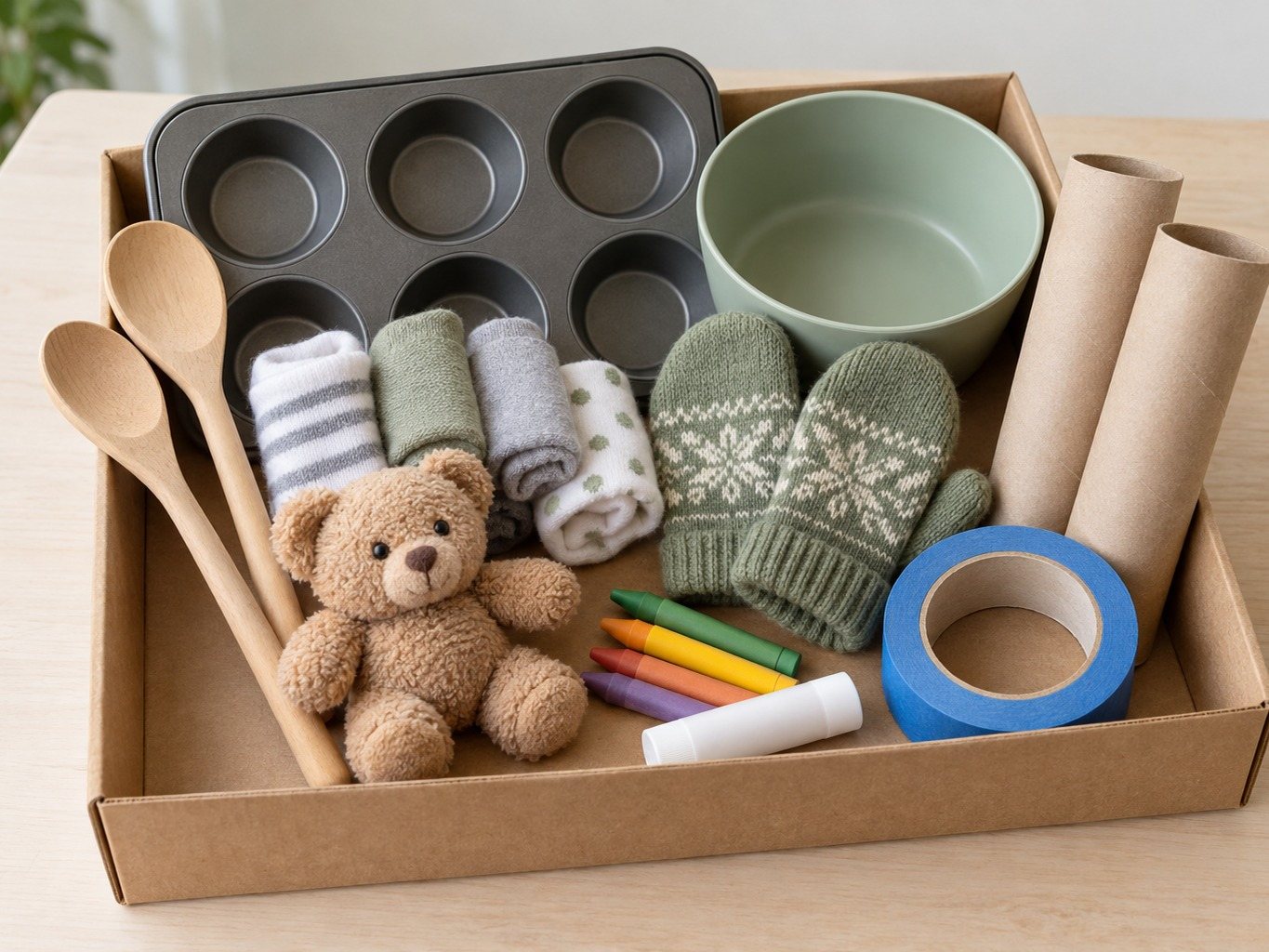
The best part about household-item activities is that you probably have most of this stuff already. Before December 1, do one quick sweep and put these into a single box or bin so nothing becomes a scavenger hunt on the day:
Kitchen Drawer and Pantry
- Muffin tin
- Pots, wooden spoons, plastic bowls
- Cookie cutters (any shape works, but stars and circles are best)
- Aluminum foil
- Baking soda
- Large blocks or big toys for sorting (no small cereal or dry pasta)
- Paper plates
Junk Drawer and Craft Bin
- Tape (regular and painter’s tape if you have it)
- Glue stick
- Crayons
- Washable paint (a small amount is enough)
- Scrap paper and leftover wrapping paper
- Envelopes
Laundry Room
- Clean socks (rolled)
- Mittens
- A dish towel
- A blanket
Everywhere Else
- Flashlights with screw-secured battery compartments
- Paper towel tubes
- A stuffed animal or two
- Torn tissue paper (and cotton balls, optional, for kids who don’t mouth things)
- A leaf, or textured cardboard if it’s snowy (for Day 6)
- Bubble wrap from a recent order
If you’re short a few things, swap them. No cotton balls? Use torn tissue paper. No foil? Use a sheet of paper and crinkle it. The point isn’t the exact items. It’s the “we’re doing this together” part.
Day-by-Day Tips for the Trickier Cards
Most of the cards explain themselves. A handful have details that make the difference between a fun five minutes and a spill-covered disaster. Here are the ones worth a few extra sentences.
Day 2: Paper Snowstorm (Messy)

Give each child a pile of scrap paper and let them rip it into pieces. Toddlers love the sound of tearing paper more than the result. Then you count to three, everyone throws the pieces in the air, and the “snow” falls everywhere.
Good to knowRealistic mess level: medium. It’s paper, so it vacuums up in a minute. Do it on a bedsheet and shake the sheet out into the trash.
If you want a longer winter-themed version of the same idea, our DIY sensory bin ideas have a lot of snow-style fills that could replace torn paper on a bigger day.
Day 3: Flashlight Fort (Calm)

Use a sturdy table as the roof. If you drape the blanket over chairs, tuck the edges under heavy books so a tug can’t pull the chairs down. Clear hard objects nearby and stay inside the fort with your child.
Day 7: Muffin Tin Sort
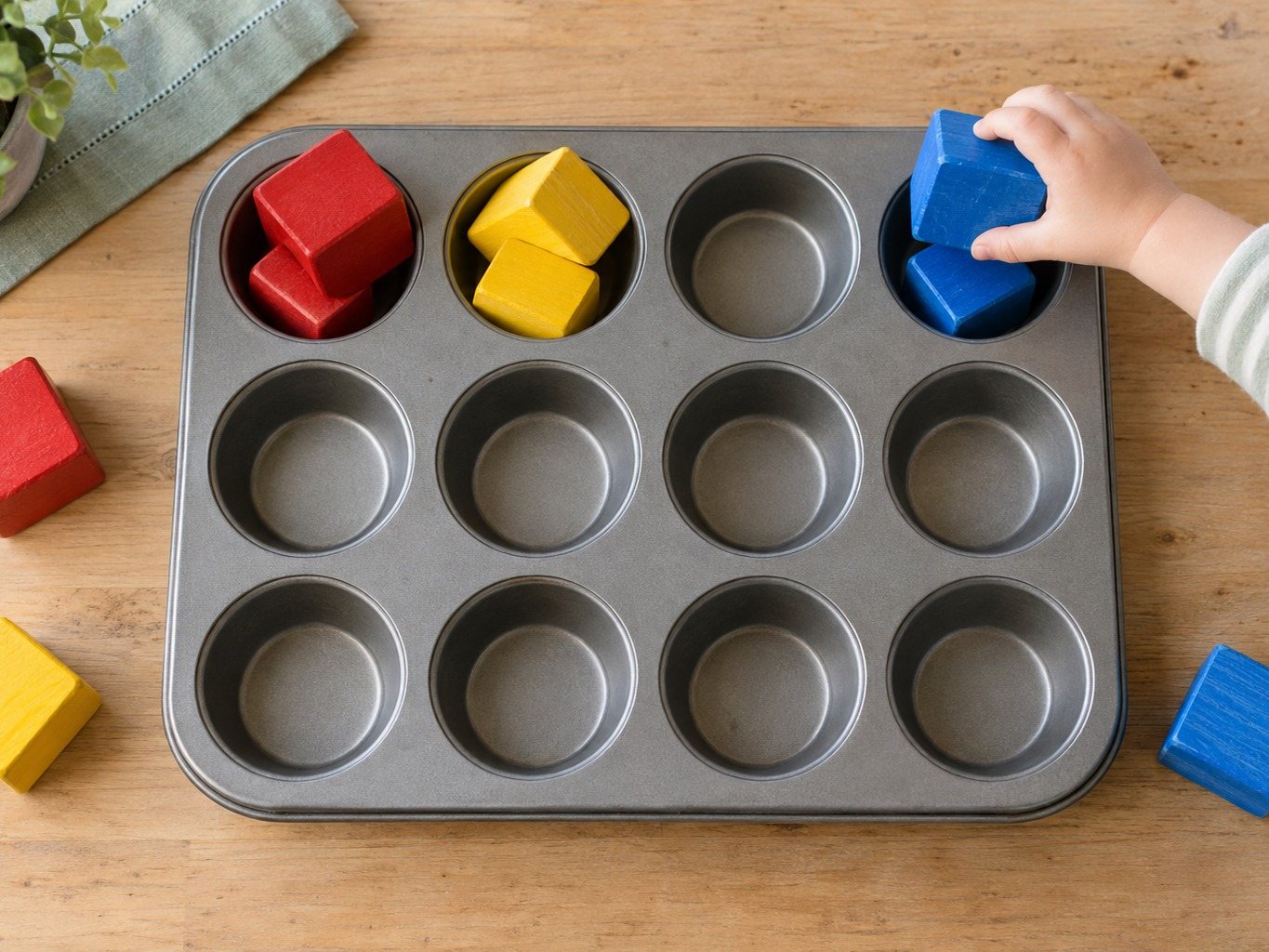
This is the quietest card in the set, and it’s a great one for a parent who needs a minute. Pick three or four colors of large blocks or big toys, drop a few in each muffin cup, and let your toddler sort them.
For a two-year-old, make it easier by offering just two colors. For a four-year-old, ask them to count each cup out loud. Safety note: Small pieces can be a choking hazard. Stay with your child and skip this one if they still put everything in their mouth.
Day 9: Cookie Cutter Stamps
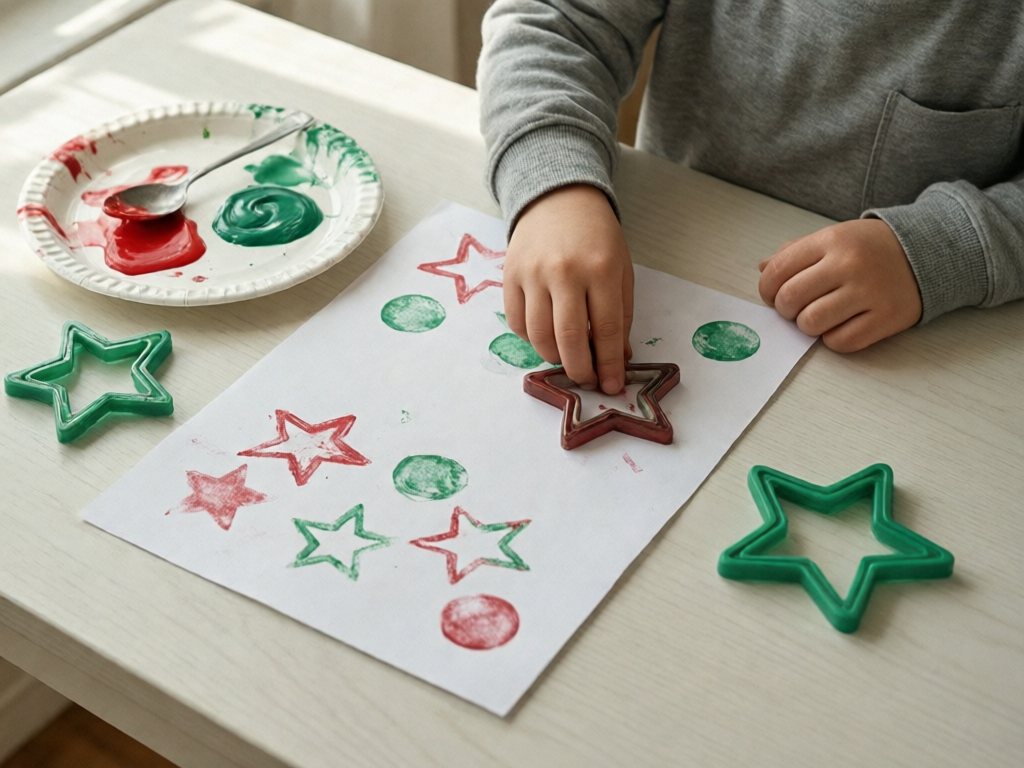
Put a tablespoon of washable paint on a paper plate. Press a cookie cutter into it, then onto paper. A star cutter makes surprisingly good ornaments.
Good to knowRealistic mess level: medium. Paint will end up on a sleeve, so put them in an old t-shirt before you start.
If you’re in a mess-free mood, swap this for crayon rubbing instead. We have a roundup of mess-free art activities for toddlers if you want more quiet options to rotate in.
Day 11: Ice Rescue

Fill a bowl with ice cubes and add a few large toy animals (bigger than a toilet-paper tube opening). Hand your toddler a cup of lukewarm water and a spoon. They “rescue” the animals by melting the ice.
This one is magic for kids who love water play. The cold ice feels interesting, the melting is a tiny science lesson, and the floor will get wet. Put a towel under the bowl and call it done.
Day 14: Cotton Ball Beard
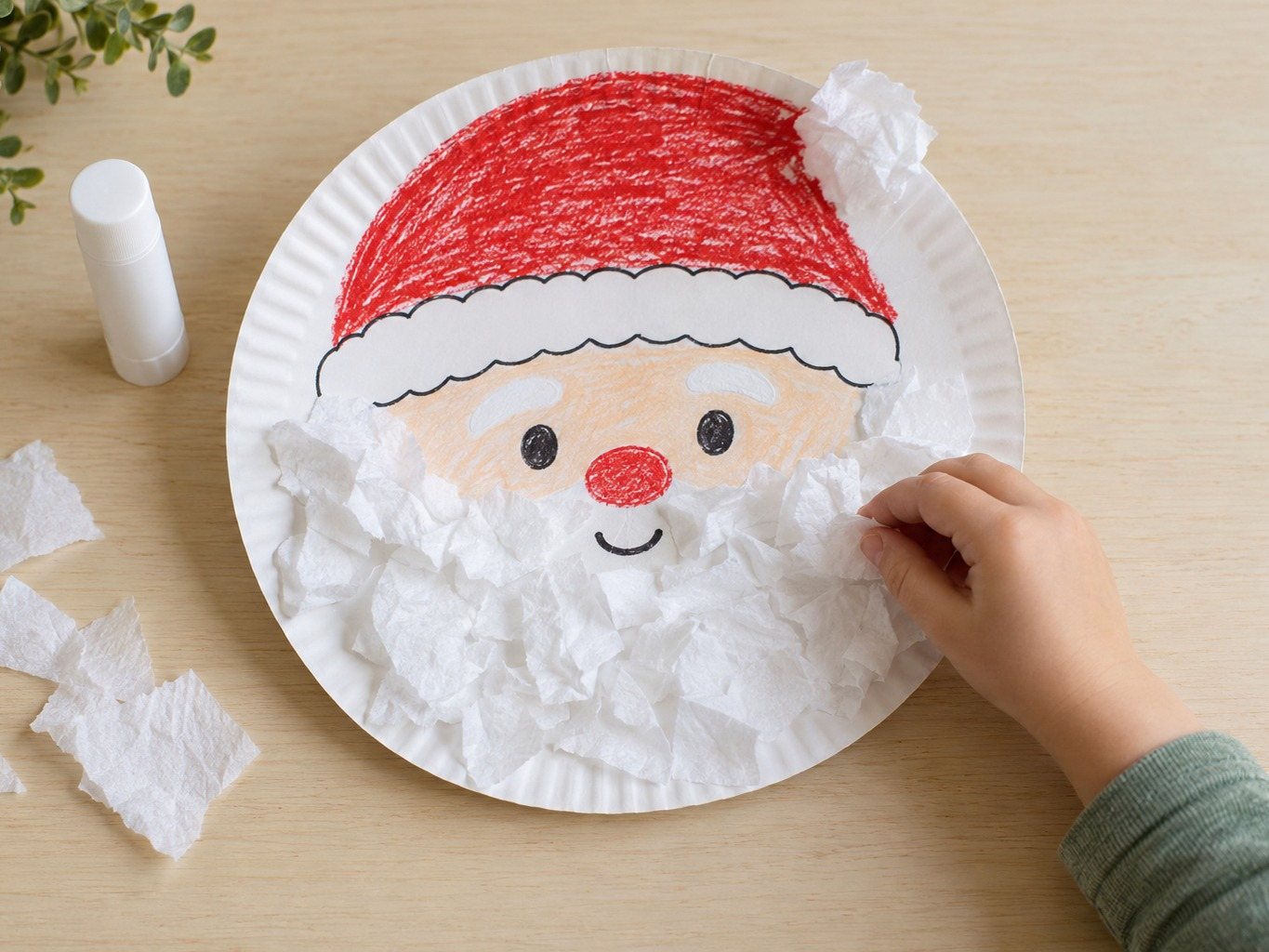
Draw a Santa face on a paper plate, or just a hat and a space for a beard. Give your toddler a glue stick or a dab of white school glue and let them place torn tissue paper on the “beard” area. Cotton balls work too if your child doesn’t mouth things.
For two-year-olds, expect most of the tissue to end up in one clump. That’s perfect. Stay close either way, since small bits get mouthed.
Day 16: Baking Soda Snow
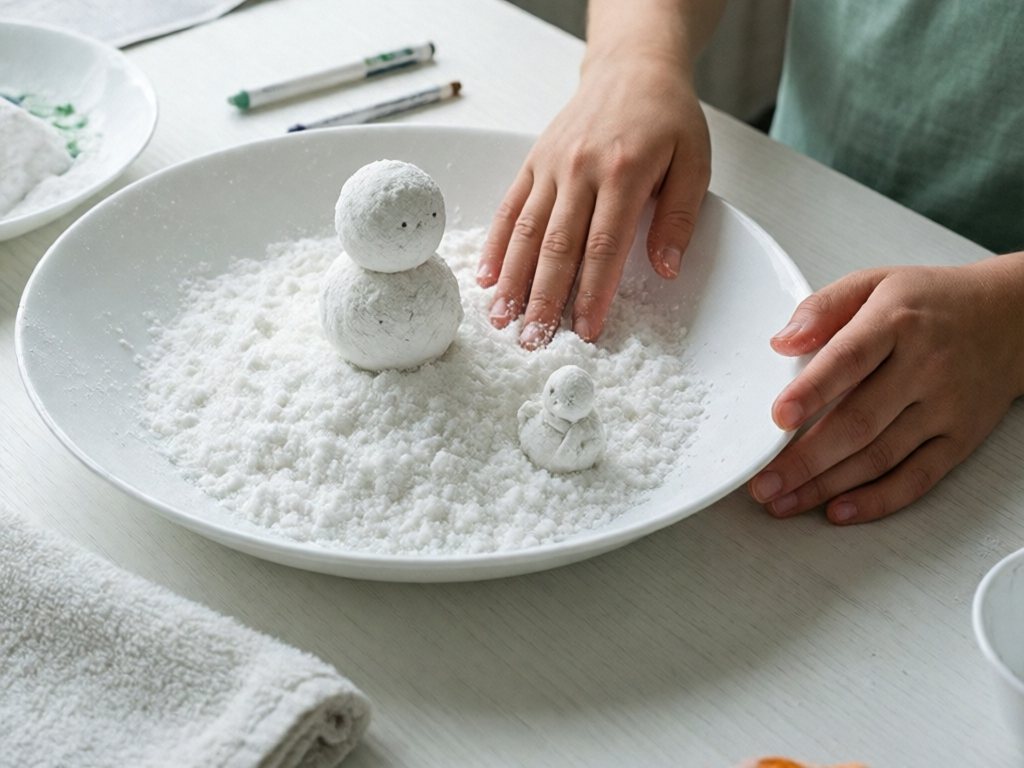
Mix about a cup of baking soda with a squirt of hair conditioner. Stir until it clumps and holds a shape when squeezed. It feels cold, smells nice, and works for tiny snowmen or snow piles.
Safety firstThis isn’t edible and conditioner is not food-safe. Stay with your child, and skip it for kids who mouth their hands (crumpled white paper makes a fine snow). Wash hands afterward, and rinse eyes with water if conditioner gets in them.
Day 19: Tape Tree on the Wall
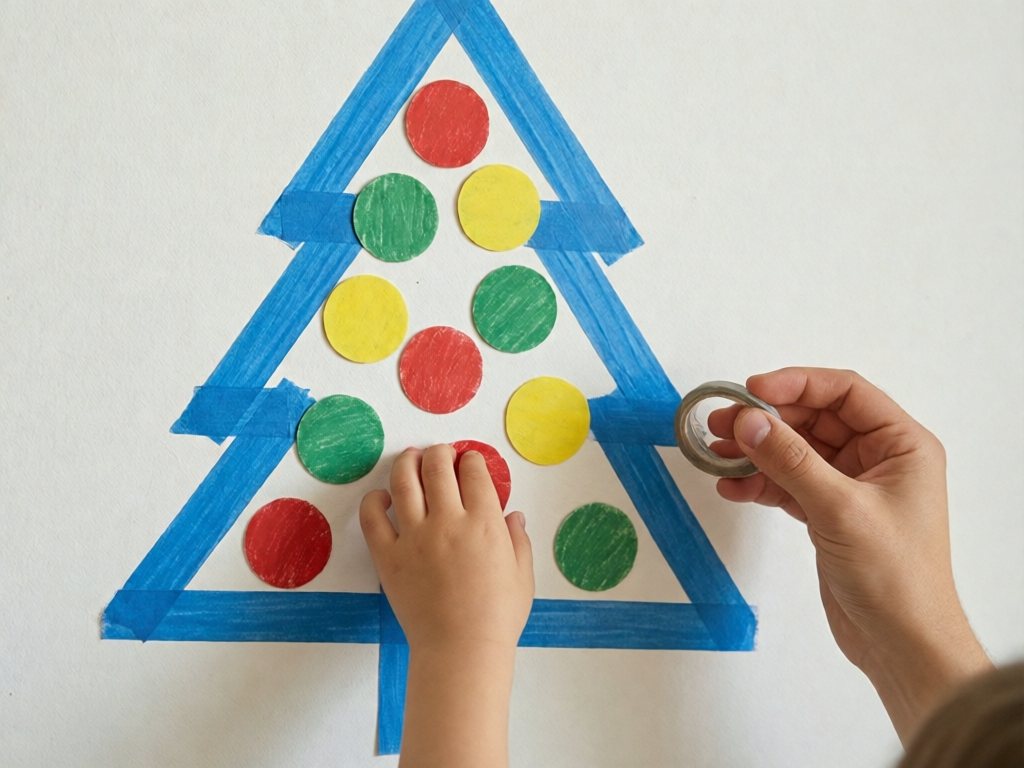
Use painter’s tape to outline a triangle tree on a wall or door. Then give your toddler paper circles (cut from scrap paper, colored with crayon) and a little loop of tape on the back of each. They stick the “ornaments” on the tree.
I like this one because it comes back. The tree stays up for the rest of December, and your kid can add to it every day. Painter’s tape peels off paint more gently than regular tape, but test a small corner first. You handle the tape loops and pick up any scraps, since toddlers mouth them.
Day 22: Hide the Elf
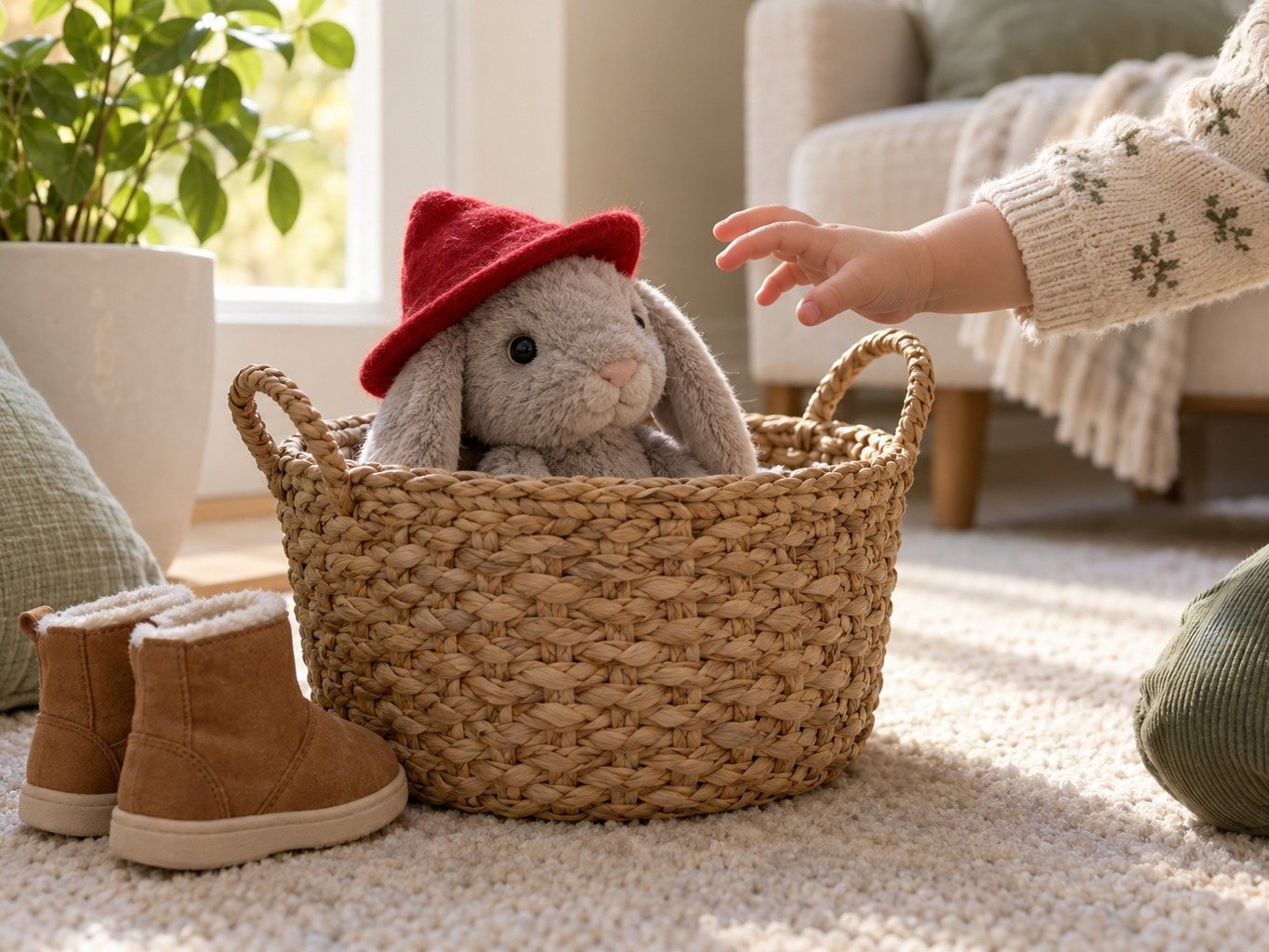
You don’t need a pricey elf. Any stuffed animal works. Hide it in plain sight at kid height (peeking out from a basket, sitting on a shoe). Count down together, then let your toddler find it.
For a three- or four-year-old, you can hide it higher. For a two-year-old, make it a game of “where did Elfie go?” with obvious hiding spots.
Day 23: Blanket Sleigh Ride
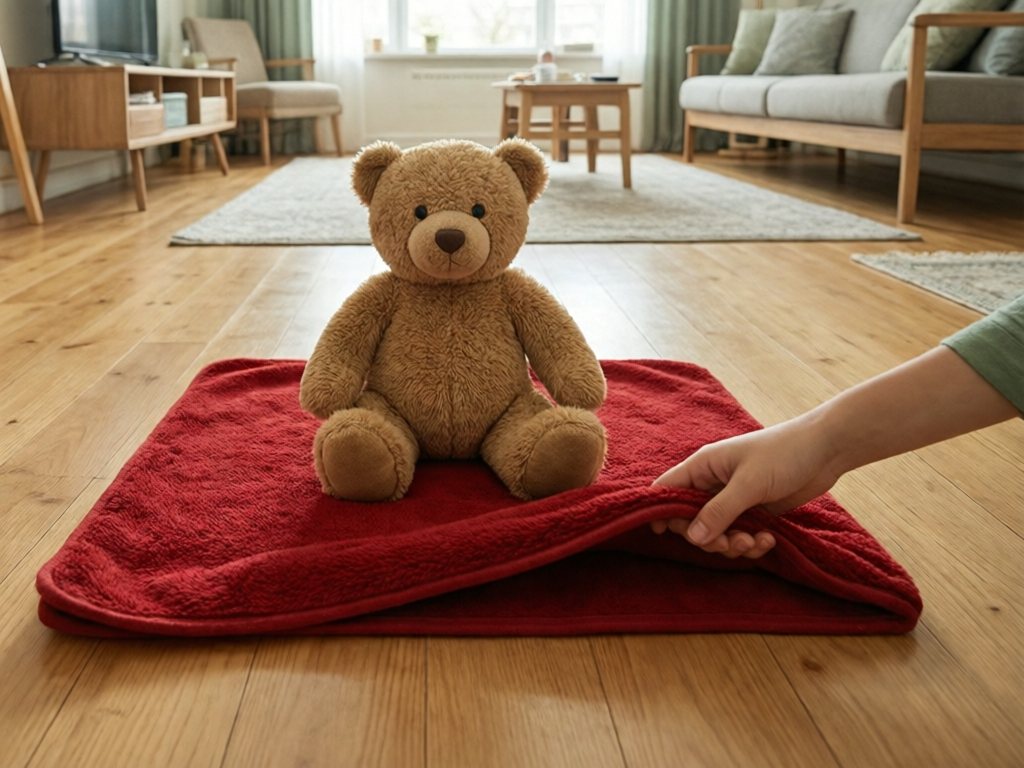
On a hard floor, sit your toddler on a blanket and pull it gently across the room. Slow, steady, and low to the ground. Add sound effects (“whoosh!”) and you’ve got a ride they will beg to repeat 40 times.
Safety firstOnly on smooth, flat floors. Keep your child seated, clear the path, stay away from stairs, and watch for corners and rugs that catch. Keep the speed low, skip socks on slippery floors if you’re the puller, and stop if they stand.
Ways to Display Your Countdown
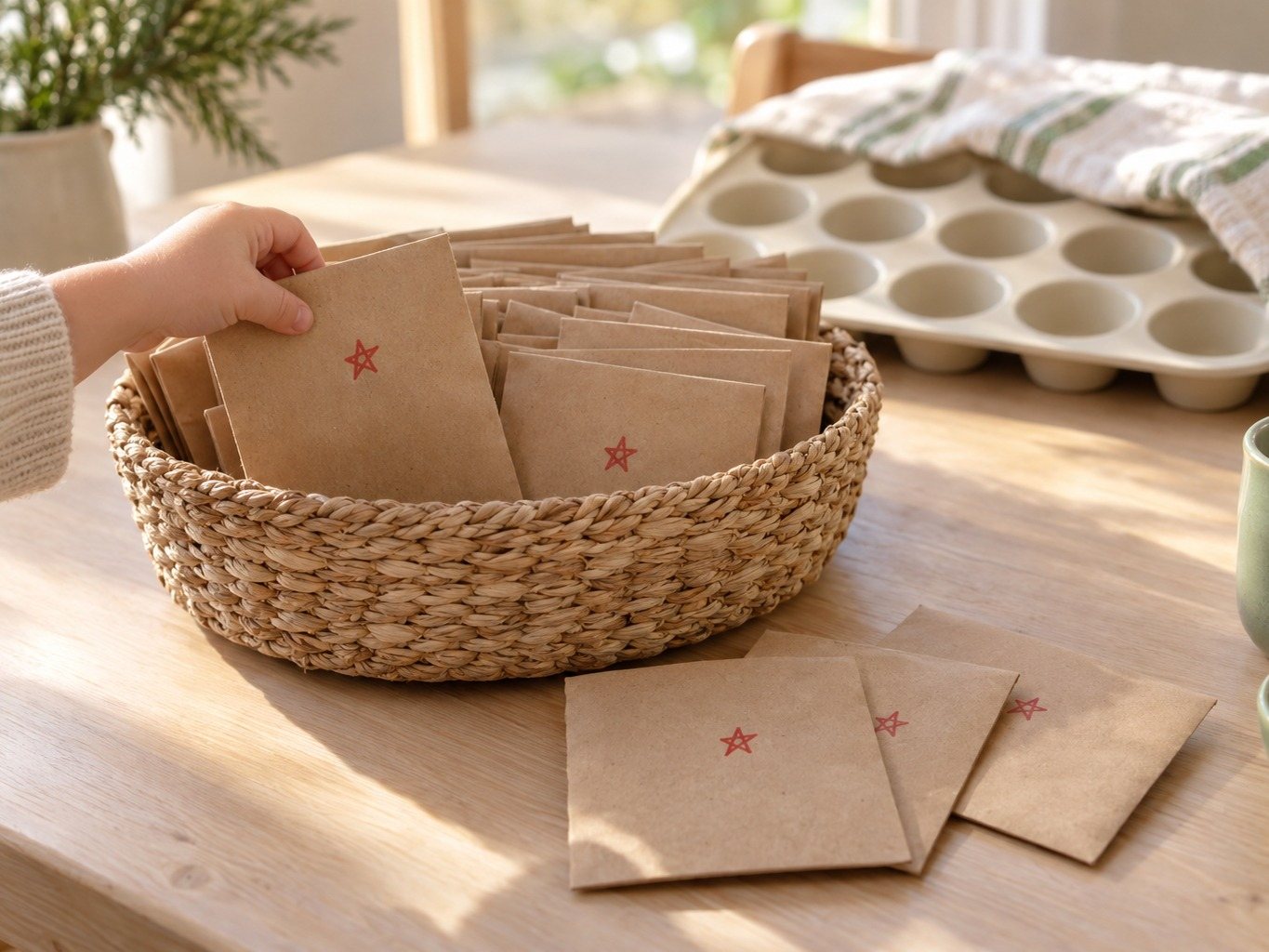
How you show the cards matters more than you’d think. A toddler who can see the countdown is more engaged than one who has to ask.
- High card garland: Clip each day’s card to a taut string high on a wall or above a door frame, well out of your toddler’s reach and nowhere near a crib or bed. Each morning you unclip the card and hand it down, and the used cards go in the memory box.
- Envelope basket: Number 24 envelopes and put them in a basket. Easy for kids who aren’t yet counting.
- Muffin tin calendar: Tuck a folded card in each cup of a 24-cup tin (or two 12-cup ones) and cover with a dish towel for surprise.
- Fridge checklist: For older toddlers, tape the table to the fridge and cross off each day. Four-year-olds love holding the marker.
- Wall tree: Stick each day’s card on a big paper tree like an ornament. By Christmas Eve, the tree is full.
Safety firstStrings and cords are a strangulation risk for toddlers. Hang any garland taut and high, never leave a long loose loop or dangling cord within reach, and let an adult take the cards down. Clothespins pinch fingers and are small enough to mouth, so keep them up there too. For a toddler-reachable option, use the envelope basket or muffin tin instead.
Adapting for Ages 2, 3, and 4
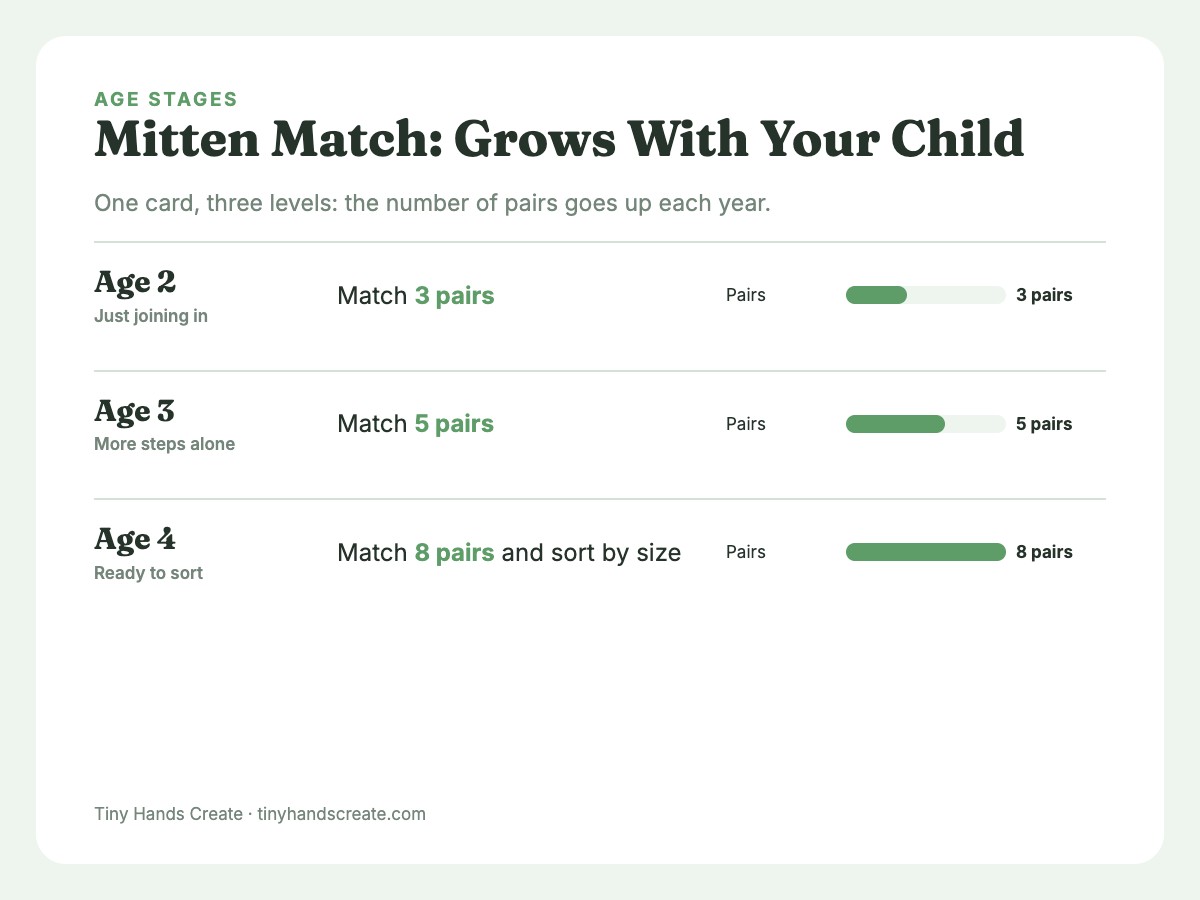
One card set, three age levels. Here’s how I’d adjust the same activity for each age.
| Activity | Age 2 | Age 3 | Age 4 |
|---|---|---|---|
| Sock Snowballs | Toss at a big box from close | Aim at a basket from farther | Count each toss, keep score |
| Muffin Tin Sort | Sort by 2 colors | Sort by 3-4 colors | Sort and count each cup |
| Cookie Cutter Stamps | Press and stamp freely | Choose a shape for each color | Make a pattern (star, circle, star) |
| Crayon Rubbing | Rub back and forth | Try different leaf shapes | Draw a tree trunk, then rub leaves on it |
| Paper Chain Start | Parent loops, child holds | Child places tape | Child makes a pattern of colors |
| Hide the Elf | Obvious hiding spots | Medium difficulty | Child hides it for you |
| Mitten Match | Match 3 pairs | Match 5 pairs | Match 8 pairs and sort by size |
For a two-year-old, the goal is participation and sensory fun, not completing a project. If they dump all the blocks in one cup, that’s a win.
For a three-year-old, add a sentence of narration: “You put the red ones here! Now the yellow ones!” This builds vocabulary without turning it into a lesson.
For a four-year-old, let them be the helper. They can read the picture on the card, gather the supplies, and even run the activity for a younger sibling.
This set isn’t for one-year-olds because of the small parts. If you have one in the house, our list of Christmas activities for 1 year olds has ideas made for that age.
What About the Mess? An Honest Look
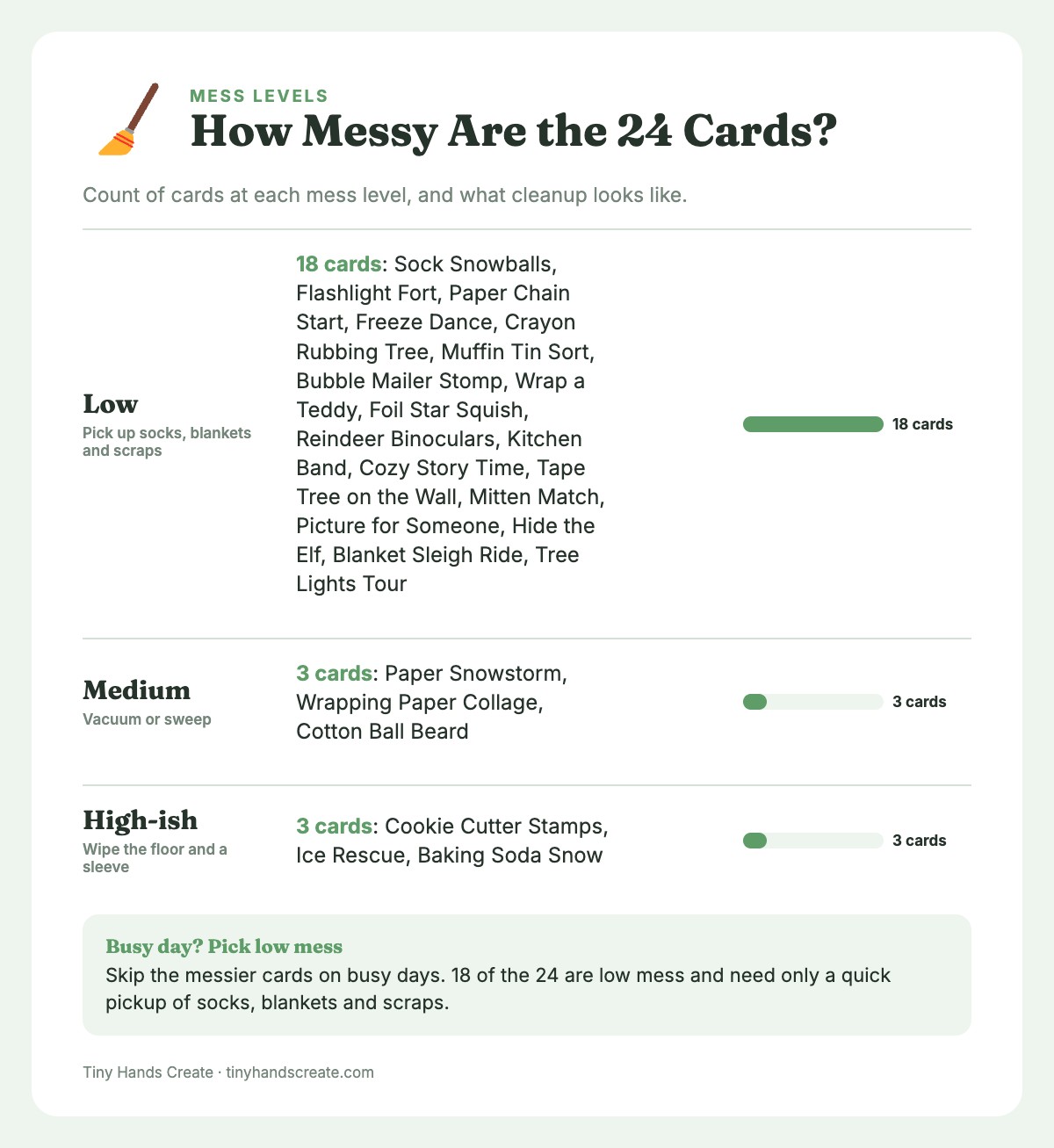
Some of these will leave a mark. Here’s how all 24 cards break down by mess level:
| Mess Level | Cards | Cleanup |
|---|---|---|
| Low | Sock Snowballs, Flashlight Fort, Paper Chain Start, Freeze Dance, Crayon Rubbing Tree, Muffin Tin Sort, Bubble Mailer Stomp, Wrap a Teddy, Foil Star Squish, Reindeer Binoculars, Kitchen Band, Cozy Story Time, Tape Tree on the Wall, Mitten Match, Picture for Someone, Hide the Elf, Blanket Sleigh Ride, Tree Lights Tour | Pick up socks, blankets and scraps |
| Medium | Paper Snowstorm, Wrapping Paper Collage, Cotton Ball Beard | Vacuum or sweep |
| High-ish | Cookie Cutter Stamps, Ice Rescue, Baking Soda Snow | Wipe the floor and a sleeve |
A few mess-management habits that save my sanity:
- Do messy cards at the kitchen table or on the floor with a sheet under them. Never on the couch. Never.
- Strip the toddler down to a diaper, undershirt, or old tee for the messy ones.
- Keep a damp towel within reach before you start.
- Say the cleanup plan out loud: “When the timer rings, we put the snow back in the bowl.” Toddlers who know the end is coming tend to melt down less.
- Skip the messy cards on busy days. The Calm cards exist for exactly that reason.
Safety Notes for Ages 2-4
I’ve flagged a few cards above, but here’s the short version:
- Small items: Cotton balls, paper bits, foil scraps, bubble wrap and small toys can all end up in a mouth. Stay close, and skip an activity if your toddler is in a mouthing phase.
- Water and ice: Never leave your child alone with a bowl of water, even a shallow one.
- Scissors and tape: You handle the scissors. Toddlers handle the sticking.
- Strings and clothespins: If you hang the cards on a garland, keep the string taut and well out of reach, away from cribs and beds, with no loose loops. Keep clothespins out of reach of mouthers, and you take the card down.
- Flashlights: Use plain handheld flashlights with screw-secured battery compartments, and skip anything with a button battery that can pop out. If you think a button battery may have been swallowed, go to emergency care immediately and call poison control. On Day 24, keep a light on and walk with your child.
- Fake snow and conditioner: Not for eating. Keep it away from eyes.
- Smooth floors for the sleigh ride: Go slowly and keep furniture out of the path.
If you’re not sure whether an activity is right for your child, trust your gut. You know them best.
What to Do When You Miss a Day (You Will)
This is the part most countdowns skip, and it’s the part that keeps you from feeling like you failed in the first week.
| Option | What to do | Best when |
|---|---|---|
| Double Card | Do two short cards the next day. Each takes about five minutes. | You missed one day and have energy |
| Catch-Up Basket | Keep missed cards in a “Later” envelope and pull one out on a weekend or quiet afternoon. | You miss a few days |
| Skip it | Seriously. Your toddler is unlikely to notice that Day 8 was missing. They’ll remember you on the floor on Day 9. | The week falls apart |
| Trade it | Swap a card that doesn’t fit the day (a messy card on a hectic Tuesday) with a Calm card later in the month. | The card type doesn’t match the mood |
If you’re worried about keeping the rhythm going, a visual routine can help. Our daily routine chart printable is a nice way to build “advent card time” into a spot in the day, like right after breakfast or right before nap.
Making It a Daily Ritual (Without the Pressure)
The cards work best when they’re part of a rhythm. Here are a few ways to anchor them:
- After breakfast: Kids are fed, calm, and the day is fresh.
- Before nap: A Calm card winds things down.
- Late afternoon: The “witching hour” is when toddlers fall apart. A Wiggly card can reset the mood.
- After dinner: Good for a flashlight or blanket-fort activity.
Pick a time that works for your house. If it’s after breakfast on weekdays and anytime on weekends, great.
A few small rituals make it feel special:
- Let the toddler “open” the card. They pull it out of the envelope or muffin cup, or unfold the one you hand down from the garland.
- Say the card name together. “Sock snowballs!” Repetition helps toddlers learn.
- Use the same song or phrase. A silly “Ta-da, it’s card time!” works.
- Cross it off or move it. A visual sign that the day is done helps them understand time.
If your child has a hard time with transitions, tie the card to something that already happens, like “after we brush teeth, we do today’s card.”
Mixing In Other Activities When You Want More
Some days your toddler will finish the card and say “more!” Here’s what I keep ready for those moments:
- A rainy-day or stuck-inside backup. Our list of boredom busters for kids has quick ideas that need almost nothing.
- A sensory bin, a second book or a dance break. For the bin, use large pom-poms, crumpled paper or big plastic lids with scoops, keep an adult within arm’s reach, and skip it for mouthers.
And if you’re hungry for a bigger craft project on a weekend, the card set pairs nicely with something like salt dough ornaments or a handprint craft. Just don’t turn the daily card into a two-hour production. The five-minute rule is what keeps this sustainable for 24 days.
Frequently Asked Questions
Is this a downloadable printable advent calendar?
Yes. Print the free 24-card set from the printable card on this page. Prefer to write your own? Copy the table above onto index cards, which takes about 15 minutes, and toddlers tend to love cards you made by hand.
What age is this advent calendar for?
It’s written for ages 2-4. Two-year-olds will join in with help, three-year-olds can do most steps themselves, and four-year-olds can run the activity and even lead it for a younger sibling. This set isn’t meant for one-year-olds because several cards use small parts, so try our list of Christmas activities for 1 year olds instead.
Do I need to buy anything?
No. Every card uses items most toddler homes already have: socks, a muffin tin, crayons, tape, paper, cotton balls, pots, spoons, and a flashlight. If you’re missing something, swap it. Torn tissue paper stands in for cotton balls, and a crumpled piece of paper stands in for foil.
What if my toddler loses interest after two minutes?
That’s normal and still counts. The card is meant to take about five minutes, but a toddler who engages for two minutes and walks away has done the activity. Don’t push to finish. Follow their interest, and if they want to keep going, let them.
Which cards are the lowest mess?
Sock Snowballs, Freeze Dance, Cozy Story Time, Mitten Match, Flashlight Fort, and Hide the Elf involve almost no cleanup. The messier ones are Cookie Cutter Stamps, Ice Rescue, and Baking Soda Snow. Save those for days when you have the energy, and do them at a table or on a sheet.
Can I do this with more than one child?
Yes. Give each child a role. The older child can pull the card, gather supplies, or hide the elf, while the younger one does the main activity. For safety, make sure small items stay away from any baby or mouthing toddler in the house.
Can I start late if it’s already December 10th?
Absolutely. Start with whatever card fits the day, then double up on weekends or skip any you don’t have time for. A toddler won’t mind that the countdown began on Day 10. They’ll just enjoy the activity.
Your Countdown, Your Pace
You don’t need a perfect advent calendar. You need five minutes, a few household items, and a kid who’s glad you’re on the floor with them. Some days that’s a sock snowball fight, and some days it’s a blanket, a flashlight, and one very long book. Both count.
Copy the cards, tuck them somewhere your toddler can see, and let December unfold one small, silly moment at a time. If a day falls apart, pull the next card tomorrow. The best part of the countdown isn’t Day 24. It’s the 24 little reasons to stop, sit down, and play.