How to Draw a Cezve Coffee Pot (Easy Step by Step)
Learn to draw a cezve coffee pot step-by-step using simple shapes. You'll discover how to break down this seemingly tricky object into a rounded bowl, flat oval, skinny handle, and steam for an easy drawing experience.
- Draw a cezve coffee pot by breaking it into simple shapes.
- Start your drawing with a rounded bowl and a flat oval for the pot's body.
- Add a skinny handle and a puffy cloud of steam to your cezve.
- Tackle one shape at a time to simplify the entire drawing process.
This post contains affiliate links. As an Amazon Associate I earn from qualifying purchases.
A cezve is a small pot with a handle that people use to make strong, frothy coffee. It looks tricky, but it is made from a few easy shapes: a rounded bowl, a flat oval, a skinny handle, and a puffy cloud of steam. Draw it one shape at a time and it will turn out great.
- Easy
- 10 minutes
- 8 steps
You need: paper, a pencil, an eraser, and crayons or markers for coloring.
Start drawing


In this article (7 sections)
How to draw a cezve coffee pot step by step
How to Draw a Cezve Coffee Pot · tinyhandscreate.com
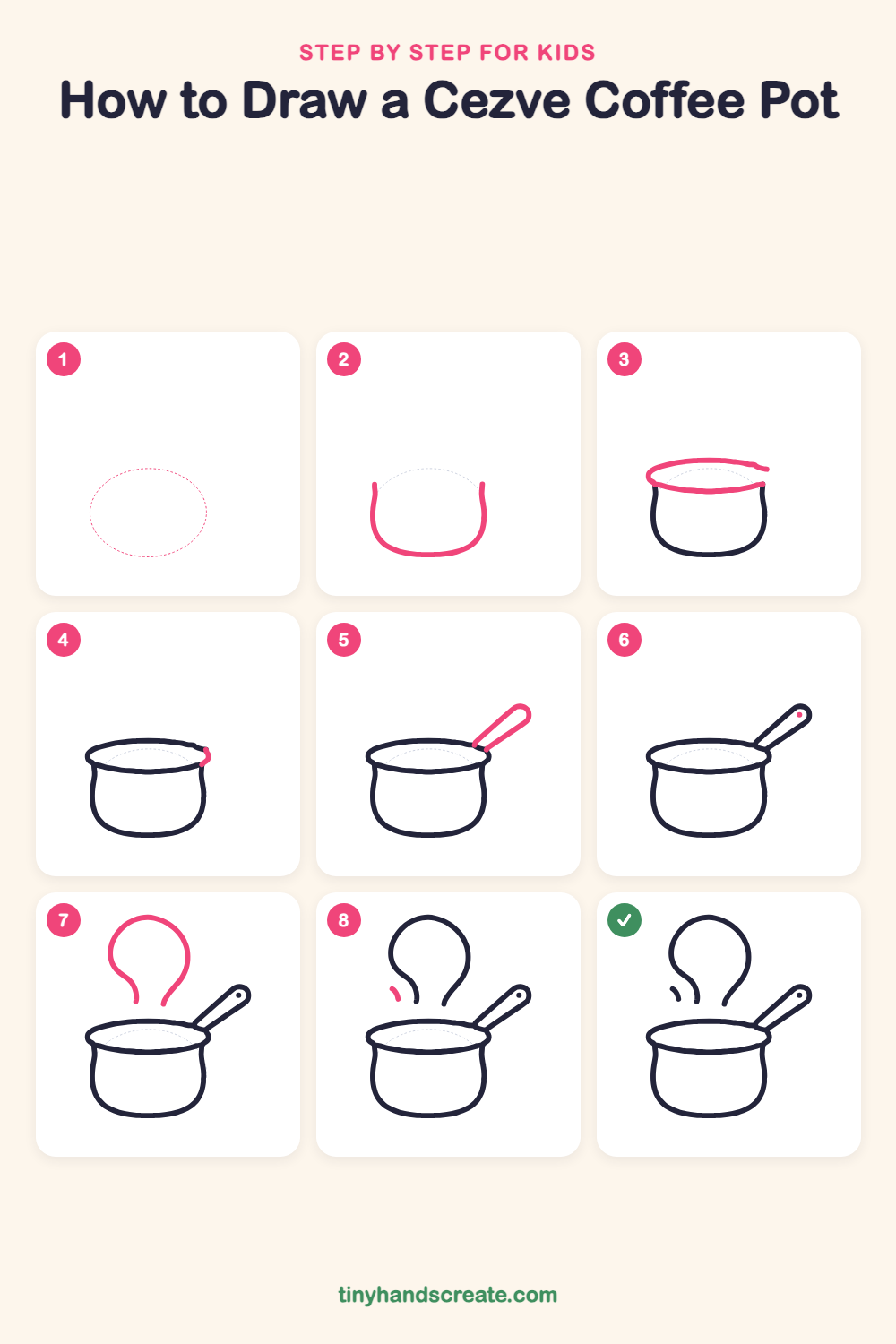
Step 1: Guide shapes
Lightly sketch this oval. It only shows where the big parts go, so press softly. You will erase it at the end.
Step 2: The round pot body
Start at the top left and draw a line that curves down, around a smooth round bottom, and back up on the right. Leave the top open, like a bowl.
Step 3: The pot opening
Across the open top, draw a wide, flat oval. Let the bottom edge of the oval land on the two top ends of the bowl.
Step 4: The pouring lip
At the right end of the oval, add a tiny curved line that sticks out a little. This is the small lip where coffee pours out.
Step 5: The handle
Draw two short, straight lines that start at the right edge of the pot and slant up and to the right. Join them at the top with a rounded end, like a skinny stick.
Step 6: The hanging hole
Near the rounded tip of the handle, add a small dot. It is the hole you could use to hang the pot on a hook.
Step 7: The big steam cloud
Above the pot, start with a wavy line that curls up and around into a big balloon shape. Leave a gap at the bottom so both ends point back down toward the pot, like warm steam rising.
Step 8: The little steam curl
To the left of the big cloud, draw one short curved line. It is a small wisp of steam floating away.
All done!
Erase the guide shapes, go over your lines, then color it in.
Finished your cezve coffee pot? Keep the pencils out and learn how to draw a rocket or how to draw a shooting star next.
Tips for drawing a cezve coffee pot
- Draw the oval opening wide and flat, so it looks like you are peeking down into the pot from just above.
- Keep the two handle lines about the same distance apart all the way along, so the handle does not turn into a triangle.
- Draw the steam with a slow, flowing line, and let it wobble a little. Wobbly steam looks more like real steam.
Free cezve coffee pot coloring page
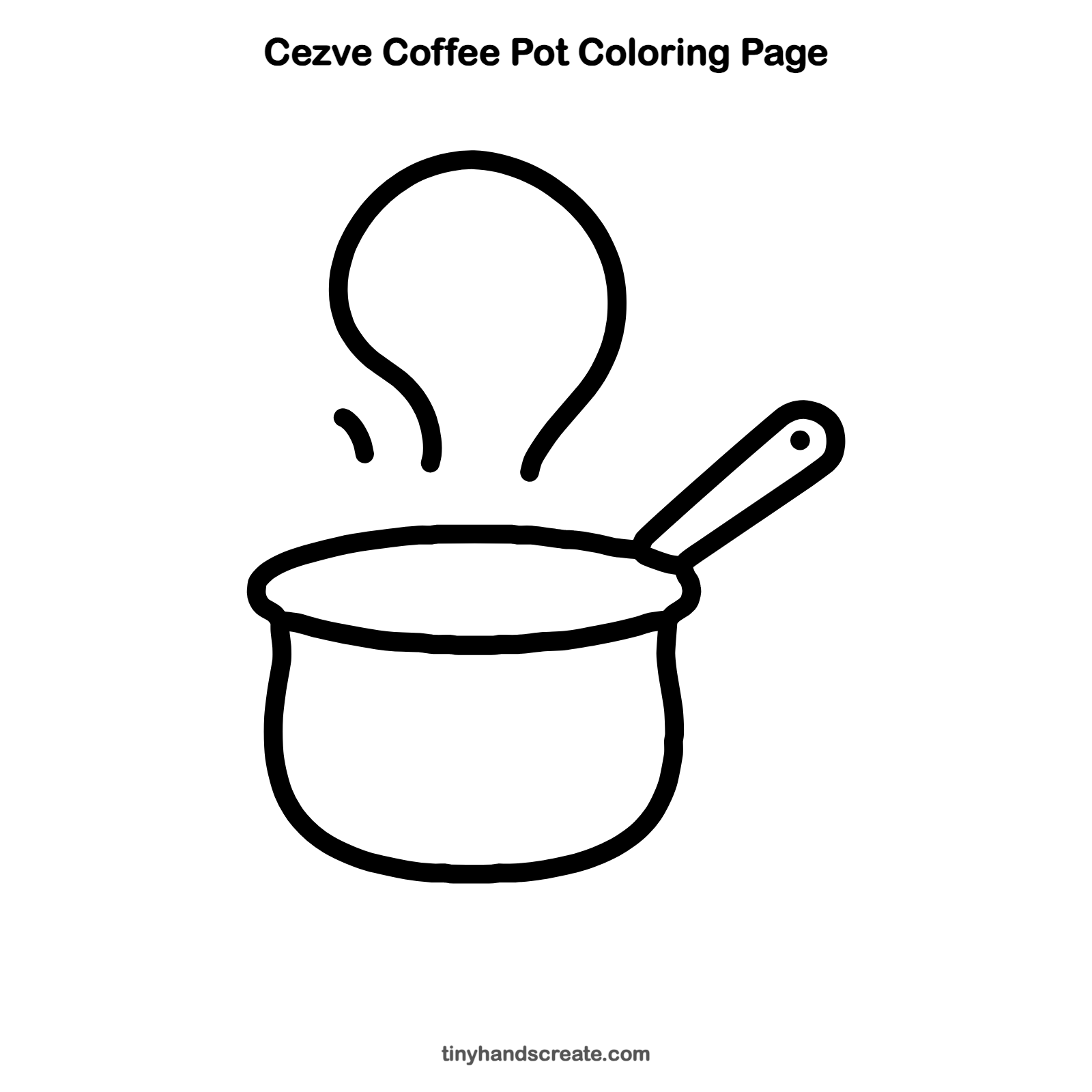
Want to go straight to coloring? Open this cezve coffee pot coloring page at full size and print it. It is the same drawing you just learned, with clean lines ready for crayons or markers.
How to color your cezve coffee pot drawing
Try copper orange and warm brown for the pot, with a darker brown handle. For a creative twist, color the steam in soft rainbow stripes, as if the coffee smells like magic.
Cezve coffee pot fun fact for kids
A cezve, also called an ibrik, is traditionally made of copper or brass. Coffee is heated slowly in it until a thick foam rises to the top.
Questions about drawing a cezve coffee pot
What shapes do I need to draw a cezve?
You need a rounded bowl for the body, a flat oval for the top, and a skinny stick shape with a round end for the handle. The steam is a big balloon-like cloud with a little curl beside it.
How do I make my cezve look more real?
Add the tiny pouring lip at the edge of the oval and a small hole near the tip of the handle. Curvy steam rising above it makes the coffee look hot.
What is a cezve used for?
A cezve is a small pot used to brew coffee on a stove. It is popular in Turkey and many nearby countries.