Seed Bombs and Garden Crafts: 12 Spring STEM Projects That Grow
Discover 12 spring garden STEM projects for kids aged 3-10, starting with an easy seed bomb recipe. You'll learn how to make seed bombs and other crafts that teach observation and patience through growing living plants.
- Follow a simple recipe to create your own seed bombs with kids.
- Engage children aged 3-10 in STEM through living plant projects.
- Prioritize safety by adjusting seed bomb size for kids under 4.
- Understand how garden crafts teach observation, waiting, and adjustment.
This post contains affiliate links. As an Amazon Associate I earn from qualifying purchases.
My seven-year-old dropped a seed bomb into a driveway crack last spring, then watered that crack every day for two weeks. One Tuesday she ran into the kitchen yelling, “MOM, IT WORKED. THERE’S A FLOWER IN THE DRIVEWAY.”
This post has 12 spring garden STEM projects for ages 3-10, starting with a seed bomb recipe. Each one lists materials, steps and a line you can say to your child. There’s a setup guide for a windowsill, balcony or yard, plus an FAQ. New to growing things? Start with our growing plants with kids guide.
Safety firstChildren under 4 need constant adult supervision. Seeds, pebbles, soil, paint and dried seed bombs are all choking or mouthing hazards. At age 3, an adult handles the seeds and small rocks, and the child does the pressing, pouring and watering. Sealant spray is an adult job at every age. Use untreated seeds and fresh bagged compost or potting mix. Never eat seeds or soil. Cover cuts with gloves or bandages, and wash hands with soap after every project.
In this article (8 sections)
Why Garden Crafts Work for STEM
Baking soda volcanoes are fine. Garden crafts add something they can’t: a living plant takes its time, and kids can’t fully control it. A seed bomb does nothing visible for days, and a sunflower takes a whole season. Checking every morning is how kids practice observing, waiting and adjusting.
These projects are crafts too. Painting markers and decorating planters gives kids something to do while nothing is growing yet. If yours love that side, try our nature crafts for kids next.
Seed Bomb Recipe for Kids
Seed bombs come first because they’re the most hands-on project here and the easiest to share. A batch costs very little and takes about 20 minutes, plus drying time.
What Is a Seed Bomb?
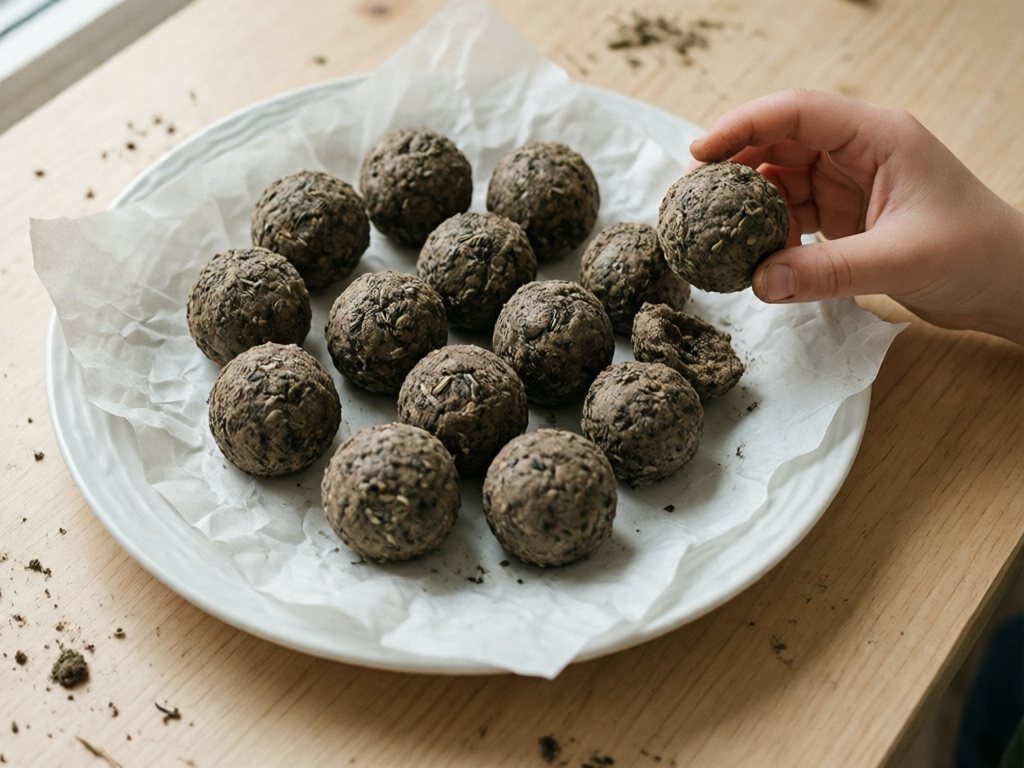
A seed bomb is a compact ball of clay, compost, and seeds. You make it, let it dry, and then toss it onto soil (or into a bare patch of yard, a planter, or yes, a driveway crack). When it rains, the clay softens and breaks apart, the compost feeds the soil, and some of the seeds germinate. It’s basically a self-contained garden delivery system.
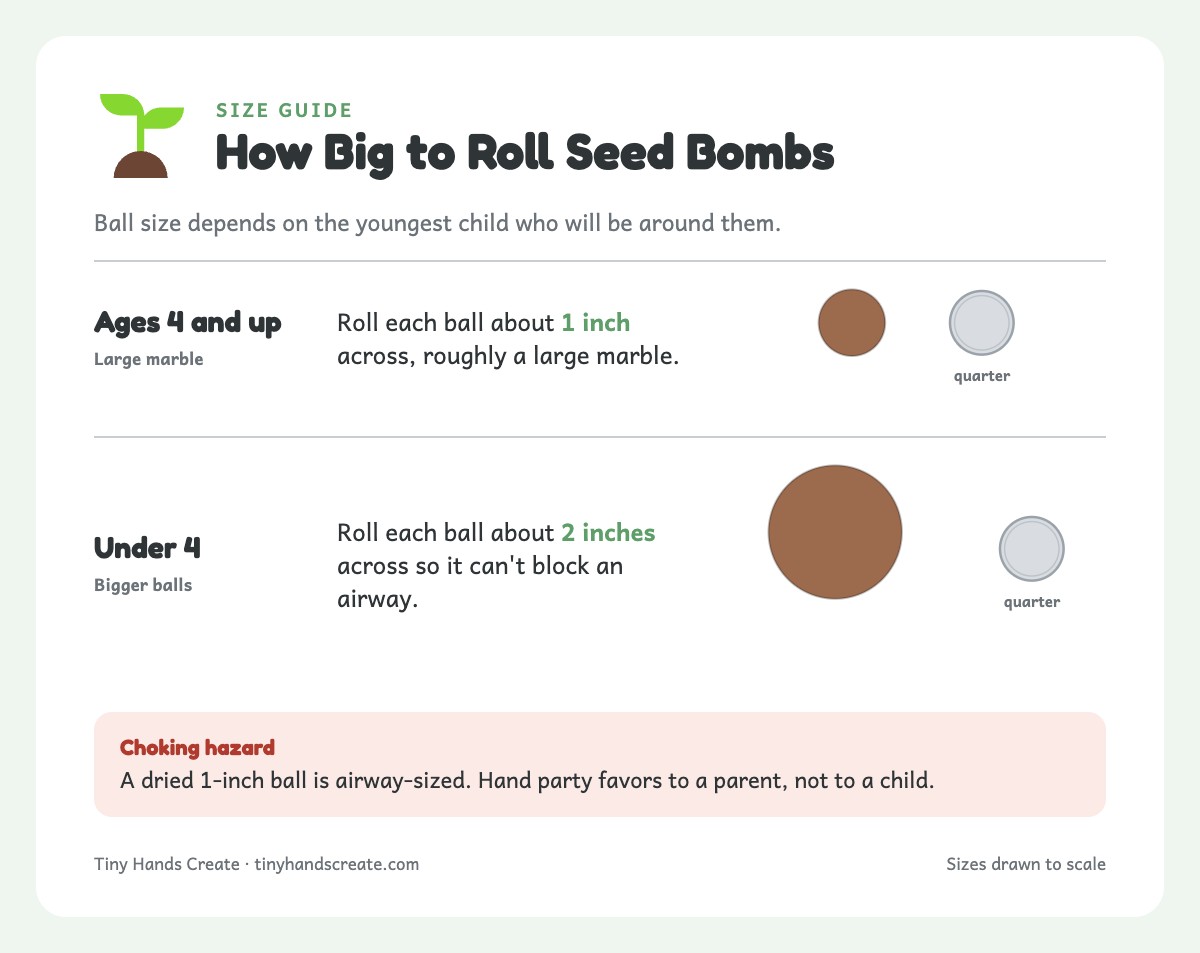
Safety firstUse fresh bagged compost or potting mix, not soil from spots where pets go. Dry clay powder is dusty, so an adult measures it outdoors or dampens it first, and nobody breathes the dust. Keep the bag of powder away from small children. Wear gloves if anyone has cuts. Seeds and seed bombs are never for eating. A dried 1-inch ball is airway-sized, so make bigger balls (about 2 inches) for any child under 4. Wash hands with soap when you finish.
The Basic Recipe
This recipe makes roughly 8-12 seed bombs, depending on size.
Materials:
- 1 cup powdered pottery or terracotta clay. Skip oil-based modeling clay and air-dry craft clay, which won’t break down in rain.
- 1/2 cup fresh bagged compost or potting mix. That’s about 2 parts clay to 1 part compost.
- 1-3 tablespoons untreated seeds. Follow the packet’s sowing density if it lists one.
- Water (small amount)
- Bowl for mixing
- Tray or plate lined with wax paper, for drying.
Steps:
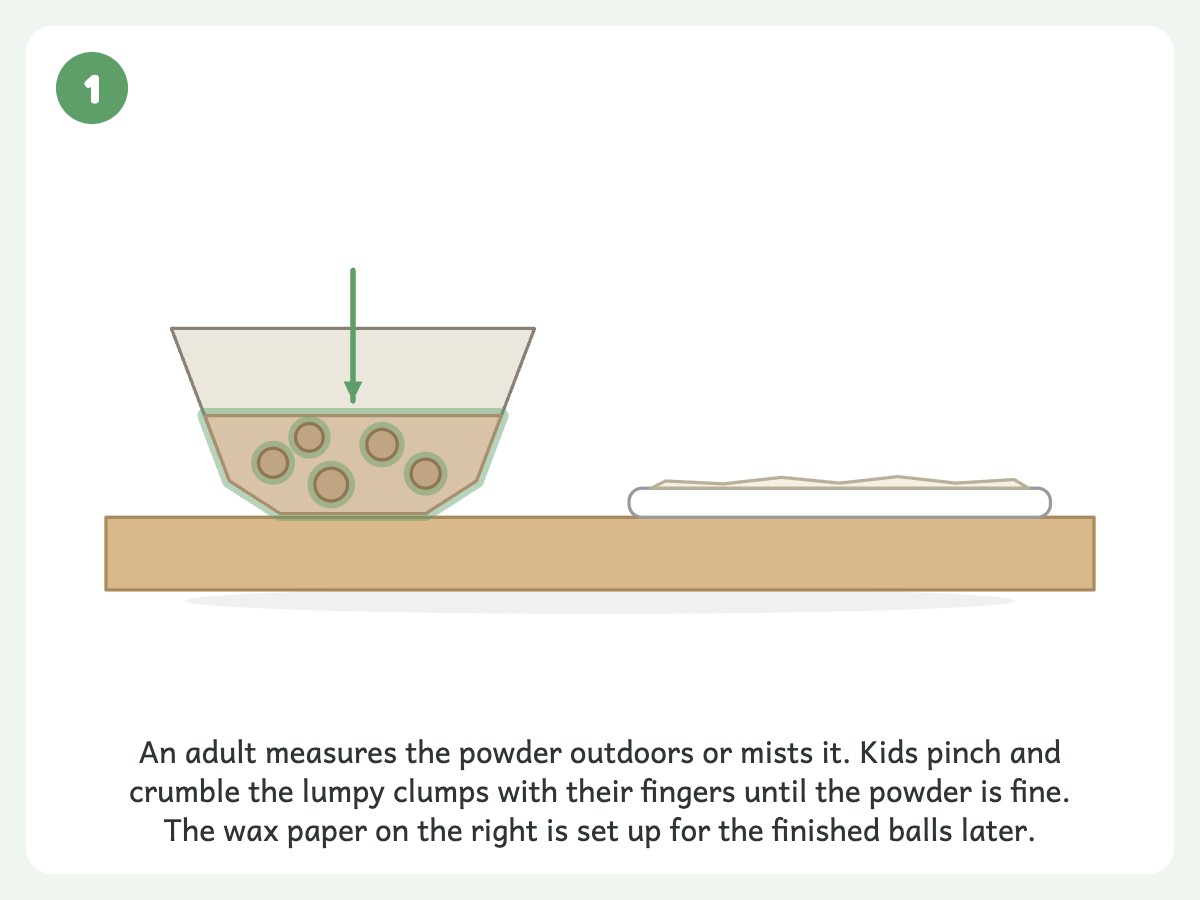
- Measure the clay. An adult measures the powder into a bowl outdoors, or mists it lightly so it doesn’t puff up. Kids then break up any lumps with their fingers, which is good hand-strength work.
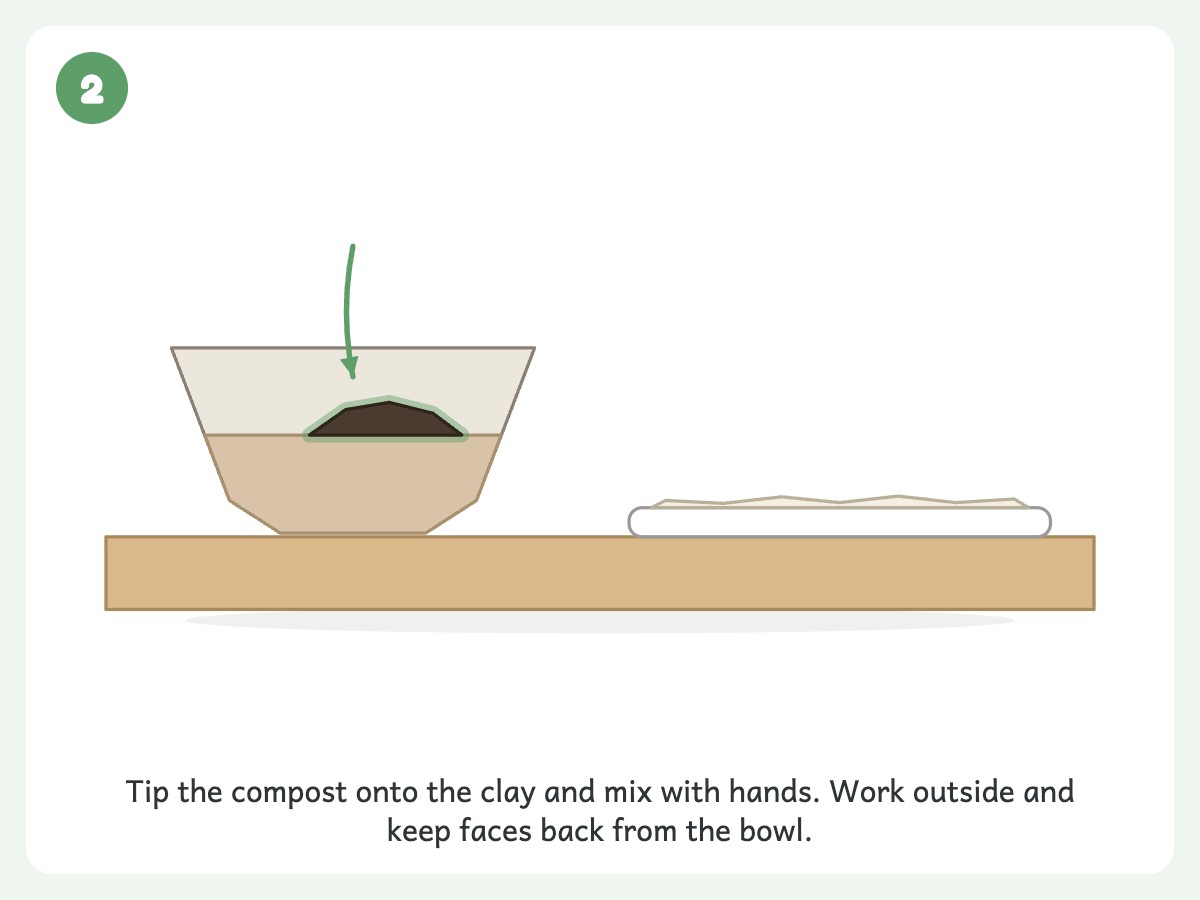
- Add the compost. Tip in the compost or potting mix and mix with hands until evenly combined. Work outside or over a tray, and keep faces back from the bowl.
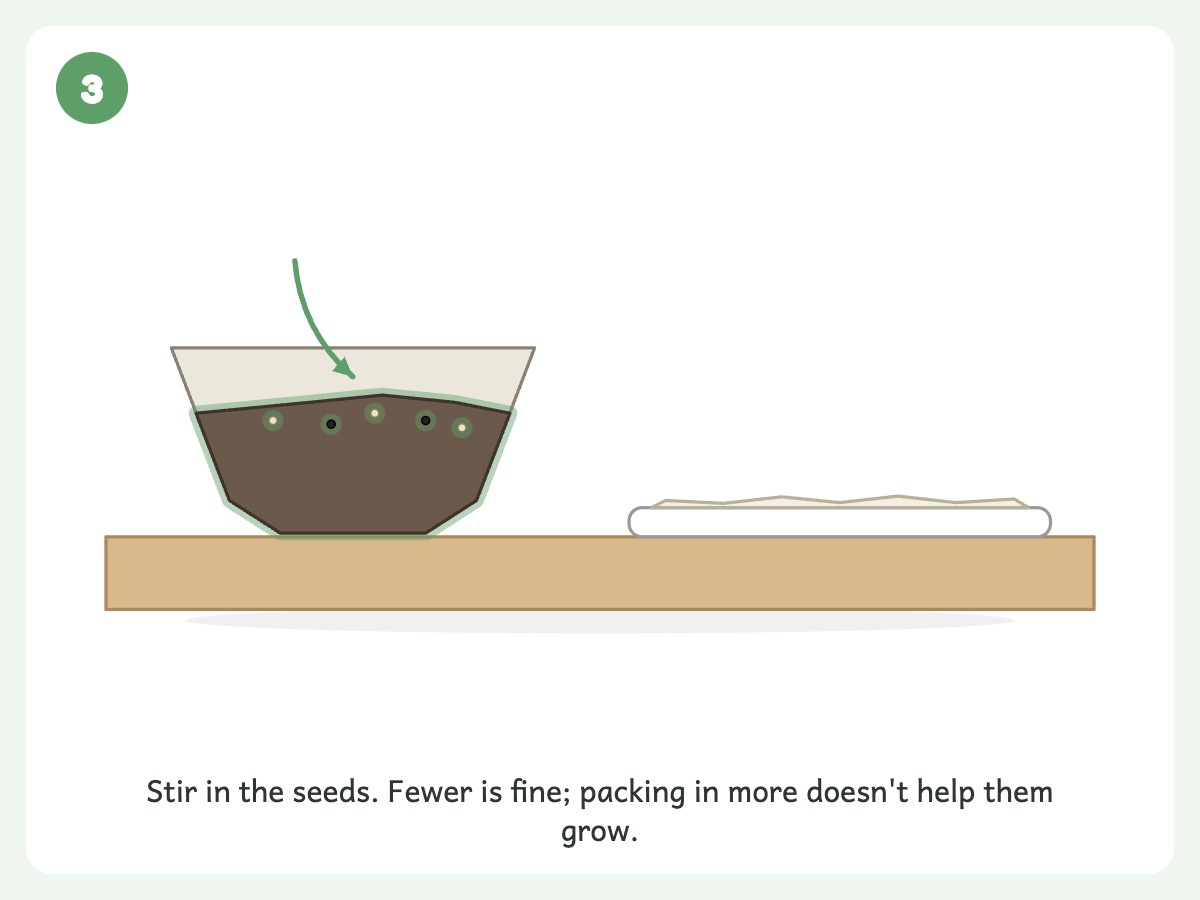
- Stir in the seeds. Fewer seeds is fine; packing in more doesn’t help them grow.
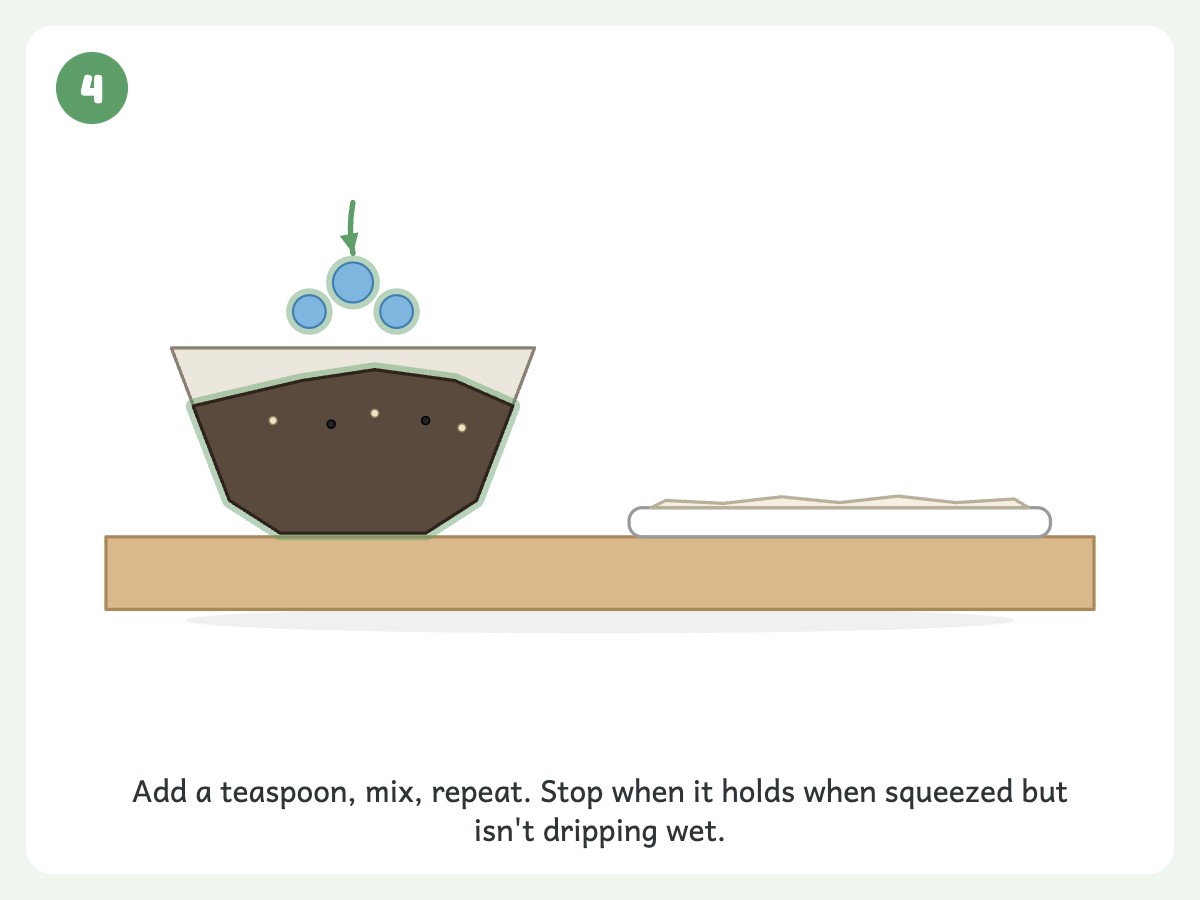
- Add water slowly. Add a teaspoon at a time, mixing after each one. Stop when the mixture holds together when squeezed but isn’t dripping wet. Think Play-Doh consistency.
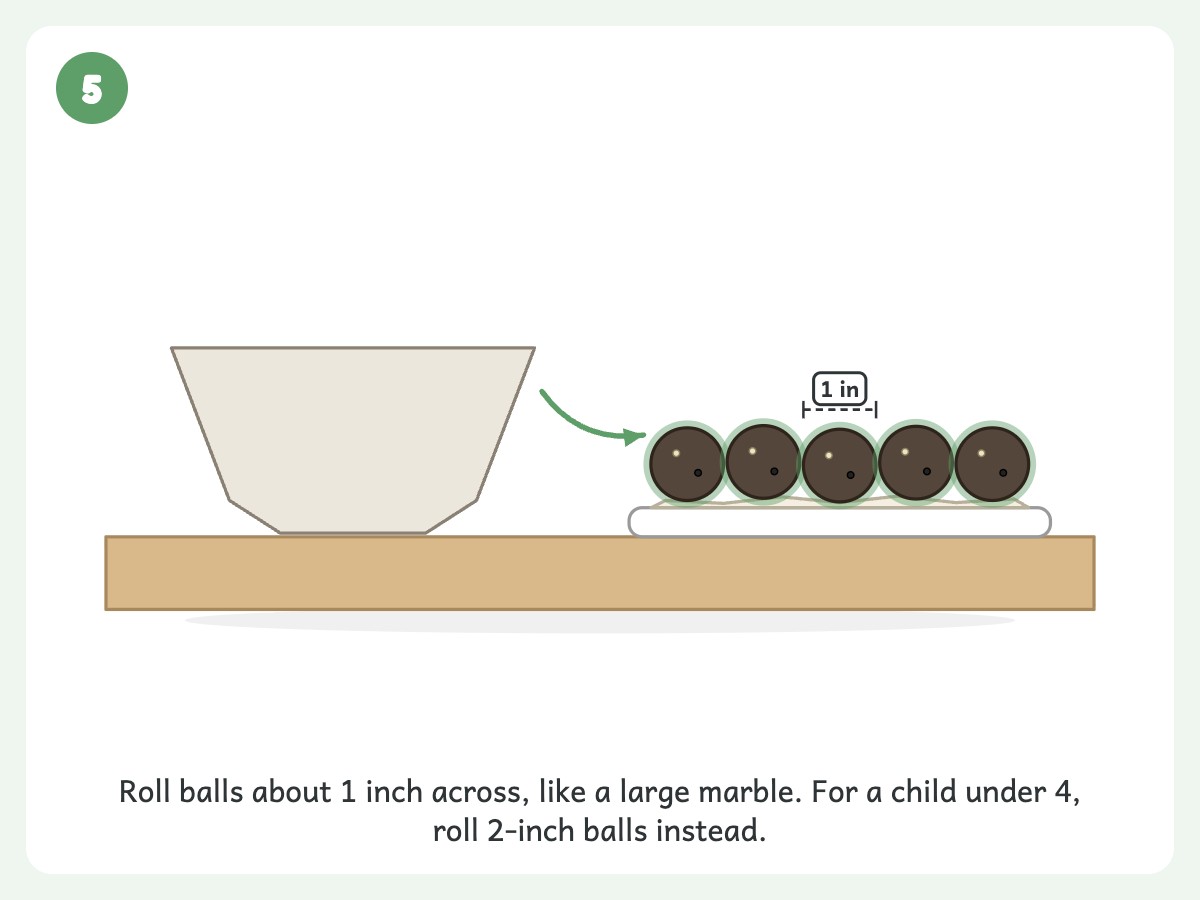
- Roll the balls. Make them about 1 inch across, roughly a large marble. For any child under 4, roll them about 2 inches across instead.
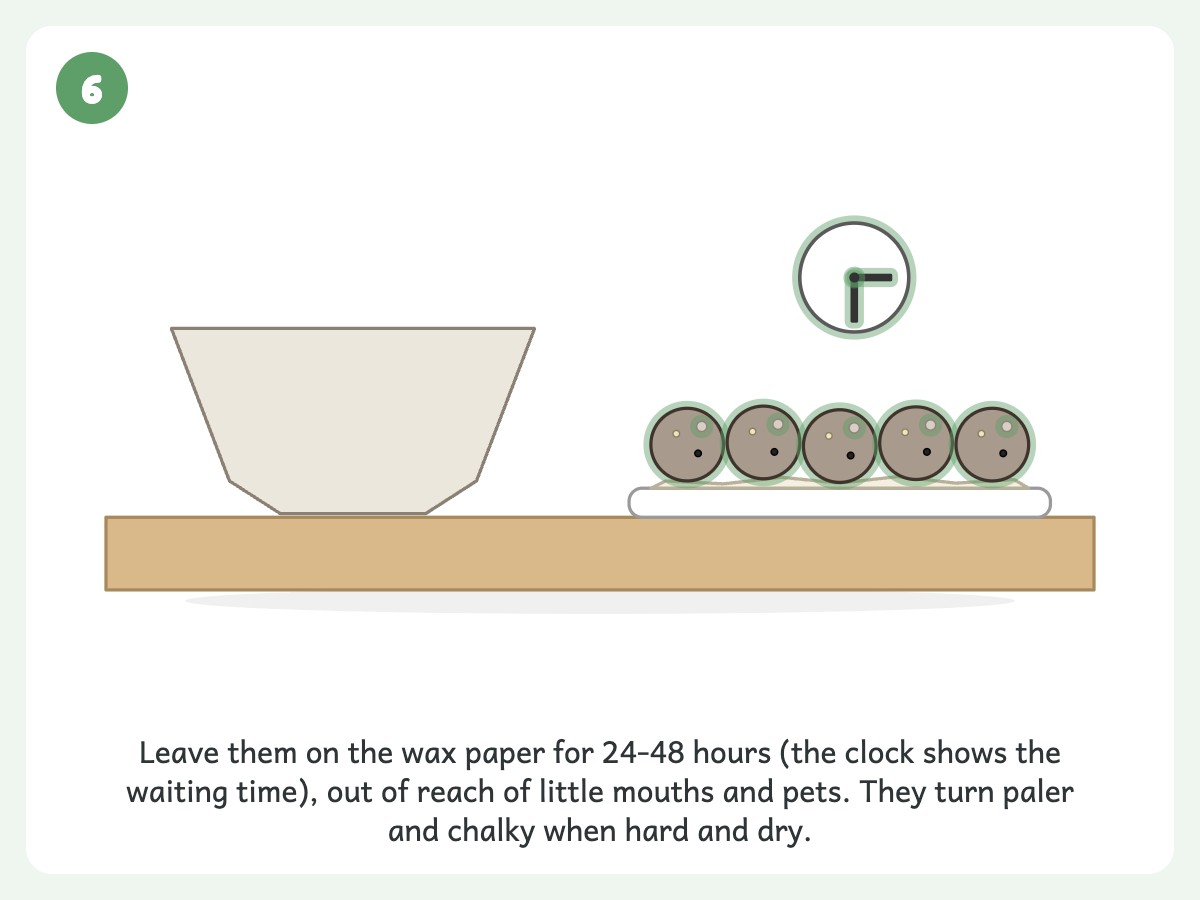
- Dry for 24-48 hours. Set them on the wax paper, out of reach of little mouths and pets.
- Toss, plant or gift. Set each one on bare soil and water it in.
Only toss seed bombs where you have permission, such as your own yard or a planter. Skip parks, nature reserves and neighbors’ yards. Plant in spring after the last frost or in early fall. Water lightly every 1-2 days for two weeks, and expect first sprouts in 1-4 weeks.
The science behind it: The clay helps protect seeds from some birds and keeps them from washing away in rain. The compost provides nutrients so the seeds have a head start when they germinate. It’s agricultural engineering on a tiny scale.
Variation 1: Wildflower Seed Bombs
Best for: Bare patches of your own yard, containers, or spaces where you have permission to plant.
Seeds to use: Pre-mixed wildflower blends made for your region. Choose native mixes that aren’t invasive where you live, since some wildflower species spread aggressively. Wildflower seeds and seed bombs are never for eating. Common inclusions: black-eyed Susans, cosmos, zinnias, coneflowers, and clover.
Why kids love it: Wildflowers are fairly forgiving. Even if the seed bomb lands in imperfect conditions, a few sprouts may still come up. That success rate matters when you’re seven.
Variation 2: Herb Seed Bombs
Best for: Kitchen windowsill planters, container gardens, gifts for grandparents.
Seeds to use: Untreated, edible-labeled basil, chives, cilantro, dill, or parsley. Check packets for treatment warnings, since some garden seeds are coated with fungicide. Most sprout in 7-14 days; parsley is slower at 14-28 days. The reward is that kids can eventually eat what they grew. Wash the leaves before anyone eats them.
Why kids love it: “I grew this basil and now it’s on our pizza” is a big sentence for a child.
Variation 3: Veggie Seed Bombs
Best for: Garden beds, large planters, school garden projects.
Seeds to use: Untreated cherry tomato, lettuce, radish, or snap pea seeds. Choose fast-germinators for maximum kid satisfaction.
Why kids love it: Growing food feels like a superpower. When your child picks a cherry tomato from a plant they started as a seed bomb, they understand something fundamental about where food comes from.
Crafty Mama tip: Make a batch of each variation and package them in small paper bags decorated by your kids. They work well as Earth Day gifts, party favors or teacher gifts kids can make. Label each bag with the seed type, simple planting instructions and the warning below.
Safety firstDried seed bombs are a choking hazard. Gift them only to families with no children under 4, or roll 2-inch balls for those homes. Hand party favors to a parent, not to a child. Write on every bag: “Not edible. Choking hazard. Keep away from small children and pets.”
Garden STEM Projects for Kids (12 Ideas)
Project Overview
The ages below assume a child doing most of the hands-on work with an adult nearby. A few jobs always belong to the adult:
- Cutting the bottles in projects 2 and 7.
- Measuring the dry clay in project 1.
- Spraying any sealant in project 6.
- Collecting the worms in project 8, and returning them afterward.
- Approving every flower and leaf picked in project 9.
Under 4, every project needs close adult help with the small parts, and the worm project is watch-only.
| # | Project | Best Age | Time to Make | Time to See Results | STEM Focus | Mess Level |
|---|---|---|---|---|---|---|
| 1 | Classic Seed Bombs | 3-10 | 20 min | 1-4 weeks | Biology, ecology | Medium |
| 2 | Mini Greenhouse from Plastic Bottles | 4-8 | 25 min | 1-2 weeks | Earth science, biology | Medium |
| 3 | Egg Carton Seed Starters | 3-7 | 15 min | 1-2 weeks | Biology, observation | Low |
| 4 | Nature Observation Journal | 5-10 | 30 min (ongoing) | Ongoing | Biology, writing, art | Low |
| 5 | Plant Observation Station | 4-9 | 20 min setup | Ongoing | Measurement, biology | Low |
| 6 | Painted Rock Plant Markers | 3-10 | 25 min | Immediate | Art, literacy, ecology | Medium |
| 7 | DIY Rain Gauge | 5-10 | 20 min | Ongoing | Measurement, weather | Low |
| 8 | Worm Composting Observation | 5-10 | 30 min setup | 2-4 weeks | Ecology, soil science | Medium |
| 9 | Pressed Flower Art | 4-10 | 15 min + 1 week drying | 1 week | Botany, art, patience | Low |
| 10 | Bean Maze in a Jar | 5-10 | 20 min | 1-2 weeks | Phototropism, biology | Low |
| 11 | Grow a Pizza Garden | 4-10 | 45 min | 6-10 weeks | Biology, nutrition, math | Medium |
| 12 | Sunflower Height Tracker | 3-10 | 15 min + ongoing | Full season | Measurement, data, biology | Low |
1. Classic Seed Bombs
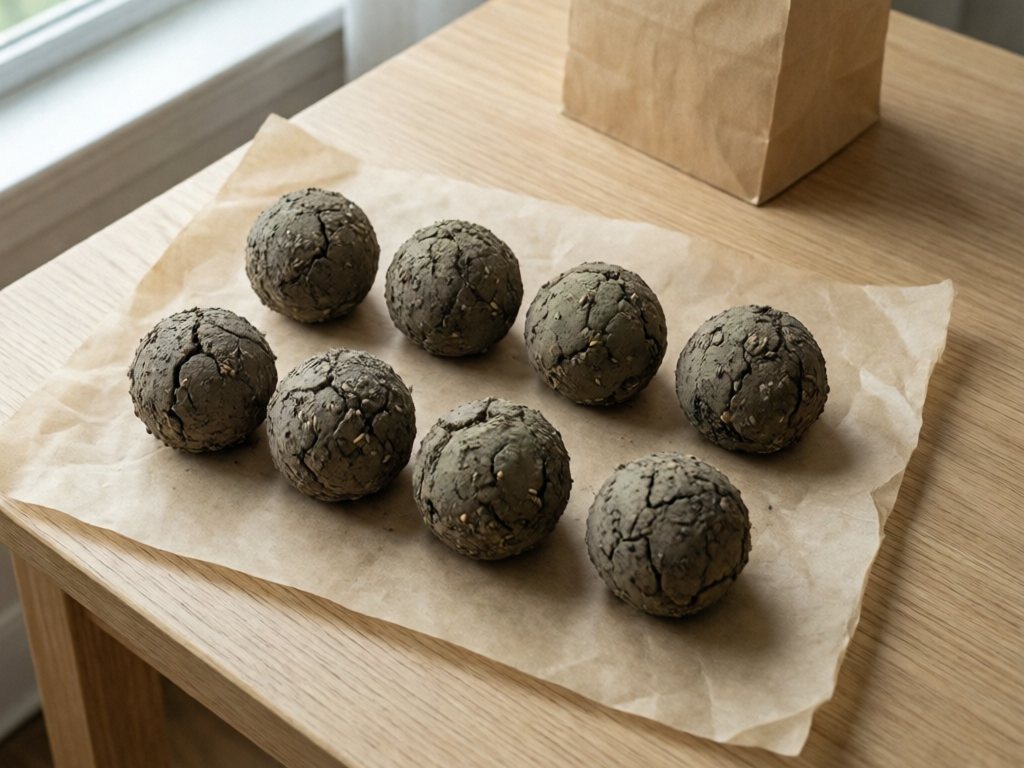
The full recipe, safety notes and three seed mixes are in the seed bomb recipe section near the top of this post.
2. Mini Greenhouse from Plastic Bottles
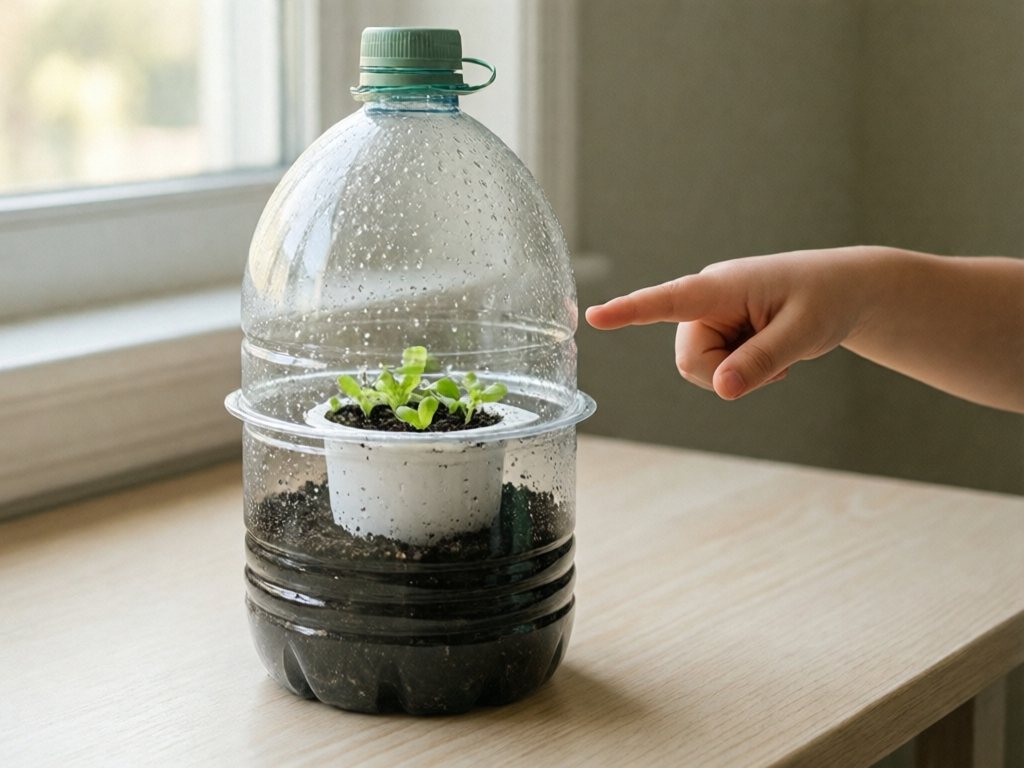
Materials: Clear 2-liter plastic bottle, sturdy scissors (adult only), small pot or yogurt cup, potting soil, seeds, water, tape.
The STEM connection: The greenhouse effect, condensation, temperature regulation, germination.
Steps:
- Adult prep: cut the plastic bottle in half horizontally with sturdy scissors. Keep both halves, then tape over or sand the cut edges before kids handle them.
- Take a small pot or yogurt cup that fits inside the bottom half of the bottle. Fill it with potting soil and plant seeds (lettuce, herbs, or fast-growing flowers work best).
- Place the pot inside the bottom half of the bottle.
- Water the soil lightly.
- Place the top half of the bottle over the pot like a dome. If needed, tape the two halves together loosely — leave a small gap for airflow.
- Set in a sunny window.
- Observe daily. Point out the condensation on the inside of the bottle — that’s the water cycle in action! On hot days, lift the dome for a while so the plants don’t overheat or grow mold.
The science conversation: “See those water droplets on the inside of the bottle? The sun warms the wet soil and the plant, so some of the water evaporates into water vapor, a gas we can’t see. When the vapor touches the cooler plastic, it turns back into droplets. Those drip back down to water the plant. We built a tiny version of the water cycle — and it’s the same thing that makes rain!”
Crafty Mama tip: Set up two identical plantings — one under the greenhouse dome and one without. Have your child predict which will sprout first and grow faster. Record observations daily. This transforms a craft into a real controlled experiment. For more weather-related science with kids, check out our weather activities and experiments.
3. Egg Carton Seed Starters
Materials: A new, unused paper-pulp egg carton (not one that held eggs). Potting soil, seeds (one type per cup, or mix and match), water, plastic wrap (optional), markers for labeling.
Safety firstUse a new, unused paper-pulp carton, not one that held eggs. Used cartons can carry Salmonella from raw eggs, and kids touch the carton, the damp soil and then their faces. Skip foam cartons too, since they won’t break down in soil. Wash hands with soap after planting and after each check on the seedlings.
The STEM connection: Germination, plant care, labeling and documentation.
Steps:
- Cut the lid off a new paper-pulp egg carton. Set the lid aside (it becomes the drip tray).
- Fill each cup with potting soil, pressing gently to remove large air pockets.
- Plant 2-3 seeds per cup, pushing them just below the surface. Different seeds in different cups is ideal for comparison.
- Label each cup with a marker or small stick-on label: “Basil,” “Sunflower,” “Lettuce,” etc.
- Water gently — a spray bottle works best to avoid flooding the small cups.
- Optional: cover loosely with plastic wrap to create humidity. Remove once sprouts appear.
- Place on the egg carton lid (to catch drips) in a sunny window.
- When seedlings are 2-3 inches tall with at least 2 sets of leaves, transplant to larger pots or garden beds. The paper-pulp cup can go directly into soil — it’ll decompose!
The science conversation: “We planted different seeds in each cup. Which one do you think will sprout first? Let’s check every morning and write down what we see. Scientists call this making observations — it’s the most important part of any experiment.”
Crafty Mama tip: Give your child a cheap magnifying glass and let them examine the sprouts up close. Look for the tiny hairs on the stem and the veins in the first leaves. Sometimes the seed shell sits on top like a little hat.
4. Nature Observation Journal
Materials: Blank notebook or folded/stapled paper, pencil, colored pencils or crayons, tape or glue stick (for attaching pressed specimens), ruler, magnifying glass (optional).
The STEM connection: Scientific observation, documentation, drawing from life, seasonal changes, data collection.
Steps:
- Create or buy a simple blank journal. Folding 10 sheets of paper in half and stapling the spine works perfectly. Decorate the cover.
- On the first page, write (or help your child write) a title, such as “Nature Journal: Spring” plus the year, and their name.
- Create template pages with three prompts: the date and weather at the top, “Today I observed:” with space for drawing and writing, and “Questions I have:” at the bottom.
- Take the journal on nature walks, to the garden, or even just to the backyard.
- Encourage sketching what they see — not perfect drawings, but observation sketches. The goal is looking carefully, not artistic perfection.
- Tape in small specimens an adult has approved: a leaf, a pressed flower petal, a blade of interesting grass.
- Record measurements when relevant: “The tallest sunflower is 8 inches today.”
The science conversation: “Real scientists keep journals just like this. Charles Darwin kept detailed notebooks of observations and sketches during his travels. Your journal is your scientific record of what’s happening in nature right now, this spring, in our yard.”
Crafty Mama tip: A nature journal is a habit, not a one-time craft. If your child takes to it, keep it going all year. Sitting still and drawing what you see builds observation skills. For places to take it, see our outdoor nature activities for kids.
5. Plant Observation Station
Materials: A growing plant (from projects #1-3 above, or any houseplant), ruler or measuring tape, paper for recording, markers, string, tape.
The STEM connection: Measurement, data recording, graphing, plant growth patterns.
Steps:
- Choose a plant to observe. A fast-grower like a bean, sunflower, or basil plant works best.
- Set up the “station” next to the plant: tape a strip of paper vertically to a wall or stick behind the pot. Mark inch measurements on it (like a height chart).
- Create an observation chart on paper or poster board, like this one.
| Date | Height | # of Leaves | Color | Notes |
|---|---|---|---|---|
| Apr 5 | 1 inch | 2 | Light green | First leaves appeared! |
| Apr 8 | 2 inches | 4 | Green | Growing fast |
- Have your child measure and record every 2-3 days.
- Bonus: take a photo from the same angle each time. At the end of the season, line up the photos for a visual growth timeline.
The science conversation: “Look at how much it grew in just three days! Plants don’t grow at the same speed all the time. Can you see a pattern? It grew faster this week when it was sunny. What do you think would happen if we moved it to a darker spot?”
Crafty Mama tip: For older kids (7+), introduce simple graphing. Use graph paper to plot height (y-axis) over time (x-axis). Connecting the dots makes a growth curve, which is their first real scientific graph.
6. Painted Rock Plant Markers
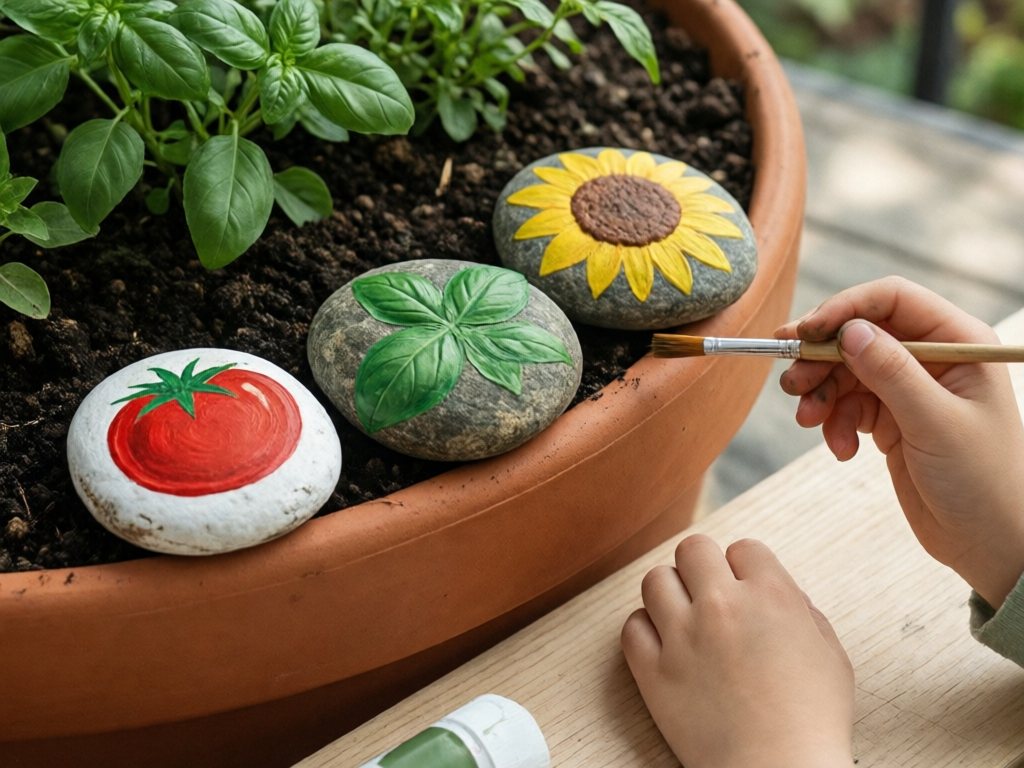
Materials: Smooth, flat rocks (from your own yard, or purchased), non-toxic, child-safe acrylic paint (look for ASTM D-4236), paintbrushes, clear sealant spray (optional, adult only). Skip paint pens, which often contain solvents.
Safety firstFor children under 4, use rocks too big to fit in a mouth. Sealant is an adult-only job: spray outdoors with kids well away, and let the rocks cure fully before anyone handles them. Keep painted rocks beside food crops, not on their soil or against their leaves.
The STEM connection: Ecology (what grows in your garden), literacy (labeling), geology (rock types).
Steps:
- Collect smooth, flat rocks from your own yard, or buy a bag. River rocks are ideal. Take rocks only from places where collecting is allowed. An adult scrubs them with soapy water, then they dry fully.
- Paint each rock with a base coat if desired (white makes colors pop). Let dry.
- Paint the name of a plant or herb on each rock: “Basil,” “Tomato,” “Sunflower,” etc. Add a small illustration of the plant if your child is artistically inclined.
- For younger kids, just paint the rocks with colors or patterns that represent each plant — red for tomatoes, green for basil, yellow for sunflowers.
- Optional and adult only: spray clear sealant outdoors with kids well away. Let the rocks cure fully, for the time listed on the can, before anyone handles them.
- Set the markers beside your plants. In food beds and herb pots, keep them on the outside edge, not on the soil the crop grows in or against its leaves.
The science conversation: “Why do we label our plants? Because when seeds first sprout, a lot of seedlings look the same — just tiny green leaves. The labels help us remember what’s what. Real gardeners and farmers do the same thing.”
Crafty Mama tip: This pairs well with our rock painting ideas for kids guide if your children want to go deeper into rock art. Collecting the rocks is a small adventure too. Talk about where rocks come from and why some are smooth (water wore them down). It’s a geology lesson disguised as a craft supply run.
7. DIY Rain Gauge
Materials: Clear plastic bottle, sturdy scissors (adult only), ruler, permanent marker, small rocks or pebbles, masking tape, notebook for recording.
The STEM connection: Measurement, weather science, data collection, water cycle.
Steps:
- Adult prep: cut the top third off a clear plastic bottle with sturdy scissors. Tape over or sand the cut edges before kids handle it. Flip the top piece upside down and insert it into the bottom piece like a funnel (this slows evaporation and keeps debris out).
- Drop small rocks into the bottom for weight so it doesn’t blow over.
- Tape a ruler to the outside of the bottle, or use a permanent marker to draw measurement lines at half-inch intervals from the bottom up.
- Place outside in an open area (not under a tree or roof overhang).
- After each rainfall, have your child check the water level and record it in a notebook, like the sample log below.
| Date | Rainfall (inches) | Weather Notes |
|---|---|---|
| Apr 6 | 0.5 | Light rain, afternoon only |
| Apr 10 | 1.25 | Heavy thunderstorm |
- Empty and reset after each reading.
- At the end of the month, add up total rainfall. Compare to the local weather service’s reported data — how close were you?
The science conversation: “Where does rain come from? Water from oceans, lakes, and rivers evaporates — turns from liquid into gas — and rises into the sky. It forms clouds, and when the clouds get heavy enough, the water falls back down as rain. Then it flows back to the rivers and oceans, and the whole thing starts again. That’s the water cycle, and we’re measuring one part of it right now.”
Crafty Mama tip: Track rainfall for a full month and then create a bar graph together. Which week had the most rain? Can your child connect that to what they remember about the weather?
8. Worm Composting Observation
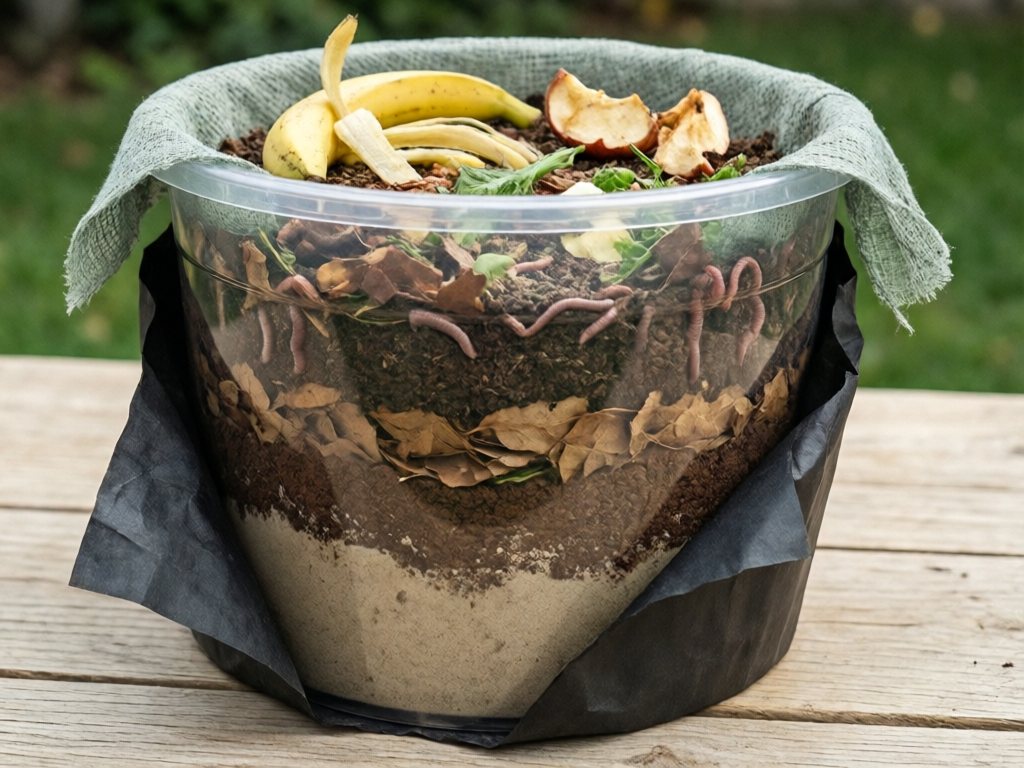
Materials: Large clear plastic container or tub, not glass. A lid with air holes or a breathable cloth cover. Soil, sand, dead leaves and vegetable scraps (banana peels, apple cores, lettuce). 5-8 worms: an adult digs up garden worms, or buy red wigglers. A spray bottle, plus dark cloth or paper to wrap the container.
The STEM connection: Soil science, decomposition, ecosystems, composting, animal behavior.
Steps:
- In the clear container, create visible layers: 1 inch of sand, 2 inches of soil, 1 inch of dead leaves, 2 inches of soil.
- Add a few small pieces of vegetable scraps on top.
- Add 5-8 worms. An adult collects garden worms from moist, shady spots under leaves or logs, or you can buy red wigglers. Cover the top with a lid with air holes or a breathable cloth, never a sealed lid. Keep the container out of direct sun and heat. After 1-2 weeks, return garden worms to the spot where you dug them up. Red wigglers can stay for the full 2-4 weeks, or longer in a proper bin if you keep feeding them. Never release bought red wigglers outdoors.
- Mist with spray bottle — the soil should be moist like a wrung-out sponge, not soaking wet.
- Wrap the outside of the container with dark paper (worms don’t like light). Leave it on most of the time, but remove it for daily observations.
- Check daily: observe how the worms mix the layers, move soil around, and process the food scraps.
- Within 1-2 weeks the layers start to blur. By 2-4 weeks, with red wigglers, they are well mixed and the food scraps are partly or fully gone. The worms turned waste into compost.
The science conversation: “Worms are nature’s recyclers. They eat dead plants and food scraps and turn them into castings. That’s the fancy name for worm poop, and it makes great plant food. Worms break down old things and turn them into food for new plants, which helps keep soil full of nutrients.”
Safety firstUse a plastic container, not glass. Children under 4 watch only and don’t handle the worms or soil. Everyone else handles worms gently, wears gloves over cuts, keeps hands away from mouths and washes with soap afterward. When you’re finished, return garden worms to the exact spot where you found them, not to a park or woods. Bought red wigglers aren’t native, so never release them outdoors. Move them to a compost bin or give them to someone who keeps one.
Crafty Mama tip: This will be either your child’s absolute favorite project or the one that grosses them out the most. Usually favorite. Kids are fascinated by worms. If they love this, check out bug hunting activities for kids for more small creatures to watch. When you’re done, put garden worms back where you found them. They have work to do! Bought red wigglers go into a compost bin instead, never loose into the yard.
9. Pressed Flower Art
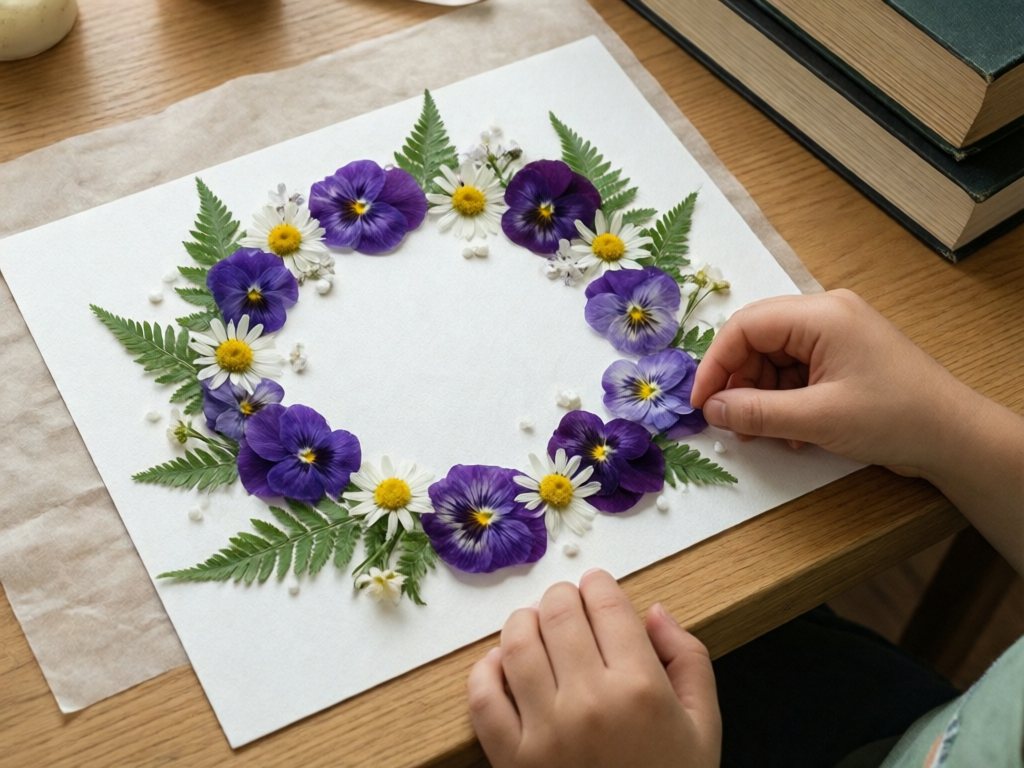
Materials: Fresh flowers and leaves. Flat varieties work best: pansies, ferns, clover, daisies, violets. Heavy books, parchment or wax paper, cardstock or watercolor paper, glue, and a frame (optional).
Safety firstAn adult picks or approves every plant before a child touches it. Learn what poison ivy, poison oak and poison sumac look like where you live, and stay clear of them. Some common garden flowers are toxic, including foxglove, lily of the valley and oleander, so stick to plants you know. Nobody tastes or mouths flowers or leaves. Skip roadsides and any lawn or bed that may have been sprayed. Don’t rely on a plant ID app to tell you whether a plant is safe. Wash hands with soap afterward.
The STEM connection: Botany (flower anatomy, species identification), preservation techniques, patience.
Steps:
- Go on a flower and leaf collecting walk. Pick only from your own garden or where you have permission, away from roadsides and sprayed lawns. An adult approves every plant before a child picks it. Look for flat flowers (pansies, daisies, violets) and interesting leaves (ferns, clover, maple). Skip thick or fleshy flowers (roses, succulents), which don’t press well.
- Lay each specimen between two sheets of parchment or wax paper.
- Place inside a heavy book. Stack more books on top. The more weight, the better.
- Wait about a week (5-7 days). This is the hard part. Resist the urge to check too early.
- Carefully remove the pressed flowers. They should be flat and dry but retain their color.
- Arrange on cardstock or watercolor paper in any design: a wreath, a garden scene, a heart, random beauty.
- Glue carefully with tiny dots of white glue. Let dry.
- Frame or display.
The science conversation: “When we press flowers, we’re removing the water inside them. That’s why they get flat and dry. The color stays because the pigments — the chemicals that make flowers colorful — are still there even after the water is gone. Pressed flowers can keep their color for years if you keep them dry.”
Crafty Mama tip: Before pressing, examine each flower with your child. Count the petals. Look at the center. Find the stem. Older kids can try to identify the species using a plant identification app or field guide. Use the app for naming only, never to decide whether a plant is safe to touch. Even just naming what they see — “this one has five petals and a yellow center” — is botanical observation. For more art made with things from outside, see our nature craft projects.
10. Bean Maze in a Jar
Safety firstAll bean seeds here are for planting only, never for eating. Raw dried beans can make you sick, and lima and runner beans are toxic raw. Use untreated seeds, keep them away from children under 4, and wash hands after handling them.
Materials: Large clear plastic container. (A glass jar works for older kids with an adult, but it can break.) Cardboard, scissors, tape, soil and water. Untreated bean seeds, for planting only: pole or bush beans are an easy choice, and lima or runner beans also work.
The STEM connection: Phototropism (plants growing toward light), plant adaptation, experimental design.
Steps:
- Cut 2-3 small shelves from cardboard. Make each one slightly smaller than the inside of the jar. It needs to fit inside but leave a gap on one side for the plant to grow around.
- Place soil in the bottom third of the jar. Plant 2-3 bean seeds about an inch below the surface.
- Insert the first cardboard shelf about 3 inches above the soil line, taping one edge to the jar wall. Leave a 1-inch gap on the opposite side.
- Insert a second shelf 3 inches above the first, leaving the gap on the opposite side from the first shelf. This creates a zigzag path.
- Optional: add a third shelf for more complexity.
- Water the soil, place the jar in a sunny window (with the open top facing up), and wait.
- As the bean sprouts, it will grow upward, hit the first shelf, grow sideways toward the gap, continue up, hit the second shelf, and navigate the maze!
The science conversation: “Plants always grow toward light — scientists call this phototropism. The word comes from ‘photo’ meaning light and ‘tropism’ meaning turning. Our bean plant can’t see the light, but it can sense it. Special chemicals in the stem cause the side facing away from light to grow faster, which makes the stem bend toward the light. So even though our shelves are in the way, the plant will find its way to the sunshine.”
Crafty Mama tip: The moment the bean bends around that first shelf is the one kids remember. Take photos of the progress every few days so your child has a story for show-and-tell.
11. Grow a Pizza Garden
Materials: Large container or garden bed area, at least 2 feet across. Potting soil, garden stakes or labels, and a watering can. Untreated seeds or seedlings: cherry tomato, basil, oregano, bell pepper, parsley, chives.
The STEM connection: Biology (plant needs and growth), nutrition (where food comes from), math (spacing, measurement), ecology (companion planting).
Steps:
- Choose your container or garden spot. A large pot, a section of raised bed, or even a kiddie pool with drainage holes all work.
- Divide the growing area into “pizza slices” — wedge-shaped sections. Use sticks or string to mark the divisions.
- In each slice, plant a different pizza ingredient, using untreated seeds or seedlings.
- Slice 1: Cherry tomato. A plant gives faster results than seed.
- Slice 2: Basil seeds.
- Slice 3: Oregano seeds.
- Slice 4: Bell pepper. A plant works better than seed.
- Slice 5: Parsley seeds.
- Slice 6: Chive seeds.
- Label each slice with popsicle stick labels, or set painted rock markers (Project #6) around the outside edge of the container.
- Water thoroughly. Place in full sun (6+ hours daily).
- Maintain throughout the season: water regularly, observe growth, note which plants grow fastest.
- When everything is ready to harvest, make pizza together with your garden ingredients!
Safety firstEat only the ripe fruit, never tomato or pepper leaves and stems. Wash all harvests, and quarter cherry tomatoes lengthwise for children under 4. Cut other raw foods small too.
The science conversation: “Every ingredient on our pizza came from a plant. The tomato sauce, the basil, the oregano seasoning, even the wheat in the dough — all plants. When we grow our own food, we understand that food doesn’t come from a store. It comes from soil, water, sunlight, and time.”
Crafty Mama tip: This project is a full-season commitment, and that’s part of the point. It teaches sustained responsibility. Put your child in charge of watering (with your backup). Set a phone alarm together: “Pizza Garden Water Time.” Some plants will struggle and a pizza garden takes real upkeep, but a harvest pizza of cherry tomatoes and basil on store-bought dough is still a proud moment.
12. Sunflower Height Tracker
Materials: Sunflower seeds, pot or garden space, measuring tape or yard stick, long strip of paper or poster board, markers, camera (phone works fine).
The STEM connection: Measurement, data recording, graphing, growth rates, biology.
Steps:
- Plant sunflower seeds according to package directions (about 1 inch deep, full sun, after last frost).
- Tape a long strip of paper to the wall near the sunflower (or use a poster board).
- Once the sunflower sprouts, start measuring. Record three things on the wall chart.
- Date
- Height in inches
- Draw a small picture or take a photo
- Measure once a week at minimum. Twice a week is better for seeing dramatic growth.
- Giant sunflower varieties can grow 8-12 feet tall — your child will be craning their neck by midsummer.
- When the sunflower blooms, measure the flower head diameter too.
- After the bloom fades, harvest the seeds. Count them!
Example log (giant variety; real numbers vary a lot with variety and weather):
| Week | Date | Height | Notes |
|---|---|---|---|
| 1 | Apr 12 | 0 in | Planted seed! |
| 2 | Apr 19 | 0.5 in | Sprout appeared today! |
| 3 | Apr 26 | 3 in | Growing fast, 2 leaves |
| 4 | May 3 | 7 in | 4 leaves now |
| 8 | May 31 | 28 in | Taller than my little brother! |
| 12 | Jun 28 | 60 in | TALLER THAN MOM |
| 16 | Jul 26 | 96 in | Flower bud forming!!! |
The science conversation: “Sunflowers are heliotropic when they’re young — that means they follow the sun across the sky during the day, facing east in the morning and west in the evening. Once the flower head opens, it typically faces east permanently. East-facing flower heads warm up faster in the morning sun, which may help attract more bees.”
Crafty Mama tip: Sunflowers grow fast, and giant varieties end up taller than the child who planted them. Height depends on the variety, so check the packet. Take a photo of your child next to the sunflower every week for a side-by-side growth comparison. At the end of the season, line up the photos — it’s your own time-lapse of summer.
Garden Science Concepts for Kids (Quick Reference)
The science here happens in front of your child’s eyes. Use the table to find the right project, then borrow the words below it.
| Concept | What it is | What kids see | Projects that show it |
|---|---|---|---|
| Germination | A seed sprouting and beginning to grow. | The first tiny green shoot poking through the soil. | Seed bombs (#1), egg carton starters (#3), bean maze (#10), pizza garden (#11). |
| Photosynthesis | How plants turn sunlight into food. | Green leaves growing larger and turning toward windows. | Mini greenhouse (#2), plant observation station (#5), sunflower tracker (#12). |
| The water cycle | Water moving from the earth to the sky and back. | Condensation inside the greenhouse dome, rain filling the rain gauge. | Mini greenhouse (#2), rain gauge (#7). |
| Soil ecosystems | The living things that keep soil healthy. | Worms mixing layers, food scraps disappearing. | Worm composting (#8), seed bombs (#1), and the tin can planter from our earth day crafts article. |
Germination
Say this: “Inside every seed is a tiny baby plant, plus food to help it start growing. When the seed gets water and warmth, it ‘wakes up’ and uses that food to push a root down and a stem up. The root looks for water, and the stem looks for light.”
Photosynthesis
Say this: “Plants are like tiny solar panels. Their green leaves make food from sunlight, air and water. The green stuff is called chlorophyll, and it’s what catches the sunlight. Without it, plants couldn’t make their food.”
The Water Cycle
Say this: “Water goes on a big trip. It rises from oceans and lakes into the sky (evaporation) and forms clouds (condensation). Then it falls as rain (precipitation) and flows back to the ocean. Our greenhouse does the same thing on a tiny scale. Look at the water drops on the inside!”
Soil Ecosystems
Say this: “Soil isn’t just dirt. It’s alive! Every handful holds tiny creatures: worms, insects, fungi, and bacteria too small to see. They break down dead leaves and food scraps and turn them into nutrients that plants need to grow. Worms are like the Earth’s recycling crew.”
Garden Setup for Apartments, Balconies and Yards
You don’t need a backyard, raised beds or even outdoor space. Pick the option below that matches your home.
Option 1: The Sunny Windowsill (No Outdoor Space)
Works for: Apartments, condos, houses with no yard, winter months.
What you need: A south-facing or west-facing windowsill, small pots or containers, a drip tray.
Safety firstWindows are a fall hazard for young children, and a screen will not stop a fall. Keep pots on a low sill or a low table your child can reach with both feet on the floor. Keep stools, chairs and other climbable furniture away from windows. Fit window guards or window stops on any window a child can reach, and keep the windows by your plants closed while kids are gardening.
Best projects: Egg carton starters (#3), herb seed bombs (#1, planted in pots), plant observation station (#5), bean maze (#10).
Tips:
- Group pots on a large tray to catch water.
- Rotate pots a quarter turn every few days so plants grow straight.
- A small clip-on grow light extends your options if your windows don’t get great sun. Keep its cord out of reach and away from water.
Option 2: The Balcony or Patio Container Garden
Works for: Apartments with outdoor space, small yards, renters who can’t modify the landscape.
What you need: Pots in various sizes, potting soil, and a watering can or hose access. 5-gallon buckets with drainage holes work well and cost little.
Safety firstKeep drainage holes clear and empty any standing water, since a bucket with a few inches of water is a drowning risk for toddlers. Keep pots, buckets and stools away from railings, and supervise children on balconies.
Best projects: All 12 projects work here. The pizza garden (#11) is ideal in a large container.
Tips:
- Put heavy pots on plant caddies with wheels so you can move them to follow the sun.
- Group plants by water needs (herbs together, tomatoes together).
- Elevate pots on bricks if your balcony floor gets very hot.
Option 3: The Backyard Bed or Raised Bed
Works for: Houses with yards, families ready for a bigger commitment.
What you need: A sunny spot (6+ hours of direct sun), garden soil or raised bed mix, basic tools (trowel, watering can).
Best projects: Pizza garden (#11), sunflower tracker (#12), wildflower seed bombs (#1), rain gauge (#7).
Tips:
- Start small. A 4×4 foot raised bed is plenty for a first garden.
- Let your child help with every step: digging, filling, planting, watering.
- Put the garden where you can see it from inside the house, so checking on it is easy.
- Set painted rock plant markers (#6) around the outside edge of flower beds. Use stick labels inside food beds.
Making It Kid-Sized
Whatever space you use, make sure your child can reach everything independently. If pots are too high, they’ll stop checking on them. If the watering can is too heavy, they’ll lose interest. Get a child-sized watering can. Give them their own small set of garden tools.
For indoor window gardens, bring the plants down to your child instead of lifting your child up to the window. A low sill works, and so does a low table or bench they can reach without climbing. Save the step stool for counters and shelves away from windows, and stay within arm’s reach while they use it.
Screen-Free Garden Time for Kids
Garden projects are an easy way to get kids off screens without a fight. You aren’t taking something away. You’re offering something more interesting.
Here’s how to make garden time a regular screen-free habit:
Build it into the routine. “Every morning before breakfast, we check the garden.” Make it non-negotiable and brief — 5 minutes is enough. The consistency matters more than the duration.
Make it social. Garden time is conversation time. Kids often talk more easily with busy hands, watering or weeding beside you, than they do face to face.
Give them real responsibility. Don’t just let them “help.” Give them actual ownership of a plant, a section of the garden, or a specific project. “This is YOUR sunflower. You’re in charge of watering it.” Responsibility creates investment.
Connect it to other screen-free activities. Garden time flows naturally into outdoor play, nature walks, and art projects, like our backyard scavenger hunt. One afternoon you’re watering the garden, the next you’re pressing flowers from it, the next you’re drawing it in a nature journal. For more ideas on filling time without screens, our spring break screen-free activity countdown has plenty of ideas that fit around garden projects.
Let them eat what they grow. Food they grew themselves is a strong motivator. Wash everything first, eat only the ripe fruit (never leaves or stems), and quarter cherry tomatoes lengthwise for children under 4.
Frequently Asked Questions
What seeds are best for kids who are impatient?
Fast-germinating seeds are your best bet for impatient kids: radishes sprout in 3-5 days, lettuce in 5-7 days, beans in 5-8 days, and sunflowers in 7-10 days. Wildflower mixes typically take 10-14 days. Avoid slow germinators like carrots (14-21 days) or parsley (14-28 days) for first-time young gardeners. A quick first sprout keeps a child interested.
Do seed bombs actually work?
Yes, but with realistic expectations. Results vary widely. Even in good conditions (adequate moisture, sunlight, and contact with soil), many seeds won’t establish, and a few sprouts is a good outcome. Position them on bare soil rather than thick grass, and water regularly for the first two weeks if there’s no rain. The ones that do grow are worth the wait.
Can I do these projects if I live in an apartment with no yard?
Yes. All twelve projects work with a windowsill or a balcony, and ten need no outdoor space at all. Six are easy indoors as written: the mini greenhouse, egg carton starters, plant observation station, painted rock markers, bean maze and pressed flower art.
Four more work indoors with a small change. Seed bombs go into pots, and the worm observation sits in a shady corner. The sunflower tracker needs a large pot by a sunny window or on a balcony. The nature journal travels to any park.
The last two need a balcony or patio. The pizza garden needs a large container and 6+ hours of sun. The rain gauge needs an open outdoor spot, such as a balcony floor away from the railing. Set it where children can’t climb.
My child killed their last plant. How do I set them up for success this time?
Start by treating plant death as normal. Even experienced gardeners lose plants. Then stack the odds: pick forgiving plants like basil, chives, mint or sunflowers, and start several so one loss doesn’t end the project. Finally, set a watering routine instead of relying on memory. A phone alarm or a fridge checklist (“Did we water today? Check!”) does the job.
Are worms safe for kids to handle?
Yes, worms are generally safe to handle gently, but soil and worms can carry germs. Children under 4 should watch rather than handle them. Everyone else washes hands with soap afterward, covers cuts with gloves or bandages, and keeps hands out of mouths. Most kids are delighted by worms; the squeamish one is usually the parent. If your child is hesitant, model gentle handling and let them watch before touching. Never force it, and never use worms to scare or prank.
What if our seeds don’t sprout at all?
This happens, and it’s a valid scientific outcome worth discussing. Common causes: seeds were too old (check expiration dates), soil was too wet or too dry, temperature was wrong (most seeds need 60-75 degrees F), or seeds were planted too deep. Troubleshoot together: “Let’s be scientists about this. What could have gone wrong? What should we try differently?” Then replant. Every scientist has experiments that don’t work, and figuring out why is the science.
How do I keep garden projects going through the summer without losing momentum?
Rotate through the projects so something new is always happening. The sunflower tracker (#12) lasts all season on its own, and a new planting every few weeks keeps fresh sprouts coming. Tie the garden to cooking (basil for pasta night) and art (pressing flowers). A “garden playdate” where friends check on each other’s plants helps too.
Can these projects work in a classroom setting?
Most of them can. The best classroom picks are egg carton starters (#3, one per student) and the bean maze (#10, easy to see from across the room). Painted rock markers (#6) and the nature journal (#4, which runs all year) work well too. For the starters, use new, unused cartons instead of asking families to send in ones that held eggs.
Seed bombs (#1) suit a group activity with something to take home. Many students have younger siblings, so send them in a labeled bag: “Not edible. Choking hazard. Keep away from small children and pets.” The worm observation (#8) works as a classroom pet alternative: it is low maintenance, and kids are fascinated. When the unit ends, garden worms go back where they were dug up, and red wigglers go to a compost bin.
Your Spring Garden Action Plan
Twelve projects is a lot. Here’s the order I’d do them in:
| Week | Projects | What you’ll see |
|---|---|---|
| Week 1 (now) | Make seed bombs (#1) and egg carton starters (#3). | Seeds are in the soil, so there is something to watch while you plan the rest. |
| Week 2 | Set up the plant observation station (#5) for your egg carton seedlings. Start a nature journal (#4) and take it on your first spring walk. | First sprouts, first measurements and a first journal page. |
| Week 3 | Paint rock markers (#6) for any seedlings you’ll transplant. Build the bean maze (#10) and mini greenhouse (#2). | Water droplets inside the greenhouse dome. |
| Week 4 | Set up the rain gauge (#7). Start the worm observation (#8) if your child is up for it. Plant the pizza garden (#11) and sunflower (#12) if it’s warm enough in your area. | Your first rainfall reading, and worms starting to mix the layers. |
| Ongoing | Press flowers (#9) when you find good ones. Write in the nature journal every week. Measure the sunflower, log each rainfall, and harvest and cook from the pizza garden. | A season of measurements and, with luck, a pizza. |
Start with the seed bombs and see what comes up. Even a few sprouts make a good story.
Happy planting, friends. Go get your hands dirty.