Nature Crafts for Kids: 25 Backyard Craft Ideas by Age
Discover 25 engaging nature crafts for kids using free backyard finds like leaves, sticks, and rocks. You'll learn how to collect materials safely and create unique projects from simple leaf rubbings to painted story stones.
- Gather leaves, sticks, rocks, and pinecones from your backyard for free craft supplies.
- Follow tips for safe collection, including checking for bugs and avoiding poison ivy.
- Create leaf rubbings, nature wands, painted rocks, and more with 25 unique ideas.
- Find projects suitable for toddlers to older kids, fostering creativity and outdoor fun.
This post contains affiliate links. As an Amazon Associate I earn from qualifying purchases.
Some of the best crafting materials are free—they’re already scattered across your backyard, the park, or the sidewalk on the walk home. Sticks, leaves, rocks, pinecones, and flower petals make better art supplies than half of what’s sold in craft store kits, mostly because no two kids ever come home with the same handful.
As a former art teacher, my favorite lesson prep was always the one that started with “go collect stuff outside” instead of a supply order. Nature crafts get kids moving and looking closely before anyone touches glue, and the finished pieces can’t be copied—there’s only one pinecone that looks like that pinecone.
This list covers 25 nature crafts organized by material—leaf, stick, rock, pinecone, and mixed finds—plus a bonus section for teens, seasonal swaps, and a rundown for anyone running this as a classroom or preschool/EYFS project. Grab a basket and head outside; your supplies are waiting.
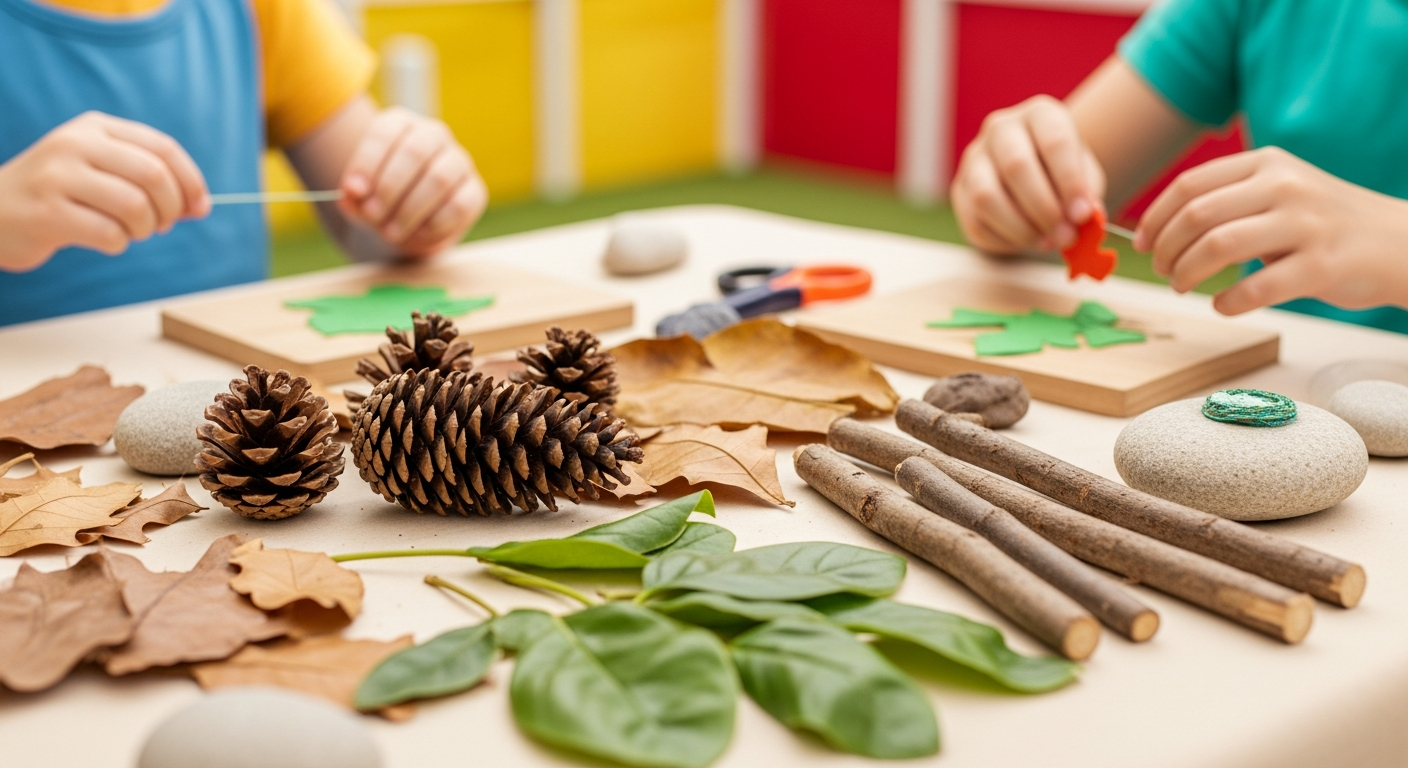
[IMAGE: Collection of nature items laid out for crafting – leaves, sticks, rocks, pinecones]
In this article (14 sections)
- All 25 Crafts at a Glance
- Before You Begin: Collecting Tips
- Leaf Crafts (6 Ideas)
- Stick Crafts (5 Ideas)
- Rock Crafts (5 Ideas)
- Pinecone Crafts (4 Ideas)
- Mixed Nature Crafts (5 Ideas)
- Bonus: Nature Crafts for Older Kids and Teens
- Seasonal Nature Craft Ideas
- Nature Crafts for Classrooms and EYFS Groups
- Setting Up for Success
- Frequently Asked Questions
- Frequently Asked Questions
- Conclusion
All 25 Crafts at a Glance
| Craft | Material | Age | Mess Level | Prep Time |
|---|---|---|---|---|
| Leaf Rubbings | Leaf | 2+ | Low | 5 min |
| Leaf People and Animals | Leaf | 3+ | Low | 10 min |
| Pressed Flower Bookmarks | Leaf/Flower | 4+ | Low | 1-2 weeks pressing + 10 min |
| Leaf Crown | Leaf | 3+ | None | 10 min |
| Leaf Printing | Leaf | 3+ | Medium | 15 min |
| Stained Glass Leaves | Leaf | 3+ | Low | 15 min |
| Nature Wand | Stick | 3+ | Low | 10 min |
| Stick Frame | Stick | 4+ | Low | 15 min |
| Twig Paintbrushes | Stick | 3+ | Medium | 10 min |
| Stick Boat | Stick | 4+ | Low | 20 min |
| Twig Sculptures | Stick | 4+ | Low-Medium | 15 min |
| Painted Rock Garden Markers | Rock | 3+ | Medium | 20 min + dry time |
| Story Stones | Rock | 3+ | Medium | 20 min + dry time |
| Rock Animals | Rock | 4+ | Medium | 20 min + dry time |
| Kindness Rocks | Rock | 5+ | Medium | 20 min + dry time |
| Rock Photo Holders | Rock | 6+ (adult help) | Low | 15 min |
| Pinecone Bird Feeder | Pinecone | 2+ | Medium | 10 min |
| Pinecone Owls | Pinecone | 3+ | Low | 15 min |
| Pinecone Christmas Tree | Pinecone | 3+ | Medium | 15 min + dry time |
| Pinecone Fire Starters | Pinecone | 6+ (adult only) | Medium | 20 min |
| Nature Collage | Mixed | 2+ | Low | 15 min |
| Fairy House | Mixed | 3+ | Low-Medium | 20-30 min |
| Nature Mobile | Mixed | 4+ | Low | 20 min |
| Nature Bracelets | Mixed | 2+ | None | 5 min |
| Sun Catcher | Mixed | 3+ | Low | 15 min |
Before You Begin: Collecting Tips
Because there’s no wrong way to arrange a stick or sort a pile of acorns, most of this collecting phase doubles as loose parts play—kids will naturally start sorting, stacking, and building before a single item gets glued down. Let that happen; it’s not a delay, it’s the first stage of the craft.
What to gather:
- Leaves (various sizes, shapes, colors)
- Sticks and twigs
- Rocks and pebbles
- Pinecones
- Acorns and acorn caps
- Flowers and petals
- Seed pods
- Bark pieces
- Feathers
- Shells (if near water)
Collection tips:
- Use a basket or bag for transport
- Only collect fallen items when possible
- Check for bugs before bringing items inside
- Let wet items dry before crafting
- Store items in open containers (they need air)
If checking for bugs turns into the highlight of the trip, lean into it—kids who linger over what’s crawling on a log usually enjoy dedicated bug hunting activities just as much as the crafting part. And if a plain collecting walk needs more structure to hold attention, turn it into a backyard scavenger hunt—hand each kid a list of colors, textures, or shapes to find instead of just wandering.
Safety notes:
- Learn to identify poison ivy, oak, and sumac before you head out
- Avoid berries and unknown plants—don’t let young kids put found items near their mouths
- Wash hands after collecting, especially before snack time
- Supervise young children closely around rocks, sticks with points, and anything near water
Leaf Crafts (6 Ideas)
Leaves are the most forgiving material to start with, especially in fall when there’s an endless free supply. If you want to stay in that season, our fall leaf crafts for preschoolers round up 20 more ideas built specifically around autumn colors.
1. Leaf Rubbings
Materials: Leaves, paper, crayons (paper removed)
How to: Place leaves under paper, rub crayon sideways over the top. Veins and shapes appear like magic.
Ages: 2+ | Mess: Low
2. Leaf People and Animals
Materials: Leaves, paper, glue, markers
How to: Glue leaves onto paper to create bodies, heads, and wings. Add details with markers.
Ages: 3+ | Mess: Low
3. Pressed Flower Bookmarks
Materials: Leaves, flowers, heavy book, contact paper or laminator
How to: Press flowers and leaves in a book for 1-2 weeks. Arrange on cardstock and laminate.
Ages: 4+ | Mess: Low
4. Leaf Crown
Materials: Long leaves, tape or string
How to: Overlap leaves in a row, tape or tie together to fit around head. Add flowers for decoration.
Ages: 3+ | Mess: None
5. Leaf Printing
Materials: Leaves, paint, paper
How to: Brush paint on the underside of leaves (where veins are raised). Press onto paper.
Ages: 3+ | Mess: Medium
6. Stained Glass Leaves
Materials: Leaves, contact paper, construction paper frame
How to: Cut a frame from construction paper. Stick leaves to contact paper, place frame on top.
Ages: 3+ | Mess: Low
[IMAGE: Colorful leaf rubbings on paper]
Stick Crafts (5 Ideas)
7. Nature Wand
Materials: Stick, yarn, ribbon, beads, feathers
How to: Wrap yarn around one end of a stick. Add ribbons, beads, and feathers. Perfect for pretend play.
Ages: 3+ | Mess: Low
8. Stick Frame
Materials: 4 sticks (similar length), twine or glue
How to: Arrange sticks into a square or rectangle frame. Tie corners with twine or glue. Add a photo or leaf art.
Ages: 4+ | Mess: Low
9. Twig Paintbrushes
Materials: Twigs, leaves or pine needles, rubber bands or string
How to: Bundle leaves or needles at the end of a twig. Use to paint with—each brush makes different marks.
Ages: 3+ | Mess: Medium (painting)
10. Stick Boat
Materials: Sticks, string, leaf for sail, waterproof glue
How to: Bundle sticks for the hull. Add a vertical stick mast, attach a leaf sail. Test in water!
Ages: 4+ | Mess: Low
11. Twig Sculptures
Materials: Twigs, air-dry clay or hot glue
How to: Stand twigs in a clay base or glue together to create abstract sculptures or trees.
Ages: 4+ | Mess: Low-Medium
Rock Crafts (5 Ideas)
12. Painted Rock Garden Markers
Materials: Flat rocks, acrylic paint, brushes, sealer
How to: Paint rocks with pictures of plants (tomato, carrot, flower). Use in the garden to mark what’s planted.
Ages: 3+ | Mess: Medium
13. Story Stones
Materials: Smooth rocks, paint or permanent markers
How to: Paint simple pictures on rocks (sun, tree, house, animal). Use to prompt storytelling.
Ages: 3+ | Mess: Medium
14. Rock Animals
Materials: Rocks of various sizes, paint, googly eyes, glue
How to: Stack and glue rocks to create bugs, animals, or creatures. Paint features, add eyes.
Ages: 4+ | Mess: Medium
15. Kindness Rocks
Materials: Smooth rocks, paint, sealer
How to: Paint encouraging words or pictures on rocks. Leave in public places to brighten someone’s day.
Ages: 5+ | Mess: Medium
16. Rock Photo Holders
Materials: Large flat rock, wire
How to: Twist wire into a spiral, insert into a rock crevice or glue to the rock. Use the spiral to hold photos.
Ages: 6+ (adult help with wire) | Mess: Low
[IMAGE: Painted kindness rocks with encouraging words]
Pinecone Crafts (4 Ideas)
17. Pinecone Bird Feeder
Materials: Pinecone, peanut butter (or sunflower butter), birdseed, string
How to: Spread peanut butter on pinecone, roll in birdseed, hang outside.
Ages: 2+ | Mess: Medium
18. Pinecone Owls
Materials: Pinecones, felt, googly eyes, glue
How to: Glue felt wings and ears to pinecone. Add large googly eyes and a felt beak.
Ages: 3+ | Mess: Low
19. Pinecone Christmas Tree
Materials: Pinecone, green paint, small beads or pom poms, glitter
How to: Paint pinecone green. Glue on “ornaments.” Add a star on top.
Ages: 3+ | Mess: Medium
20. Pinecone Fire Starters
Materials: Pinecones, wax (candle or crayons), essential oils (optional)
How to: Melt wax, dip pinecones, let harden. Add to campfire to help start flames (adult use only).
Ages: 6+ (with adult help) | Mess: Medium
Mixed Nature Crafts (5 Ideas)
21. Nature Collage
Materials: Cardboard base, nature items, glue
How to: Arrange and glue nature items onto cardboard to create a picture or abstract art.
Ages: 2+ | Mess: Low
22. Fairy House
Materials: Sticks, bark, leaves, moss, acorns, stones
How to: Build a tiny house for fairies using nature items. Can be built outdoors or in a container.
Ages: 3+ | Mess: Low-Medium
23. Nature Mobile
Materials: Large stick, string, nature items
How to: Hang nature items (pinecones, feathers, shells) from a horizontal stick using string. Hang from ceiling.
Ages: 4+ | Mess: Low
24. Nature Bracelets
Materials: Wide masking tape, nature items
How to: Wrap tape (sticky side out) around wrist. Press nature items onto tape as you find them outdoors.
Ages: 2+ | Mess: None
25. Sun Catcher
Materials: Clear contact paper, frame of sticks or paper plate with center cut out, nature items
How to: Stick pressed flowers and leaves to contact paper. Frame with sticks or a paper plate ring. Hang in a window.
Ages: 3+ | Mess: Low
[IMAGE: Finished fairy house made from natural materials]
Bonus: Nature Crafts for Older Kids and Teens
Most nature craft lists stop at “preschooler with a pinecone,” but the same materials scale up nicely once kids can handle more precise work and longer attention spans.
26. Nature Journal Pages
Materials: Pressed leaves/flowers, notebook or watercolor paper, glue stick, pen
How to: Press specimens flat, then glue them into a journal alongside sketches, the date, and notes on where each was found. Older kids can research and label species.
Ages: 8+ | Mess: Low
27. Natural Dye Fabric
Materials: White cotton fabric or an old t-shirt, onion skins or avocado pits, large pot (adult use), rubber bands
How to: Simmer the dye material in water, strain, then soak bunched or rubber-banded fabric in the dye bath. Unwrap once dry for a tie-dye effect.
Ages: 10+ (adult handles the stove) | Mess: Medium
28. Land Art Sculptures
Materials: Whatever’s on the ground—leaves, petals, stones, sticks
How to: Arrange found materials directly on the ground by color, size, or shape into a pattern or spiral. Photograph it, then leave it for the next person to find (or the wind to scatter). No glue, no mess, no cleanup.
Ages: 10+ | Mess: None
29. Sanded Branch Wall Art
Materials: Straight branch, sandpaper, twine, small potted plant cuttings or dried flowers
How to: Sand the branch smooth, tie twine at intervals for hanging small bundles of dried flowers or trailing plants. Makes a simple piece of wall decor that doesn’t look like a kid craft.
Ages: 12+ | Mess: Low
Seasonal Nature Craft Ideas
Spring: Pressed flowers, flower crowns, nature collages with blossoms, or turn extra seeds into seed bombs and garden STEM projects for planting season.
Summer: Painted rocks, stick boats, nature bracelets, sand crafts (if you’re near a beach)
Fall: Leaf crafts (peak season!), acorn animals, pinecone owls, stick creatures
Winter: Pinecone bird feeders, evergreen wreaths, twig snowflakes, ice ornaments (freeze nature items in water)
Nature Crafts for Classrooms and EYFS Groups
If you’re setting this up for a classroom, homeschool co-op, or an early years/EYFS group instead of one kid at your kitchen table, a few tweaks make it much easier to run with a crowd:
- Pre-bag materials per child or table so nobody’s fighting over the one “good” pinecone
- Choose zero-dry-time crafts for group settings: leaf rubbings, leaf crowns, nature bracelets, and nature collages can go home the same day with no wet paint to worry about
- Tie each craft to what you’re already teaching: leaf crafts pair with a seasons or changes unit, story stones work for a language and storytelling center, pinecone bird feeders fit a habitats or animal-needs unit
- Send a “collect and bring” note home the week before so families can contribute items you can’t source on school grounds—feathers, shells, seed pods
- Post a short safety reminder where kids can see it: no berries or unknown plants near mouths, wash hands after handling, ask before touching anything unfamiliar
Setting Up for Success
Create a nature collection station:
- Shallow bins or trays for sorted items
- Labels for younger children
- Easy access for spontaneous crafting
Keep basic supplies handy:
- White glue and glue sticks
- Paint and brushes
- Paper and cardboard
- String and yarn
- Scissors
- Googly eyes
Preserve nature items:
- Press leaves and flowers in heavy books
- Spray clear sealer on pinecones to preserve them
- Keep rocks dry to prevent mold
Frequently Asked Questions
What age is right for nature crafts?
Most nature crafts work from about age 2 through the teen years—the material stays the same, but the technique changes. Toddlers press leaves into paint or wear nature bracelets; preschoolers glue and paint; older kids and teens move into pressing for a nature journal, natural dye, or land art that doesn’t need any glue at all.
What nature crafts work best for toddlers and preschoolers?
Stick to crafts with no dry time and low choking risk: leaf rubbings, nature bracelets (tape wrapped sticky-side out), leaf crowns, and simple nature collages. These need the least fine motor control and can’t really go wrong, which matters most for the 2-4 age range.
What nature crafts are good for teens and older kids?
Teens generally do better with crafts that feel less like “kid crafts”: nature journaling with pressed specimens, natural dye on fabric, land art (arranging found materials into a pattern, then photographing it), and sanded branch wall art. These use the same backyard materials but ask for more patience and precision.
What natural materials should we collect for kids’ crafts?
Leaves, sticks, rocks, pinecones, acorns, flowers, seed pods, bark, feathers, and shells cover nearly every craft on this list. Collect only fallen items when possible, check for bugs before bringing anything inside, and let wet finds dry out before you start.
How do I set this up as a nature project for a school or EYFS classroom?
Pre-bag materials per child or table to avoid scrambling for the same few pinecones, stick to crafts with no dry time (leaf rubbings, leaf crowns, nature bracelets) so everything can go home the same day, and tie each craft to a unit you’re already teaching—seasons, habitats, or storytelling.
How do I preserve leaves, flowers, and pinecones so crafts last?
Press leaves and flowers flat inside a heavy book for one to two weeks before using them in bookmarks or sun catchers. Spray a clear sealer on painted or natural pinecones to keep them from drying out or shedding, and store rocks and pinecones somewhere dry to prevent mold.
Crafty Mama
Crafty Mama is a former elementary art teacher turned stay-at-home parent who believes every child is creative — they just need the right invitation. She develops age-appropriate activities, crafts, and projects that spark imagination while keeping mess (and parent stress) to a minimum.
Frequently Asked Questions
How do I keep nature items from molding?
Make sure everything is completely dry before storing. Keep in open containers with air circulation. Avoid closed plastic bags.
My child wants to craft with items they found, but I’m worried about bugs.
Inspect items carefully. You can bake pinecones at 200°F for 20-30 minutes to kill any bugs or larvae inside.
What if we don’t have a backyard?
Parks, nature trails, and even sidewalks have treasures. Take a nature walk specifically for collecting. Just be sure collection is allowed in public spaces.
Are nature crafts safe for toddlers?
Many are! Avoid small items that could be swallowed. Supervise closely. Stick to large leaves, big rocks, and supervised pinecone bird feeders for the youngest crafters.
Conclusion
Nature crafts connect kids to the outdoors in a meaningful way. The act of collecting, observing, and creating with natural materials builds appreciation for nature while developing creativity and fine motor skills.
Head outside today, gather some treasures, and see what you and your kids can create. The best part? Your supplies are free, unique, and always waiting in your backyard.
50 Easy Sensory Bin Ideas for Toddlers (By Season)
—