How to Draw Jack and the Beanstalk (Easy Step by Step)
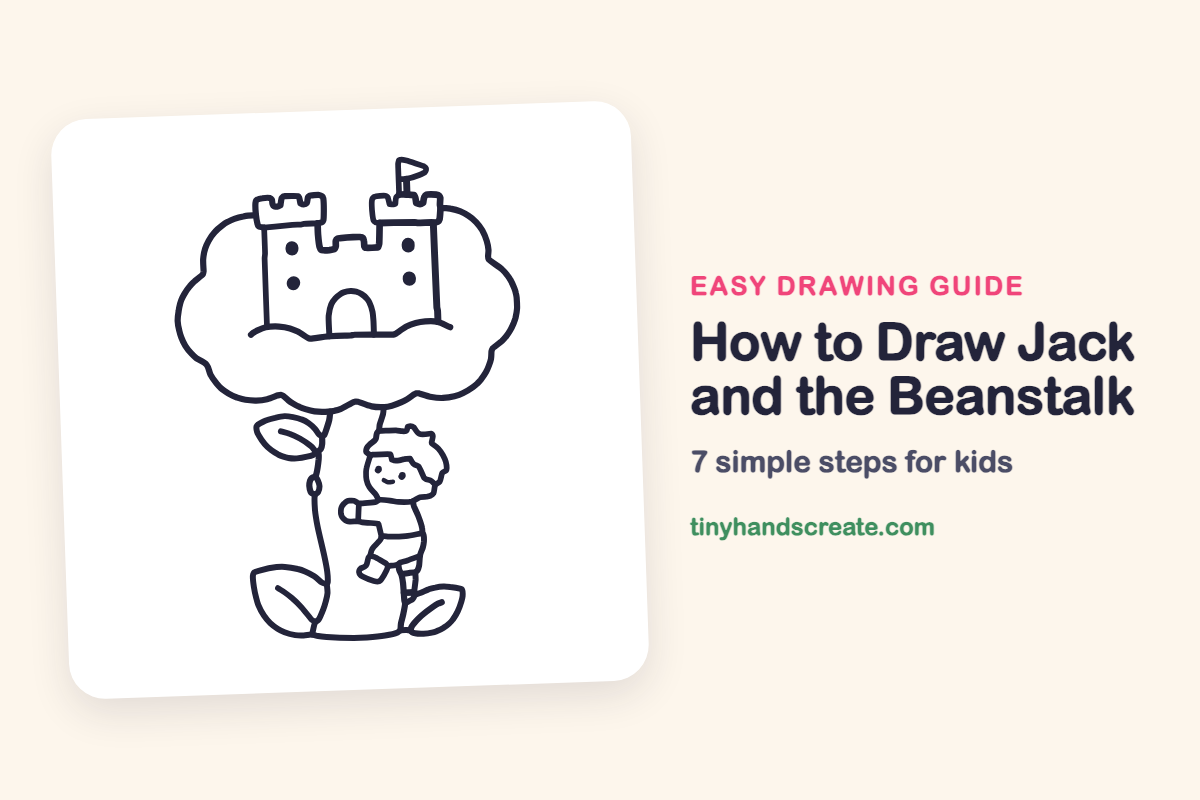
Learn to draw the classic Jack and the Beanstalk scene with this easy step-by-step guide. You'll use simple shapes to create a castle on a bumpy cloud, a wavy vine, and even a friendly monkey.
- Use simple shapes to construct your Jack and the Beanstalk drawing.
- Draw a bumpy cloud to serve as the base for the giant's castle.
- Form the castle using basic rectangles and triangles.
- Create a wavy vine with rounded leaves hanging from the cloud.
- Add a friendly monkey hugging the vine for an engaging detail.
Jack climbing a giant beanstalk up to a castle in the clouds is a story most kids already know, which makes it fun to draw. It is built from simple shapes: a little castle with bumpy towers, a puffy cloud, a round head for Jack and a long wavy stalk with leaves.
- Medium
- 20 minutes
- 7 steps
You need: paper, a pencil, an eraser, and crayons or markers for coloring.
Start drawing
In this article (7 sections)
How to draw Jack and the Beanstalk step by step
How to Draw Jack and the Beanstalk · tinyhandscreate.com
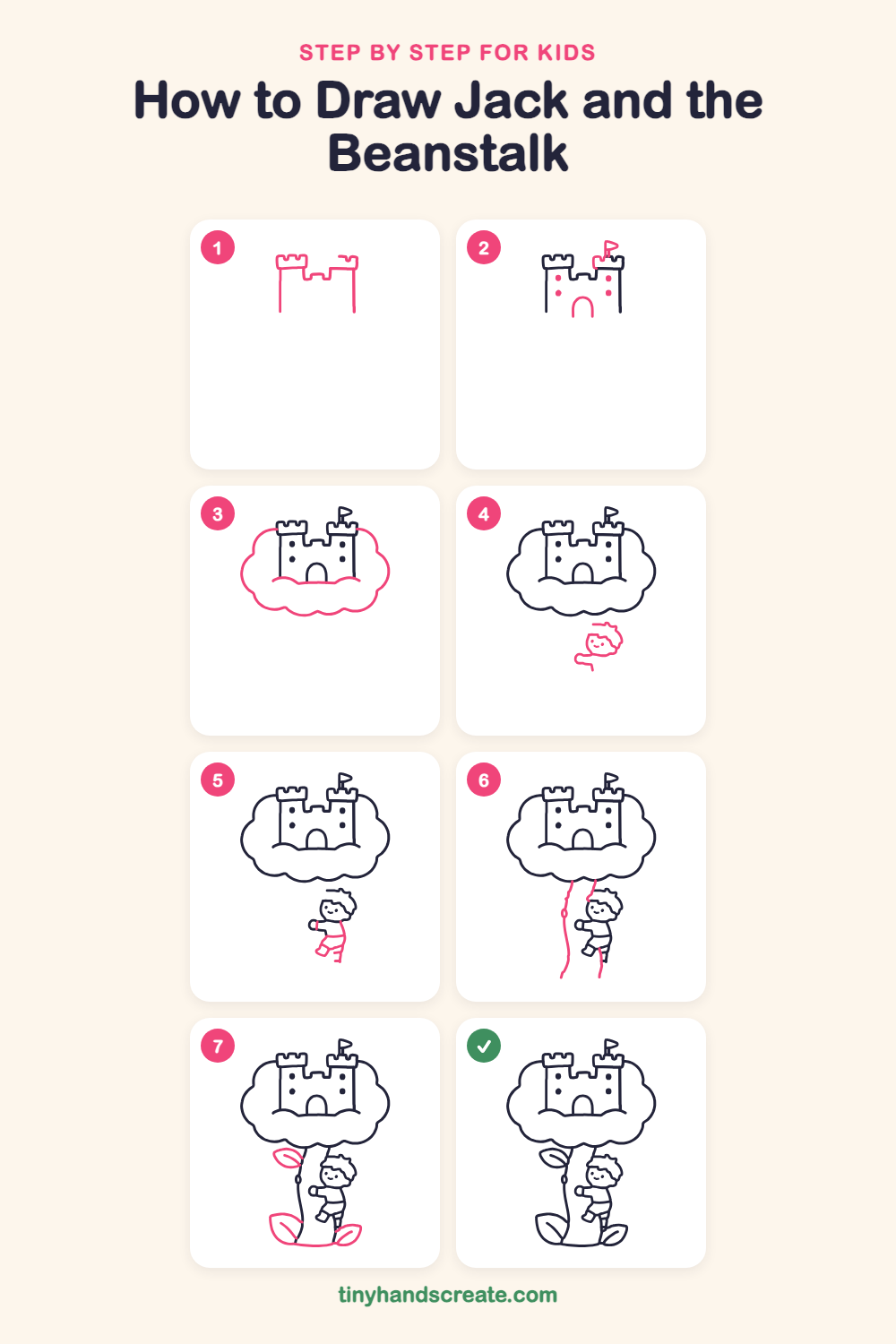
Step 1: Castle towers and walls
Draw two small square towers with bumpy tops, one on the left and one on the right. Join them with a wavy dip in the middle, then draw a straight wall line down from the outside of each tower.
Step 2: Flag, windows and door
Draw a tiny flagpole on the right tower with a triangle flag on top. Add four dots for windows, two on each side, and an arched door at the bottom middle.
Step 3: The fluffy cloud
Draw a big puffy cloud around the castle with lots of round bumps. Then add a wavy line across the bottom of the castle for the cloud it sits on.
Step 4: Jack's head and arm
Below the cloud, draw a round head with spiky hair on top, two dot eyes and a smile. Then draw a curvy arm reaching out to the left from under the head, ending in a little curl for the hand.
Step 5: Jack's body and leg
Draw a short shirt below the head, then shorts under it. Finish with a bent leg and a little foot kicking out.
Step 6: The beanstalk lines
Draw two long wavy lines from the bottom of the cloud down toward the ground. The left one passes beside Jack and has a small knot, and the right one goes behind Jack and ends near his foot.
Step 7: Big leaves
Draw a pointy leaf sticking out on the upper left of the stalk and two big leaves at the bottom, one on each side. Add a curved line down the middle of each leaf.
All done!
Go over your lines with a marker, then color it in.
Finished your Jack and the Beanstalk? Keep the pencils out and learn how to draw a pumpkin carriage or how to draw a glass slipper next.
Tips for drawing Jack and the Beanstalk
- Draw the castle first and the cloud around it, so the cloud lines go around the towers.
- Jack is the trickiest part. Start with his round head, then add the arm and body, and let the stalk lines stop where he overlaps them.
- Keep the two stalk lines wavy but roughly the same distance apart so they look like one thick stem.
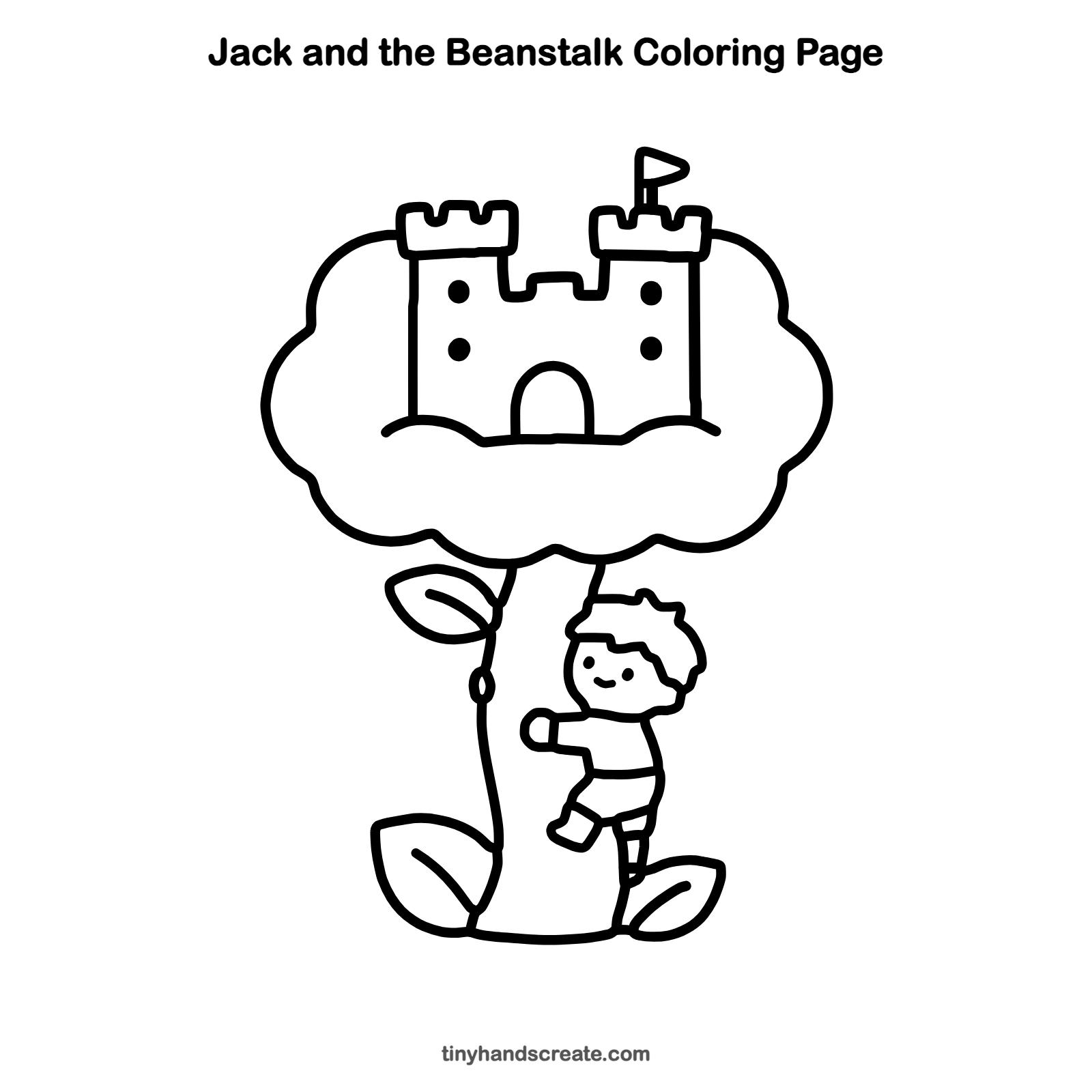
Free Jack and the Beanstalk coloring page
Want to go straight to coloring? Open this Jack and the Beanstalk coloring page at full size and print it. It is the same drawing you just learned, with clean lines ready for crayons or markers.
How to color your Jack and the Beanstalk drawing
Color the stalk a bright green, the castle gray or sandy brown, and the cloud a pale blue. For a twist, make the castle gold or add rainbow flags.
Jack and the Beanstalk fun fact for kids
Real bean plants are climbers. Their stems twist around poles and strings, which is why runner beans are grown on tall wooden frames in gardens.
Questions about drawing Jack and the Beanstalk
What shapes do I need to draw Jack and the Beanstalk?
You need small squares with bumpy tops for the castle towers, a circle for Jack's head, bumpy curves for the cloud and long wavy lines for the stalk.
How do I make the beanstalk look tall?
Make the stalk long and let it stretch from the cloud all the way down to the big leaves at the bottom. Jack beside it makes it feel even bigger.
How do I make Jack look like he is climbing?
Bend one leg and reach one arm out toward the stalk. This gives him a natural climbing pose.