10 Heartfelt DIY Teacher Gifts Kids Can Actually Make Themselves
You'll find 10 DIY teacher gift ideas kids ages 2-8 can make, complete with costs, hands-on times, and crucial safety notes. Use the comparison table and timeline to plan your perfect handmade gift.
- Discover 10 DIY teacher gifts kids ages 2-8 can make themselves.
- Use the comparison table to pick a gift by age, time, and mess level.
- Start your handmade gift project about three weeks before the last day of school.
- Prioritize safety by following guidelines for adult-only tasks and small parts.
- Plan for $2-8 per gift and source supplies from dollar or big-box stores.
This post contains affiliate links. As an Amazon Associate I earn from qualifying purchases.
Last spring I panic-bought a generic mug and a gift card at 9:47 PM. The next morning my four-year-old drew her teacher a wobbly card, and the card was the gift that got the happy tears. That was the last time I gave a store-bought gift on its own.
This post covers ten end-of-year teacher gifts for kids ages 2-8. Nine are projects kids make themselves, and one is an adult-made mug where kids pick the colors. Each has costs, hands-on and drying times, and safety notes.
The comparison table under “Pick a Gift by Age, Time and Mess” lets you choose by age, time and mess, and the three-week timeline near the end tells you when to start.
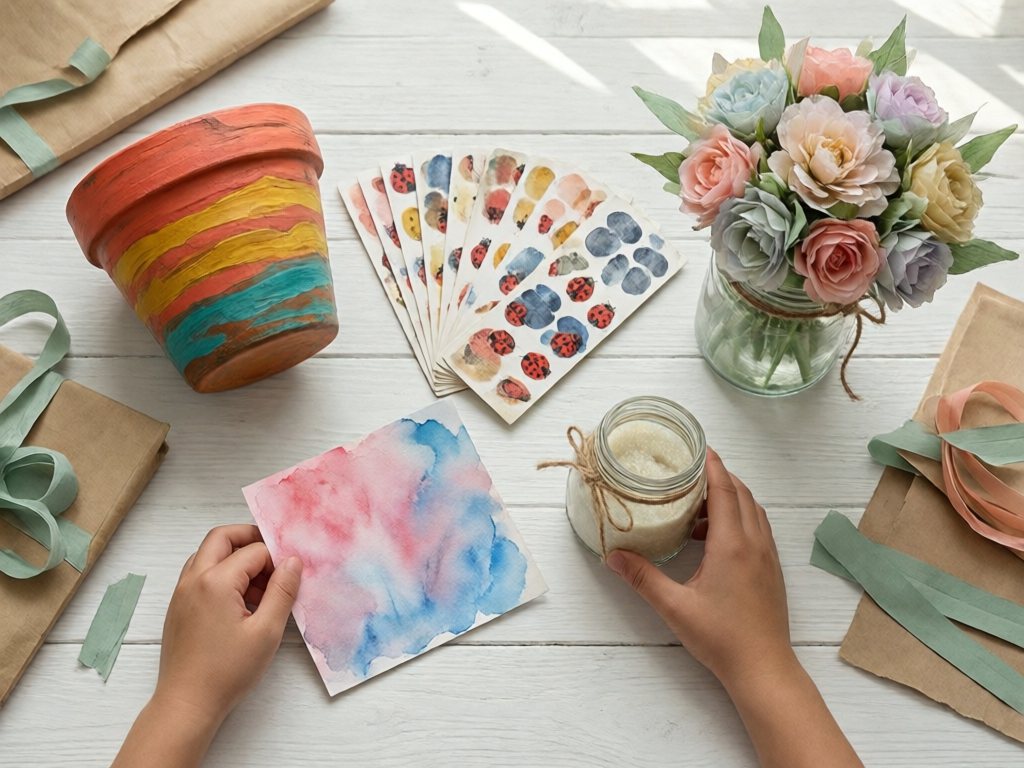
In this article (7 sections)
Why Handmade Teacher Gifts Are Worth the Mess
Three reasons I keep coming back to handmade gifts:
- They’re personal. A gift card to Starbucks says “I remembered you exist.” A handprint flower pot says “I spent time thinking about you specifically.”
- They show effort, not budget. Teachers know that families have wildly different financial situations. A handmade gift levels the playing field in a way that feels good for everyone.
- Kids feel ownership. When your child hands over something they actually made, they beam. That pride is worth more than any $25 gift card.
A gift card is still welcome, and several of these projects pair well with a small one tucked inside. The handmade piece is the part that makes it personal.
Before You Start: Quick Planning Guide
Safety firstThese rules apply to every project below.
- Adult-only jobs: aerosol sealer, nail polish and remover, the hot iron, the laminator, hot glue, and all knife work for apple and potato stamps.
- Sealer: an adult sprays it outdoors, wearing a mask and away from flames. Let the item off-gas fully before a child touches it.
- Small parts: no buttons, gems, googly eyes or other small parts for children under 4. At ages 4-5, only with an adult watching.
- Paint on skin: use only washable, non-toxic, skin-safe paint or ink on hands, and wash hands after crafting.
- Wrapping: keep cellophane, plastic bags and ribbon away from children under 3. Wrap the gift after your child has finished with it.
- Glass: carry glass jars with two hands over a rug or other soft surface. For ages 4-5, use a plastic or cardboard container if there is any doubt.
- Gifts headed to a classroom: other children will be around them. Ask the teacher to keep seed packets and the sugar scrub out of children’s reach.
Three things to settle before you buy anything: budget, timing and supplies. Then use the table to pick a project.
Budget
Plan on about $2-8 per gift in basic materials, less if you already own paint and brushes. Sealer, nail polish and other specialty items cost extra, and each supply list names them.
Timeline
Each project takes 15 to 45 minutes of hands-on time, plus drying. Paint can need overnight, and the mug’s sealer needs 24 hours to cure. Start about three weeks before the last day of school so you’re not crafting at 11 PM the night before.
Supply Sourcing
Dollar stores and the craft aisle of any big-box store cover most of these supplies. These basics show up in more than one project, so buy them once:
- Washable, non-toxic, skin-safe paint for anything that touches hands.
- Acrylic paint and brushes for pots and base coats.
- Clear acrylic sealer spray (adult use only).
- Cardstock for bookmarks, cards and gratitude notes.
- Mason jars or clean recycled jars.
- Ribbon or twine, gift tags, and a plastic tablecloth or newspaper.
Pick a Gift by Age, Time and Mess
Pick by your child’s age first, then by time and mess. The age shown is the youngest I’d try each project with.
| # | Project | Ages | Cost | Time | Difficulty | Mess Level |
|---|---|---|---|---|---|---|
| 1 | Painted Flower Pot with Seed Packets | 3+ | $4-6 | 30-45 min | Easy | Medium |
| 2 | Thumbprint Bookmark Set | 2+ | $2-3 | 15-20 min | Easy | Low |
| 3 | Personalized Pencil Holder | 4+ | $3-5 | 30-40 min | Easy | Medium |
| 4 | Watercolor Thank You Cards | 3+ | $2-4 | 20-30 min | Easy | Medium |
| 5 | Sugar Scrub Jars | 5+ | $5-8 | 20-30 min | Easy | Low |
| 6 | Tissue Paper Flower Bouquet | 4+ | $3-5 | 30-45 min | Medium | Low |
| 7 | Stamped Tea Towel | 3+ | $4-6 | 20-30 min | Easy | Medium |
| 8 | Photo Frame with Handprint Art | 2+ | $3-5 | 20-30 min | Easy | Medium |
| 9 | Gratitude Jar with Handwritten Notes | 5+ | $3-5 | 30-45 min | Medium | Low |
| 10 | Decorative Marbled Mug (adult-made; kids 8+ pick colors) | 8+ | $5-8 | 30-45 min | Medium | High |
Costs in the table are for basic materials. Sealer, polish and other specialty items add to it, and times are hands-on only, so allow extra for drying.
10 End-of-Year Teacher Gift Ideas Kids Can Make
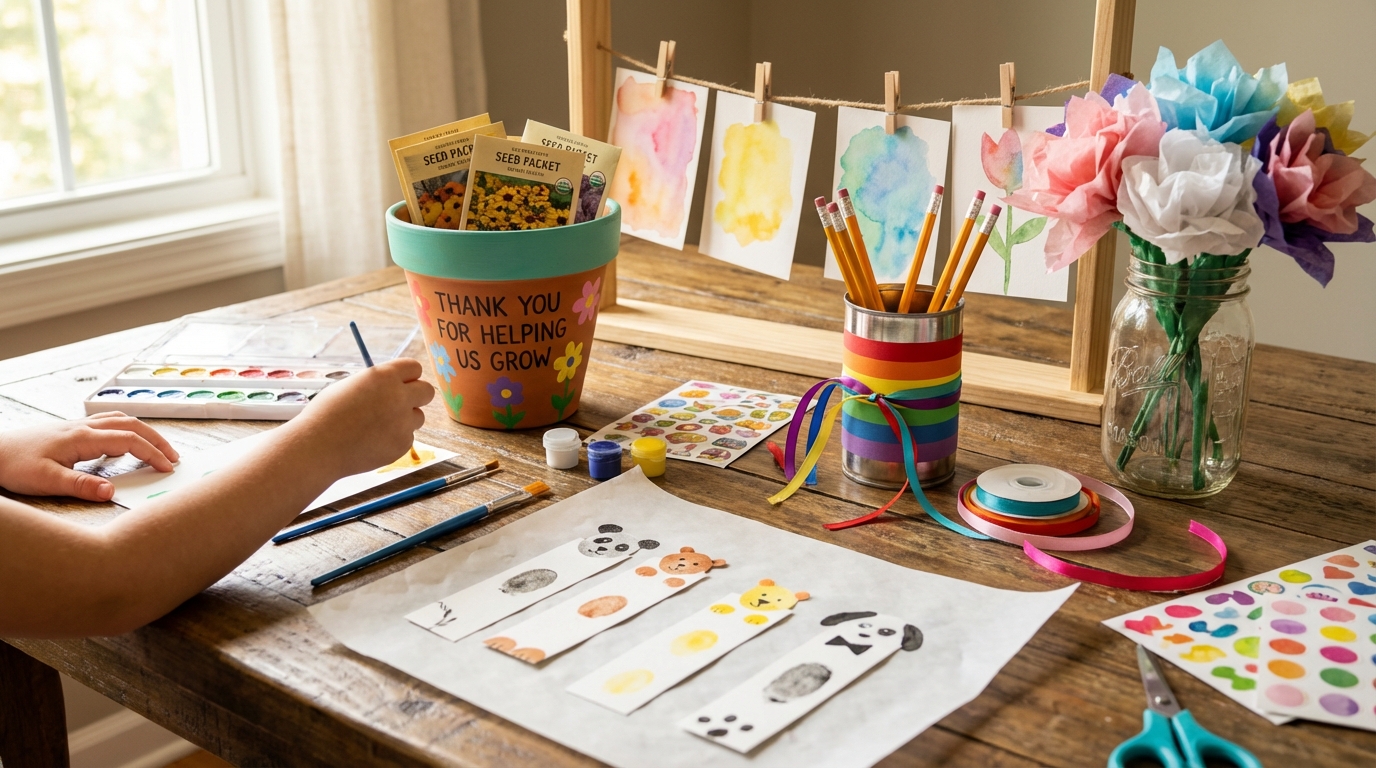
1. Painted Flower Pot with Seed Packets (Ages 3+)
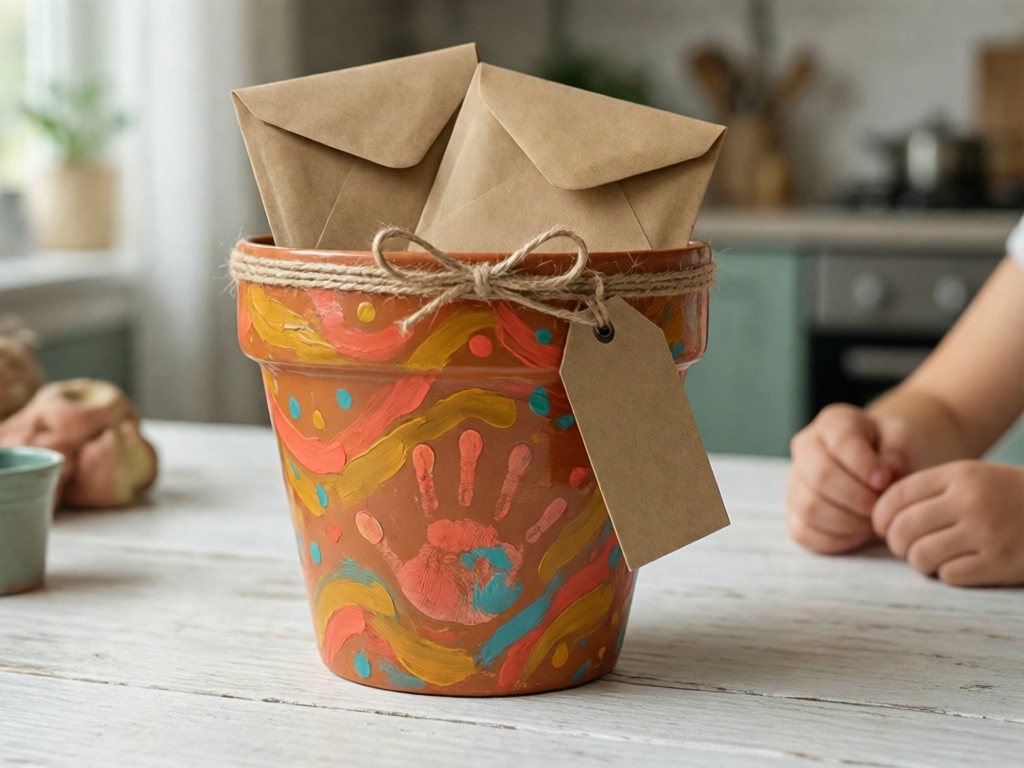
This is my go-to recommendation for a reason. It’s forgiving, it’s beautiful even when it’s messy, and the teacher gets to watch something grow. Our kids’ garden growing guide has easy seed tips.
My daughter painted one at age three, and the wild paint splatters looked almost intentional.
Supply list:
- Small terra cotta pot (4-inch, typically about $1-2).
- Acrylic paint in 3-4 colors for the pot itself.
- Washable, skin-safe paint for any handprints.
- Paintbrushes (wide ones for little hands).
- Clear acrylic sealer spray (an adult applies this).
- 2-3 packets of untreated seeds (wildflowers, sunflowers, or herbs).
- Small bag of potting soil (optional).
- Ribbon or twine.
- Newspaper or a plastic tablecloth for the workspace.
Step-by-step instructions:
- Cover the table. Terra cotta pots collect paint drips, and acrylic paint on a kitchen table is a bad day. I put down a plastic Dollar Tree tablecloth.
- Paint the outside. Stripes, dots or total abstract chaos all work. For ages 3-4, offer two or three colors so it doesn’t turn into brown mud. Use the washable, skin-safe paint for any handprints.
- Let it dry. Give it at least 2-3 hours, ideally overnight. I usually paint one evening and assemble the next.
- Seal it (adult only). An adult sprays the outside only with clear acrylic sealer, following the Safety first box above. Keep sealer off the inside, where soil and seeds go. Let it off-gas fully before your child handles the pot. Sealer keeps the paint from chipping.
- Add the seeds. Choose untreated seeds and tuck the closed packets inside the pot. Packets marked treated or coated with fungicide should not go to a classroom. Keep seeds away from mouths and wash hands after handling them. Tell the teacher to store the seeds out of children’s reach, and say so on the tag. A small bag of soil makes it a complete kit.
- Tie on a tag. Wrap a ribbon around the pot and attach a handwritten tag. My kids write “Watch me grow, just like my love for you!” It’s cheesy in the best way.
Age modifications:
- Ages 3-4: Let them fingerprint or handprint the pot using washable, non-toxic, skin-safe paint. Provide the colors already squeezed onto a paper plate. Expect full hand coverage in paint.
- Ages 5-7: They can attempt patterns, write the teacher’s name, or draw flowers. Provide a pencil for sketching first.
- Age 8: Challenge them to plan a design, use fine-tipped brushes, or paint a scene. They can also write a message directly on the pot with paint pens.
What could go wrong:
- Peeling paint: you skipped the sealer.
- Paint everywhere: three-year-olds will try to paint the inside of the pot and their own arms.
- Muddy colors: let it dry and add dots of a contrasting color on top.
- It looks like a Jackson Pollock: that’s a feature, not a bug.
Presentation idea: Place the pot in a small cellophane bag, tie with ribbon, and tuck a card inside. Do the wrapping yourself once your child is finished, and keep the bag and ribbon away from children under 3.
2. Thumbprint Bookmark Set (Ages 2+)
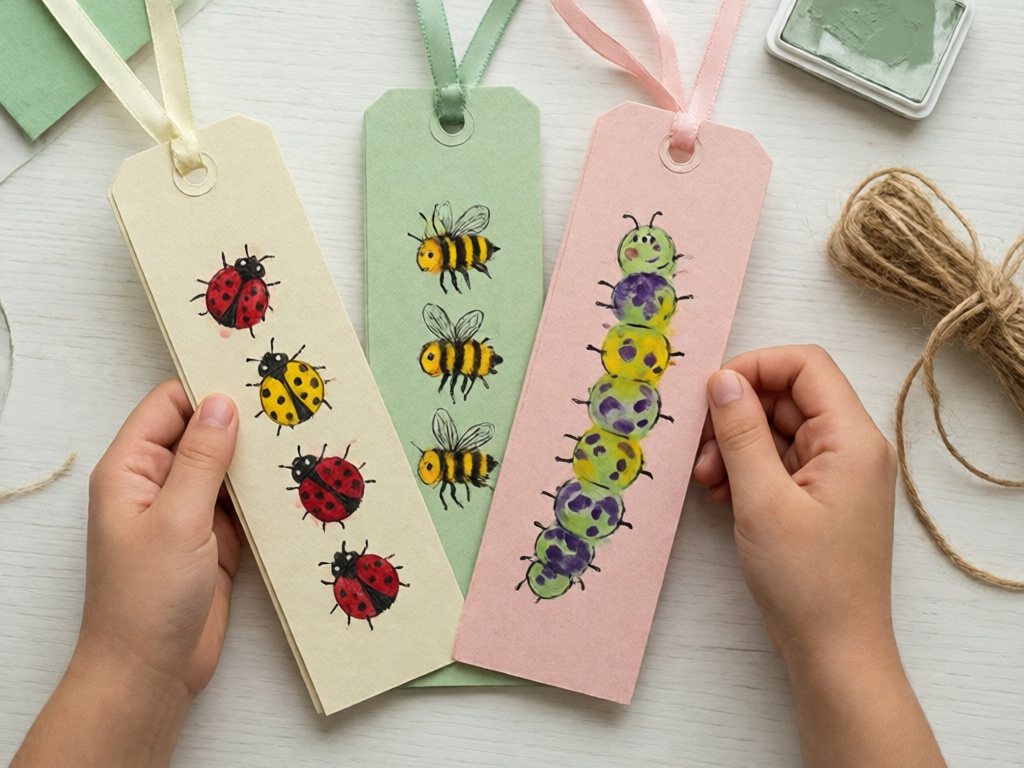
This one is magical because even the tiniest kids can do it, and the results look genuinely charming. Each little fingerprint turns into a ladybug with a few marker lines.
Safety firstUse only ink pads or paint labeled non-toxic and washable for kids. Stay right beside ages 2-3 the whole time, and keep the ink pad out of reach between prints. Wipe little fingers right after each print, because ages 2-3 will try to taste the ink. The laminator and its hot output are adult-only, with children kept well back. An adult adds the ribbon or tassel after the child is done, and finished bookmarks stay out of mouths for ages 2-3.
Supply list:
- Cardstock cut into bookmark strips (2″ x 6″, any color).
- Washable, non-toxic, skin-safe ink pads or paint (no acrylic on skin).
- Fine-tip markers (for a parent or older kid to add details).
- Laminator (adult only) or clear packing tape, for durability.
- Hole punch.
- Ribbon or tassel.
Step-by-step instructions:
- Cut the strips. Cut cardstock into 2″ x 6″ strips. I usually make 3-4 per teacher so they can keep extras or share.
- Print. Your child presses a thumb or fingertip onto the ink pad, then onto the cardstock. Make a row of prints or scatter them. Wipe fingers right away, and move the ink pad out of reach between prints.
- Add details. Once the prints are dry, use fine-tip markers to turn each one into a ladybug, flower, heart or bee. Line up several prints for a caterpillar. Younger kids need a parent for this part.
- Sign the back. Write the child’s name and the year, or a message like “You left your thumbprint on my heart”.
- Protect it. An adult laminates the bookmarks, or you cover both sides with clear packing tape. Without this step the ink smudges and the bookmarks fall apart.
- Add a ribbon (adult). Once your child is done, punch a hole at the top and thread a short ribbon or tassel through it. For ages 2-3, keep the ribbon short or skip it.
Age modifications:
- Ages 2-3: They do the thumbprints; you do everything else. Stay right beside them the whole time. Keep prints to one or two colors, and have wipes ready, because inky fingers go straight to mouths.
- Ages 4-6: They can help turn prints into creatures with markers and write their name.
- Ages 7-8: Let them design the whole thing — they can create entire scenes from thumbprints.
What could go wrong:
- Dried-out ink pad: kids press hard. Have a spare.
- Whole-palm prints: some kids stamp the entire palm instead of a thumb. Cut extra strips.
- Bubbles: the laminator bubbles if the bookmark goes in crooked. Feed it slowly.
- Gaps in the tape: overlap the packing-tape strips so no cardstock is left bare.
Presentation idea: Bundle 3-4 bookmarks together with twine and a small tag that reads “From the thumbs of [child’s name].”
3. Personalized Pencil Holder (Ages 4+)
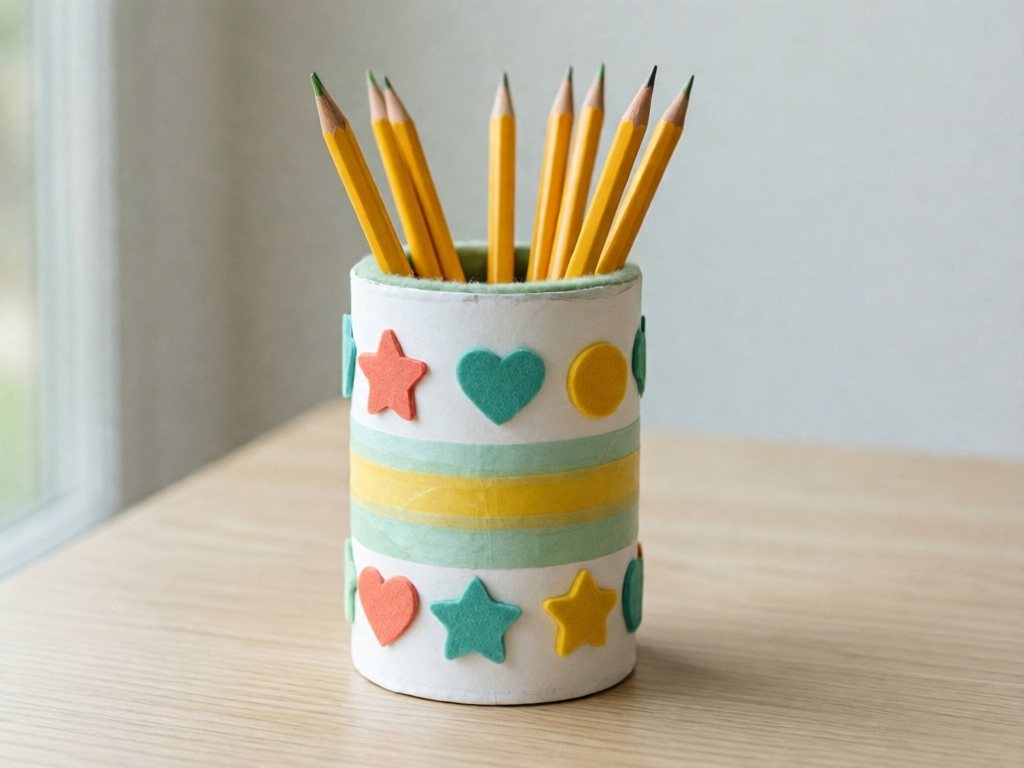
This is cardboard box crafts for kids at its finest, and I love it because the base material is literally garbage. We eat a lot of canned beans in this house, so I’m never short on supplies. A pencil holder also gets used, so the gift is practical as well as sentimental.
Supply list:
- A clean 15-oz tin can, label removed, opened with a smooth-edge (safety) can opener.
- For ages 4-5, a cardboard canister instead of the can.
- Duct tape or felt (to cover the inner rim of a can).
- Acrylic paint for the base coat (spray paint is an adult-only outdoor job; see Safety first above).
- Peel-and-stick decorations: washi tape, ribbon, stickers, foam letters.
- Buttons and googly eyes (ages 4+ only, with an adult watching at ages 4-5).
- Craft glue, or a hot glue gun that only an adult uses.
- Felt or foam sheet (optional, for lining the inside).
Step-by-step instructions:
- Prep the container (adult). Wash the can and remove the label. An adult inspects the rim, then folds duct tape or sticks felt over the inside edge. Don’t test the edge with a finger. For ages 4-5, start with a cardboard canister instead.
- Paint a base coat. White or a light color works best under decorations. Let it dry 1-2 hours.
- Decorate. Foam letters, washi tape stripes and stickers all work. My kids like spelling “BEST TEACHER” in foam letter stickers. Buttons and googly eyes are for ages 4 and up, with an adult watching at ages 4-5. An adult does any hot gluing.
- Line the inside (optional). Once the decorations are dry, add a circle of felt so pencils don’t scratch the metal.
- Fill it. Add sharpened pencils, pens or markers.
Age modifications:
- Ages 4-5: Start with a cardboard canister instead of a can. Stick to stickers, washi tape, and foam shapes that peel and stick. Buttons and googly eyes only with an adult watching, and never for under-4s.
- Ages 6-7: Introduce button patterns, ribbon wrapping, and glitter glue details.
- Age 8: They can attempt more sophisticated techniques — decoupage with tissue paper, painting detailed designs, or wrapping the can in fabric.
What could go wrong:
- Sharp edges: use only a can opened with a smooth-edge opener, and have an adult inspect and tape the rim. For ages 4-5, or if in doubt, use a cardboard canister.
- Stickers won’t stick: paint a base coat first.
- Decoupage is slow: Mod Podge takes a long time to dry, so start early.
- Glitter glue dulls: it loses its sparkle when dry. Regular glitter with white glue has more impact.
Presentation idea: Fill with pencils and wrap the whole thing in cellophane tied with a bow. Add a tag that says “Thank you for helping me WRITE my story.” (Puns are mandatory in teacher gifts; it’s the law.)
4. Watercolor Thank You Cards (Ages 3+)
If your kids love painting, this is the project. Watercolors are forgiving, beautiful, and hard to mess up in a way that doesn’t still look artsy. I wrote about watercolor techniques for kids in detail if you want to build their skills. Even a three-year-old’s watercolor wash can look like something from a stationery store.
Supply list:
- Watercolor paper or heavyweight cardstock (pre-folded to card size).
- Watercolor paints (the cheap Crayola set is perfectly fine).
- Paintbrushes (medium round brushes, plus one wide brush).
- Two cups of water (one clean, one for rinsing).
- Paper towels.
- Markers or colored pencils (for writing the message inside).
- Envelopes.
Step-by-step instructions:
- Fold the card. Pre-fold the paper to about 5″ x 7″. Watercolor paper gives the best results, but heavyweight cardstock works too.
- Wet the front. Brush clean water over the front of the card with a wide brush. This is the “wet-on-wet” technique, and it makes the colors flow and look dreamy.
- Drop in color. Your child touches paint to the wet surface and watches it bloom and blend. Gentle touches are enough. This is process art territory, because the paint does the pretty part on its own.
- Let it dry. Allow 30-60 minutes, or an adult can use a hair dryer on low.
- Add details. Once the card is dry, your child can draw a flower, a heart, a sun, or just their name on top.
- Write the message. Pre-writers can draw inside while you write down what they dictate. I write it word for word, weird parts included. “Thank you for letting me be the line leader that one time” is perfect as spoken.
Age modifications:
- Ages 3-4: Focus entirely on the wet-on-wet technique — it’s basically magic water painting. They add color and watch it spread. You handle the folding, message writing, and details.
- Ages 5-7: They can paint a simple scene (rainbow, flowers, sun) and attempt to write their own message.
- Age 8: Encourage planned compositions, layered techniques (let the first layer dry, then add details on top), and thoughtful personal messages.
What could go wrong:
- Warped card: too much water. Use watercolor paper if possible, or press the dried card under heavy books overnight.
- Brown soup: too many colors. Stick to 3-4, and avoid mixing complementary pairs (red + green, blue + orange) on the paper.
- Muddy light colors: kids dip dark paint straight into light. Give them two cups of water and remind them to rinse between colors.
Presentation idea: Slide the card into a kraft envelope, seal with a heart sticker, and write the teacher’s name in your child’s handwriting on the front. Simple and elegant.
5. Sugar Scrub Jars (Ages 5+)
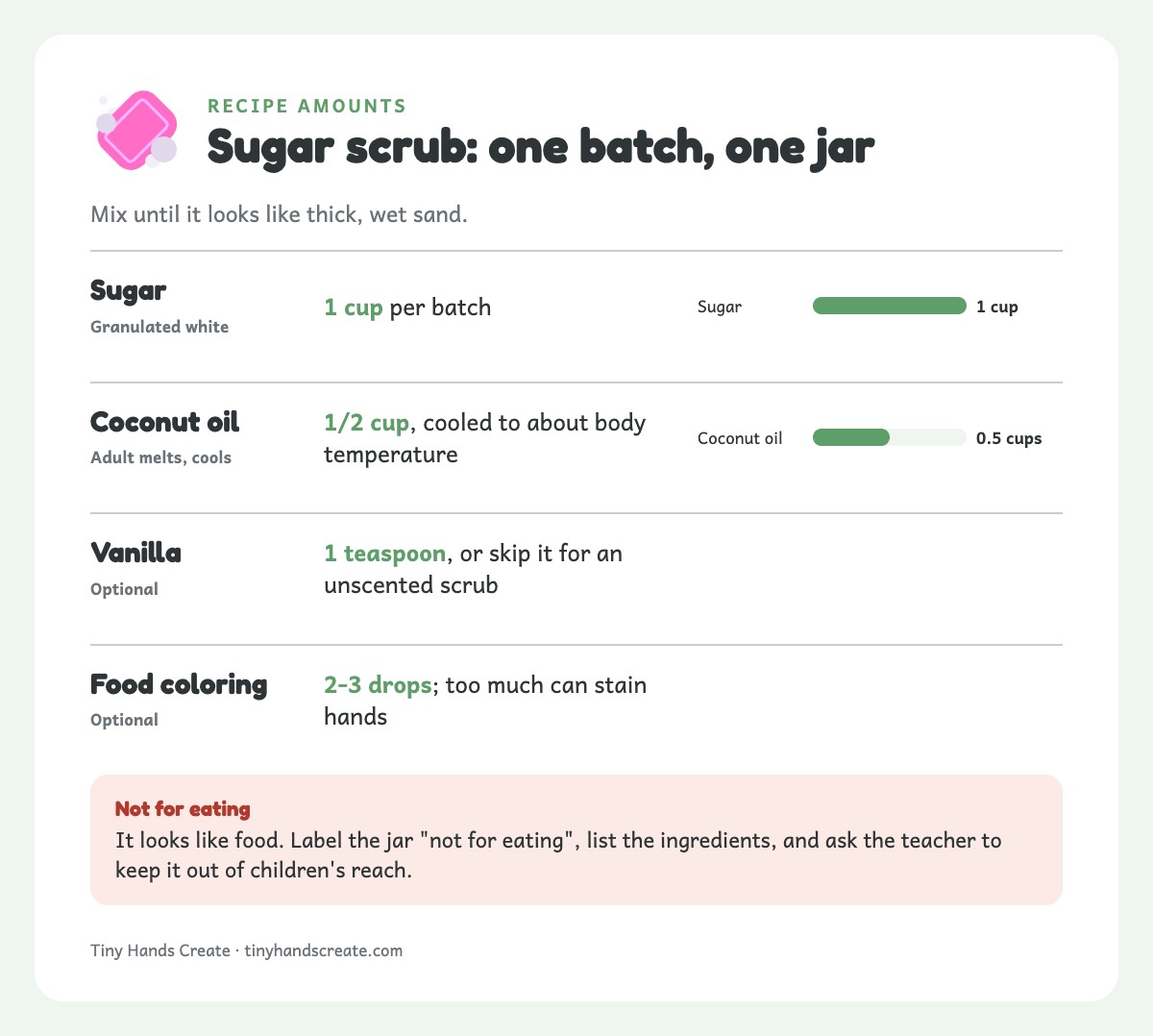
This one feels fancy but is easy. The first time we made it, my son said, “Wait, we can just make bath stuff?” It’s a small self-care treat rather than another classroom supply.
Safety firstThe scrub looks like food and goes on skin, so read these before you mix.
- Not for eating: label the jar “not for eating” and list the ingredients (coconut oil, sugar, and vanilla extract if you add it).
- Out of reach: tell the teacher to keep it at home or out of children’s reach, because it looks like food.
- Patch-test first: try it on a small area of skin. Keep it off the face and off broken or irritated skin.
- Scent: unscented is the safest choice. A little vanilla extract is the only scent I use, and it contains alcohol, so skip it for sensitive skin. Skip peppermint and lemon oil too.
- Hot oil: an adult melts the coconut oil and lets it cool before a child touches it.
- Keeping it fresh: use a clean, dry spoon and keep water out of the jar. It is best used within about a month.
- Slippery: coconut oil makes tubs and floors slick.
- Ask first: check with the teacher’s family or the school before gifting any skin product.
Supply list:
- Small mason jars or clear containers with lids (4-8 oz size).
- 1 cup granulated white sugar per batch (a batch fills roughly one 8 oz jar).
- 1/2 cup coconut oil (melted by an adult).
- 1 teaspoon vanilla extract, or leave it unscented.
- Food coloring (optional).
- Small bowl and a spoon or craft stick for mixing.
- Ribbon, labels, or gift tags.
Step-by-step instructions:
- Melt and cool the oil (adult only). An adult melts the coconut oil and lets it cool. It should still be liquid but comfortable to touch, about body temperature.
- Mix. In a bowl, combine 1 cup sugar and 1/2 cup of the cooled oil. Your child stirs until it looks like thick, wet sand.
- Scent it, or don’t. Add 1 teaspoon of vanilla extract, or skip it for an unscented scrub.
- Add color (optional). Stir in 2-3 drops of food coloring. A tiny bit goes a long way, and too much can stain hands.
- Fill the jar. Your child spoons the mixture in and packs it gently.
- Label and decorate. Close the lid, add the ingredient and “not for eating” label, and tie on a ribbon and tag. We write “You deserve a little sweetness. Thank you for an amazing year!”
Age modifications:
- Ages 5-6: They can measure (with help), stir, choose the scent, and spoon into jars. You handle the melted oil and any fragrance.
- Ages 7-8: They can do everything except melting the oil. Let them read the “recipe” and follow steps on their own.
What could go wrong:
- Syrup instead of scrub: the oil was too hot and dissolved the sugar. Let it cool until it is liquid but comfortable to touch, about body temperature.
- Sensitive skin or allergies: go unscented, which is the gentlest choice. Include an ingredient label either way.
Presentation idea: Tie a small wooden spoon to the jar with ribbon for scooping. Add a label with the scent, the ingredients, “not for eating” and how to use it: massage into hands, then rinse with warm water. Add a line asking the teacher to keep it at home or out of children’s reach. Kraft sticker paper makes the labels look polished.
6. Tissue Paper Flower Bouquet (Ages 4+)
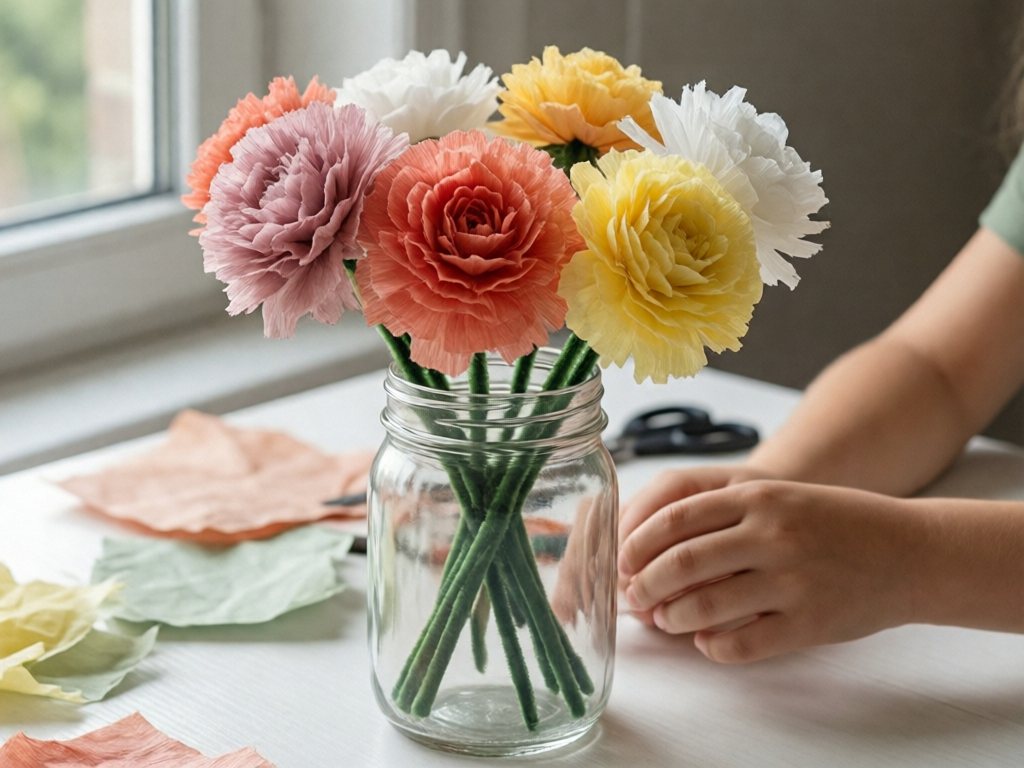
These never wilt, they cost almost nothing, and a bouquet of them in a mason jar is honestly gorgeous (more ideas in our tissue paper crafts for kids). They also make a good slow-afternoon project: put on music and assemble a batch at the kitchen table.
Supply list:
- Tissue paper in assorted colors (5-6 sheets per flower).
- Green pipe cleaners, or wooden skewers wrapped in green floral tape (an adult snips off the sharp tips).
- Scissors.
- String, twist ties, or small rubber bands.
- Mason jar or small vase (optional, for presentation).
- Green construction paper (optional, for leaves).
Step-by-step instructions:
- Stack and cut. Stack 5-6 sheets of tissue paper. Cut the stack to about 8″ x 12″ for standard flowers, or 4″ x 6″ for small ones.
- Fold. Accordion-fold the stack with folds about 1 inch wide. It should look like a paper fan.
- Tie the middle. Pinch the folded stack in the center and secure it with a twist tie, pipe cleaner or small rubber band.
- Shape the ends. Round both ends with scissors for a peony look, or cut points for a spikier flower. Scalloped and fringed edges work too.
- Separate the layers. Pull each layer of tissue up toward the center, one at a time. Go slowly, because tissue paper tears easily.
- Fluff. Adjust the layers until the flower is full and round.
- Add a stem. Twist the pipe cleaner around the center, or tape a wooden skewer to the back.
- Repeat. Make 5-7 flowers in mixed colors for a full bouquet.
Age modifications:
- Ages 4-5: They can help with the accordion folding (with guidance) and the fun part — pulling the layers apart. They’ll tear some layers. That’s okay. Slightly ragged flowers look more organic.
- Ages 6-7: They can do the full process with minimal help. Let them choose color combinations. Teach them the different edge cuts.
- Age 8: Challenge them to make different flower types (roses, carnations, dahlias) by varying the technique. They can look up tutorials and experiment.
What could go wrong:
- Torn tissue: kids pull too fast. Keep extra sheets on hand.
- Flat, sad flowers: you didn’t separate enough layers. Coax each one up gently.
- Drooping heads: reinforce pipe-cleaner stems with tape.
- Floppy or stubborn: folding too loosely makes a floppy flower, and folding too tightly makes the layers hard to separate.
Presentation idea: Arrange 5-7 flowers in a mason jar (painted by your child, if you’re ambitious) or wrap the bouquet in kraft paper tied with twine, like flowers from a farmer’s market. Add a tag: “Thank you for helping me bloom.”
7. Stamped Tea Towel (Ages 3+)
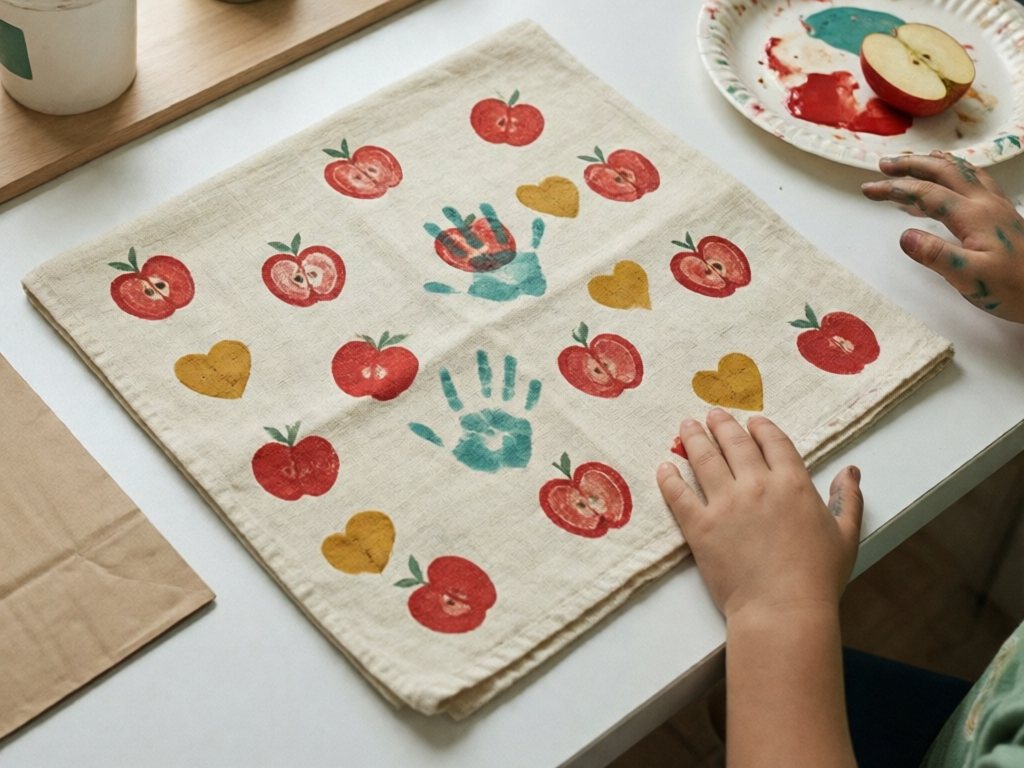
This one is practical, cute and easy. Stamps keep the paint more contained than freehand painting, an idea borrowed from our mess-free art approaches.
Supply list:
- Plain white or cream flour sack tea towel (often about $1 each at a dollar store, or cheaper in multipacks).
- Non-toxic, skin-safe fabric paint.
- Stamps: apple halves, potato stamps, foam stamps, or your child’s handprint.
- Paper plates (for paint palettes).
- Cardboard (to slide under the towel to stop bleed-through).
- Iron and a thin pressing cloth (for heat-setting, adult only).
Step-by-step instructions:
- Pre-wash the towel. Washing removes the sizing, the factory coating that makes it feel stiff, so the paint sticks.
- Protect the table. Lay the towel flat and slide a piece of cardboard underneath so paint doesn’t bleed through.
- Pour the paint. Spread fabric paint on paper plates in thin layers. You want even coverage on the stamp, not globs.
- Stamp the design. Pick a stamp from the table below. Press it into the paint, dab the extra on scrap paper, then press it firmly onto the towel.
- Let it dry. Leave the towel flat for at least 4-6 hours, or overnight.
- Heat-set (adult only). Iron the reverse side of the design through a thin pressing cloth for 3-4 minutes on medium heat with no steam, following the paint label. Keep kids well away from the hot iron. Heat-setting makes the design permanent and washable.
| Stamp | Who preps it | Best for | Mess |
|---|---|---|---|
| Handprint | An adult presses the child’s hand into the paint and guides it to the towel | Ages 3-4, and the most personal design | High |
| Apple half | An adult cuts the apple; pat the cut side dry before stamping | Ages 5+ on their own, 3-4 with help | Medium |
| Potato stamp | An adult cuts the potato and carves a simple heart, star or circle | Ages 5+ on their own, 3-4 with help | Medium |
| Foam stamps | No prep; letters, shapes or animals | Ages 5+, and letter stamps for messages at 8 | Low |
Age modifications:
- Ages 3-4: Handprints are best. You control the paint application — press their hand into the paint on the plate, guide it to the towel, press down. Expect paint on arms, face, and the dog.
- Ages 5-7: They can use stamps independently. Let them plan a pattern or create a scene.
- Age 8: They can design the whole layout, use multiple stamp types, and even write messages with letter stamps.
What could go wrong:
- Blobby prints: too much paint on the stamp. Dab the extra on scrap paper first.
- Smudges: fabric paint dries much more slowly than regular paint, so no touching it to check.
- Mushy apples: apple stamps soften after a few uses. Have a backup apple.
- Design washes out: you skipped the heat-setting step.
Presentation idea: Fold the towel neatly, tie with a ribbon, and attach a small cookie cutter or wooden spoon with a tag that says “Thanks for ‘stirring’ up a love of learning.”
8. Photo Frame with Handprint Art (Ages 2+)
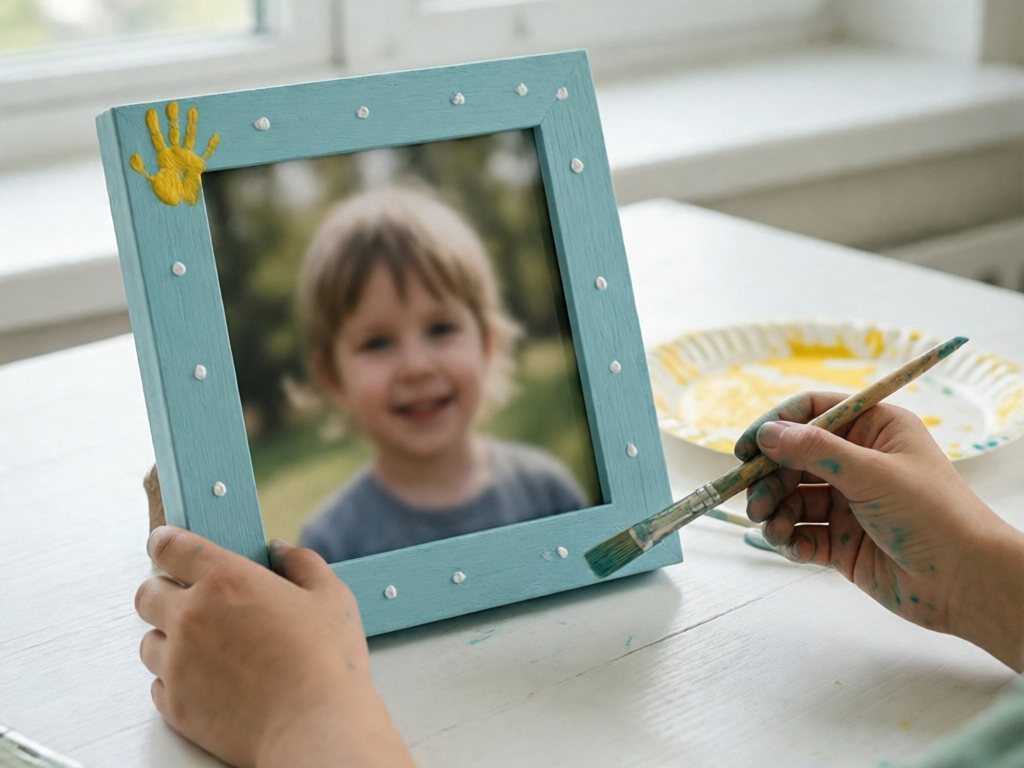
This project is a good fit for toddler process art, and it doubles as a keepsake frame a teacher can keep on a desk. Something about a tiny handprint frozen in time just gets to people.
Supply list:
- Unfinished wooden picture frame (from Dollar Tree or a craft store).
- Non-toxic, washable, skin-safe paint in 2-3 colors (it goes on hands).
- Paintbrushes.
- A class photo or a photo of your child (4×6, or whatever fits the frame).
- Clear acrylic sealer spray (an adult applies this).
- Optional: flat stickers for extra decoration. No gems or buttons under age 4, and only with an adult watching at ages 4-5.
- Newspaper or a plastic tablecloth.
Step-by-step instructions:
- Take the frame apart (adult). Remove the glass and backing, and set the glass out of reach. Only the wooden frame gets painted.
- Paint a base coat. White, light blue or yellow all work well. Let it dry.
- Add the handprint. Brush paint evenly onto your child’s hand and press it onto the frame, in a corner or along one side. One print or several, whatever fits.
- Let it dry. Wait until the handprints are completely dry.
- Decorate. Your child can add painted dots, flat stickers, or their name in marker.
- Seal it (adult only). An adult seals the frame with clear acrylic spray, following the Safety first box above. Let it off-gas fully before your child handles it.
- Finish. Insert the photo, reassemble the frame, and write the child’s name, age and year on the back.
Age modifications:
- Ages 2-3: This is basically a handprint stamping session. You do the frame prep, paint application, and guiding. They provide the adorable tiny hand. That’s enough. It’s more than enough.
- Ages 4-6: They can paint the base coat, do their own handprint (with guidance), and add decorations.
- Ages 7-8: Let them paint a miniature scene or portrait on the frame, or use fine brushes for detailed designs. Their handprint still goes on there — it’s the whole point.
What could go wrong:
- Faint print: paint dries fast on hands. Go straight from painting to pressing.
- Blurry print: don’t press again, or you’ll get a smudge. Let it dry and add another print in a slightly different spot.
- Wiggly fingers: hold their wrist gently but firmly during the press.
- Broken glass: an adult keeps the frame glass out of reach until the very end.
Presentation idea: Insert a current photo of your child (or a class photo if you have one), wrap the whole frame in tissue paper, and write “Framed with love by [name], [year]” on the back.
9. Gratitude Jar with Handwritten Notes (Ages 5+)
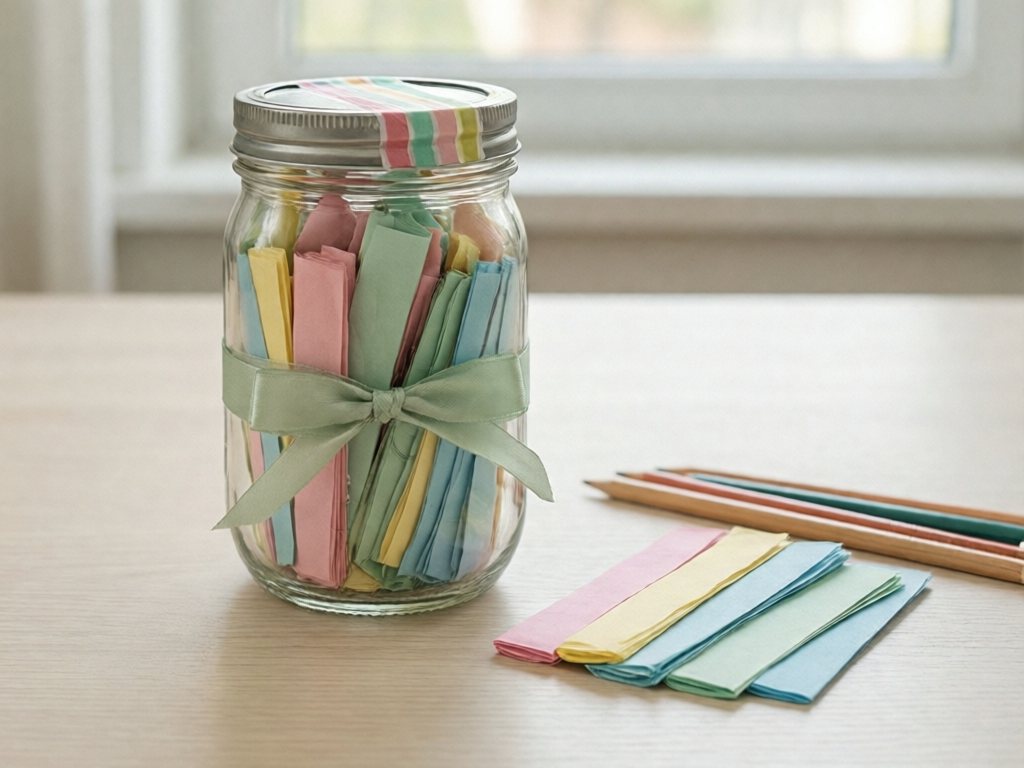
This is the most personal gift on the list. It turns your child’s specific memories of the year into notes the teacher can keep and reread on a tough day.
Supply list:
- Mason jar or clear glass jar with a lid (pint size works well).
- Colored paper or cardstock, cut into strips about 2″ x 4″.
- Markers, colored pencils, or pens.
- Ribbon.
- Stickers, washi tape, or paint for decorating the jar.
- Optional: glitter or stick-on gems for the outside of the jar (gems only with an adult watching at age 5).
Step-by-step instructions:
- Decorate the jar. Your child can paint the outside, wrap it in washi tape, or add stickers. A simple ribbon around the middle looks great too. A washed pasta sauce jar works as well as a new one, the same idea as our Earth Day recycled crafting.
- Cut the strips. Cut colored paper into strips about 2″ x 4″. I usually prep 15-20 strips per jar.
- Write the notes. On each strip, your child writes one thing they love, remember, or appreciate about their teacher. Four kinds of notes work well.
- A specific memory. “I loved when you read us Charlotte’s Web”.
- A quality. “You never yell even when we’re loud”.
- A funny moment. “Remember when the class hamster escaped and you screamed”.
- A simple feeling. “You make me feel smart”.
- Fill the jar. Fold each note and drop it in.
- Decorate the lid. Paint it, cover it with washi tape, or wrap it in fabric held with a rubber band.
- Add a label. Try “[Name]’s Gratitude Jar” or “Open when you need a smile”.
Age modifications:
- Ages 5-6: They can write simple sentences with help. Phonetic spelling is perfect — “u r the best teecher” is infinitely more charming than a dictated, parent-written message. Let the spelling be real.
- Age 7: They can write longer, more specific memories and reflections. Encourage them to think of particular moments.
- Age 8: They can write thoughtful paragraphs, include quotes, and even add small drawings to each strip. This age can produce notes that are genuinely moving.
What could go wrong:
Kids sometimes struggle to think of specific things. Try these prompts:
- What is your favorite thing your teacher does?
- What was hard this year that you learned to do?
- What makes this teacher different from other teachers?
Still stuck? Have them draw instead of write. A drawing of a favorite classroom moment says just as much.
Presentation idea: Tie a ribbon around the jar with a decorative tag. Include a small card on top that explains the concept: “Inside this jar are [X] reasons why you’re an amazing teacher. Open one whenever you need a reminder.”
10. Decorative Marbled Mug (Adult-Made; Kids 8+ Pick Colors)
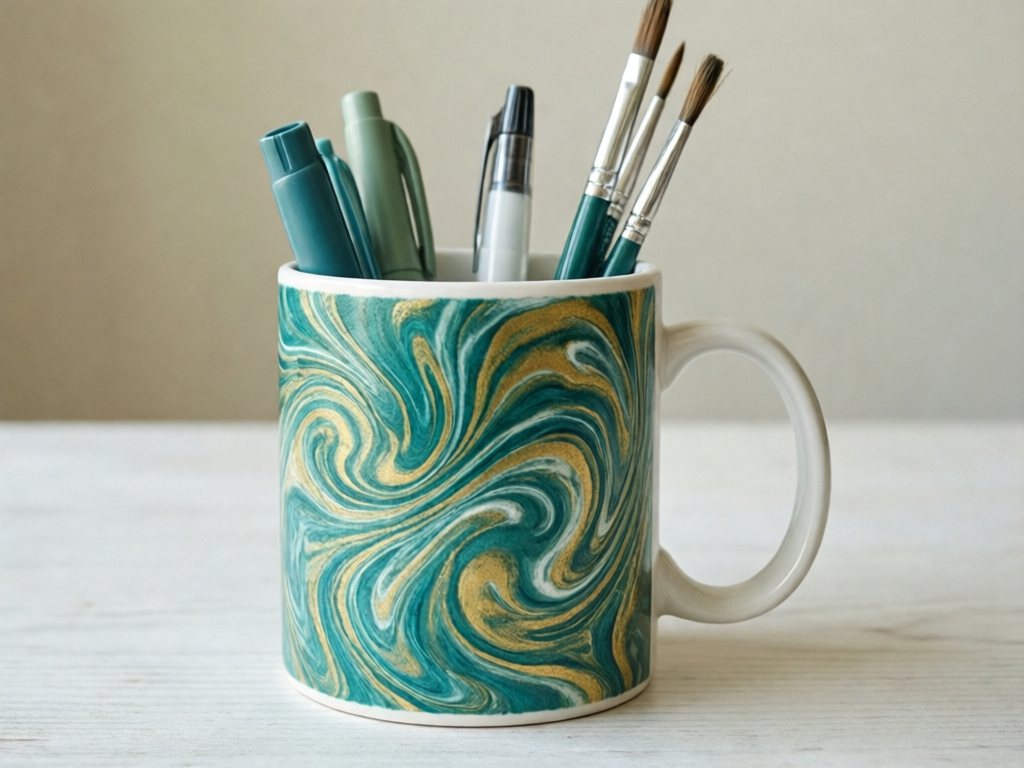
This is the one project on the list that an adult makes. Kids 8 and up choose the colors and watch from a few steps back, and the swirled result looks striking. The finished mug is decorative: it holds pens, brushes or a small plant.
Safety firstThis mug is decorative only, never for drinking.
- Outside only: decorate well below the rim, and never put polish or sealer on the inside.
- Adult-made: an adult handles the polish, remover and sealer, outdoors, with gloves on and no flames or heat nearby.
- Kids stand back: children 8 and up pick the colors and watch only, a few steps away while polish is open. Keep polish and remover away from eyes and mouths.
- Disposal: let the leftover polish film dry, then put the water and container in the trash. Check your local household hazardous waste rules for leftover liquid polish and remover, and never pour them down the drain.
Supply list:
- Plain white ceramic mug (about $1-2 at a dollar store).
- Nail polish in 2-3 colors. Cheap brands work great, and the wilder the colors, the better.
- A disposable container deep enough to dip the mug (an old takeout container works).
- Warm water.
- Toothpick or wooden skewer.
- Nail polish remover and cotton balls (for cleanup).
- Newspaper or trash bags (to protect your workspace).
- Disposable gloves (required).
- Clear acrylic spray sealer, plus a mask for spraying.
Step-by-step instructions:
- Set up outdoors (adult). Work outside, away from flames and heat, because nail polish fumes are strong. Put on disposable gloves, cover the table, and have kids stand a few steps back.
- Fill the container. Add warm (not hot) water, about 3 inches deep.
- Drip the polish. Drip each color onto the water, one at a time. It should spread into a thin film. Work fast, because polish dries quickly.
- Swirl. Drag a toothpick through the colors 2-3 times. More than that turns everything muddy.
- Dip the mug. Hold the mug by the handle and slowly roll the outside through the film. Keep the rim and the inside clear of polish.
- Let it dry. Set the mug on newspaper and leave the design alone for at least 2 hours.
- Seal it. Wearing a mask, spray the outside only with clear acrylic sealer, outdoors and away from flames. Let it cure for 24 hours before it comes back inside.
- Clean up. Keep the gloves on. Let the leftover polish film dry, then put the water and container in the trash. Check your local household hazardous waste rules for leftover liquid polish and remover, and never pour them down the drain.
- Tag it. The mug is for decoration, not drinking. It gets wiped clean by hand and never goes in the dishwasher, so say so on the gift tag.
Age modifications:
- Ages 8+: They pick the colors, decide the swirl pattern and watch from a few steps back. An adult handles the polish, remover, sealer and dipping.
- Older siblings: They can plan the color combinations and write the “decorative, not for drinking” tag.
- Under 8: Skip this one and pick another project. The fumes make it a poor fit for younger kids, even as watchers.
What could go wrong:
- Polish sinks: the water is too cold (use warmer water) or the polish is too thick (try another brand).
- Brownish mess: you swirled too much or picked colors that don’t contrast. Try teal + gold, purple + white, or blue + green.
- Smudged design: you moved the mug too fast. Go slowly and steadily.
- Kitchen smells like a nail salon for three days: you didn’t work outside.
Presentation idea: Fill the mug with a few pens, pencils or paintbrushes, wrap in cellophane, and tie with a ribbon. Add a tag that says the mug is decorative and not for drinking.
Presentation Ideas That Make DIY Gifts Look Polished
Presentation is what makes a kid craft look gift-ready, and it takes about five minutes. Do the wrapping yourself once your child has finished, and keep cellophane, plastic bags and ribbon away from children under 3.
The Gift Bag Approach:
Drop the finished gift into a solid-colored gift bag from Dollar Tree. Add tissue paper on top. Attach a handwritten tag with twine. Done. This works for virtually every project on this list.
The Cellophane Wrap:
For items like painted pots, mugs, or jars, cellophane wrap with a ribbon makes everything look boutique-level. Buy a roll of clear cellophane from Dollar Tree (it comes in a big sheet) and cut to size. Gather at the top and tie with ribbon.
The Kraft Paper Bundle:
For flat items like cards, bookmarks, or tea towels, wrap in kraft paper and tie with baker’s twine. Add a small sprig of dried lavender or a fresh flower from your yard if you’re feeling fancy. This takes 90 seconds and looks like a professional gift.
The Tag:
Always, always include a handwritten tag or card from your child. Even if the whole gift IS a card (like the watercolor cards), add a small note. “For [Teacher’s Name], from [Child’s Name]” at minimum. Let the child write it — crooked letters and all.
The Combo Gift:
Pair a handmade item with a small purchased item for maximum impact. A painted flower pot + a $5 coffee gift card. A sugar scrub jar + a bar of fancy soap from TJ Maxx. The handmade piece shows heart; the purchased piece shows you know teachers are real humans who enjoy real things.
Teacher Gift Timeline: When to Start Making Gifts
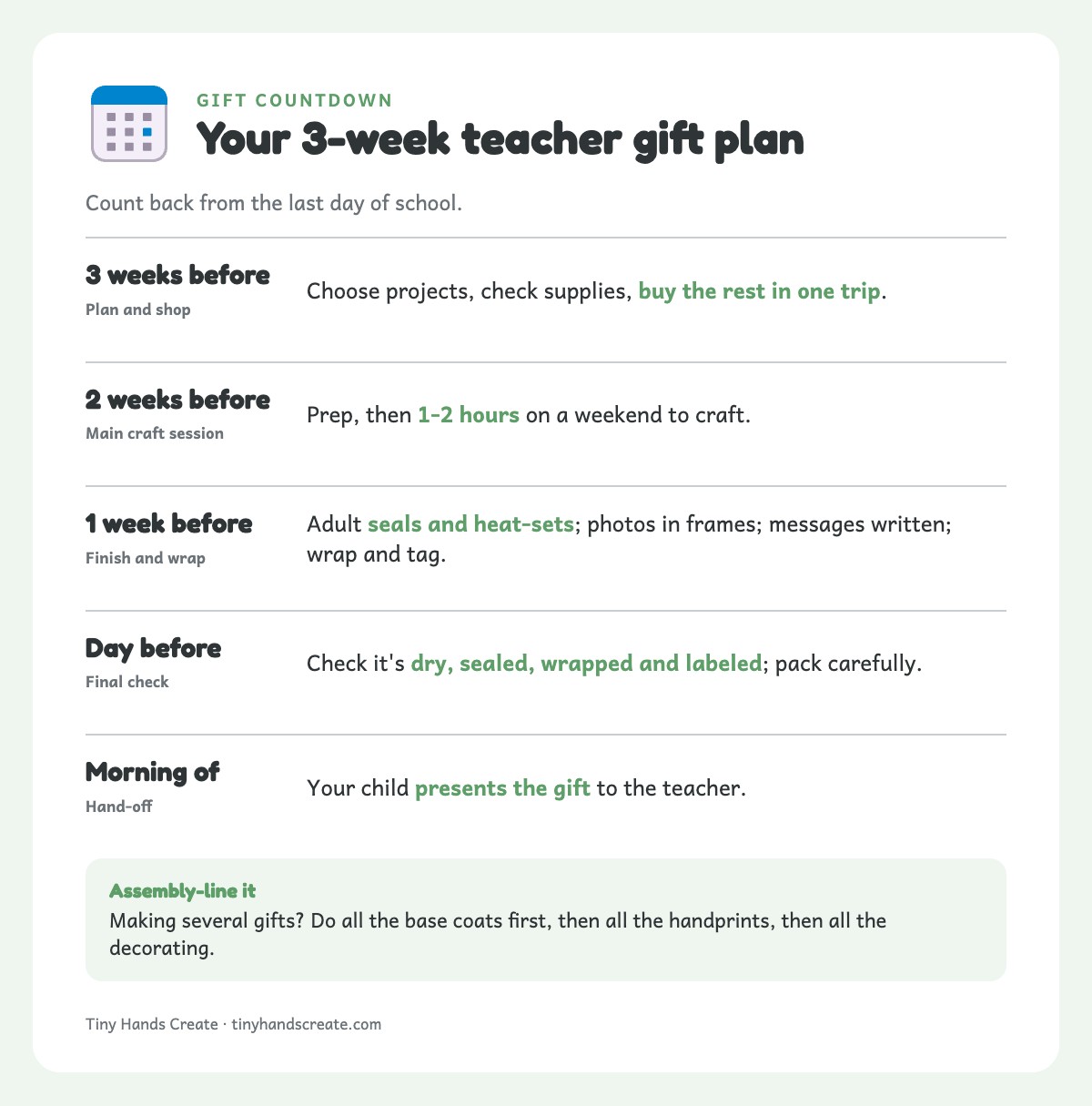
I used to be a last-minute person. Now I start three weeks before the last day of school, and my stress levels thank me. This is the plan I follow.
- 3 weeks before: choose your projects, check which supplies you already own, and buy the rest in one trip.
- 2 weeks before: do the prep and the main crafting session. Cut paper, pre-fold cards, remove can labels and pre-wash tea towels. Then set aside 1-2 hours on a weekend and put on music.
- Making several gifts? Work assembly-line style. Do all the base coats first, then all the handprints, then all the decorating.
- 1 week before: finish up. An adult does the sealing and heat-setting, photos go into frames, and your child writes or dictates the messages. Then wrap and tag everything.
- The day before: check that everything is dry, sealed, wrapped and labeled. Pack gifts carefully, because a painted pot can crack in a backpack.
- The morning of: hand the gift to your child and let them present it.
Frequently Asked Questions
How much should I spend on a teacher gift?
Amounts vary a lot by school and community. Many families spend roughly $5-20, and a handmade gift can cost less. The projects here cost about $2-8 each in basic materials. Many schools have policies about gift values, so check your school handbook if you’re unsure. Whatever you spend, a handmade component makes it feel more personal than a gift card alone.
My child’s teacher has 25+ students. Won’t they be overwhelmed with gifts?
Teachers do receive a lot of gifts at the end of the year, and yes, 25 mugs is a lot of mugs. That’s an argument for small handmade gifts, which stand out from a pile of generic ones. A thumbprint bookmark or a card takes up almost no space.
What if my kid’s teacher has allergies? Are any of these gifts risky?
The sugar scrub (Project 5) is the one to think about. Coconut oil and fragrance can bother sensitive skin, and some people are allergic to coconut. Make it unscented and include an ingredient label, or choose a different gift if you know of an allergy. The marbled mug (Project 10) is decorative only and not for drinking or holding food. Painted items work well as display pieces once fully dry and sealed. When in doubt, stick with paper-based projects like cards, bookmarks, or the gratitude jar.
Should I make gifts for ALL the teachers my child has?
This is a personal call, but I usually make gifts for the main classroom teacher, any aides who are in the room daily, and any specialist teacher my kid talks about regularly. If your child takes a bus, the bus driver is often forgotten and deeply appreciated. For secondary teachers (art, music, PE) where the relationship is less personal, a card alone is a lovely gesture. My rule: if my kid can tell me something specific about the person, they get a gift.
What if my toddler literally cannot make anything?
If your child is under two, a handprint or footprint on a card or frame is plenty. You’re doing the work, and everyone knows it, and nobody cares. The handprint is the gift. Use washable, non-toxic, skin-safe paint and wipe hands right away. Pair it with a heartfelt note (written by you) and call it done. I promise no teacher has ever looked at a baby handprint and thought “this isn’t crafty enough.”
Can I make teacher gifts as a classroom parent for the whole class?
Yes. Several of these projects work well as group gifts. For the gratitude jar, collect a note from every student and fill one big jar. The photo frame can include a class photo. A flower pot can be covered in thumbprints from every child. Coordinate with other parents through your class communication channel, assign each family a simple task (bring one note, one thumbprint, etc.), and assemble it yourself. A whole-class gift includes every student, which is part of its charm.
My child wants to give their teacher something they made totally on their own without my help. Should I let them?
Yes. Even if the result is a crumpled piece of paper with a mystery drawing and a message that reads “yor the besst teetcher in the hole wrld”, it’s exactly right. The point of a handmade gift is your child’s own voice, art and words. Resist the urge to fix it, redo it, or add to it. Your only job is a quick safety check on the materials.
That’s ten teacher gifts from the craft drawer and, probably, the recycling bin. The best part isn’t the finished product. It’s your kid at the kitchen table, tongue sticking out in concentration, making something for someone they care about.
Now if you’ll excuse me, I need to go buy terra cotta pots. Between my two kids we have two classroom teachers, an aide and a bus driver to make gifts for, and I’m starting early this time.
Have you made any of these teacher gifts? I’d love to see your results! Tag us on social media or send a photo — especially the ones that went hilariously wrong. Those are my favorite.