Sensory-Friendly Christmas Activities for Sensitive Kids
Learn how to spot sensory overload in kids ages 2–8 and swap high-stimulation holiday events for calm, low-stress alternatives.
- Treat holiday meltdowns, clinginess, or freezing as sensory overload rather than misbehavior.
- Categorize holiday stress into four sensory loads: noise, light, touch, and crowds.
- Lower sensory load by choosing calmer swaps like steady warm lights and quiet activities.
- Build preview routines and clear exit plans before heading to holiday events.
This post contains affiliate links. As an Amazon Associate I earn from qualifying purchases.
Last December I took my four-year-old to a “magical” holiday market: a choir, a loudspeaker, a light tunnel and forty people in line for Santa. My kid lasted about six minutes. Then they went limp, covered their ears, and whispered, “Can we go to the car?” It was the best sentence of the afternoon: clear, calm, and proof they knew what they needed.
This guide is for kids ages 2 to 8 (with notes for younger siblings) who find December too loud, bright, scratchy or crowded. You’ll get a table rating common Christmas activities by sensory load with a calmer swap for each, quiet crafts and bins, a preview routine and an exit plan.
In this article (16 sections)
- Why December Overwhelms Some Kids (And What It Looks Like)
- The Sensory Load Table: Common Christmas Activities and a Calmer Swap
- A Sensory-Friendly Christmas Tree That Doesn’t Overwhelm
- Sensory-Friendly Christmas Lights Without the Glare
- Christmas Sensory Bin Ideas That Calm Instead of Overload
- Quiet Versions of the Usual Christmas Crafts
- Calm Holiday Baking and Food Activities
- Previewing Every Outing So Nothing Is a Surprise
- The Exit Plan: Your Secret Weapon
- Scratchy, Tight, and Itchy: Making Holiday Clothes Work
- Gatherings, Relatives, and the Hug Question
- Gift Opening Without the Chaos
- A Gentle Week of Sensory-Friendly Christmas Activities
- Letting Go of the “Perfect Christmas” (Because Yours Is Already Good)
- Frequently Asked Questions
- A Quieter Christmas Is Still a Magical One
Why December Overwhelms Some Kids (And What It Looks Like)
Think about what a normal December asks of a small body. Lights blink in every window, stores blast the same songs, and itchy tights and stiff collars appear. Relatives want hugs, the kitchen smells like six things at once, and naps slide. Even the fun parts are a lot of input arriving fast.
Some kids filter all that without noticing. Others feel every bit of it. For them, the same stimulus that delights a sibling can land as noise, glare, pressure or too-muchness. That’s not misbehavior, and it isn’t something to talk them out of. It’s information.
I used to think that six-minute market trip meant we’d failed at Christmas. Really, I’d planned for the wrong kid. Mine is a blanket-fort, one-string-of-warm-lights kid, and the season can be rebuilt around that without losing the magic.
A realistic note: nothing here is mess-free, and nothing here will make your child love every part of Christmas. The goal is more good moments than overwhelmed ones, and feeling less like a bouncer at your own holiday.
Good to knowThis guide assumes no diagnosis. Some kids are sensitive for a month, some for a lifetime, and some only when they’re tired. You don’t need a label to turn the volume down. If sensitivities are intense, persistent, or get in the way of eating, sleep or daily life, talk with your pediatrician or an occupational therapist. This guide can support that conversation but doesn’t replace it.
Signs of Christmas overstimulation
Little kids rarely say “I’m overstimulated.” They show you. Here’s what it can look like at ages 2 to 8:
- Covering ears or eyes, or turning their face into your shoulder
- Getting silly, wild or clingy when the noise ramps up, which looks like a burst of energy but can be a stress response
- Sudden meltdowns over small things (the wrong cup, a sock seam) after a stimulating outing
- Freezing or going very quiet and refusing to move or answer
- Refusing clothing that they wore happily in October
- Asking to leave, or hiding under tables, behind curtains or in the car
- Falling apart at home after holding it together in public, a pattern many parents and teachers call “after-school restraint collapse” and which can follow a holiday party too
- Sleep trouble in the days after a big event
Notice that none of these are “bad behavior.” They’re a nervous system waving a flag. The most useful shift I made was to stop asking “why are they acting like this?” and start asking “what is the load right now?”
The four loads: noise, light, touch, crowd
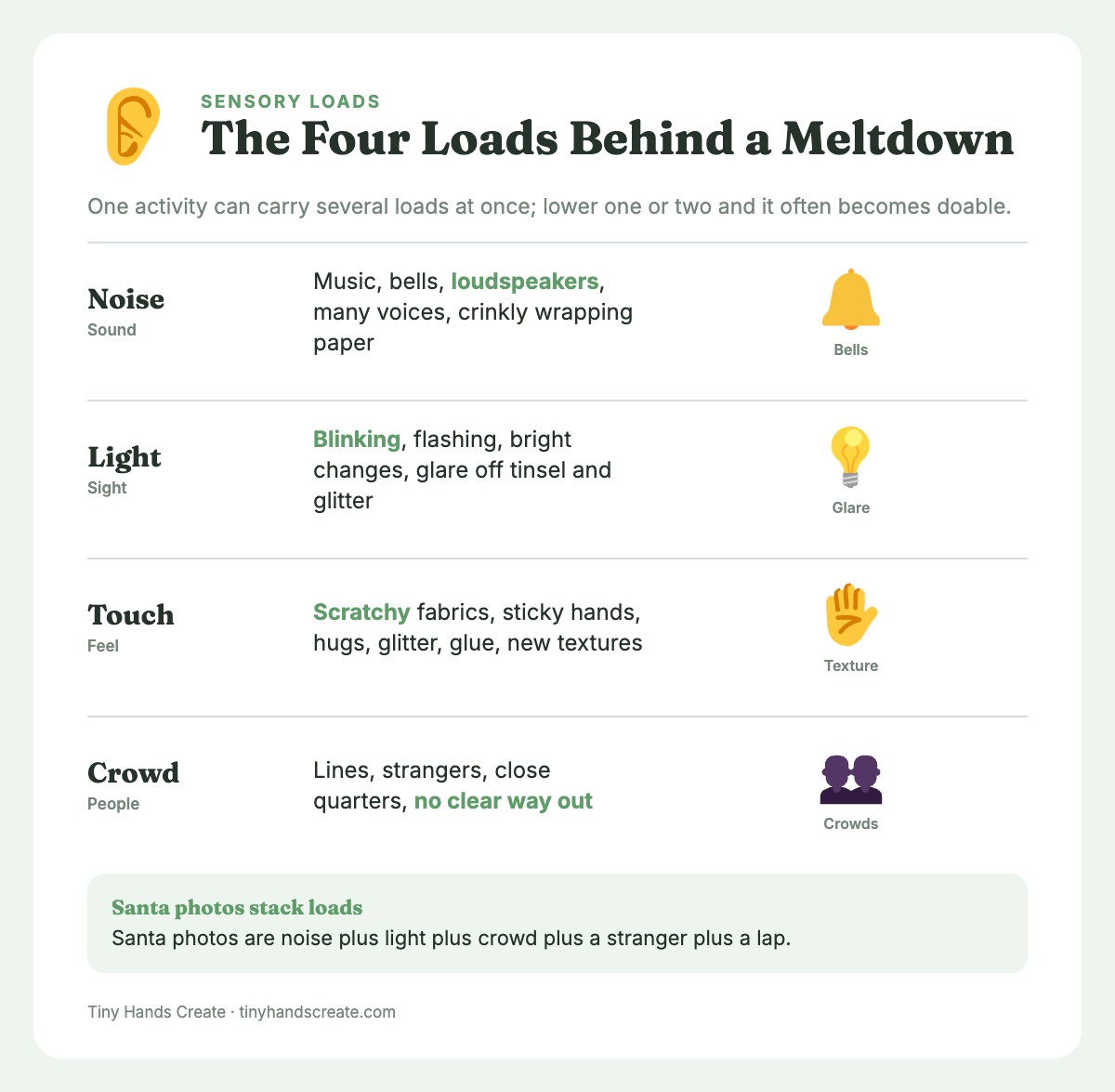
To keep this simple, I sort holiday stress into four buckets. You’ll see them again in the table below.
- Noise: music, bells, loudspeakers, many voices talking at once, crinkly wrapping paper
- Light: blinking, flashing, very bright or very dim-to-bright changes, glare off tinsel and glitter
- Touch: scratchy fabrics, sticky hands, hugs, glitter, glue, new textures in food and crafts
- Crowd: lines, strangers, close quarters, unpredictable people, no clear way out
One activity can carry several loads at once. Santa photos, for instance, are noise plus light plus crowd plus a stranger plus a lap. Once you can see the loads, you can lower one or two and often the whole thing becomes doable.
The Sensory Load Table: Common Christmas Activities and a Calmer Swap
This is the heart of the page. Loads are rated Low, Medium or High based on what a typical version of the activity involves. Your kid’s own ratings may differ, so treat this as a starting point and edit it. A kid who loves music might find the choir easy and the crowd brutal.
| Activity | Noise | Light | Touch | Crowd | A calmer swap |
|---|---|---|---|---|---|
| Visiting Santa at the mall | High | High | Medium | High | Santa from a distance, a letter to Santa, or a quiet-hours/appointment session |
| Christmas tree lot or farm | Low | Low | Medium (sap, scratchy needles) | Medium | Go at opening time on a weekday, or pick an artificial tree at home |
| Driving to see light displays | Low | High | Low | Low | Drive-through from the car seat with a brimmed hat or sunglasses to cut glare, or walk one calm street |
| Walk-through light show | Medium | High | Low | High | One porch with warm white lights, or a night-light “light hunt” |
| Holiday parade | High | Medium | Low | High | Watch the first ten minutes from the edge, or stream it with the sound low |
| School or church concert | High | Medium | Low | High | Sit by the exit, bring ear defenders, go for one song |
| Big family dinner | High | Low | Medium | High | Quiet room with a plate, arrive early, leave before dessert |
| Gift opening | Medium | Low | Medium (paper, bows) | Medium | Open one gift at a time, quiet music, pre-opened wrapping |
| Baking cookies | Low | Low | High (sticky dough) | Low | Spoon-and-bowl version with nitrile (latex-free) gloves and an adult nearby, cookie cutters on a tray liner |
| Decorating the tree | Low | Medium | Medium (tinsel, spiky ornaments) | Low | Kid-height tree zone with soft, shatterproof ornaments |
| Ugly sweater day | Low | Low | High (itchy, tight) | Medium | Soft shirt with a small festive patch or pin, worn over cotton layers |
| Crafts with glitter | Low | Medium | High (glitter, glue) | Low | Sticker, torn-paper or felt versions; see below |
| Christmas shopping trip | High | High | Low | High | Online shopping, a single store, or a “kid does one item” plan |
| Sibling or cousin party | High | Medium | Medium | High | A 45 to 90 minute cap, a quiet corner, a separate small playdate |
| Holiday movie night | Medium | Medium | Low | Low | Lower volume, lamp on, captions, a blanket and a pause button |
| Advent countdown | Low | Low | Low | Low | Already calm. Use the countdown as your visual schedule. |
Use the table like a menu. You don’t have to cancel everything in the High column. Pick the one or two events that matter most to your family and make those as gentle as possible. For everything else, choose a swap or skip it guilt-free.
A simple rule of thumb: never stack two High loads in one day
If the morning is a High (a concert, a crowded store), make the afternoon low and slow. Back-to-back High events are where most of my family’s December meltdowns lived. Alternate loud days with quiet days and everything gets easier, including for the adults.
A Sensory-Friendly Christmas Tree That Doesn’t Overwhelm
The tree is the center of the room, so it’s worth getting right. A tree can be calming or a daily dose of glare, depending on how it’s set up.
Safety firstAnchor the tree to the wall so it can’t tip. Keep light cords out of reach, and keep ornament hooks and button-sized ornaments off the low branches. Keep holly, mistletoe and poinsettia away from kids.
Choose the light, not just the tree
Lights are usually what makes a tree hard for sensitive kids. A few things to consider:
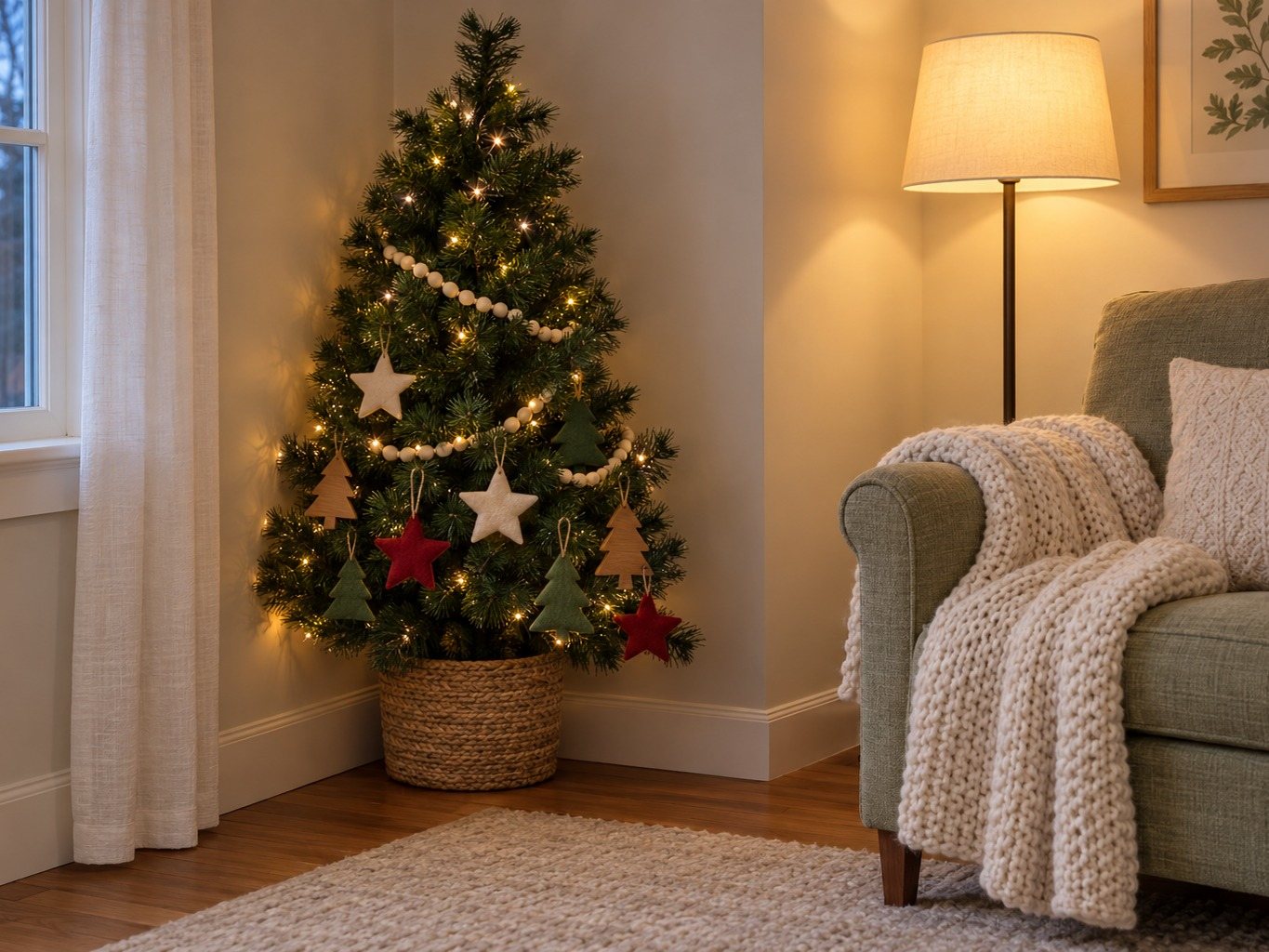
- Warm white over multicolor. Warm, steady light tends to be softer than cool white or a rainbow of colors.
- Steady over blinking. Look for a “steady on” setting. If your string has modes, find the one that doesn’t flash, and have an adult keep the controller. Choose UL/ETL-listed lights, check the cords for damage, and turn the lights off when you leave the house or go to bed.
- Fewer strands. A thin, even glow is calmer than a wall of sparkle. You can use fewer strings than the box suggests and still have a lovely tree.
- A dimmer or smart plug. Plug the tree into a dimmer or timer so the light comes up gently rather than blasting on. A plain timer also gives a predictable “lights on at 4:30, off at bedtime” rhythm, which many kids like.
- Lights off during meals and play. The tree doesn’t have to be on all day. Use it as a cozy evening feature.
Soften the touch and the sparkle
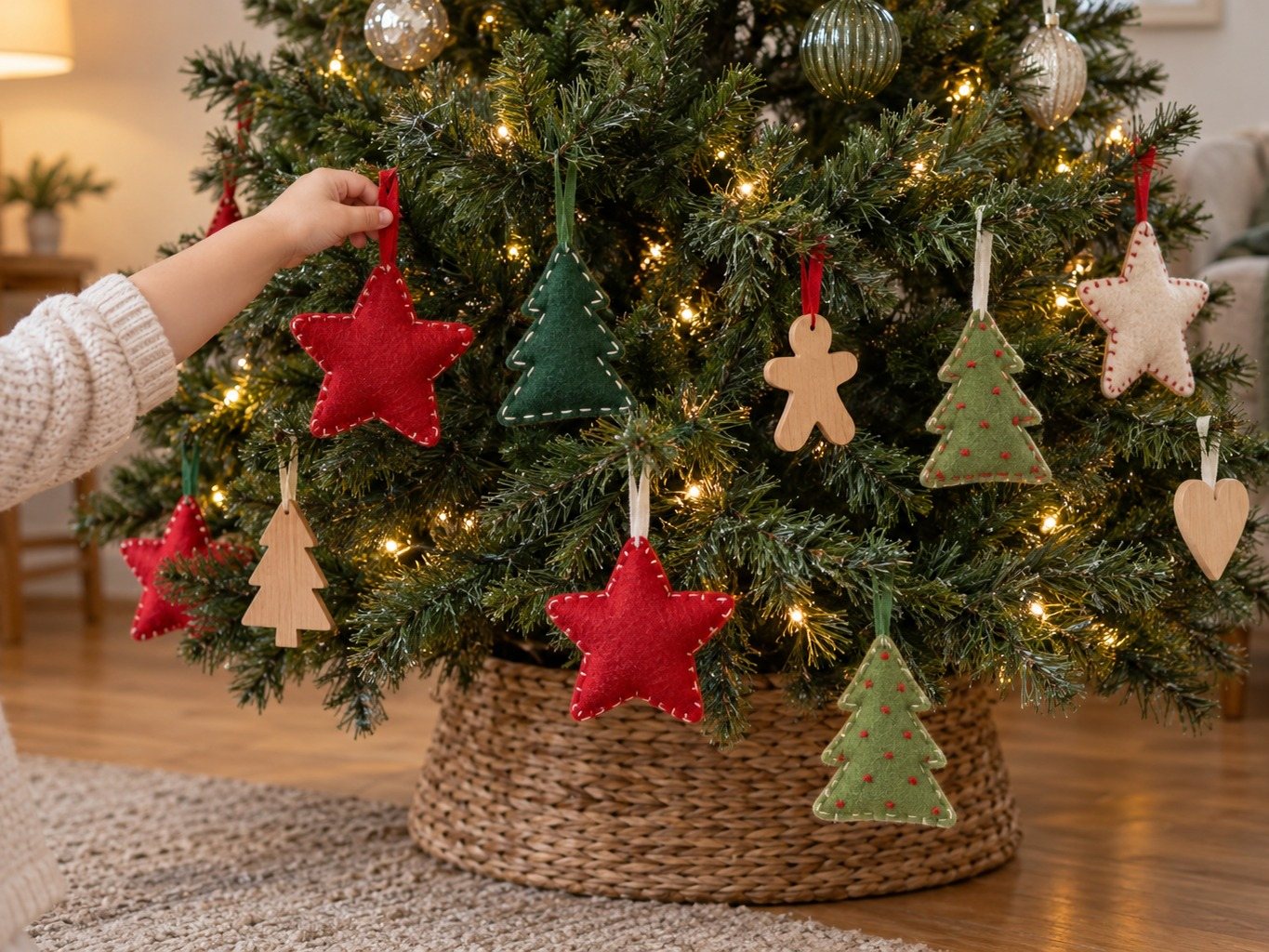
- Skip the tinsel and flocking. Tinsel is shiny and scratchy, and it’s also a chewing and swallowing risk. A plain garland works fine.
- Choose soft ornaments at kid height: felt, wood or knitted shapes bigger than a toilet-paper tube, with short ribbon loops and no hooks. Save glass and spiky ones for the top half.
- Think about scent. A fresh tree is lovely for some kids and overwhelming for others. An unscented artificial tree is a perfectly good choice, and some kids prefer it.
- Try a “kid zone.” Make the bottom third of the tree entirely theirs: only soft, unbreakable, large ornaments, and they can rearrange as often as they like. Small pom-poms don’t belong here for kids under 4.
Let them help, in a controlled way
A tree your kid helped decorate is a tree they feel safe around. Give them a job with a clear start and finish: “You hang these six felt stars, then we’re done.” Put on quiet music or nothing at all. If decorating lasts more than twenty minutes, stop for a break and finish tomorrow.
A tiny tree is still a tree
If a full tree is too much, a tabletop tree, a branch in a vase with a few ornaments, or even a paper tree taped to the wall counts. One year we used a lonely little rosemary plant in a pot, and my kid decided it was the best tree in the world because they could touch it whenever they wanted.
Sensory-Friendly Christmas Lights Without the Glare
You can keep the magic of lights while dialing down the intensity. Here’s how to handle lights at home and out in the world.
Safety firstMany small lights and tea lights run on button or coin batteries, which can cause serious injury if swallowed. Choose lights with screw-secured battery compartments and lock away spare and loose batteries. If one is swallowed, go to the ER immediately and call poison control on the way.
At home
- Use lamps, not overheads. Warm lamplight in the evening signals “wind down” without the sharp glare of ceiling fixtures.
- Try a night-light hunt. Turn the main lights off and give your kid a small flashlight or a soft battery tea light. They hunt for twinkles on the tree, in the window or along the shelf. It’s calm, it gives them control of the light, and it feels like an adventure.
- Pick one light zone. If the whole house blinks, it becomes visual noise. Choose one place for the festive light, such as the tree, and keep the rest of the house plain.
- Give your kid the remote. Many sensitive kids tolerate more when they control the switch. A battery remote or a wall-plug timer makes the light feel like their choice. Don’t hand them the plug-end switch or the cord.
- Cover windows if needed. If outside decorations (yours or the neighbor’s) shine through the bedroom window, blackout curtains help sleep a lot.
Out and about
- Drive-by viewing from the car is the lowest-effort option. Kids can look out, look away, or put on a hat. The car is also your built-in exit.
- Pick one street instead of a whole display. Ten minutes on a street with quiet, steady lights beats an hour at a big attraction.
- Bring tools: a brimmed hat, sunglasses (yes, at night), or a hood. Some kids relax once they can dim the glare themselves. In the car seat, keep bulky layers out from under the harness and skip drawstrings on hoods and hats.
- Preview with photos or video first. We’ll cover this in the preview section below.
- Look away is allowed. Tell your kid: “You can look at the lights or look at me. Both are fine.”
Quieter alternatives to a light show
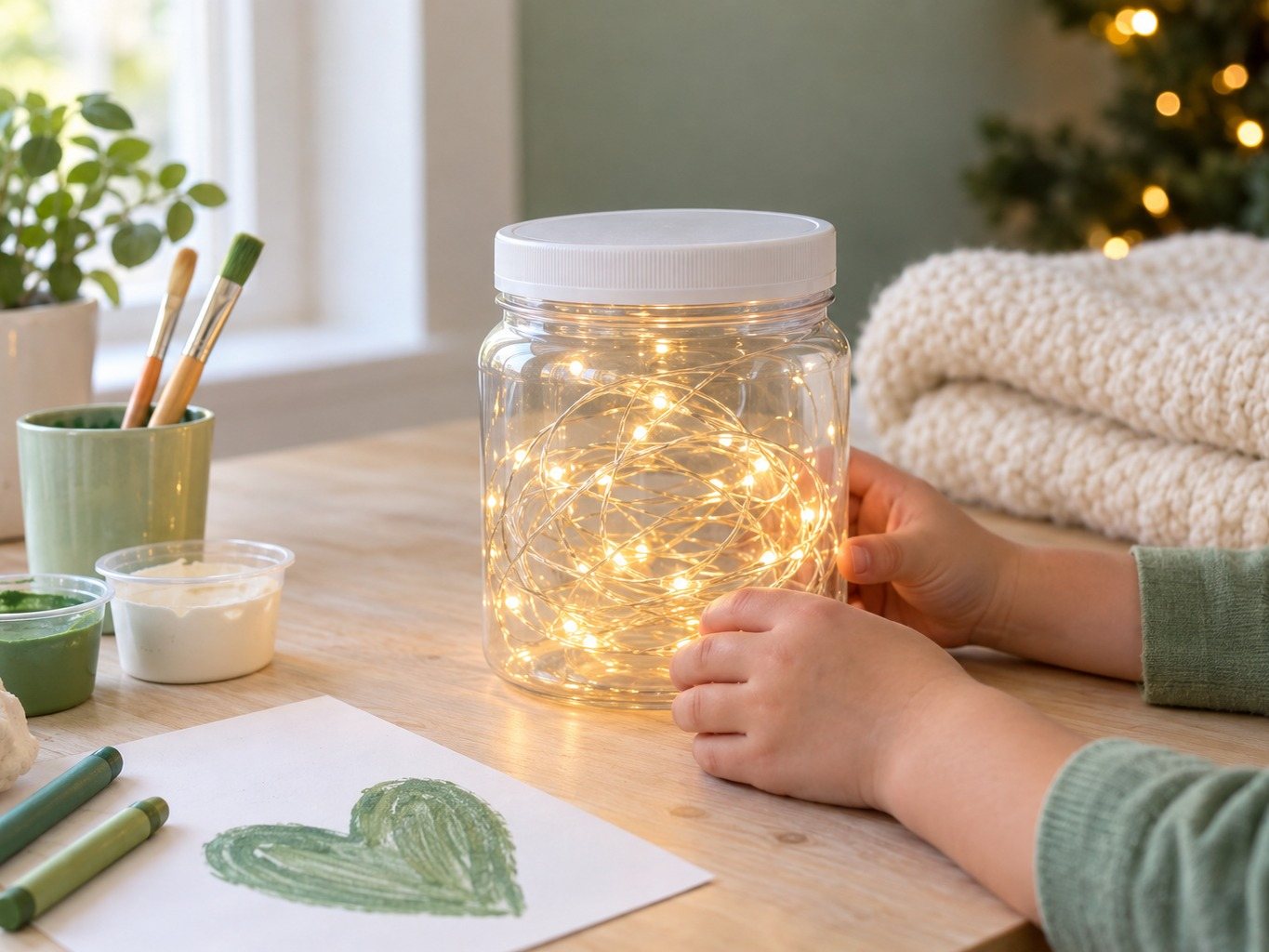
If big displays are too much, try these instead:
- A sealed, battery-powered LED string inside a plastic jar, made by an adult, as a “firefly lantern” (never plug-in lights)
- Battery candles in a shoebox with the lid mostly closed
- A projector night-light that throws slow, soft stars
- Sealed glow sticks in a dim bath, only for kids who don’t mouth things (not under 3), with an adult within arm’s reach the whole time. Toss any that crack or get chewed, and rinse skin or eyes with water if liquid leaks.
- A flashlight under a colored paper cup for a gentle glow on the wall
Christmas Sensory Bin Ideas That Calm Instead of Overload
A sensory bin is a great December tool because the child sets the pace. They choose when to touch, how much, and when to stop. The key is picking textures and sounds that match your child’s comfort. A bin that delights one kid can horrify another.
If bins make you nervous because of the cleanup, my guide to sensory play with no mess has contained setups that keep the floor clear. A rimmed baking sheet, a shower curtain under the table and a “bin stays at the table” rule go a long way.
Safety firstSupervise every bin. For kids under 4, or any kid who mouths things, use only pieces bigger than a toilet-paper tube. Skip water beads entirely, plus dry beans, ground cinnamon and loose small pom-poms. Keep holly, mistletoe and poinsettia out of the bins.
Five calm Christmas sensory bins
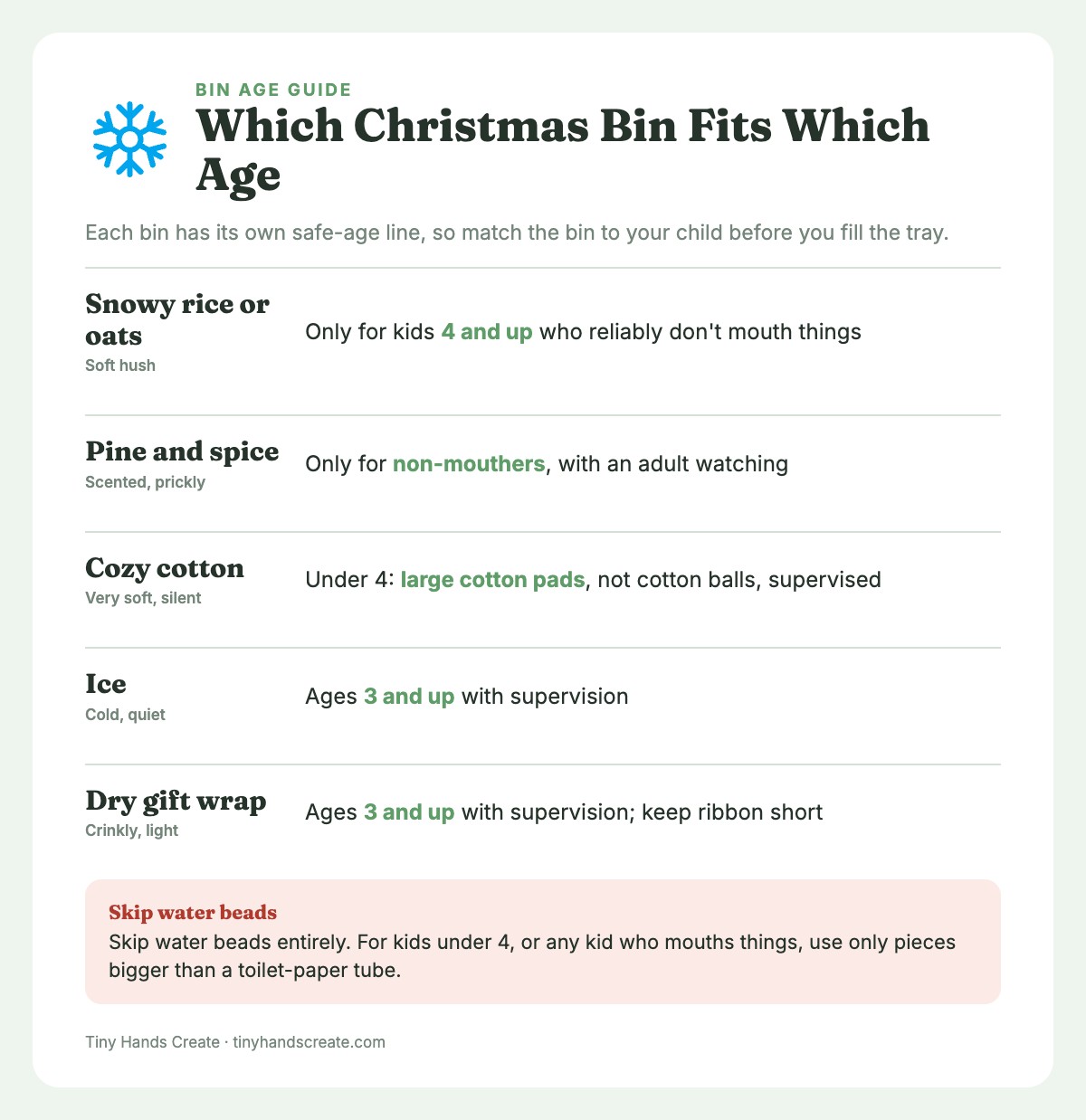
| Bin | Texture | Noise | Mouthing risk | Minimum age | Best for |
|---|---|---|---|---|---|
| Snowy rice or oats | Soft, gritty | Soft hush | High | 4+ | Kids who like pouring |
| Pine and spice | Prickly, scented | Low | High | Non-mouthers, supervised | Scent-tolerant kids |
| Cozy cotton | Very soft | Silent | Medium | Large pads under 4 | Kids who dislike grit |
| Ice | Cold, slippery | Quiet | Medium | 3+ | Slow, watch-first play |
| Dry gift wrap | Crinkly, light | Medium | Medium | 3+ | Gift-opening practice |
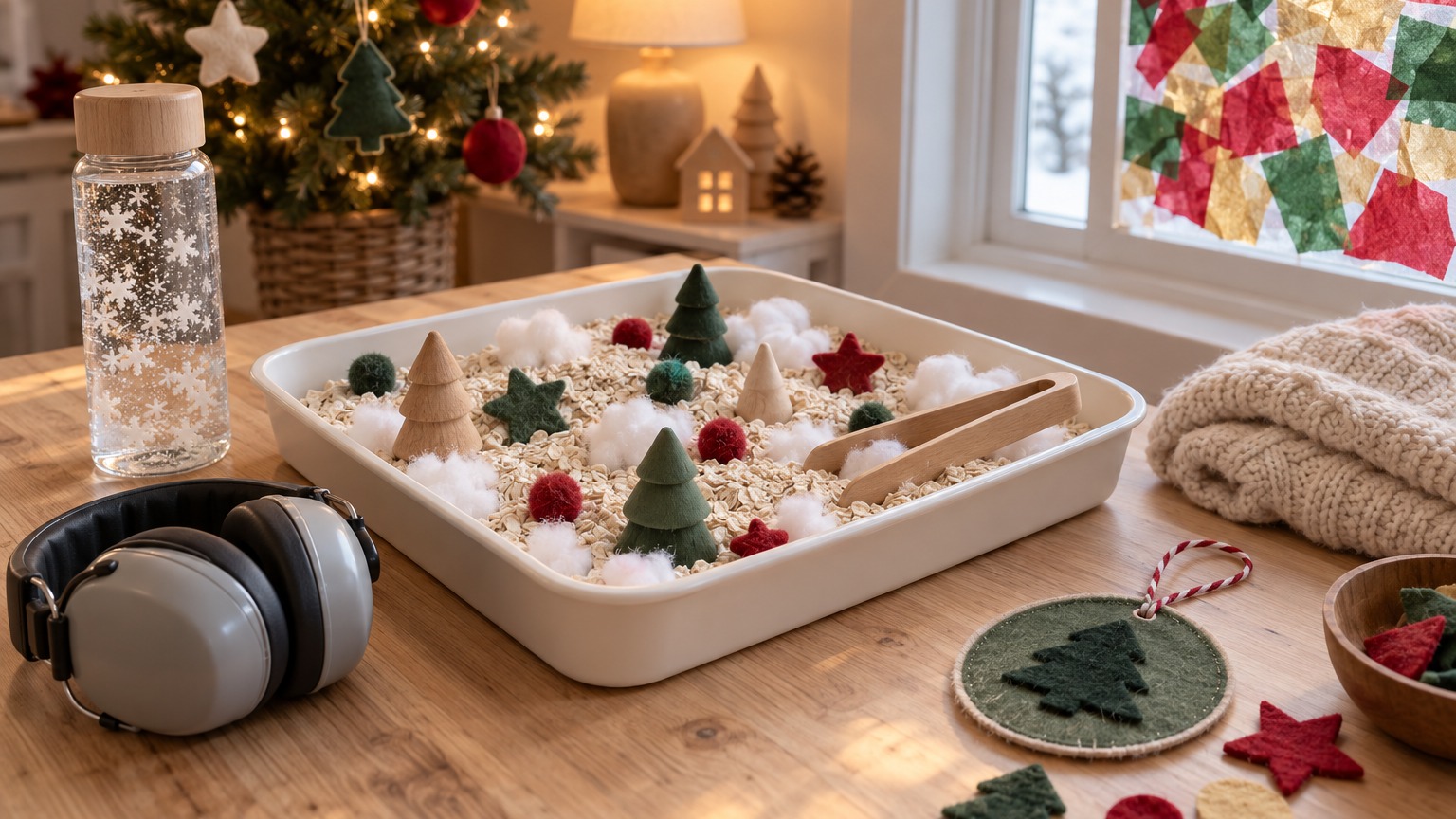
1. Snowy rice or oat bin (soft and quiet). Fill a tray with white rice or uncooked oats. Add large wooden trees, big felt stars and large pom-poms. Oats are soft and quiet, while rice makes a soft hush.
Safe-age line: only for kids 4 and up who reliably don’t mouth things. Loose rice and oats are choking and aspiration hazards for younger kids.
2. Pine and spice bin (textured, scented, optional). Use large, non-sharp, non-toxic greens, pinecones, whole cinnamon sticks and dried orange slices. Never use ground cinnamon, which can be inhaled. This bin is scented, so offer it only if smells are fine for your child, and smell it yourself first.
Safe-age line: only for kids who don’t mouth things, with an adult watching. Pine needles are sharp and can be chewed or swallowed. For more texture play, my fall sensory bin with acorns and pinecones is easy to give a Christmas twist.
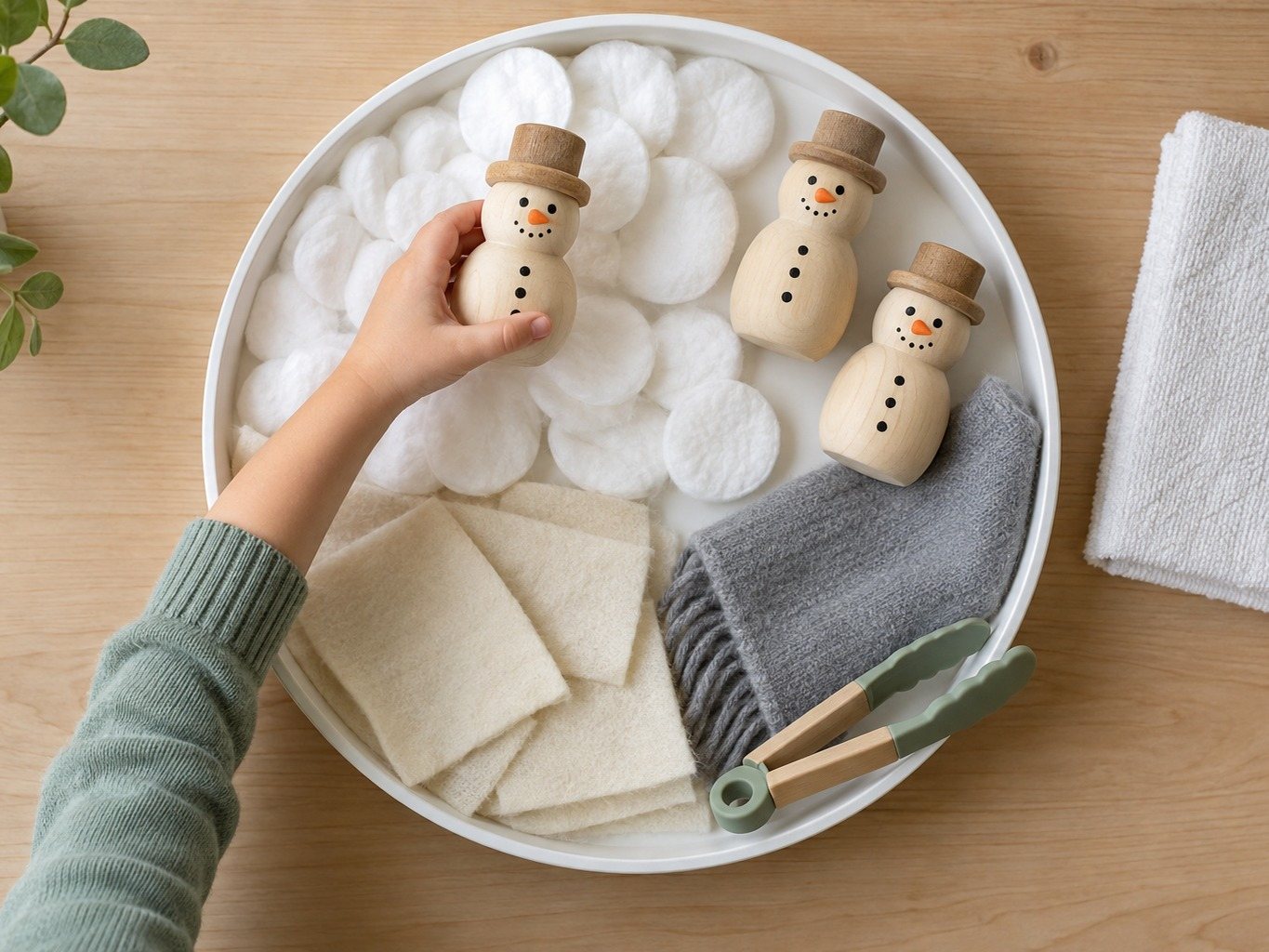
3. Cozy cotton bin (very soft). Large cotton pads, big felt pieces, a soft scarf and a few large wooden snowmen. Add child-safe tongs for scooping. This is the lowest-intensity option and great for kids who dislike gritty textures.
Safe-age line: use large cotton pads (not cotton balls) for under 4, supervise closely, and keep wooden pieces bigger than a toilet-paper tube. Use the scarf only in hand-held play, never around the neck.
4. Water-bead-free “ice” bin. Skip water beads entirely at this age and in any home with kids under about 8. They swell to many times their size and can block the bowel or airway. Use big ice blocks too large to fit in a mouth, with a little blue food coloring (it can stain skin, clothes and surfaces), in a wide tub. It’s cold, quiet and slow, and kids can stop touching whenever they want.
Safe-age line: ages 3 and up with supervision. Cold can be a lot for some kids, so offer a towel and a warm-water backup bin.
5. Dry “gift wrap” bin (quiet unwrapping practice). Use soft tissue paper scraps, short ribbon lengths and boxes bigger than a toilet-paper tube. Kids practice unwrapping and wrapping at their own speed. This one doubles as practice for gift-opening day, where crinkly paper can feel loud.
Safe-age line: ages 3 and up with supervision; keep ribbon short and never around the neck.
Make the bin sensory-friendly in practice
- Offer a tool and a no-touch option. Scoops, spoons and tongs let kids play without direct contact.
- Start with a small amount. A shallow tray feels less intimidating than a deep tub.
- Let them watch first. Some kids need to see you play before they join. That’s participation too.
- Keep a damp towel nearby for sticky or gritty hands, and don’t make them use it. Offering is enough.
- No pressure to finish. If your kid pokes it once and walks away, it was still a success.
- Mouthing check. For under 4, or any kid who mouths, leave out pom-poms, cotton balls and rice, or swap in large versions, and stay close. Check each item against the toilet-paper-tube test: if it fits through the tube, it’s too small.
Another practical trick is a “sensory bin in a bag.” Fill a zip bag with hair gel and a few foam shapes, then double-bag it and seal it with strong tape.
Tape it flat to a window or table and let your child squish it. Supervise, and throw it out if it’s punctured. Keep it away from under-3s, and don’t pack it in a kit for a kid who mouths things.
For related calm-down tools that work year-round, our guide to sensory bottles for calming down shows how to make a snow-globe style bottle that doubles as a holiday decoration and a slow-breathing tool.
Quiet Versions of the Usual Christmas Crafts
Crafts are a perfect place to adjust the sensory load because you control every material. Here are low-glitter, low-stickiness, low-noise versions of Christmas favorites.
Replace glitter and wet glue
Glitter and glue are the top two touch offenders. Try these swaps:
| Usual material | Why it’s hard | Calmer alternative |
|---|---|---|
| Glitter | Gritty, gets everywhere, sparkles in eyes | Torn tissue paper, sequin-free stickers, colored paper scraps |
| Wet white glue | Sticky, cold, slippery | Glue sticks, double-sided tape, contact paper |
| Finger paint | Slimy, cold | Paint with a brush or sponge, or paint in a zip bag |
| Playdough | Salty, sticky for some | Soft air-dry clay or felt shapes |
| Tinsel | Scratchy, shiny | Yarn, ribbon or felt strips |
| Cotton ball “snow” with glue | Sticky fibers | Pre-glued paper where kids press on cotton (large cotton pads, not balls, for under 4 or mouthers, supervised) |
The cotton snowman is a great example of a swap that works. You spread the glue on a pre-drawn shape, then kids press soft cotton onto it with very little glue contact. Our cotton snowman craft for toddlers walks through it step by step.
Safety firstFor under 4 or any kid who mouths things, use large cotton pads, not cotton balls, and supervise the whole time.
Crafts that are naturally calm
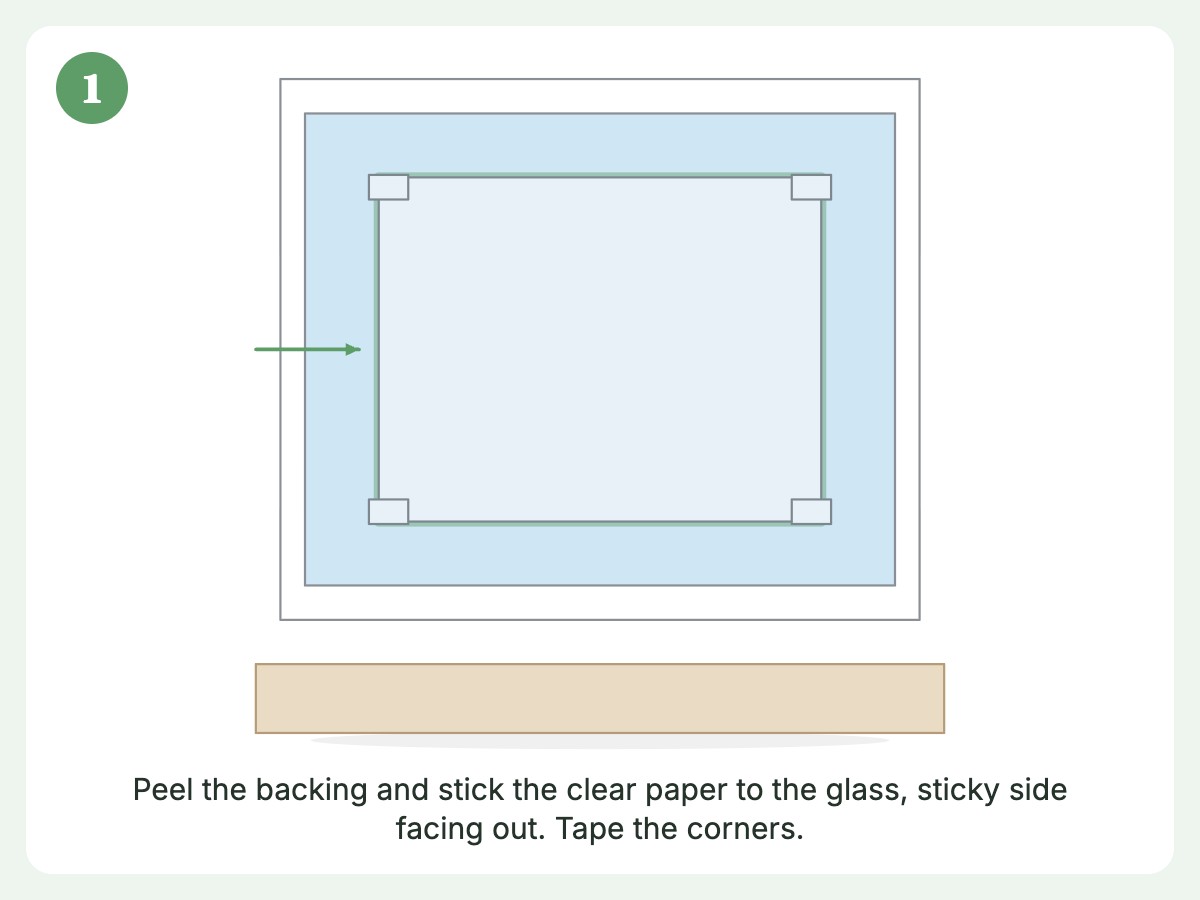
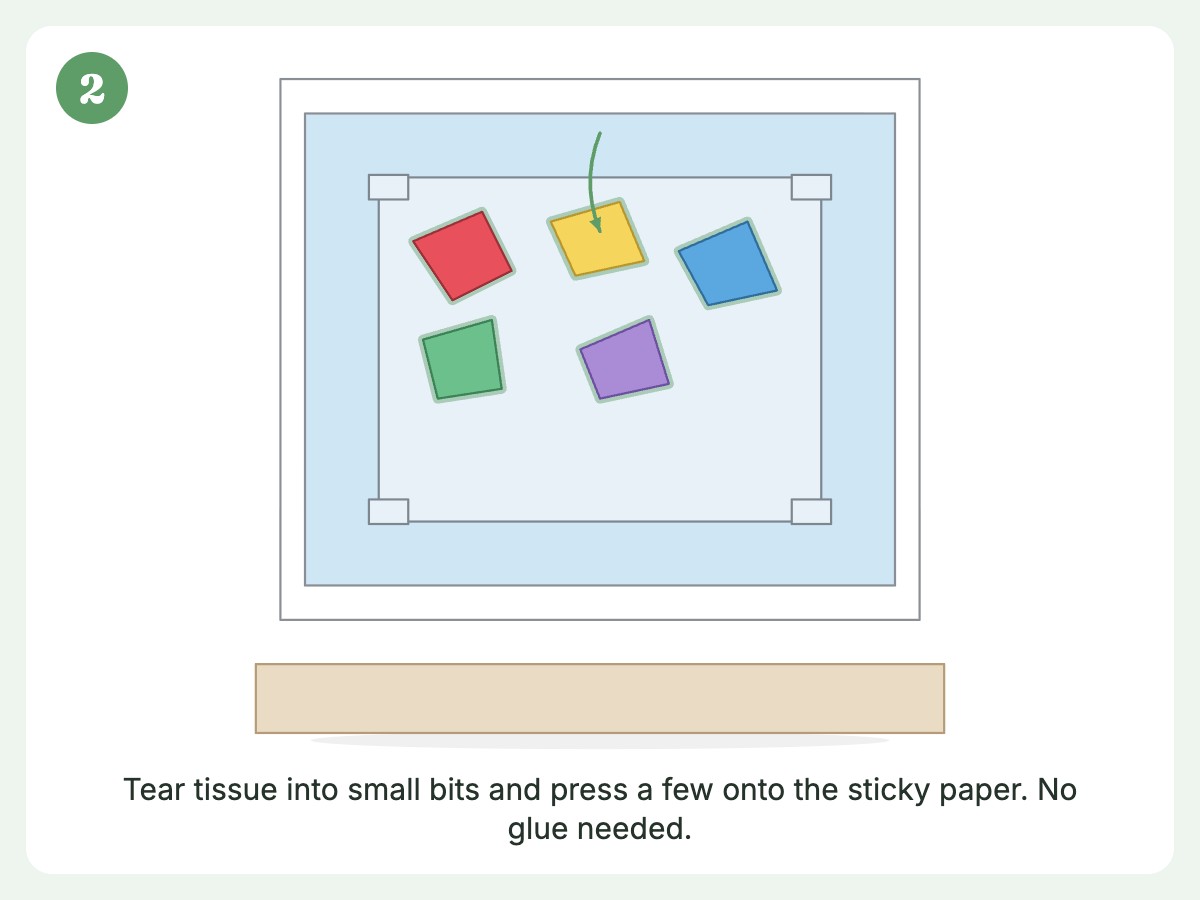
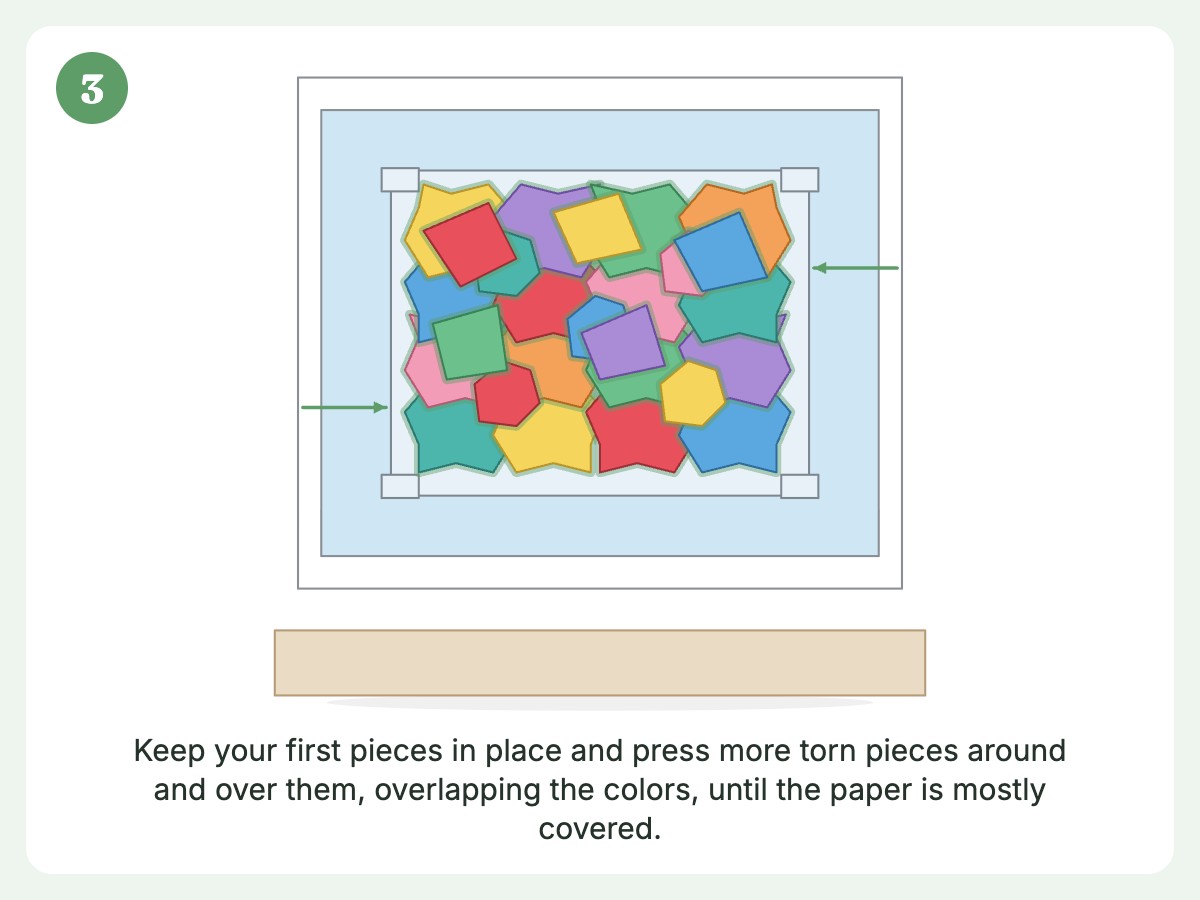
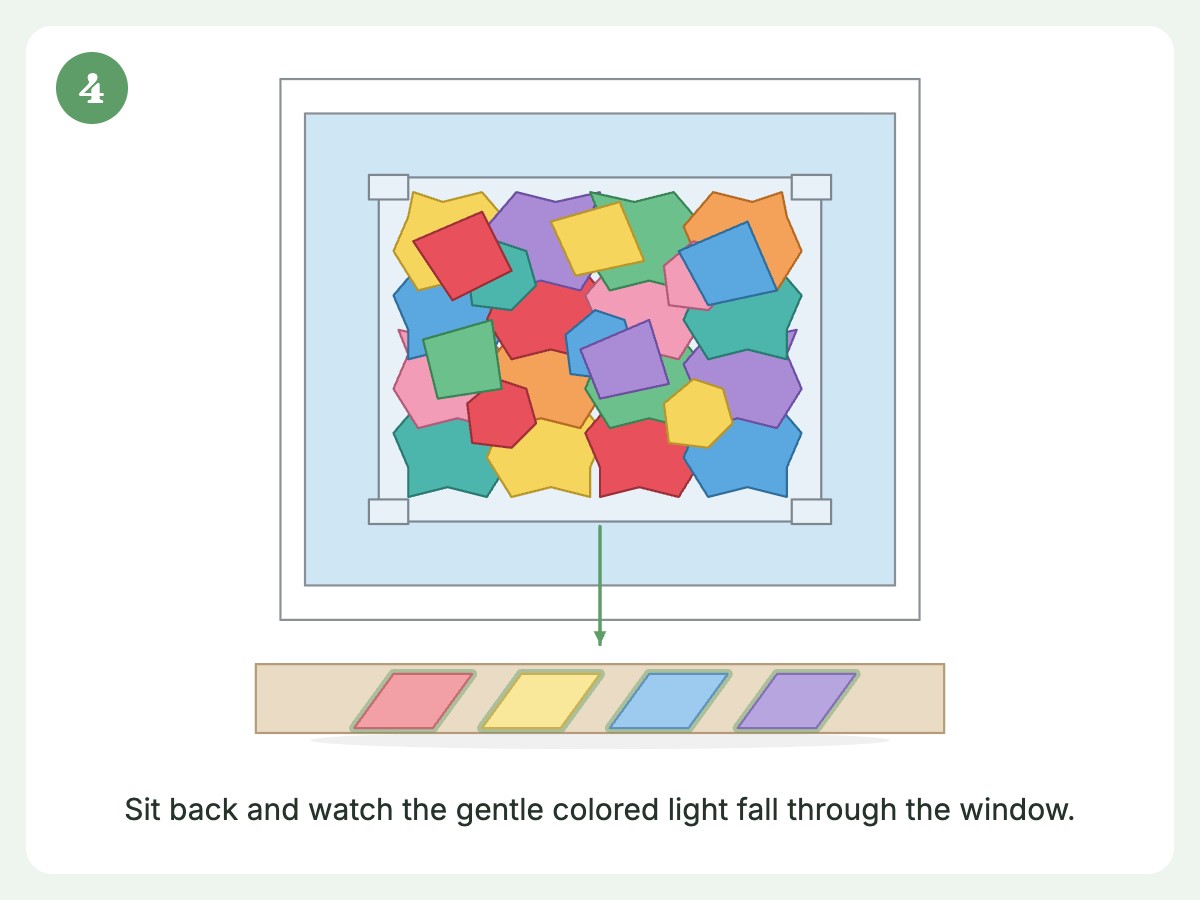
- Contact-paper stained glass. Stick a sheet of clear contact paper (sticky side out) to the window and let kids press on torn tissue paper. No glue, no mess, and the light through the colors is gentle.
- Felt ornament decorating. Pre-cut felt shapes they stick onto a felt background. Everything is soft and quiet. Cut shapes bigger than a toilet-paper tube for under 4, and supervise.
- Paper chain countdown. Rhythmic, repetitive, and satisfying. Kids tear or loop paper at their own pace.
- Pom-pom tree. A paper cone and a bowl of pom-poms they can drop into a glue-stick patch. Use large pom-poms bigger than a toilet-paper tube for under 4, and supervise.
- Cookie cutter stamping. Dip cutters in a thin layer of paint on a sponge and stamp. Kids who dislike paint on their hands can hold the cutter instead.
- Salt dough or air-dry clay ornaments. Rolling and pressing can feel calming for some kids. If the touch of dough bothers them, offer a rolling pin and cutters so hands stay mostly clean. Salt dough isn’t food and can be harmful if eaten. An adult does all oven baking, and ribbon loops stay short. See our salt dough ornament crafts for toddlers for a simple recipe.
Keep craft time short and predictable
- Set a visual timer or an “all done” signal: “We’re making three stars, then we’re done.”
- Offer a choice of two materials so your kid has some control.
- Skip the “make it look like the sample” pressure. The point is the process, not the product.
- Let them leave and come back. A craft that stays out on a tray for the day is often more successful than one that has to be finished in one sitting.
Calm Holiday Baking and Food Activities
Baking is warm and cozy, and also sticky, loud (mixer!) and smelly. Here’s how to keep it gentle.
Safety firstNo tasting raw dough or batter, because raw flour and eggs can carry E. coli and Salmonella. Kids stay back from the oven, and an adult handles hot trays. Check for nuts, egg and dairy before sharing treats at gatherings.
- Use a bowl and spoon, not a mixer. A stand mixer on high is a sudden roar. Stir by hand, or warn your kid before turning it on (“It will be loud for ten seconds. Want to wear your headphones?”).
- Give them a “clean hands” jar. A damp washcloth within reach means sticky hands can be wiped without leaving the activity.
- Use nitrile (latex-free) gloves or tongs for sticky dough, with an adult watching. Some kids love squishing dough, and others can’t stand it. Offer both.
- Pick lower-smell recipes if strong smells (cinnamon, peppermint, molasses) bother your child. Crack a window and let them choose their station.
- Make a “safe snack.” Holiday parties often serve unfamiliar foods. Bring one familiar thing your kid reliably eats so they never have to go hungry.
- Respect food refusals. December is not the month to win a food battle. Pressure plus a loud room is a recipe for a meltdown.
If cookie decorating feels like too much frosting chaos, try “dry decorating”. Spread a thin layer of icing in advance, then let your kid press on sprinkles or candies. Or skip frosting entirely and let them press cookie cutters into rolled dough and play with the shapes.
Safety firstFor under 4, skip hard or small candies and use only soft sprinkles, or none, with an adult watching.
Previewing Every Outing So Nothing Is a Surprise
If I could give only one tip from this whole guide, this would be it. Many sensitive kids handle a lot more when they know exactly what to expect. Surprise is expensive. Predictability is cheap and free.
The five-part preview
For any outing, run through these five things ahead of time. Keep it short and calm, ideally a day or two before and again on the way.
- Where we’re going and who will be there. “We’re going to Grandma’s house. Grandma and Uncle Joe will be there, and your cousin.”
- What we’ll see and hear. “There will be a Christmas tree with lights. People will talk and laugh. There might be music.”
- What we’ll do. “We’ll say hi, eat dinner, and maybe open one present.”
- What you can do if it’s too much. “If it’s loud, you can go to the quiet room, wear your headphones, or hold my hand.”
- How we’ll leave. “When I say it’s time, or when you tell me you’re done, we’ll go to the car.”
Ways to preview that actually work for little kids
- Photos and videos. Look at pictures of the place, or a short video if the venue has one online. Seeing the tree lot or the stage before you arrive removes a lot of the shock.
- A simple picture story. Draw four stick-figure panels: leave home, arrive, do the thing, go home. Even a rough sketch helps. (No diagnosis needed. Picture previews help plenty of ordinary kids.)
- Role-play. Play “Santa visit” with a stuffed animal in a chair. Let your kid be Santa, then be the visitor, then trade. A tiny rehearsal makes the real thing less strange.
- A visit before the event. If there’s a concert in the church hall, stop by the empty hall a few days earlier. Walk around, find the exits and the bathroom.
- Name the sensory stuff. “It’s going to be bright, then dim, then bright.” Naming it validates the experience.
- Offer a choice about the preview. Some kids like a lot of detail, and others get anxious with too much. Follow their cues.
A one-page preview template
Keep this on the fridge or in a notes app and fill it in for each event:
- Event: ______
- When: ______ (and for how long, max)
- Loud parts: ______
- Bright parts: ______
- Crowded parts: ______
- Our quiet spot: ______
- Our signal: ______
- Our exit plan: ______
For counting down days to bigger events, a printable advent calendar with toddler activities also gives December a visual structure. Kids who can see the days ticking by often feel more grounded because they know what comes next. A daily routine chart does the same job for ordinary days.
The Exit Plan: Your Secret Weapon
An exit plan is not a sign you expect things to go badly. It’s the reason things can go well. When your child knows they can leave, they can often stay longer, because the stakes feel lower. Here’s how to build one.
Before you go
- Agree on a signal. A hand squeeze, a code word (“pickles!”), or a card they can hand you. Practice it at home so it’s easy to use under stress.
- Decide your leave-by time. Write it down: “We’ll leave at 6:30, or earlier if needed.” Tell your co-parent so no one has to renegotiate in the moment.
- Drive separately if possible. If you carpool with relatives, you’re stuck when your kid is done. Two cars means an easy exit for you.
- Park close to the exit. Spend ten minutes finding a spot near the door. It’s worth it.
- Scout the quiet spot. Find a bedroom, a hallway, a bathroom or the car. Your kid can retreat there for five minutes to reset.
What to pack: the calm-down kit
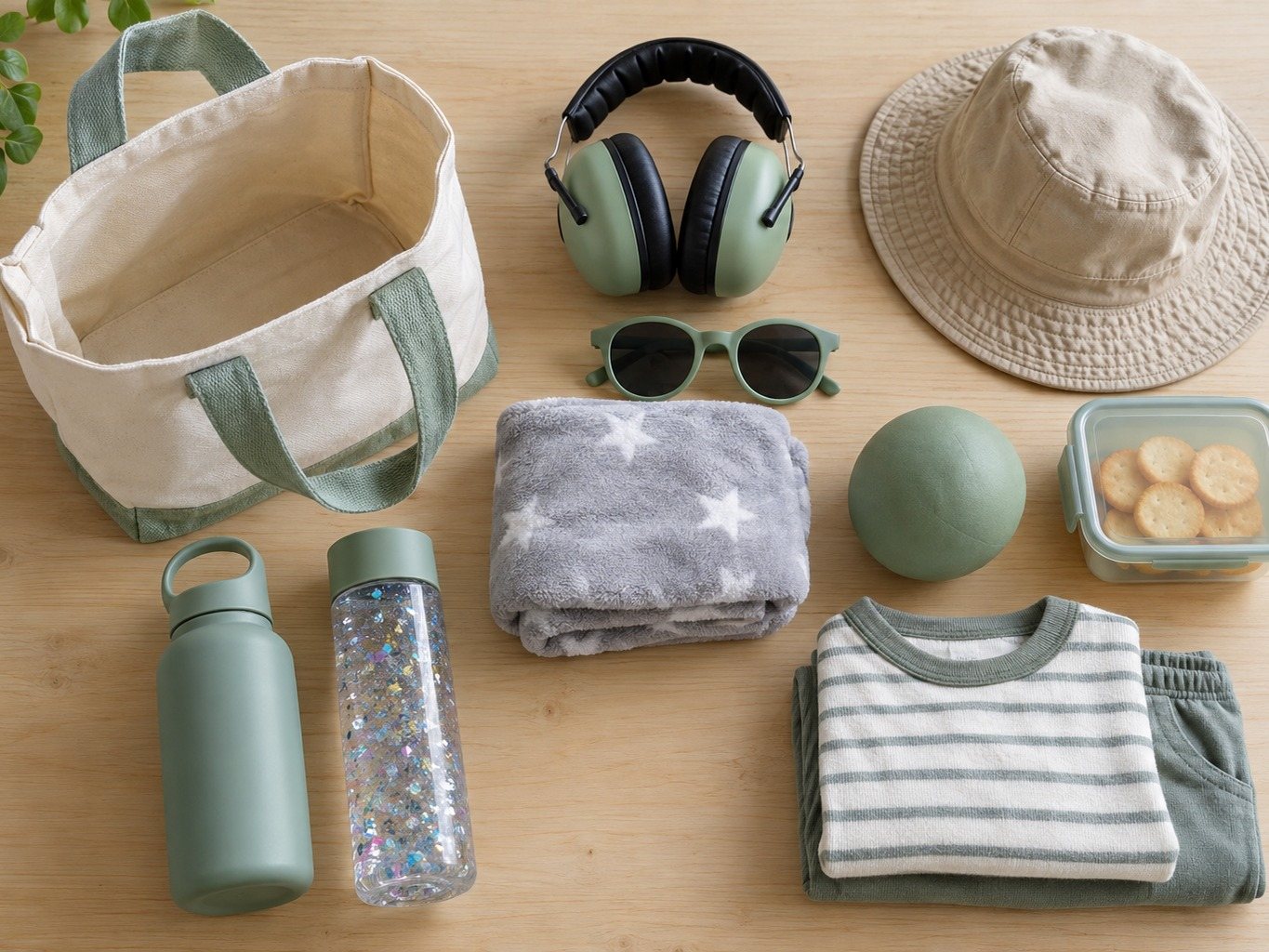
Put these in a small bag that comes to every outing:
- Child-sized, earmuff-style ear defenders that fit snugly (short periods only, never for sleep)
- A brimmed hat or sunglasses
- A familiar soft item (blanket, stuffie, soft sleeve)
- A small sensory fidget bigger than a toilet-paper tube (a squishy ball or a large smooth stone)
- A familiar comfort snack that isn’t a holiday treat, plus a water bottle
- A mini sensory bottle for slow, focused looking
- A change of soft clothes (some kids melt down over a wet sleeve)
In the moment
When you see the signs, act early. Waiting for a full meltdown means you’re already past the easy exit.
- Get low and speak quietly. “Looks like it’s getting loud. Want to take a break?”
- Offer two choices, both of which involve less input: “Quiet room or car?” Choices help kids feel in control when the world feels out of control.
- Move first, talk later. Skip long explanations. Walk out, and debrief at home.
- Skip the lecture and the guilt. “We tried and it was a lot. That’s okay” is all you need.
- Praise the signal, not the endurance. “Thank you for telling me you needed a break. That was really smart.”
What a good exit sounds like
Here’s a script that has worked for us:
Tip“I can see your ears are hurting. Let’s go outside for a minute. You’re not in trouble. We can come back in or we can go home, you pick.”
If you decide to go home, keep it neutral. Avoid saying “we never get to do anything fun” in the car, even if you’re frustrated. It’s easy to feel disappointed, and it’s okay to let yourself feel that quietly. Then reset: warm drink, soft blanket, one calm thing.
After the outing: the recovery plan
- Dim the lights, lower the volume. A quiet hour after a big event is not optional for many kids.
- Offer a deep-pressure activity, like a big squeeze, pushing a laundry basket or carrying a few light books across the room. A snug blanket roll works too: head and face uncovered, never tight, never unattended, and stop if they object. If sensory difficulties are ongoing, ask an occupational therapist.
- Give snacks and water. Hungry plus overstimulated is a hard combo.
- Don’t schedule anything else. The day is done. Our quiet time activities fit here.
- Debrief gently, once they’re calm. “What was the best part? What was hard?” Use their answers to plan next time.
Scratchy, Tight, and Itchy: Making Holiday Clothes Work
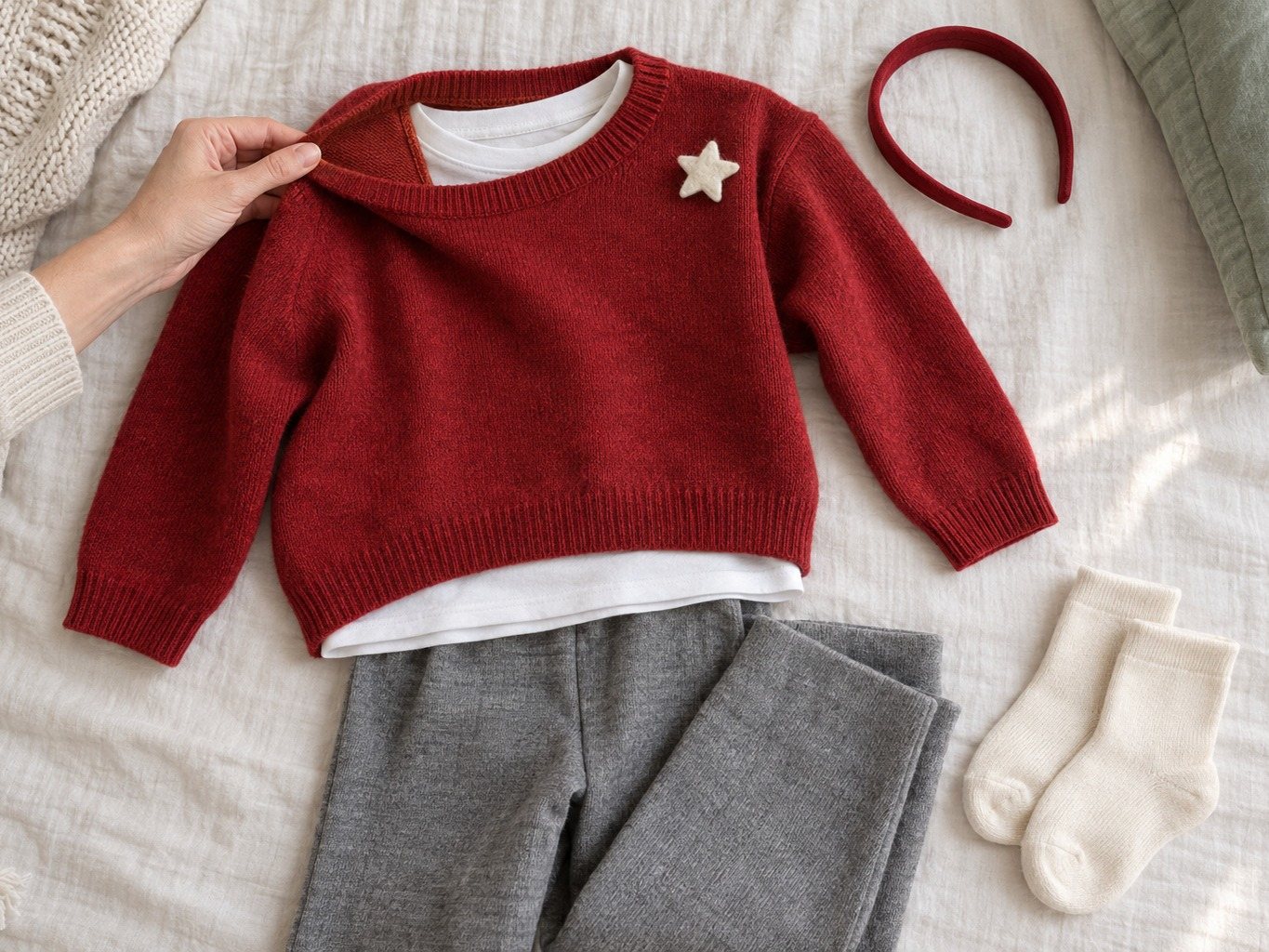
Dressing up is a classic Christmas stress point. A velvet dress with a stiff lining or a wool sweater can feel like torture, even if it looks adorable.
- Choose the feel first, the look second. Soft cotton, jersey, fleece and brushed knits tend to be tolerated better. If it doesn’t pass the “rub it on your wrist” test, skip it.
- Cut out tags and flip seams inside out, or pick seamless socks.
- Layer soft under scratchy. A cotton tee under a festive sweater creates a buffer.
- Let your kid pick the outfit. A red shirt and favorite soft pants counts as festive. Add a headband or a pin for the holiday touch.
- Try it on early. Do a trial run a week before, not five minutes before you’re out the door.
- Plan a change. Bring a second, comfy outfit to switch into after photos.
- Don’t force the photo outfit all day. Take the pictures first, then change.
The ugly sweater is optional. If your child can’t stand wool, a Christmas-themed sticker on a soft shirt does the job.
Gatherings, Relatives, and the Hug Question
Family gatherings combine noise, crowds and social pressure. A few small moves make a big difference.
Before and on arrival
- Arrive early. You get a quieter first half hour and some time to settle before the room fills up.
- Claim a quiet corner. Ask the host in advance if there’s a spare bedroom or study you can use for breaks.
- Brief the relatives. A quick, friendly text beforehand: “Heads-up, [Kid] finds big gatherings tiring, so we might step away for breaks. Please don’t take it personally!” Most people respond with kindness.
During the gathering
- Replace forced hugs with options. Offer a wave, a high-five, a fist bump or a blown kiss. It teaches body autonomy and avoids an uncomfortable moment for everyone.
- Bring a “job.” A small task like carrying napkins, handing out cups or feeding the dog gives your kid purpose and a reason to move around.
- Limit the stay. 45 to 90 minutes is plenty for many kids at loud or crowded events. Leaving on a high note beats staying through the meltdown.
- Protect nap and bedtime. Tired kids have less capacity for noise and lights. A missed nap makes everything harder.
- Have a stand-in. If you’re stuck in conversation, your partner or a trusted relative can take over exit duty.
If a relative is skeptical (“They just need to toughen up”), you don’t have to argue. A calm “This is what works for us” is enough. You know your kid.
Gift Opening Without the Chaos
Gift opening is a big sensory event: crinkling paper, excited voices, piles of new things, and the pressure to react “correctly.”
- One at a time. Passing out gifts all at once creates a free-for-all. Taking turns lets your kid focus.
- Pre-open wrapping, or use gift bags. Tissue paper and bags are quieter than taped paper. Some kids love tearing paper, so ask yours.
- Keep new items simple. Gift a few things instead of a mountain. Too many toys at once can overwhelm.
- Check the toys’ sound. Many toys come with loud electronic noises. Take the batteries out, or save them for after. Put removed batteries straight into a locked or high cupboard, never a drawer or the counter. If a battery is swallowed, go to the ER right away.
- Let them skip the reaction. Some kids go quiet when they’re overwhelmed, which can look ungrateful. Prep relatives: “If they go silent, it means they love it.”
- Spread it out. Open some gifts on Christmas Eve, some in the morning and some later in the week.
- Plan a quiet play session. After the opening, give them time alone with one new toy.
For a homemade gift idea they can do on their own terms, there are lots of DIY Christmas gifts kids can make for grandparents that need only a few quiet supplies.
A Gentle Week of Sensory-Friendly Christmas Activities
Here’s a sample week you can copy or adapt. It alternates low-load days with a single “bigger” event, and builds in a recovery day.
| Day | Activity | Load | Notes |
|---|---|---|---|
| Monday | Contact-paper stained glass at the window | Low | 15 minutes, soft music or none |
| Tuesday | Cozy cotton sensory bin | Low | Tray on the table, tools offered |
| Wednesday | Drive by one quiet street of lights | Low-Medium | Hat and sunglasses, home by 6:30 |
| Thursday | Rest day: movie, blanket fort, no outings | Low | Lamp on, volume low |
| Friday | Felt ornament decorating | Low | Pre-cut shapes, six per kid (large for under 4) |
| Saturday | One bigger event (family visit or tree lot) | Medium-High | Preview, exit plan, calm-down kit |
| Sunday | Recovery: slow morning, deep-pressure play, bath | Low | Nothing scheduled |
Swap in your own activities. The pattern is what matters: low, low, medium, rest, low, one bigger thing, recover.
Easy daily micro-rituals
Tiny predictable rituals are often more calming than big events. Try:
- A “good morning, tree” moment. Plug in the lights together and say hi to the tree.
- One page of a holiday book at bedtime. Short, quiet, always the same.
- A warm drink in a special mug after dinner.
- A countdown mark. A sticker or a paper link each day.
- A final lights-out routine. “Lights off, thank you tree, goodnight.”
These small repeats tell a sensitive kid that the season is safe.
Letting Go of the “Perfect Christmas” (Because Yours Is Already Good)
This might be the hardest part, so I’ll say it plainly: you’re allowed to skip things. You can skip the mall Santa, the light tunnel, the parade, the three parties. Most kids remember the warm lap, the quiet tree and the ritual cocoa far more than how many events they attended.
Some families I know have created their own traditions: a pajama-and-flashlight drive-through, a “quiet Christmas Eve” with soft lights and one story, an afternoon baking with the door closed. These aren’t second-best versions of Christmas. They’re simply Christmas, built for the kid you actually have.
If you feel pressure from social media, remember that nobody posts the photo of the kid melting down under the light tunnel. Everyone has a version of that day. Make your plan, keep your exit, and give yourself the same patience you’d give your child.
For ideas that sit even lower on the intensity scale, our Christmas activities for 1 year olds are short, safe and quiet, and they work well for older kids in the middle of a hard day too.
Frequently Asked Questions
How do I know if my child is overstimulated or just being difficult?
Look at the pattern, not the single moment. Overstimulation tends to show up after noisy, bright or crowded events, and the behavior often improves quickly once the input drops (a quiet room, headphones, a snack, a cuddle). Difficult behavior usually doesn’t change much with the environment. If your child melts down at the mall but is fine in a quiet room ten minutes later, the load was probably the issue. You don’t need a diagnosis to respond: lower the input, offer a break, and watch what helps.
What are the best sensory-friendly Christmas activities for toddlers and preschoolers?
Low-load, short and child-paced activities work best. Try contact-paper “stained glass”, felt ornament decorating, a night-light hunt for twinkles on the tree or a quiet drive past one street of lights. Keep sessions to 10 to 20 minutes, offer tools so kids don’t have to touch every texture, and let them stop whenever they want. Pair a bigger event with a quiet day on either side.
Is it okay to skip Santa, concerts and holiday parties?
Yes. There’s no required list of Christmas events. If an activity regularly leads to tears or an exhausted kid, skipping it, shortening it or swapping it for a calmer version is a perfectly good choice. Pick the one or two events that matter most to your family and make those as gentle as possible with previews, a quiet spot and an exit plan. For Santa specifically, a letter, a distant wave or a quiet-hours visit can all work.
How can I make Christmas lights less overwhelming for my child?
Choose warm white, steady lights over blinking or multicolor, use fewer strands than the box suggests, and put the tree on a timer or dimmer so it comes up gently. Keep lights in one zone of the house rather than everywhere. Out and about, view displays from the car, pick one calm street instead of a big show, and bring a brimmed hat or sunglasses. Remind your child they can look away at any time, and let them control the switch at home whenever possible.
What should go in a calm-down kit for holiday outings?
Pack child-sized earmuff-style ear defenders, a brimmed hat or sunglasses, a familiar soft item, a fidget bigger than a toilet-paper tube (squishy ball or large smooth stone), a snack and water, a mini sensory bottle, and a spare soft outfit. Include a comfort snack that isn’t a holiday treat, because unfamiliar food is another stress point at parties. Keep the bag by the door during December so it’s always ready.
How long should we stay at a Christmas gathering?
For many sensitive 2 to 8 year olds, 45 to 90 minutes is a good cap, especially if the event is loud or crowded. Arrive early while the room is quieter, find a break spot, and leave on a good note rather than waiting for a meltdown. Agree on your leave-by time with your co-parent beforehand, and plan for a quiet recovery hour at home afterward.
What if my child refuses to wear holiday clothes?
Choose comfort over costume. Pick soft fabrics, cut out tags, use seamless socks, and layer a cotton tee under anything scratchy. Let your child choose the outfit and add festive touches with a pin, headband or sticker. Try outfits on a week early, take photos first, then switch into comfy clothes. A red soft shirt is a perfectly festive outfit.
A Quieter Christmas Is Still a Magical One
Christmas doesn’t have to be loud to be special. For a sensitive kid, the magic often lives in the small, soft moments: one string of warm lights, a bin of cotton snow, a story under a blanket, a hand to hold on the way to the car. If you preview what’s coming, lower a load or two and keep your exit plan handy, you’re giving your child the thing they need most, which is the feeling that they’re safe. That’s a pretty great gift for December, and it’s one you can keep giving all year.