Rainbow Rice Sensory Bin: How to Make and 10 Ways to Play
You'll learn how to easily make vibrant rainbow rice using pantry staples for engaging sensory play, along with essential safety tips and storage advice.
- Easily make rainbow rice with rice, vinegar, and gel food coloring for bright hues.
- Ensure safe play: use for ages 3+ with supervision, avoiding choking hazards.
- Your rainbow rice is affordable, versatile, calming, and lasts up to six months.
- Dry rice completely on a baking sheet and store in an airtight container.
- Use vinegar, not alcohol, to evenly coat rice with dye for child safety.
This post contains affiliate links. As an Amazon Associate I earn from qualifying purchases.
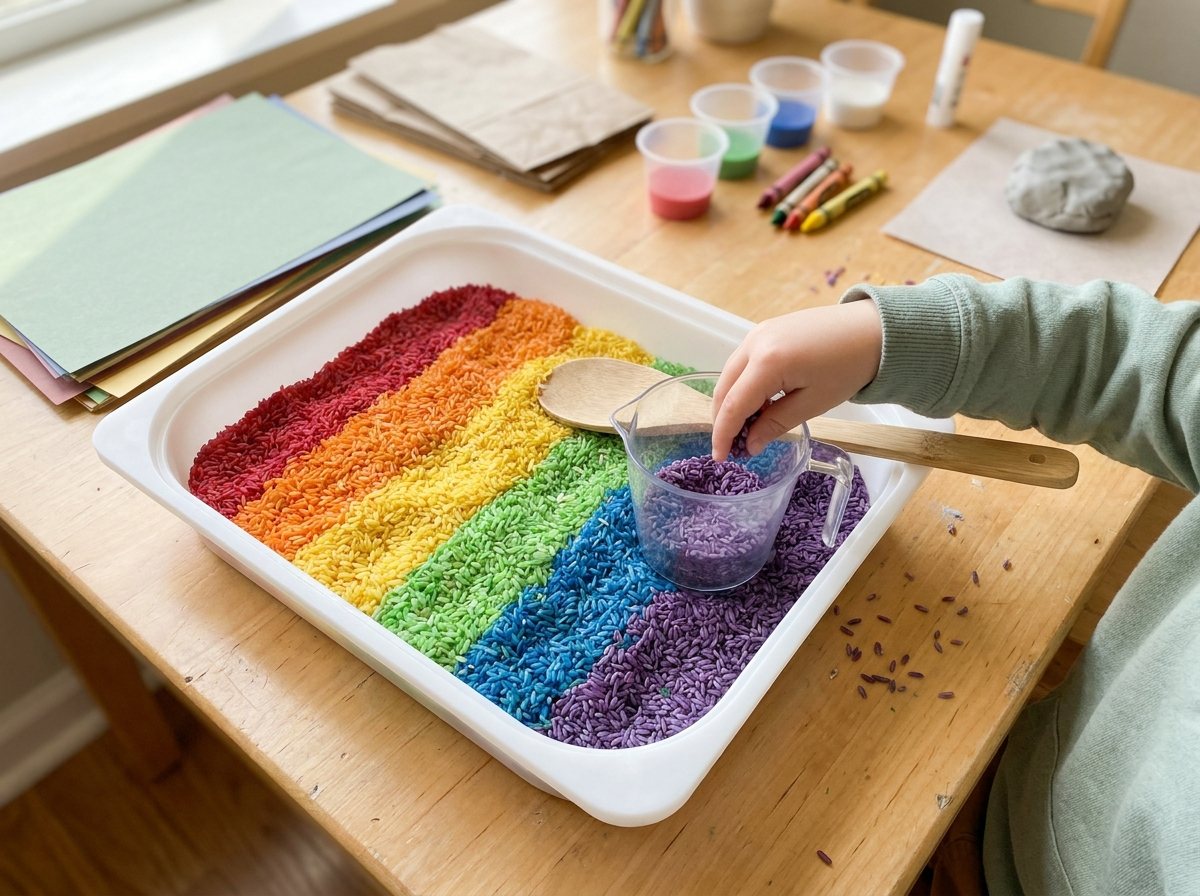
Rainbow rice is my favorite sensory bin base. It’s cheap to make, looks gorgeous, and pulls kids in right away. Add a few scoops and containers, and you have a bin ready to go.
This guide shows exactly how to make it with three pantry staples (rice, vinegar, and food coloring), plus 10 themed bin ideas.
Safety firstRainbow rice is for ages 3+, with an adult within arm’s reach. We don’t recommend it before age 3, or for any child who still mouths things. For them, use a taste-safe base from our edible sensory play ideas instead.
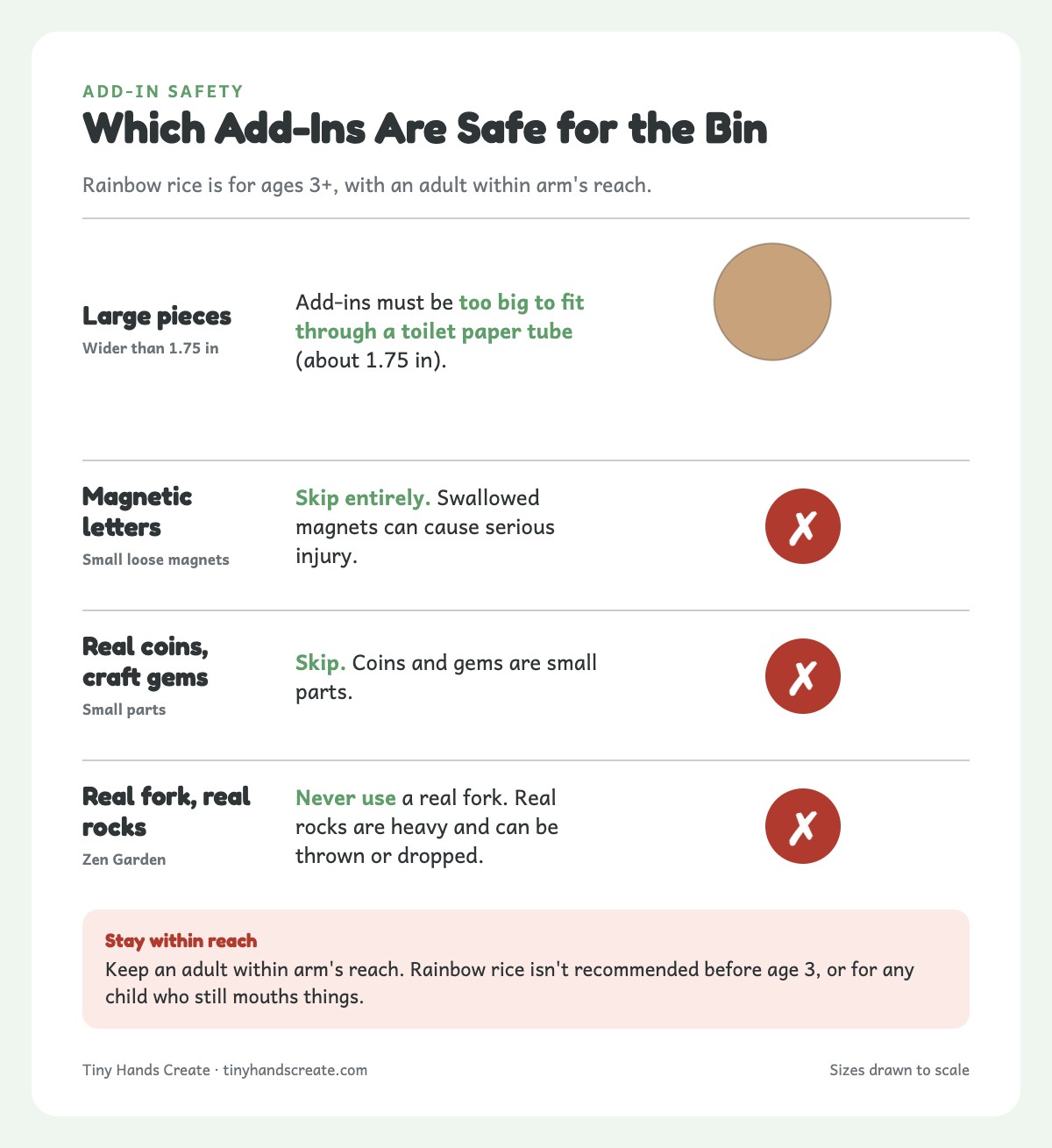
Dyed dry rice is a play material, not food. Every add-in must be too big to fit through a toilet paper tube (about 1.75 in). Skip small loose magnets entirely.
If a child cannot cough, speak, or breathe, call 911 and start choking first aid for their age. If a child swallows a handful, or keeps coughing or wheezing afterward, get medical help right away. For other questions, call Poison Control at 1-800-222-1222 (US).
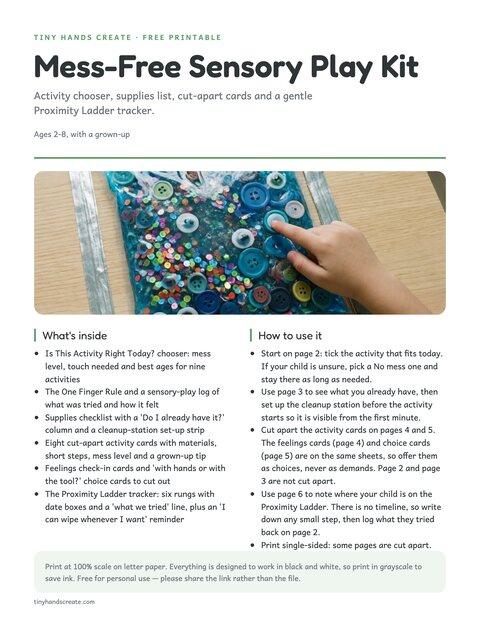
Free printable · 6 pages
Mess-Free Sensory Play Kit
An is-this-activity-right-today chooser with a sensory-play log, a supplies checklist with a cleanup-station strip, eight cut-apart activity cards, feelings and choice cards, and a Proximity Ladder tracker.
Free. Your download link appears right here. You'll also join the Daily Printable Drop. Unsubscribe anytime. Privacy
In this article (8 sections)
Why Use Rainbow Rice for Sensory Play
- Affordable and long-lasting: One bag of rice makes a big batch. It keeps for up to about 6 months when dry.
- Versatile: Use it for themed bins, color sorting, letter hunts, or plain scooping and pouring.
- Calming for many kids: Many kids find the sound and feel of pouring rice soothing. It’s easier to clean up than sand or oobleck, though rice will escape the bin. I still find stray grains under the couch days later.
How to Make Rainbow Rice (Step by Step)
Ingredients
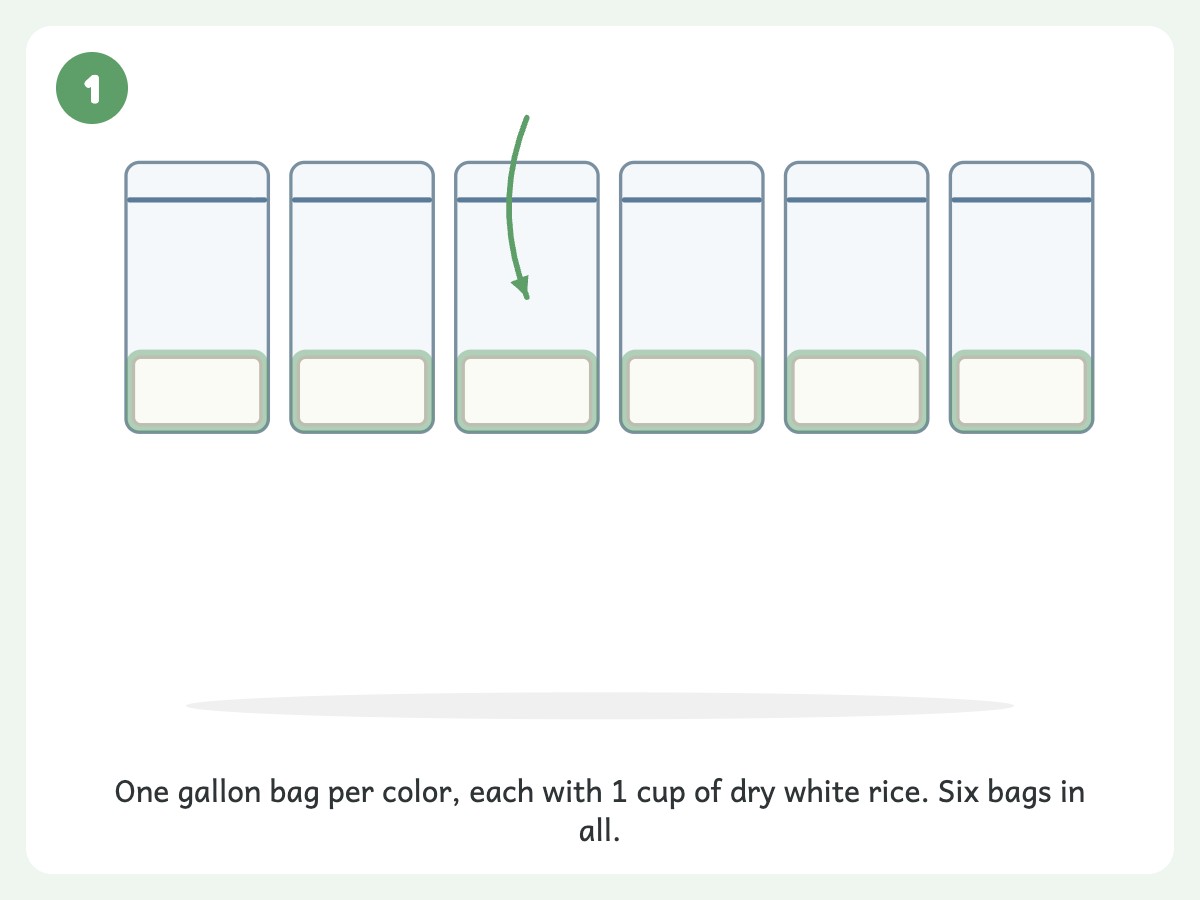
- 6 cups of uncooked white rice (1 cup per color, for 6 colors)
- White vinegar
- Food coloring (gel food coloring gives brighter colors)
- Gallon ziplock bags
Instructions
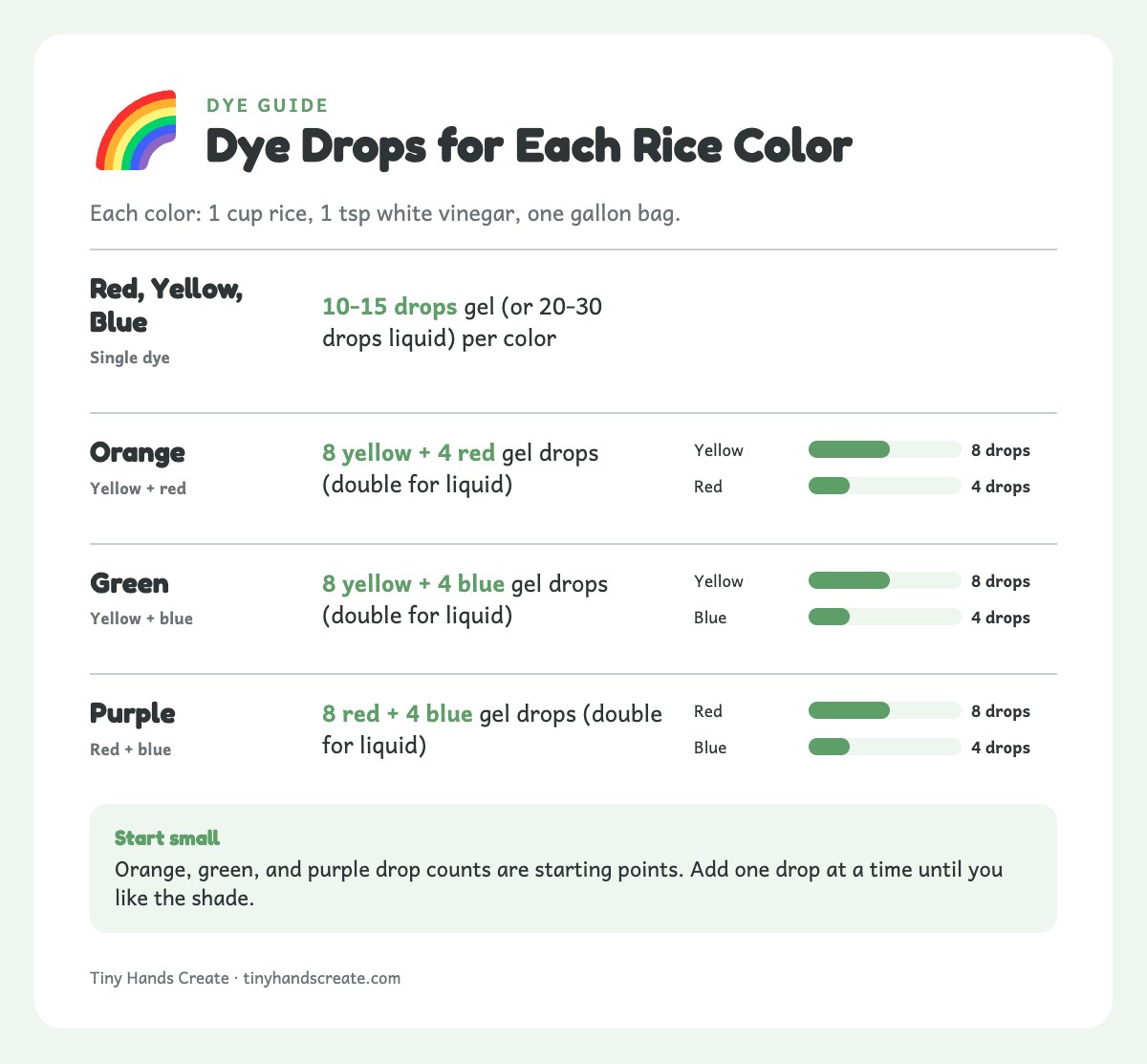
Here are the amounts for each color. Each batch gets its own gallon bag. All six together make about 6 cups of rice, enough for a shallow layer in a tray around 12 x 16 inches.
The drops for orange, green, and purple are starting points. Add one drop at a time until you like the shade.
Good to knowThe vinegar thins the dye so it coats every grain. You may see recipes that swap in rubbing alcohol. I skip it. It’s flammable and toxic if swallowed, and I don’t want it on something kids handle. Vinegar does the job, and kids can help shake.
| Color | Rice | White vinegar | Dye |
|---|---|---|---|
| Red | 1 cup | 1 tsp | 10-15 drops gel (or 20-30 drops liquid) |
| Orange | 1 cup | 1 tsp | 8 drops yellow + 4 drops red gel (double for liquid) |
| Yellow | 1 cup | 1 tsp | 10-15 drops gel (or 20-30 drops liquid) |
| Green | 1 cup | 1 tsp | 8 drops yellow + 4 drops blue gel (double for liquid) |
| Blue | 1 cup | 1 tsp | 10-15 drops gel (or 20-30 drops liquid) |
| Purple | 1 cup | 1 tsp | 8 drops red + 4 drops blue gel (double for liquid) |
- Bag the rice. Put 1 cup of rice in each gallon ziplock bag, one bag per color.
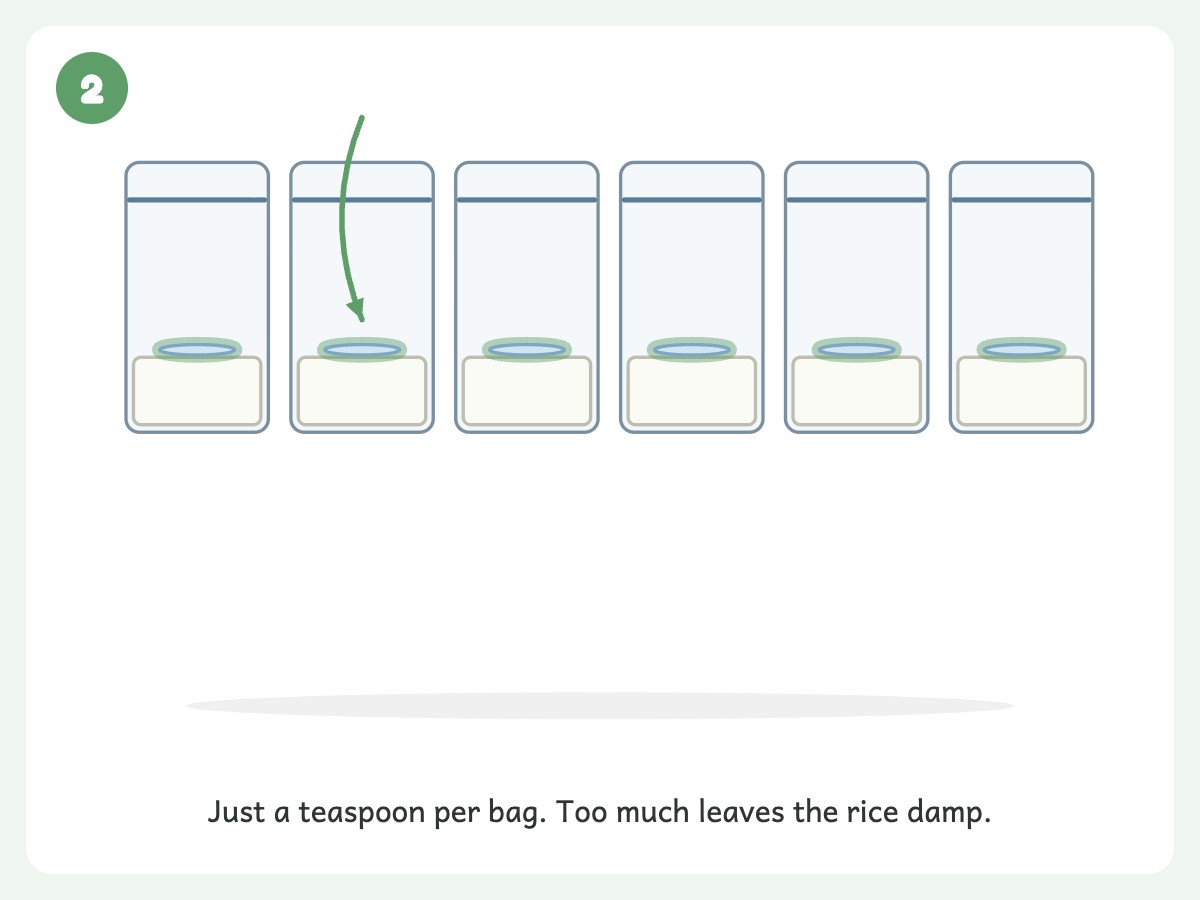
- Add vinegar. Add about 1 teaspoon of white vinegar per bag. It helps the dye take, but too much leaves the rice damp.
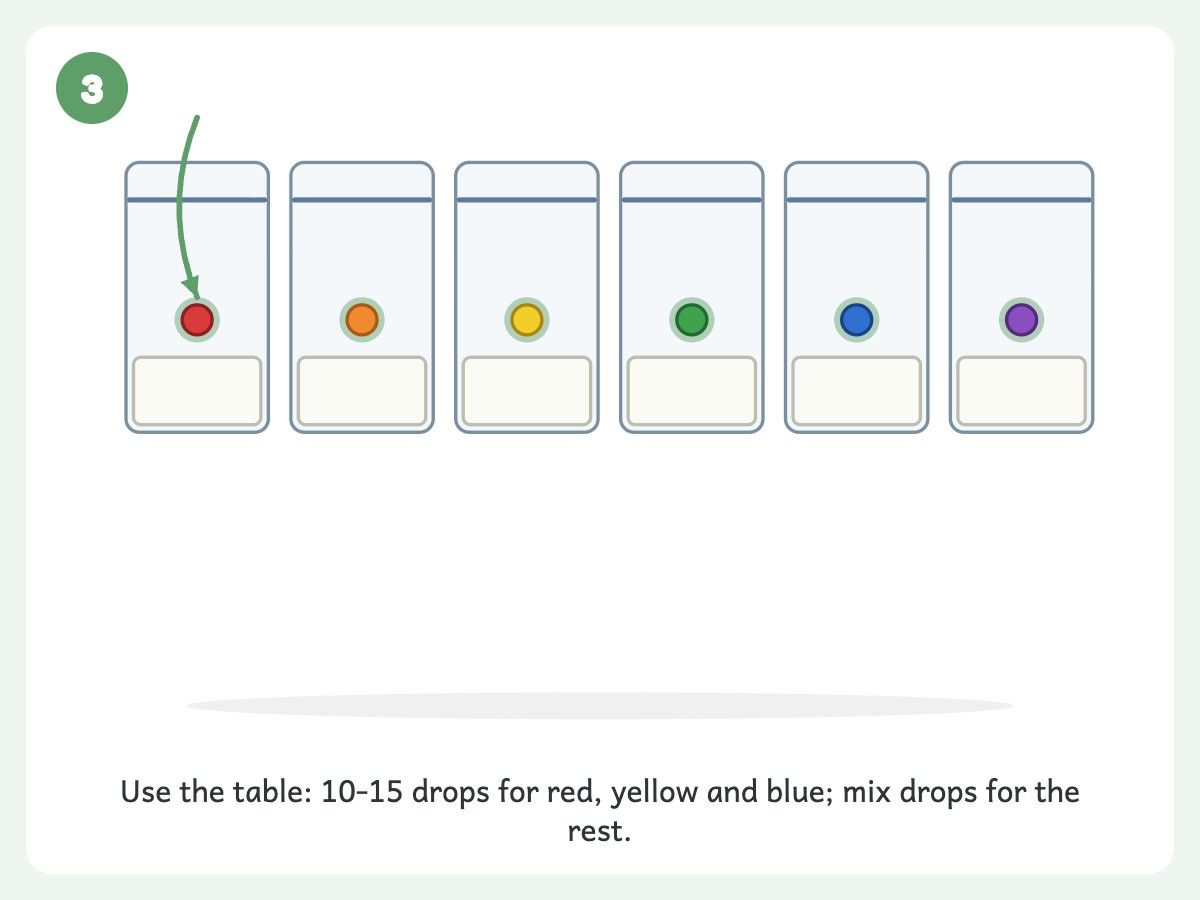
- Add dye. Start with the amounts in the table. You can always add a few more drops.
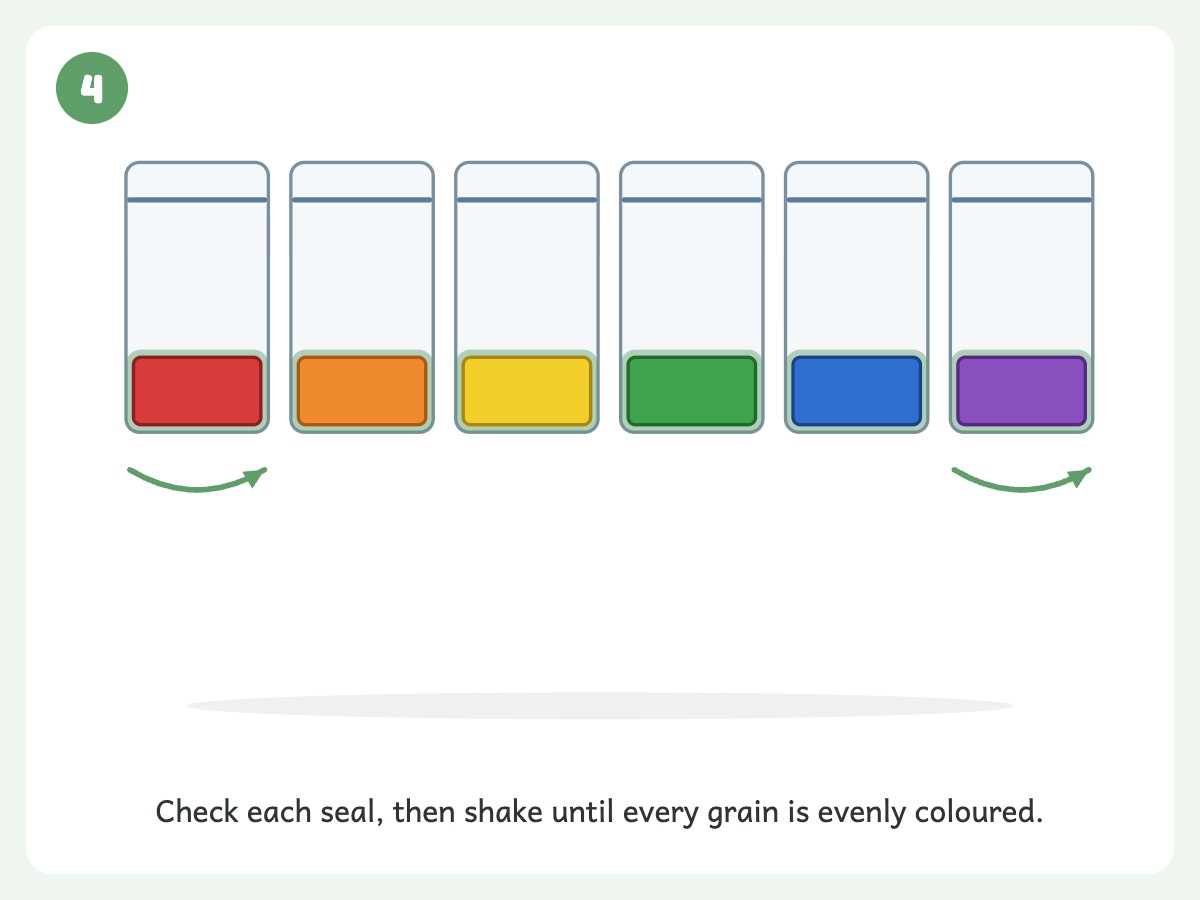
- Shake. Seal the bag and shake for 1-2 minutes until the color is even. Kids love this job. I check the seal twice before I hand a bag over, because one open corner means dyed rice all over the counter.
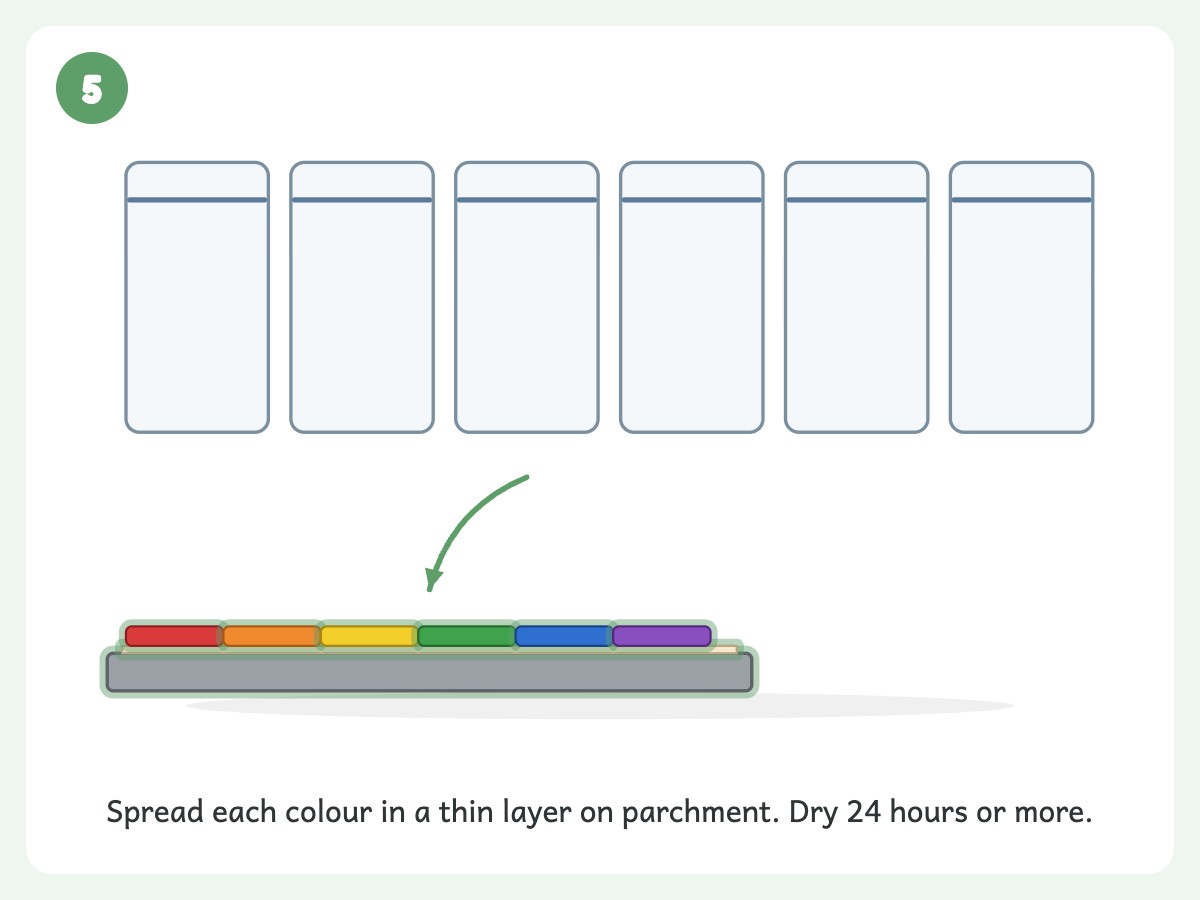
- Dry it. Spread the rice thin on a baking sheet lined with parchment. Let it dry until it feels completely dry, with no cool or damp spots. That can take 24 hours or more in humid weather.
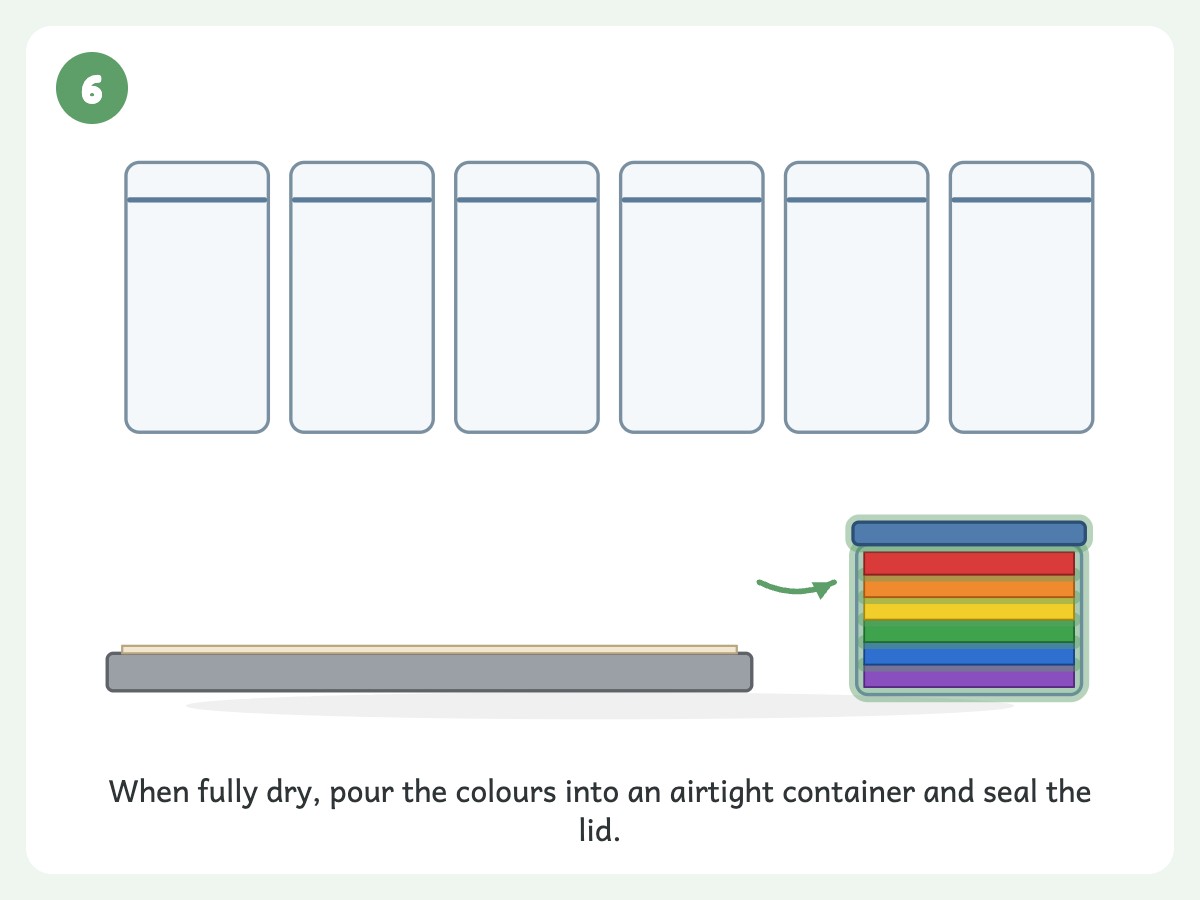
- Store it. Move the dry rice to an airtight container, or combine the colors into one rainbow bin.
TipStir the rice every few hours while it dries and break up clumps. If it smells musty or looks discolored, toss it.
Two Quick Tips
- Use gel food coloring for brighter colors with less dye.
- For deeper colors, add a few more drops or shake longer. More dye stains more, so use play clothes.
Rainbow Rice Sensory Bin Ideas
| Idea | What to add (large pieces only) | What kids do | Skill practiced |
|---|---|---|---|
| 1. Classic Scoop and Pour | Measuring cups, spoons, funnels, containers | Scoop, pour, fill, dump | Fine motor, hand-eye coordination, volume |
| 2. Rainbow Sorting | Cups or bowls in matching rainbow colors | Sort rice by color (try our pattern worksheets for a follow-up) | Color recognition, sorting |
| 3. Letter Hunt | Large non-magnetic letters (wood, big foam, or plastic) | Find letters, name them, spell simple words (pair with alphabet worksheets) | Letter recognition |
| 4. Number Excavation | Large plastic or wooden numbers, number cards | Find numbers, match to cards, put in order (pair with number tracing worksheets) | Number recognition, sequencing |
| 5. Dinosaur Dig | Large plastic dinosaurs, soft brushes, big plastic bones | Dig for dinosaurs hidden in the rice | Imaginative play, fine motor |
| 6. Treasure Hunt | Oversized felt or foam “coins,” a treasure chest, large pirate figures | Search for buried treasure | Fine motor, imaginative play |
| 7. Garden Planting | Flowers with soft plastic or foam stems, pots, plastic toddler garden tools | “Plant” flowers in the rice garden | Pretend play, fine motor |
| 8. Construction Site | Large dump trucks, excavators, big cones, large foam or wooden blocks for “boulders” | Dump, dig, and transport rice | Imaginative play, vehicle vocabulary |
| 9. Rice Painting | Washable, non-toxic school glue, paper, brushes | Brush glue on paper, pour rice over it, then leave it flat on the table to dry | Art, texture exploration |
| 10. Zen Garden | Kid rake (plastic or wooden), large smooth wooden or foam “stones,” large figures | Rake patterns and arrange the “stones” | Fine motor, calm focus |
Safety firstA few of these ideas need extra care. Skip magnetic letters, real coins, and craft gems. Swallowed magnets can cause serious injury, and coins and gems are small parts.
For Rice Painting, use no hot glue. Let the art dry fully, flat on the table, and keep it away from mouths. Dried rice can flake off the paper, and loose grains are a choking hazard.
For the Zen Garden, never use a real fork, and skip real rocks, which are heavy and can be thrown or dropped. A parent or teacher should stay within arm’s reach for both activities.
For more bin themes by season, see our 50 easy sensory bin ideas for toddlers.
How to Keep Rainbow Rice Play Fresh
Rotate themes: Same rice, different add-ins. Swap the dinosaurs for flowers next week.
Try a texture contrast: Add a few big felt shapes or chunky wooden blocks for a different feel. Like every add-in, they must be too big to fit through a toilet paper tube.
Combine colors: Let kids mix colors together for new effects.
Switch containers: Shallow trays, low bins, or individual bowls each change the play.
For kids under 3, or any child who still mouths things: Skip the rice and see our edible sensory play ideas.
Safety firstIf a child puts rice in their mouth, have them spit it out and wipe their mouth. Offer water only once they are calm and breathing normally.
If a child cannot cough, speak, or breathe, or their face turns blue or pale, call 911 and start choking first aid for their age.
If coughing, wheezing, or trouble breathing continues after a child mouths or inhales rice, get urgent medical care.
Expect a faint tint on fingers the first few times you play with a fresh batch. I plan for it now instead of being surprised by it. Dyed hands wash off with soap and water, and play clothes go straight in the wash.
Storage and Care
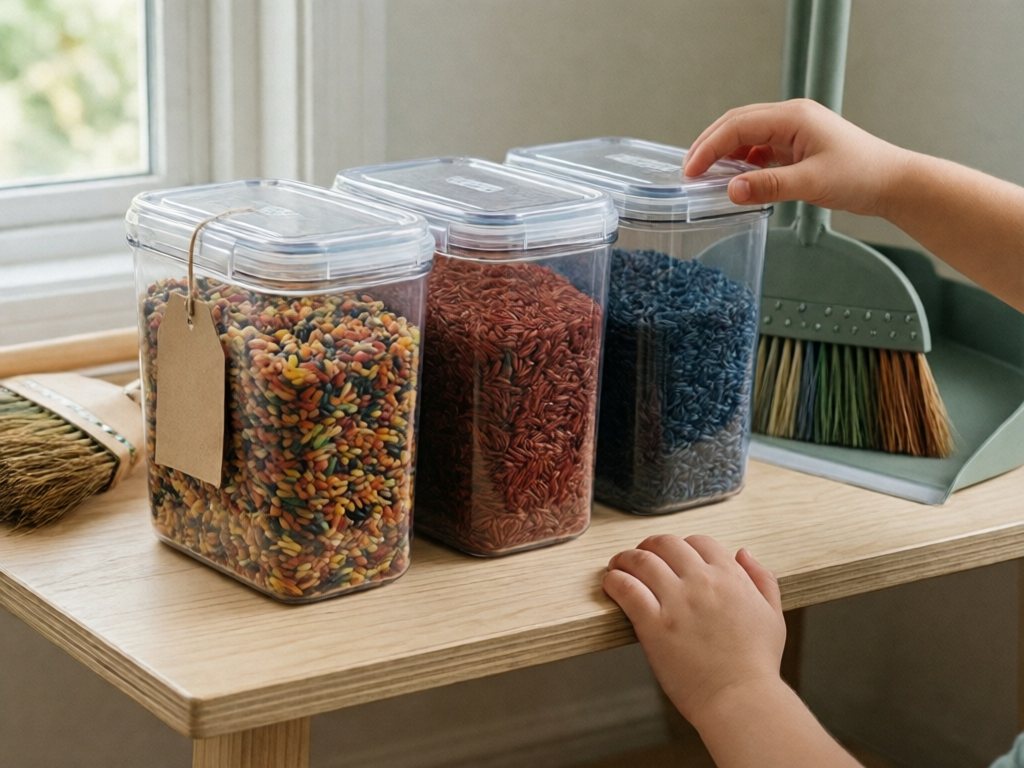
Store It
- Keep rice in an airtight container in a cool, dry spot
- Label it with the date made (it lasts up to about 6 months if kept dry)
- After play, pour rice back in and sweep up spills with a hand broom
When to Toss It
- Check for damp or musty rice before each use
- Discard it at any sign of moisture or mold
- Discard it if it smells musty, looks discolored, or the colors fade a lot
Rainbow Rice Troubleshooting: Clumps, Pale Color, and Mess
| Problem | Likely cause | Fix |
|---|---|---|
| Colors aren’t vibrant | Not enough dye, or liquid dye | Add a few more drops or shake longer. Gel dye is stronger than liquid. More dye stains more, so use play clothes. |
| Rice is clumpy | It didn’t dry completely | Spread it out and let it dry longer. |
| Color on hands | Fresh rice still shedding dye | It usually settles after a few plays. Wash hands with soap and water. |
| Rice going everywhere | Deep bin, bare floor | Use a shallow tray or low bin, and put a sheet under the play area. |
TipSweep up spilled rice right away. Loose rice on a hard floor is slippery, and the grains skitter farther than you’d think. I keep a hand broom parked right next to the bin.
Crafty Mama
Crafty Mama is a former elementary art teacher turned stay-at-home parent who believes every child is creative — they just need the right invitation. She develops age-appropriate activities, crafts, and projects that spark imagination while keeping mess (and parent stress) to a minimum.
Frequently Asked Questions
Is rainbow rice safe if my toddler eats it?
Dyed dry rice is a play material, not food. Dry grains are a choking hazard and can be inhaled. We don’t recommend rainbow rice before age 3, or for any child who still mouths things.
If a child swallows a handful or has trouble breathing, get medical help right away. For other questions, call Poison Control at 1-800-222-1222 (US).
How long does rainbow rice last?
If kept completely dry, rainbow rice lasts up to about 6 months. The colors may fade a little. Discard it at any sign of moisture, mold, or odor.
Can I use brown rice?
You can, but white rice takes color better and produces more vibrant results.
Do I need to cook the rice?
No! Rainbow rice uses uncooked rice. Cooking it would make it sticky and eventually moldy.
Can I use Kool-Aid to dye rice?
We don’t recommend it for this age. A food-scented dye makes tasting more likely, and sugar can attract ants and mold when damp. Stick to food coloring, which also stains less.
Final Thoughts
The only part that takes patience is the drying, so start a day ahead. I’ll be honest: some rice will end up on the floor every single time, and I’ve made my peace with that. After that, one bag of rice and some food coloring give you months of play. Want a tidier option? Try our mess-free sensory play ideas or a batch of soft homemade playdough.
Make a batch this weekend, and stay close by while your preschooler plays.
Read next: Fine Motor Activities for Toddlers: Strengthen Little Hands
—