18-Month-Old Crafts: 15 Simple Ideas for a Brand-New Toddler
This post contains affiliate links. As an Amazon Associate I earn from qualifying purchases.
The best 18-month-old activities at home are short (3 to 10 minutes), built around one action like smearing, stamping, or scribbling, and use food-based materials such as yogurt paint while your child still mouths things. Start with yogurt finger paint, water painting on cardboard, or a jumbo-crayon scribble sheet. The first five ideas are food-based, and every idea needs an adult within arm’s reach.
This page is for the in-between stage. At 18 months your child is too big for baby sensory mats and too little for glue-and-glitter crafts. They still mouth things, and they will eat the crayon. Each idea gets a mess rating, and the check table below marks every one as food-based, supervised, or skip-if-mouthing.
In this article (9 sections)
- The “Still Mouths Everything” Safety Filter
- Set Up Once, Use Every Time
- 15 Crafts for 18-Month-Olds
- Mouth-Safety Check for All 15 Crafts
- Quick-Pick Table: Match the Craft to the Moment
- How to Run a Craft With a Very Short Attention Span
- Mess Management Without the Stress
- Frequently Asked Questions
- You’re Doing Great, Mess and All
The “Still Mouths Everything” Safety Filter
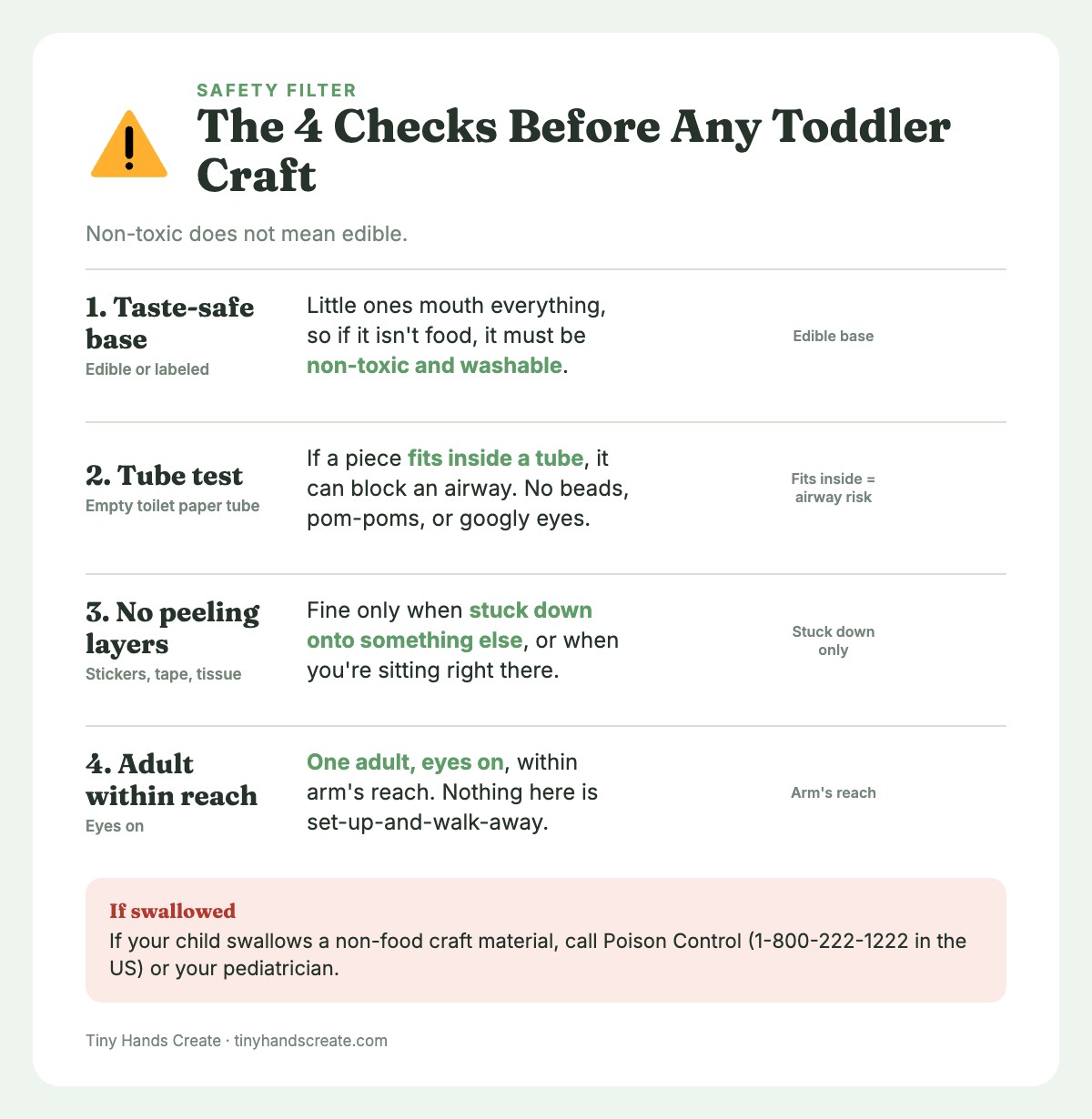
Safety firstNon-toxic does not mean edible. Use the tube test below, stay within arm’s reach for every craft, and remove broken or chewed-off pieces. If your child swallows a non-food craft material, call Poison Control (1-800-222-1222 in the US) or your pediatrician.
Before any craft makes the list, I run it through four checks. Use these to vet anything you find online, too.
- Edible or taste-safe base. If the main material isn’t food, it must be labeled non-toxic and washable, and you should assume a taste test will happen.
- Nothing that fits inside a toilet paper tube. The classic rule: if a piece fits inside a tube, it can block an airway. That rules out googly eyes, pom-poms, beads, buttons, and most sequins. The tube test covers small objects only. Food needs its own check: keep it soft, in small pieces, and supervised.
- No loose layers that peel off. Stickers, tissue paper, and tape are fine only when they stick to something else (contact paper, a box) and are out of reach, or when you’re sitting right there.
- One adult, eyes on, within arm’s reach. Nothing on this list is a “set it up and walk away” activity at this age.
Quick swaps for craft advice you find elsewhere:
- Googly eyes become a drawn dot, and glitter gets skipped.
- Glue becomes a flour-and-water paste cooked on the stove until thick (not for eating).
- Pom-pom drops become big wooden spoons dropping into a bin.
What Counts as a “Craft” at 18 Months
Your toddler is not making a thing. They’re discovering that their hand can leave a mark. For more on why, our guide to fine motor activities for toddlers explains how grabbing and squeezing build the hand strength behind later pencil grip.
Set Up Once, Use Every Time
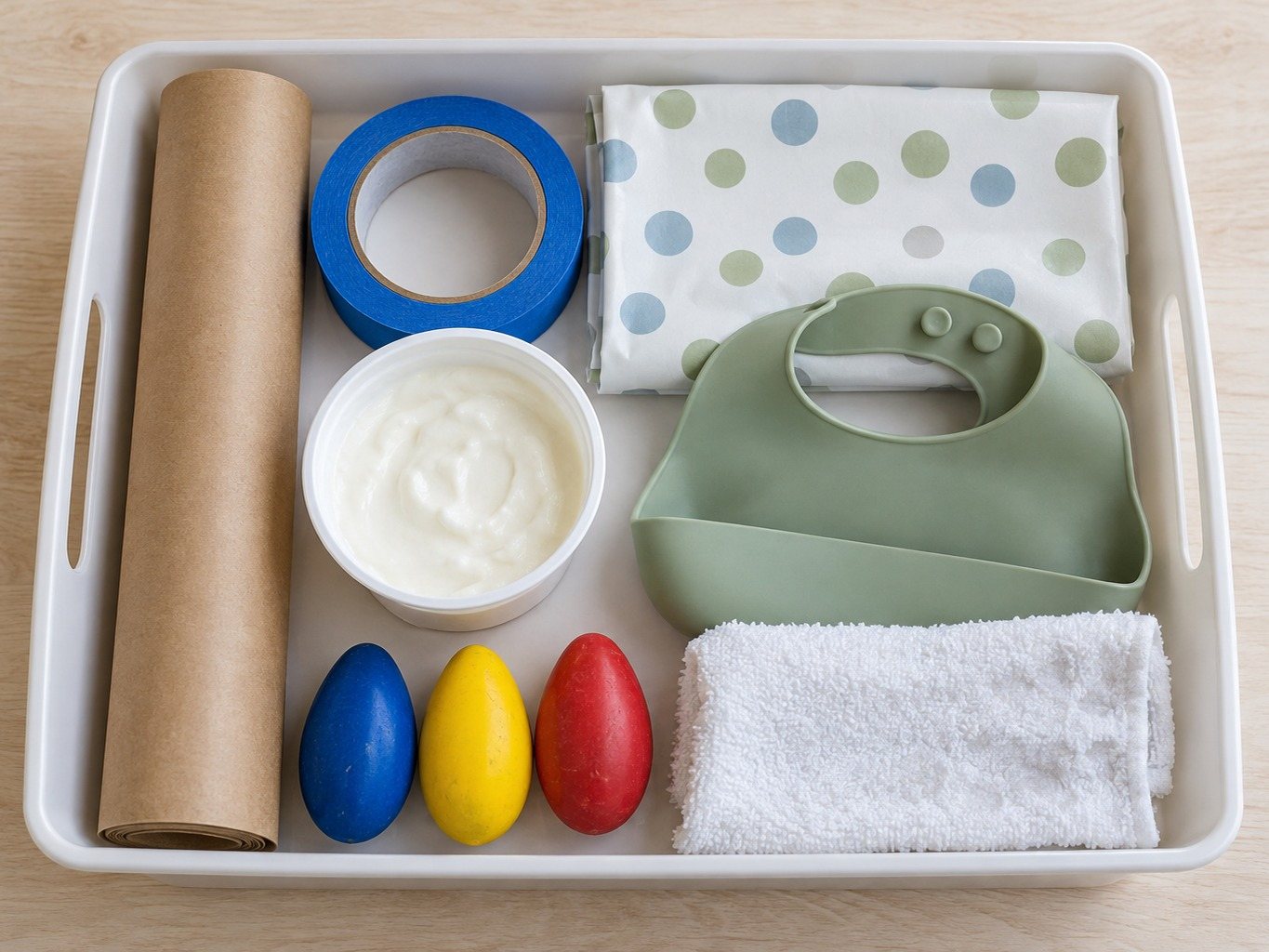
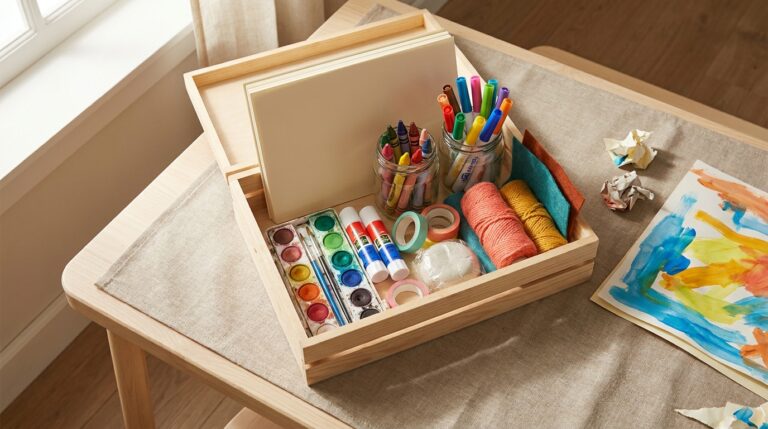
You don’t need a craft closet. Keep this in one bin:
- A roll of butcher or kraft paper, or cut-open grocery bags
- Painter’s tape (to tape paper to the floor or tray, so it doesn’t slide)
- A wipeable tablecloth or shower curtain for the floor
- Plain yogurt, food coloring or pureed fruit and veg for color
- Chunky, washable, non-toxic crayons shaped like eggs or jumbo sticks
- A washable bib or an old T-shirt (or go diaper-only in warm weather)
- A damp washcloth within reach, before you start
Sit the child in a high chair or on the floor on the cloth. A high chair tray works especially well, since it defines the “art zone” and keeps them from wandering off with the paint. Buckle the harness and stay within arm’s reach.
15 Crafts for 18-Month-Olds
The Food-Based Group
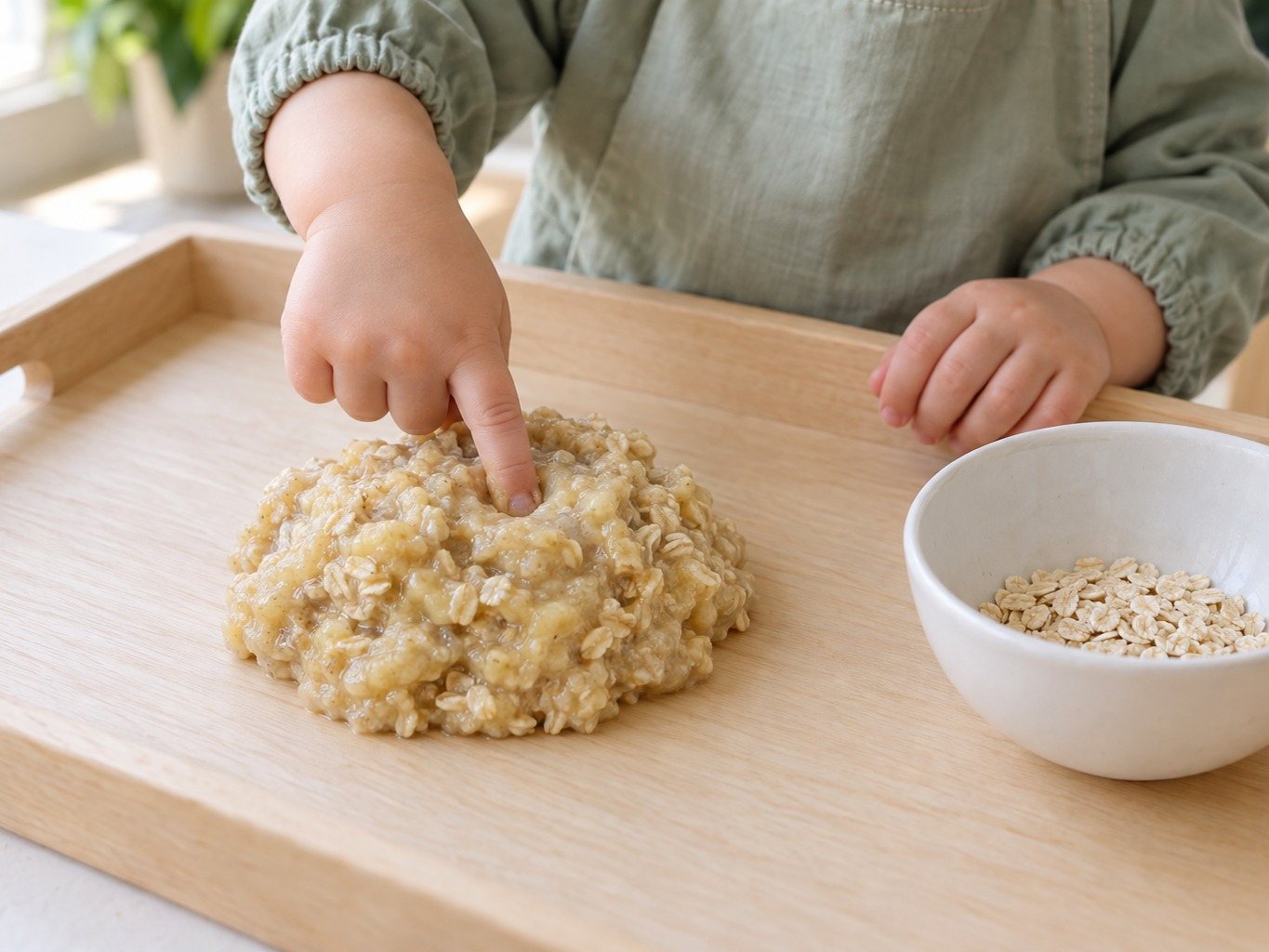
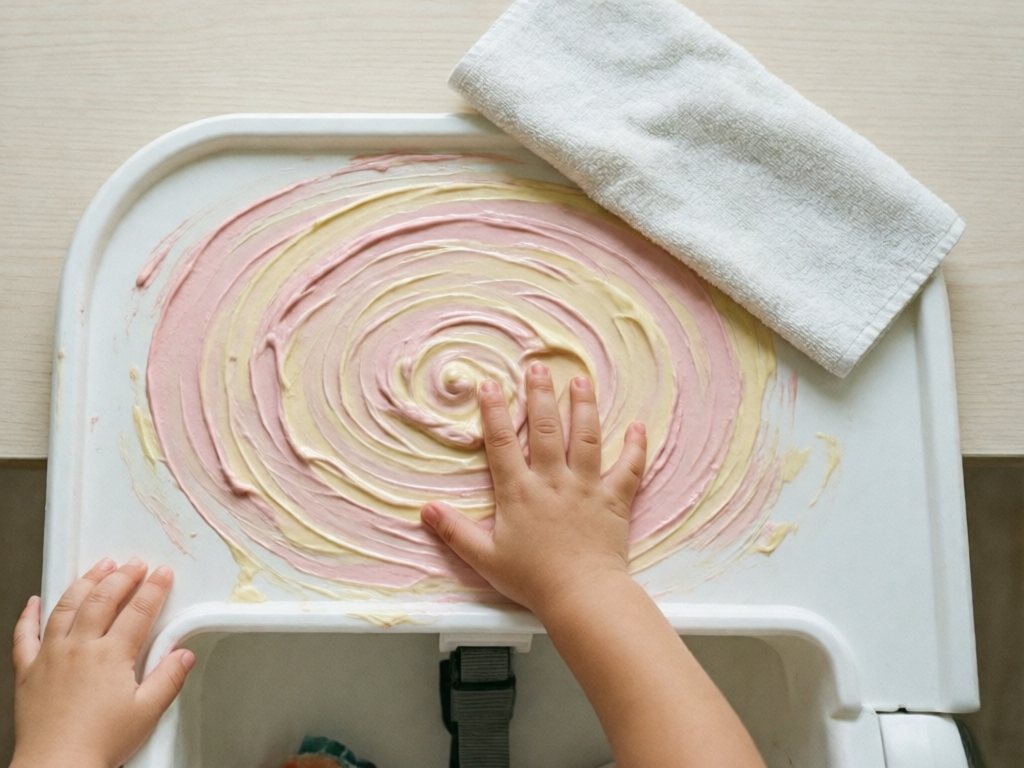
Good to knowAllergens: yogurt is dairy, cloud dough is wheat, and pasta is wheat (sometimes egg). Skip any that apply to your child. Flour should be heat-treated (bake at 350°F/175°C until it reaches 165°F inside, then cool) because raw flour can carry germs. Food-based still means supervised: a lick is okay, a mouthful of dough is not.
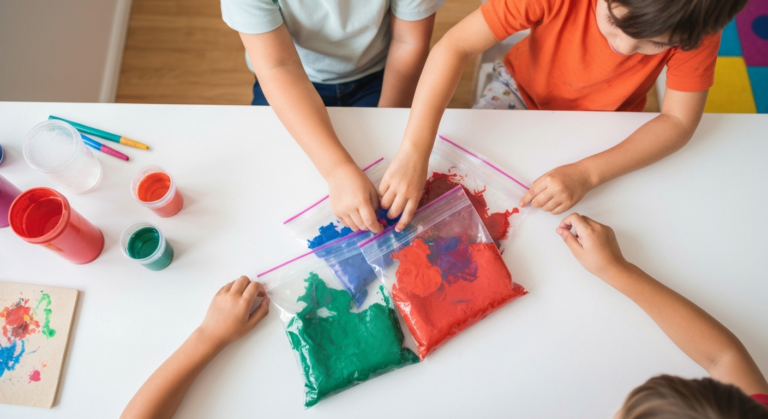
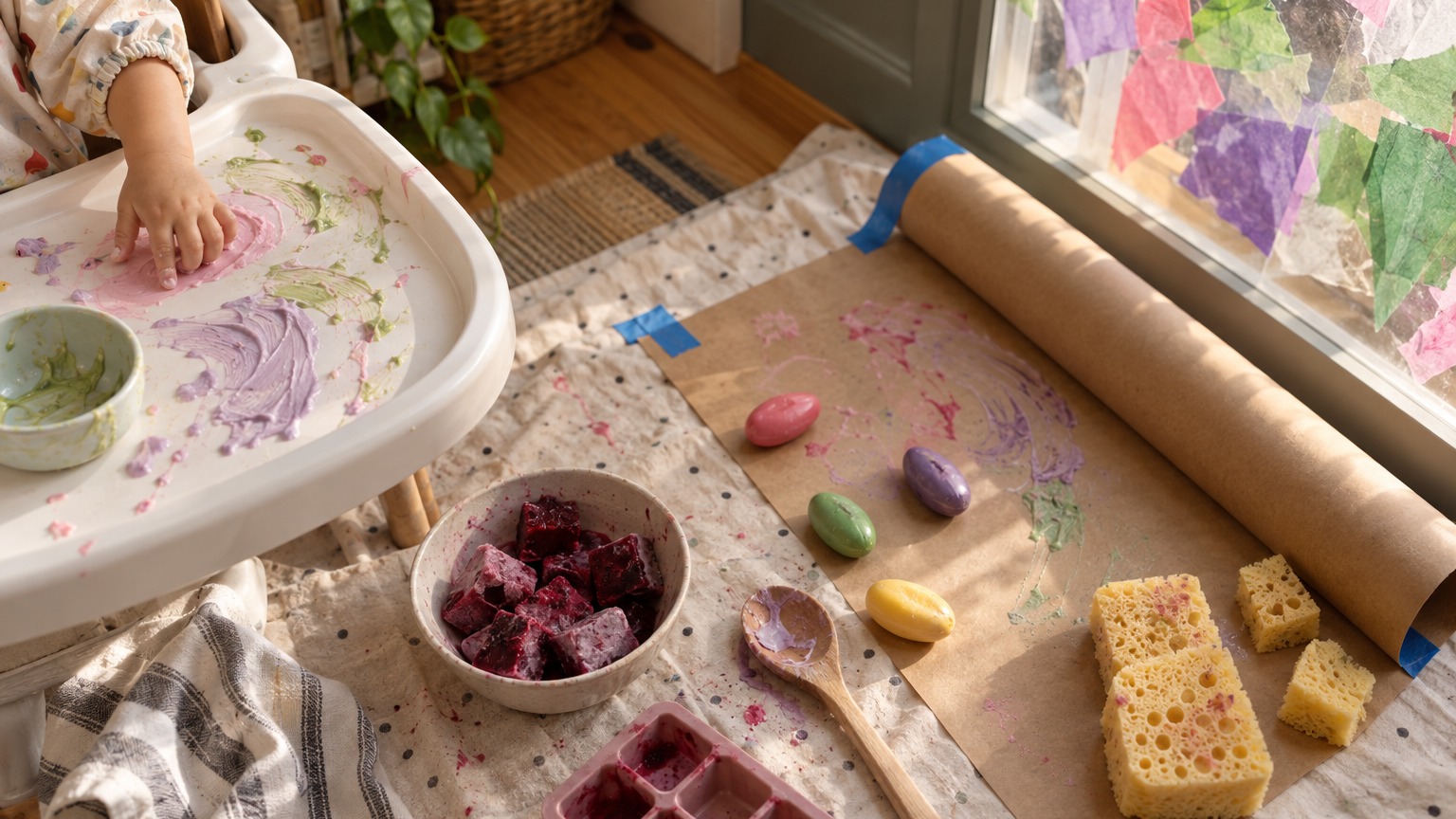
1. Yogurt finger paint. Stir a few drops of food coloring into plain yogurt, or use pureed beets, blueberries, or spinach. Put it on the tray or on paper and let them smear.
2. Oatmeal and banana “dough.” Mash a ripe banana with a few spoonfuls of dry oatmeal. It’s squishy and a little sticky, and they can poke, squeeze, and taste it.
3. Cloud dough. Mix 8 parts heat-treated, cooled flour to 1 part vegetable oil. It crumbles and then holds a shape when squeezed. Not for eating: a lick is okay, a mouthful is not. Skip it if wheat is an allergy concern.
4. Frozen puree painting. Freeze pureed fruit in an ice cube tray the night before. Hold the cube yourself, or use a sturdy handle too big to swallow, and let your toddler help slide it across paper for cold, colored streaks. Stay close: a frozen cube can stick to lips and tongue or break off.
5. Soft pasta pieces. Cut cooked pasta into short, soft pieces (long strands and clumps are a choking risk under 2), cool it, toss it with a little oil, and add it to paper or a tray. Add a bowl of yogurt for “sauce.” Pasta is a wheat allergen and can contain egg. If your child enjoys this one, our edible sensory play for babies post has plenty of similar ideas.
The Sticky Surface Group
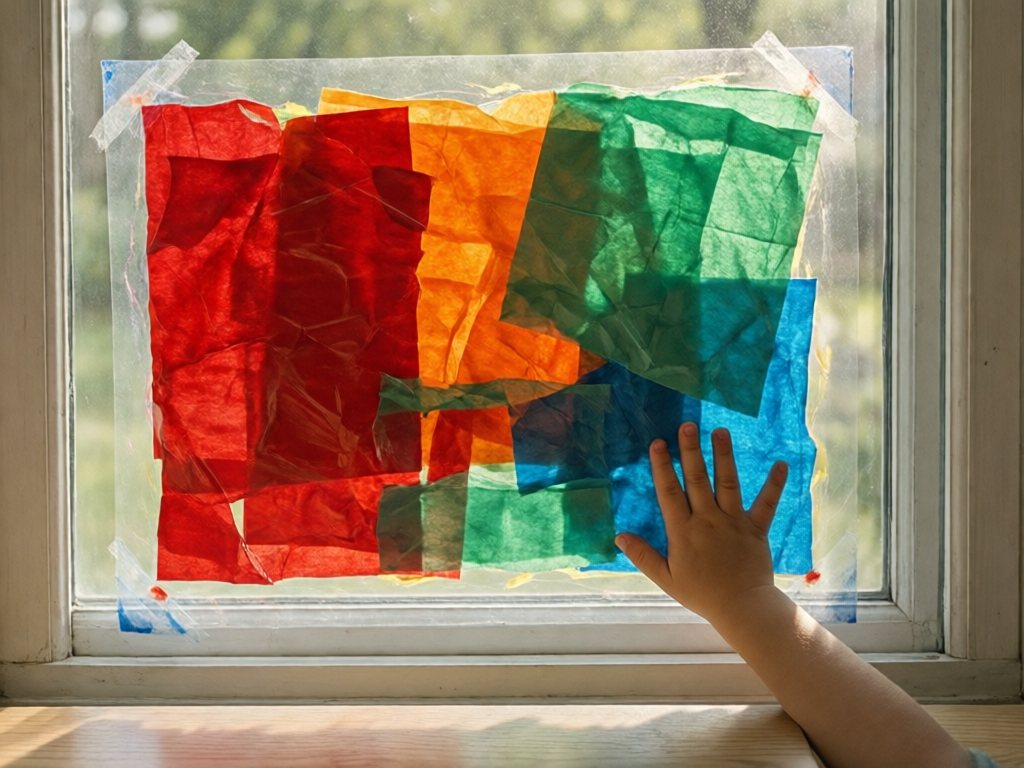
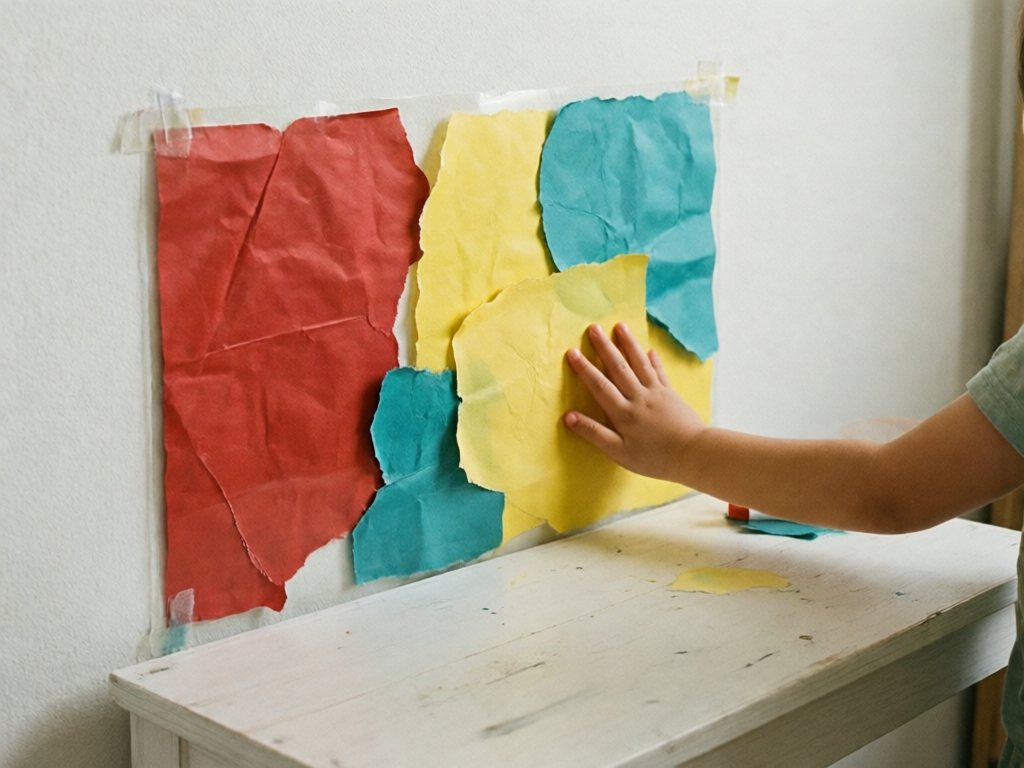
6. Contact paper sticky wall. Tape contact paper to the wall sticky side out at toddler height. Give them large pieces of tissue or paper, or clean, non-toxic leaves, to press on. Toddlers can peel pieces off and mouth them, so stay within arm’s reach.
7. Contact paper window collage. Same idea, taped to a window. When the pieces are stuck, cover them with a second layer of contact paper so nothing can be peeled off and swallowed. It looks like stained glass.
8. Big-sticker scene. Stickers can be peeled off and swallowed, so this one needs direct supervision. Skip it while your child mouths everything. If you try it, use stickers too big to pass the tube test, stick a few on a paper plate, and let them move them to a larger sheet. They’ll mostly crumple them, which is fine.
The Mark-Making Group
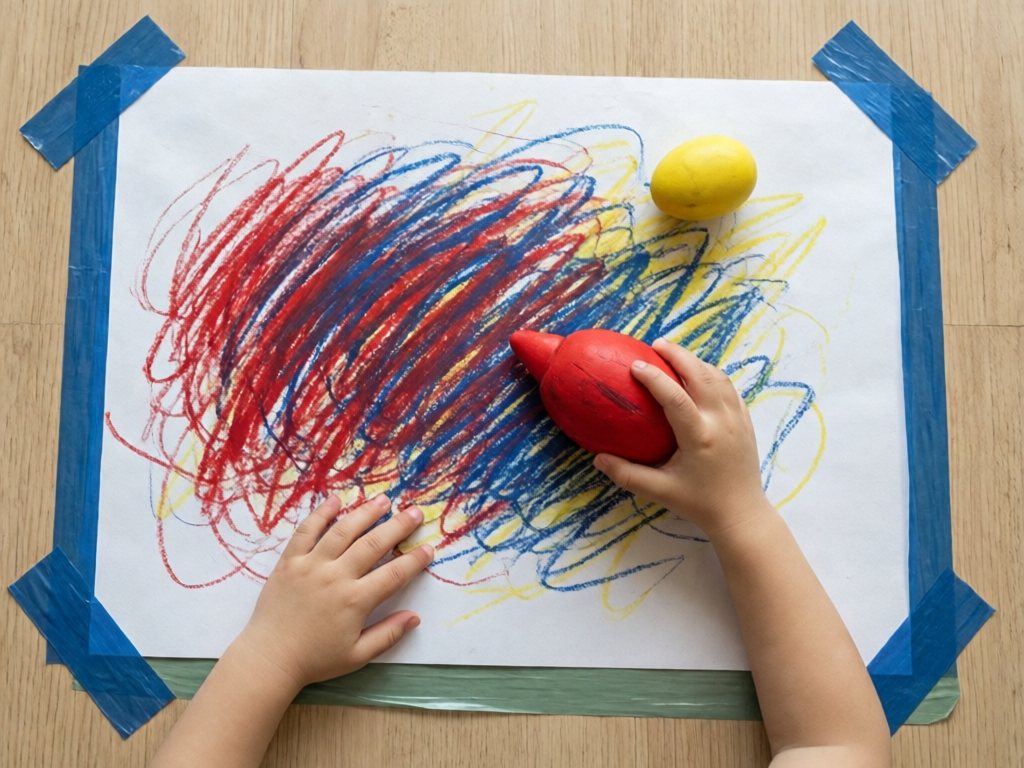
9. Jumbo crayon scribble sheet. Tape a large sheet of paper to the floor. Give them one or two chunky egg crayons and let them go. Don’t say “draw a circle.”
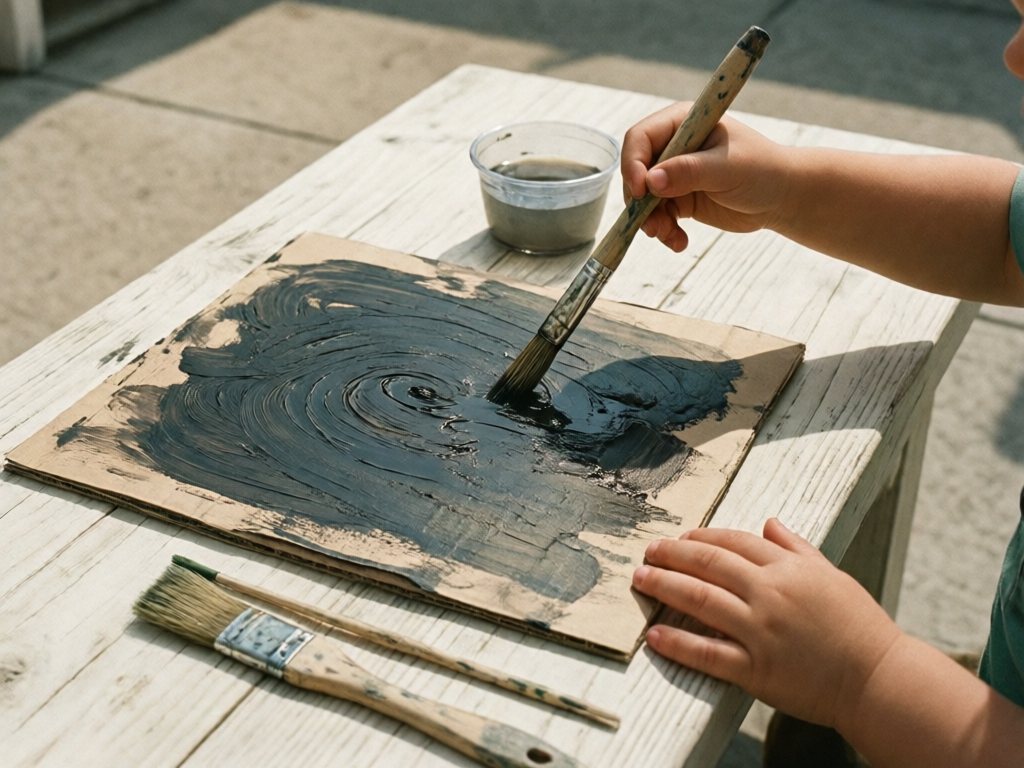
10. Water painting. Hand over a new, clean, short-handled brush and a shallow cup of water and let them “paint” cardboard or the fence. Colors darken and fade, which is thrilling. Toddlers can drown in very little water, so stay within reach, and skip wet tile, which is slippery.
11. Sponge stamping. Cut a new plain cellulose sponge (no scrub layer) into a few large chunky pieces, too big to fit in a toilet paper tube. If a piece tears, replace it. Dip in yogurt paint and press on paper. Washable paint works too, but it isn’t taste-safe, so use yogurt paint if your child still mouths things.
12. Vegetable stamps. Cut a cooked, cooled sweet potato or a large potato in half, keep the piece large, and show them how to press it in yogurt paint. The stamp is for stamping only, since bitten-off chunks are a choking risk, so stay close. Skip the stamp-shape carving: a flat cut works best at this age.
The Build-and-Drop Group
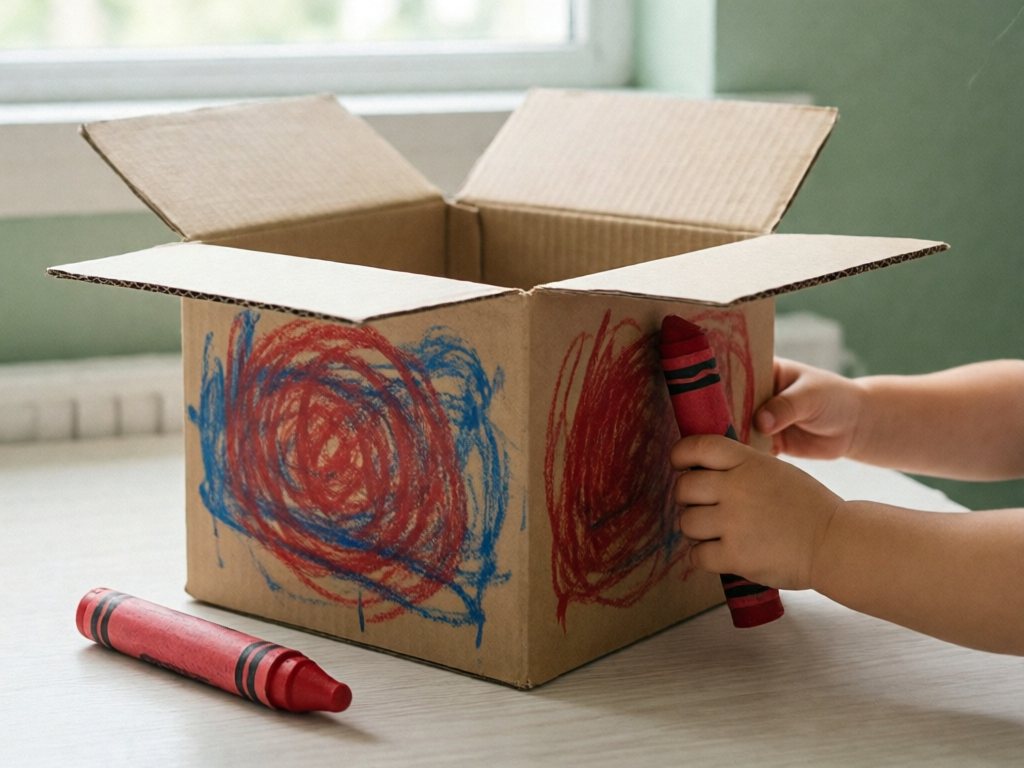
13. Decorate-a-box. Give them a cardboard box with the flaps open, no staples, and no loose tape, plus a couple of big crayons. They scribble, you narrate. It doubles as a hideout, so keep it open and ventilated and supervise hideout play. For more ideas, we’ve got 25 cardboard box crafts for when they’re ready for more.
14. Crinkle-foil board. Tape strips of foil and wax paper onto a piece of cardboard, with every edge folded down and taped. They pat, crinkle, and scratch. Foil, wax paper, and tape can tear off and be mouthed, and foil edges can be sharp, so keep the board in your hands or lap and stay close. Leave out the bubble wrap while your child mouths things, since plastic film is a suffocation risk.
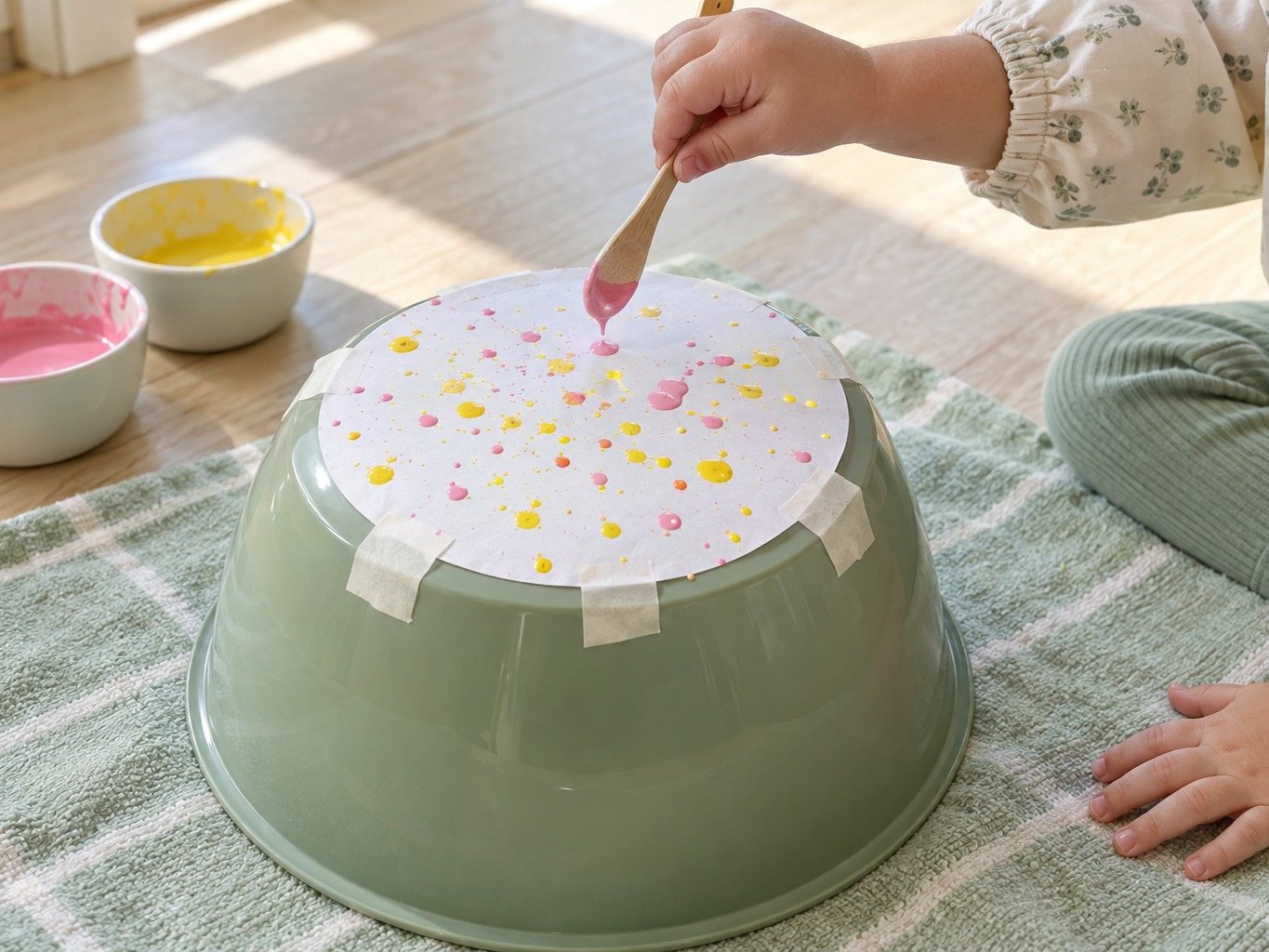
15. Wooden spoon drum art. Turn a pot or bowl upside down, tape paper across the bottom, seat your toddler, and let them tap with a wooden spoon dipped in yogurt paint. You get a splat painting and a drum solo in one. Never let them walk around with the spoon: a long handle in the mouth is a gag and poke hazard.
Mouth-Safety Check for All 15 Crafts
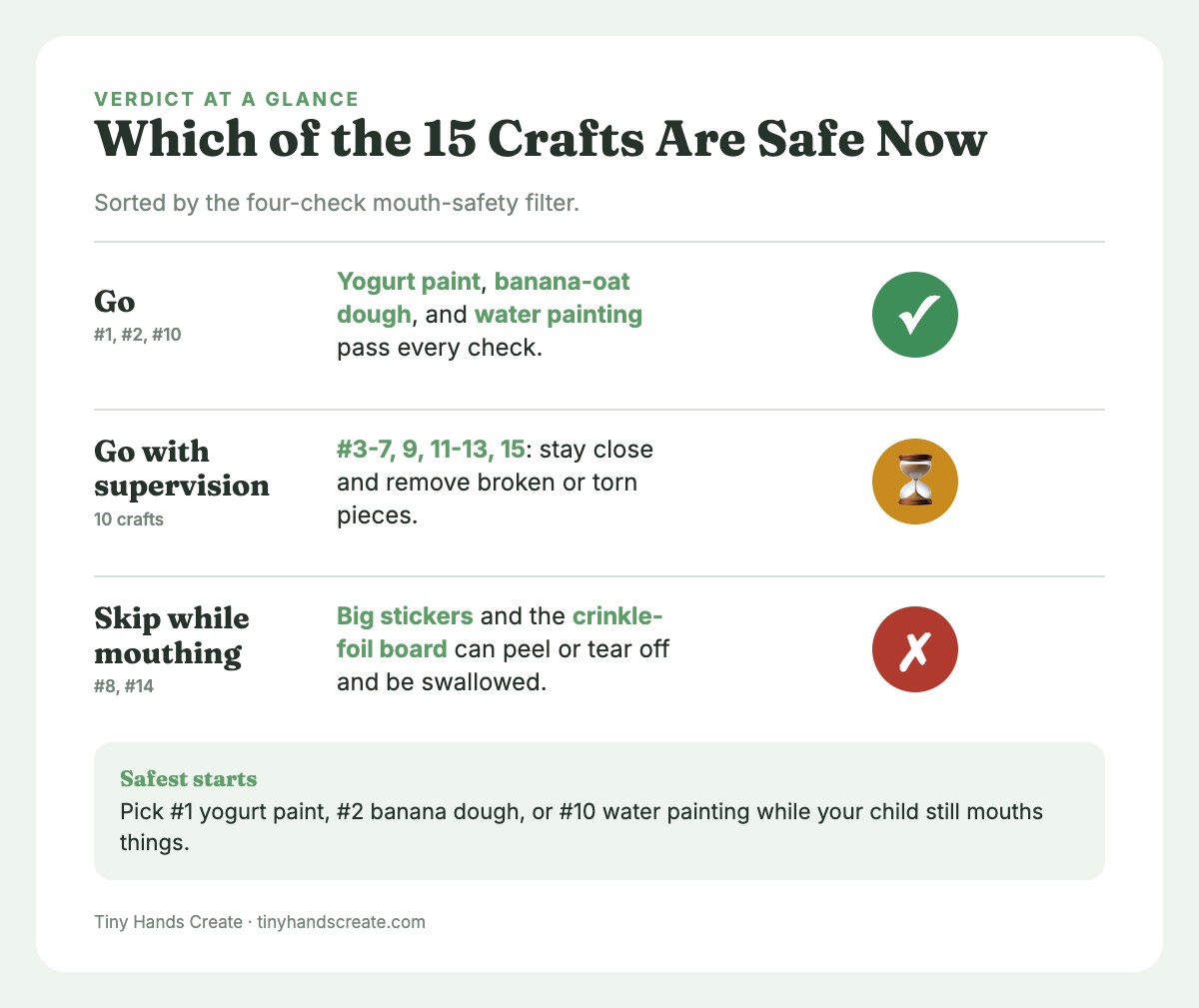
Here is the filter applied to every craft. Be honest with yourself about where your child is: if they mouth everything, stick to the “Go” rows and be picky about the rest.
| Craft | Main material | Food-based? | Anything that fits a toilet paper tube? | Can pieces peel off? | Adult needed | Verdict |
|---|---|---|---|---|---|---|
| 1. Yogurt finger paint | Yogurt, food color | Yes | No | No | Nearby | Go |
| 2. Oatmeal-banana dough | Banana, oats | Yes | No | No | Nearby | Go |
| 3. Cloud dough | Heat-treated flour, oil | Yes, but not for eating | No | No | Within reach | Go with supervision |
| 4. Frozen puree painting | Frozen fruit puree | Yes | Cube can break off | No | Hands on | Go with supervision |
| 5. Soft pasta pieces | Cooked pasta | Yes | Cut pieces small and soft | No | Eyes on | Go with supervision |
| 6. Sticky wall | Contact paper, tissue | No | Torn bits can | Yes | Within reach | Go with supervision |
| 7. Window collage | Contact paper | No | Not once covered | Not once covered | Within reach | Go with supervision |
| 8. Big stickers | Stickers | No | Can be | Yes | Hands on | Skip while still mouthing everything |
| 9. Crayon scribble | Jumbo crayons, paper | No | Broken pieces can | No | Nearby | Go with supervision |
| 10. Water painting | Water, clean brush | No, but harmless | No | No | Within reach | Go |
| 11. Sponge stamping | Sponge, yogurt paint | Paint is yogurt | Not if chunky | Sponge can tear | Nearby | Go with supervision |
| 12. Vegetable stamps | Cooked potato | Yes, but not for eating | Bitten chunks can | No | Eyes on | Go with supervision |
| 13. Decorate-a-box | Open cardboard box | No | No | Tape can | Within reach | Go with supervision |
| 14. Crinkle-foil board | Foil, wax paper, tape | No | Torn bits can | Yes | Hands on | Skip while still mouthing everything |
| 15. Spoon drum art | Wooden spoon, yogurt paint | Paint is yogurt | No | No | Within reach | Go with supervision |
Quick-Pick Table: Match the Craft to the Moment
| Situation | Best pick | Why it works |
|---|---|---|
| Only 5 minutes before dinner | #9 Scribble sheet | Almost zero setup |
| Rainy day, high energy | #15 Spoon drum art | Noise plus paint |
| Wants to put everything in mouth | #1 Yogurt paint, #2 Banana dough | Food-based, but still supervised |
| You hate cleanup | #6 Sticky wall, #10 Water painting | Almost no mess |
Want a fridge-ready version? The Toddler Craft Matcher and Week Plan printable pairs crafts with your child’s mouthing stage, so you don’t have to re-read the safety table each time.
How to Run a Craft With a Very Short Attention Span
Expect 3 to 10 minutes. That’s a success, not a failure. A few things help:
- Offer one material at a time. Three crayons is a decision; one is an invitation.
- Pre-set everything before the child sits down. A toddler won’t wait while you hunt for a cloth.
- Let them quit. When they push the paper away or climb out, it’s over. Don’t coax.
- Repeat the same craft over several days. Toddlers learn through repetition, and the second time they’ll do more with it.
- Narrate, don’t direct. “Squish! The yogurt is cold!” is plenty.
Our rainy day indoor activities list is a good backup for the afternoon after the craft is done and you still have energy to burn.
Mess Management Without the Stress
You will have yogurt in your hair. Plan for it:
- Tape a shower curtain or old sheet flat to the floor under the high chair, so it can’t slip or bunch. Shake it outside after and store plastic out of reach.
- Choose white or light paint colors for the first try. Dark berry and beet stains are real.
- Do messy crafts right before bath time so the bath is the cleanup.
Frequently Asked Questions
What are good activities for an 18-month-old at home?
Simple sensory play works best: yogurt finger painting, water painting, sticky contact paper walls, big-crayon scribbling, and banging wooden spoons on pots. Aim for 3 to 10 minutes per activity and one material at a time. A toddler this age is learning by touching, squishing, dropping, and mouthing, so choose activities that welcome all four.
Is it safe to do crafts with an 18-month-old who still puts things in their mouth?
Mostly, with the right choices and close supervision. Use edible bases (yogurt, oatmeal, pureed fruit), skip any piece small enough to fit inside a toilet paper tube, and stay within arm’s reach the whole time. Ideas 8 (stickers) and 14 (crinkle-foil board) are skip-if-mouthing, and glitter, beads, and googly eyes are out.
How long should an 18-month-old’s craft session last?
Plan on 3 to 10 minutes. Many toddlers this age will engage for only a few minutes and then walk away, and that’s developmentally normal. If they’re done, they’re done. Try again later or the next day with the same setup.
My 18-month-old just wants to eat the crayons. What should I do?
Mouthing is typical at this age. Use jumbo, non-toxic, washable crayons labeled for toddlers, offer them one at a time, and remove broken pieces. If your child swallows a non-food craft material, call Poison Control (1-800-222-1222 in the US) or your pediatrician, and mention it at checkups if it keeps happening. If they keep mouthing, switch to yogurt paint or water painting for a few weeks and try crayons again later.
Do 18-month-olds need special craft supplies?
No. Paper, painter’s tape, plain yogurt, jumbo crayons, a sponge, and a wooden spoon cover almost every idea above.
What if my toddler hates getting messy?
Start with low-mess options: water painting, the contact paper sticky wall, or crayon scribbling. Some children dislike sticky or wet hands and need a few weeks of low-pressure exposure. Keep a damp cloth nearby so they can wipe off whenever they want, and never force hands into the material.
Is yogurt paint really safe if my toddler has allergies?
Plain yogurt is a dairy product, so skip it if your child has a milk allergy or sensitivity. Use mashed banana, pureed sweet potato, or oatmeal mixed with water instead, and check any food coloring against your child’s known allergies. If you’re unsure, ask your pediatrician before trying a new food as a craft material.
You’re Doing Great, Mess and All
The craft doesn’t matter: the yogurt handprint and the two-minute scribble are the whole point of this age. Pick one idea, set it up in a few minutes, and let your 18-month-old be messily curious.