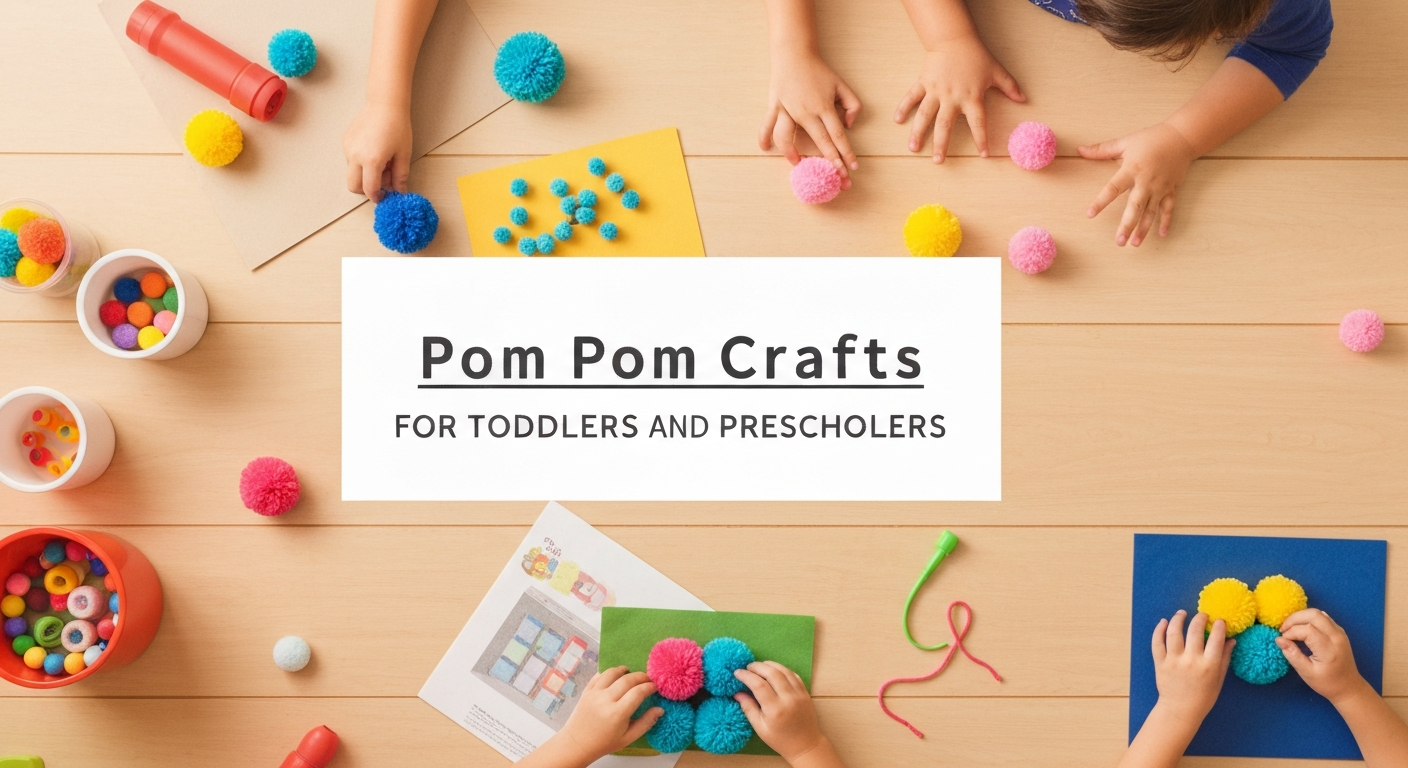
Pom Pom Crafts and Activities for Toddlers and Preschoolers (Ages 1-5)
Discover why pom poms are a developmental goldmine for toddlers and preschoolers, enhancing fine motor skills and cognitive abilities. You'll learn how to choose the right pom pom sizes for different ages and get quick, easy activity ideas.
- Utilize pom poms for developing fine motor skills, pincer grasp, and hand-eye coordination.
- Choose jumbo pom poms (1.5-2 inches) for toddlers (12-24 months) to prevent choking hazards.
- Set up quick activities like muffin tin color sorts or pom pom push bottles for instant engagement.
- Introduce smaller pom poms and tongs to preschoolers (3-5 years) for increased fine motor challenge.
This post contains affiliate links. As an Amazon Associate I earn from qualifying purchases.
I keep a gallon-sized ziplock bag of pom poms in my craft cabinet the way some people keep a first aid kit — it’s there for emergencies. Bored toddler on a rainy afternoon? Pom poms. Preschooler who finished lunch twenty minutes before everyone else? Pom poms. Need a sensory activity that takes thirty seconds to set up and doesn’t involve paint, glue, or anything that stains the carpet? Pom poms. These fuzzy little spheres are, pound for pound, the most versatile craft supply in early childhood, and I’ll defend that claim to anyone who challenges me. They’re soft, colorful, lightweight, and utterly irresistible to tiny hands, which makes them the perfect material for a genuinely wide range of activities and crafts. I’ve organized everything below by age, from squishy 1-year-old sensory play to preschool letter and pattern work, so you can jump straight to what fits your child.
In this article (7 sections)
- Why Pom Poms Are a Developmental Goldmine
- Pom Pom Activities at a Glance
- Pom Pom Activities for 1, 2, and 3 Year Olds (Quick, No-Setup)
- Pom Pom Craft Projects and Art Activities That Actually Look Great
- Pom Pom Learning Activities for Preschoolers and 5 Year Olds
- Mess Management and Practical Tips
- Frequently Asked Questions
Why Pom Poms Are a Developmental Goldmine
Pom poms might look like nothing more than fluffy craft store filler, but they’re actually precision-sized fine motor tools (okay, not literally engineered, but work with me here). Their size, shape, and texture make them ideal for the specific hand movements toddlers and preschoolers need to practice. If you want the full range of hand-strengthening activities beyond pom poms, our fine motor activities for toddlers guide has more.
Here’s what’s actually happening developmentally during a pom pom activity:
- Pincer grasp: Picking up a pom pom between thumb and forefinger is the exact grip children need for holding pencils, zipping zippers, and buttoning buttons
- Hand-eye coordination: Placing pom poms into small spaces (holes, cups, glue dots) requires precise visual guidance of hand movements
- Bilateral coordination: Many pom pom activities require one hand to hold a container while the other hand places pom poms — two hands doing different things simultaneously
- Color recognition and sorting: Pom poms come in every color of the rainbow, making them natural sorting and classification tools
- Counting and one-to-one correspondence: “Put one pom pom in each cup” teaches the math foundation of one-to-one matching
- Sensory exploration: The soft, squishy texture provides calming tactile input that many children find soothing
Choosing the Right Pom Poms by Age
Pom pom size matters more than most parents realize — it’s the single biggest factor in whether an activity with pom poms is safe and successful. Here’s how I’d break it down:
1-year-olds and young toddlers (12-24 months): Jumbo pom poms (1.5-2 inches) only, and stay in the room the whole time. At this age, hands are still developing the pincer grasp, and everything eventually goes toward the mouth. Jumbo pom poms are too large to swallow, but they can still be mouthed, so treat pom pom activities for 1 year olds as short, always-supervised sessions rather than independent play.
2 and 3-year-olds: A mix of large (1 inch) and jumbo pom poms. By now the pincer grasp is more reliable, so smaller pom poms add a fine motor challenge without becoming frustrating. This is the sweet spot for the color-sorting and push-bottle activities below.
Preschoolers (4-5 years): The full range, including mini pom poms (0.5 inch). Smaller pom poms increase the fine motor demand and allow for more detailed craft and letter-formation work. Mini pom poms are still a genuine choking risk for a child who mouths objects, so save them for kids who are reliably past that stage.
Pom Pom Activities at a Glance
Short on time? Here’s every activity in this guide sorted by age and prep time, so you can find something that matches however many minutes you actually have.
| Activity | Best Age | Materials | Prep Time |
|---|---|---|---|
| Muffin Tin Color Sort | 18 months–4 years | Muffin tin, colored paper, pom poms | 2 minutes |
| Pom Pom Push Bottle | 1–2 years | Water bottle, jumbo pom poms | Under 1 minute |
| Tong Transfer Challenge | 2–5 years | Tongs, pom poms, two bowls | 1 minute |
| Pom Pom Caterpillar | 2–5 years | Cardstock, pom poms, glue, googly eyes, pipe cleaner | 5 minutes |
| Pom Pom Wreath | 18 months–5 years | Paper plate, glue, pom poms, ribbon | 5 minutes (adult preps plate) |
| Pom Pom Stamped Art | 2–5 years | Clothespins, pom poms, tempera paint, paper | 5 minutes |
| Pom Pom Animals | 3–5 years | Pom poms, googly eyes, pipe cleaners, felt, glue | 10 minutes |
| Pom Pom Letter Formation | 3–5 years | Letter outline, mini pom poms, glue | 5 minutes |
| Pom Pom Counting | 3–5 years | Numbered cups, pom poms | 3 minutes |
| Pom Pom Pattern Making | 4–5 years | Pom poms, egg carton or flat surface | 1 minute |
Pom Pom Activities for 1, 2, and 3 Year Olds (Quick, No-Setup)
These are the activities I reach for first because they need almost no setup — perfect for the “I need something RIGHT NOW” moments that come with toddlers. All of them work as a fast pom pom toddler activity from 1 year through preschool; just adjust pom pom size and how closely you supervise.
Muffin Tin Color Sort
Materials: A muffin tin, colored pom poms, and colored paper circles placed in each muffin cup.
Place a circle of colored paper in the bottom of each cup, dump a pile of multi-colored pom poms in a bowl, and let your child sort them by color into the matching cups. For 1 and 2 year olds, start with just three colors and jumbo pom poms; for 3 year olds and preschoolers, use all six or twelve cups and hand them tongs or tweezers for an extra fine motor challenge. This activity builds color recognition, classification, and concentration, and it pairs well with our other color sorting activities for toddlers if it becomes a favorite.
Pom Pom Push Bottle
Materials: An empty water bottle or container with a small opening, jumbo pom poms.
Hand a 1 or 2 year old a pile of large pom poms and an empty bottle — they’ll figure out the rest. Pushing a squishy pom pom through a rigid opening takes finger strength, problem-solving, and persistence. When the bottle is full, shake it like a maraca, then dump it out and start again. This deceptively simple pom pom activity can occupy a toddler for a surprisingly long stretch, and the bottle is small enough to toss in a bag for waiting rooms or car rides.
Tong Transfer Challenge
Materials: Child-sized tongs or large tweezers, pom poms, two bowls.
Put pom poms in one bowl and challenge your child to move them one at a time to the other bowl using only the tongs. This Montessori-inspired practical life activity builds the squeeze-release hand strength kids will later need for scissors. For 3 year olds and up, time the transfer and challenge them to beat their own record, or mix pom pom sizes and ask them to save the smallest ones for last.
Safety note: Pom poms are a choking hazard for children who still mouth objects. For pom pom activities with 1 year olds, use only jumbo (1.5–2 inch) pom poms, stay within arm’s reach the entire time, and put the bag away the moment the activity ends.
Pom Pom Craft Projects and Art Activities That Actually Look Great
Beyond skill-building play, pom poms make wonderful craft materials for projects that produce keepsake-worthy results — these are the pom pom crafts for kids I get asked about most.
Pom Pom Caterpillar
Materials:
- 5-7 large pom poms in rainbow order
- A strip of cardstock or construction paper
- White school glue
- Two small googly eyes
- A small piece of pipe cleaner for antennae
Draw a line of glue along the cardstock strip and help your child press pom poms in a row, rainbow order from head to tail. Glue googly eyes on the first pom pom and poke a V-shaped pipe cleaner piece into the top for antennae. This project practices pattern sequencing (the color order), glue placement, and pressing with controlled force. Hang the finished caterpillar on the fridge — it’s genuinely adorable and children beam with pride.
Pom Pom Wreath
Materials:
- A paper plate with the center cut out (adult prep)
- White school glue spread generously on the plate ring
- A large pile of assorted pom poms
- A piece of ribbon for hanging
Spread a thick layer of glue over the entire paper plate ring and let your child press pom poms into the glue, covering every surface. There’s no wrong way to do this — any arrangement of colors looks fantastic. Use seasonal colors for holiday wreaths: red and green for winter, pastels for spring, orange and brown for fall. Punch a hole at the top, thread ribbon through, and hang it on a door. This is one of the best pom pom craft ideas for toddlers because the only skill required is pressing pom poms into glue, and the result looks impressively professional.
Pom Pom Stamped Art
Materials:
- Clothespins
- Large pom poms
- Washable tempera paint in shallow dishes
- White paper or cardstock
Clip a clothespin onto a large pom pom to create a stamp handle. Dip the pom pom end in paint and dab, press, and swirl it on paper. The texture of the pom pom creates a beautifully soft, circular print that looks completely different from brush painting. Use multiple colors for abstract art, or stamp in a planned pattern for flowers (pink stamps with green painted stems), fireworks (radiating stamps from a central point), or polka-dot designs. The clothespin handle is especially helpful for toddlers who struggle with traditional brush grips, and if this is a hit, our painting without brushes roundup has two dozen more tools like this one.
Pom Pom Animals
Materials:
- Large pom poms (body shapes)
- Small pom poms (heads, noses)
- Googly eyes
- Pipe cleaners (legs, tails, whiskers)
- Felt scraps (ears, wings)
- Hot glue gun (adult use) or tacky craft glue
Build animals by combining pom poms for body parts: two green pom poms stacked with googly eyes make a frog; a brown pom pom with pipe cleaner legs becomes a spider; a white pom pom with felt ears and a tiny pink nose is a bunny. This is a favorite pom pom craft for preschoolers because children choose which animal to make and select their own materials, making decisions about size, color, proportion, and placement. Build a whole pom pom zoo over time and display them on a shelf or in a shoebox “habitat.”
Pom Pom Learning Activities for Preschoolers and 5 Year Olds
As fine motor skills mature, pom poms become powerful tools for academic skill-building. These three activities are especially good pom pom activities for 5 year olds and kindergarten-bound preschoolers, since the extra steps hold up better once attention spans stretch.
Pom Pom Letter Formation
Materials: Letter outlines printed or drawn on cardstock, mini pom poms, glue.
Draw or print a large letter on a piece of cardstock. Have your child fill in the letter by gluing mini pom poms inside the outline. This is a tactile, three-dimensional approach to letter recognition and formation that engages different sensory pathways than simply tracing with a pencil. Create the whole alphabet over time and string the letters along a wall for a colorful classroom-style display. For a no-glue version, draw letters on a cookie sheet with a dry-erase marker and have children place pom poms on the lines.
Pom Pom Counting and Number Matching
Materials: Numbered cups or muffin tin with number stickers, pom poms.
Label cups or muffin tin sections with numbers 1-10. Children count the corresponding number of pom poms into each section. This builds number recognition, counting, and one-to-one correspondence — three foundational math skills in one simple activity. For extra challenge, use dice: roll and add that many pom poms to the correct cup.
Pom Pom Pattern Making
Materials: Pom poms in 3-4 colors, a flat surface or egg carton.
Start a color pattern (red, blue, red, blue…) and challenge your preschooler to continue it. Begin with simple AB patterns and progress to ABC, AABB, and more complex sequences. Pattern recognition is a fundamental math skill that underpins everything from algebraic thinking to music reading. If your preschooler enjoys this, our pattern recognition worksheets give them paper-and-pencil practice with the same skill.
Mess Management and Practical Tips
Pom poms are one of the cleaner craft supplies, but they do have a tendency to migrate to every corner of your home if you’re not careful. Here are strategies for keeping them contained.
- Work on a tray or inside a shallow box lid — this catches dropped pom poms and keeps the workspace defined
- Use a lint roller for cleanup — it picks up stray pom poms and the tiny fibers they shed faster than anything else
- Store by color in a sectioned organizer — a bead box, tackle box, or drawer organizer keeps colors separated and makes setup instant
- Designate a “pom pom zone” at the table and teach children that pom poms stay in the zone. A piece of painter’s tape border works as a visual boundary.
- Invest in a pack of child-safe tongs — using tongs to pick up and sort pom poms after an activity turns cleanup into a bonus fine motor activity
- Check the vacuum canister regularly — stray pom poms are inevitable, and a clogged vacuum is not the way you want to discover them
Pom poms prove an important point about early childhood: the best activities don’t require expensive supplies, complicated instructions, or hours of preparation. A bag of fuzzy spheres, a muffin tin, and a curious child are all you need for activities with pom poms that build real skills while being genuinely, irresistibly fun. So the next time your little one needs something to do, reach for the pom poms. They’ve never let me down yet.
Frequently Asked Questions
What age can toddlers start pom pom activities?
Most toddlers can start around 12-18 months, as long as you use only jumbo pom poms (1.5-2 inches) and stay within arm’s reach the whole time. At this age, treat it as supervised sensory play rather than independent free play — a push bottle or muffin tin sort are good first activities.
What are good pom pom activities for 2 year olds?
Muffin tin color sorting, pom pom push bottles, and simple tong transfers all work well for 2 year olds, since their pincer grasp is developing but still benefits from large, easy-to-grip pom poms. This is also a good age to try a pom pom wreath, since pressing pom poms into glue takes almost no fine motor precision.
What are good pom pom activities for 3 year olds?
Three year olds can usually handle the tong transfer challenge, pom pom caterpillars, and pom pom stamped art, since they have the hand strength and attention span for a few more steps. This is also a good age to start mixing large and jumbo pom pom sizes for extra challenge.
What pom pom activities work well for 5 year olds?
Five year olds tend to be ready for the more academic pom pom activities in this guide — letter formation, counting and number matching, and pattern making — along with more detailed craft projects like pom pom animals that require gluing several small pieces in the right place.
Are pom poms a choking hazard for toddlers?
Standard craft pom poms are soft and compressible, which makes them a real choking risk for children who still mouth objects, even though they aren’t hard like a bead or coin. Use only jumbo (1.5-2 inch) pom poms with children under 3, avoid mini pom poms until a child reliably keeps objects out of their mouth, and always supervise pom pom play directly.
What size pom poms should I buy for toddler crafts?
For toddlers, buy jumbo pom poms (1.5-2 inches) as your main size and add large (1 inch) pom poms once their grasp improves around age 2. Save mini pom poms (0.5 inch) for preschoolers doing detailed work like letter formation, since the small size makes them both a better fine motor challenge and a bigger choking risk for younger kids.
Crafty Mama
Crafty Mama is a former elementary art teacher turned stay-at-home parent who believes every child is creative — they just need the right invitation. She develops age-appropriate activities, crafts, and projects that spark imagination while keeping mess (and parent stress) to a minimum.