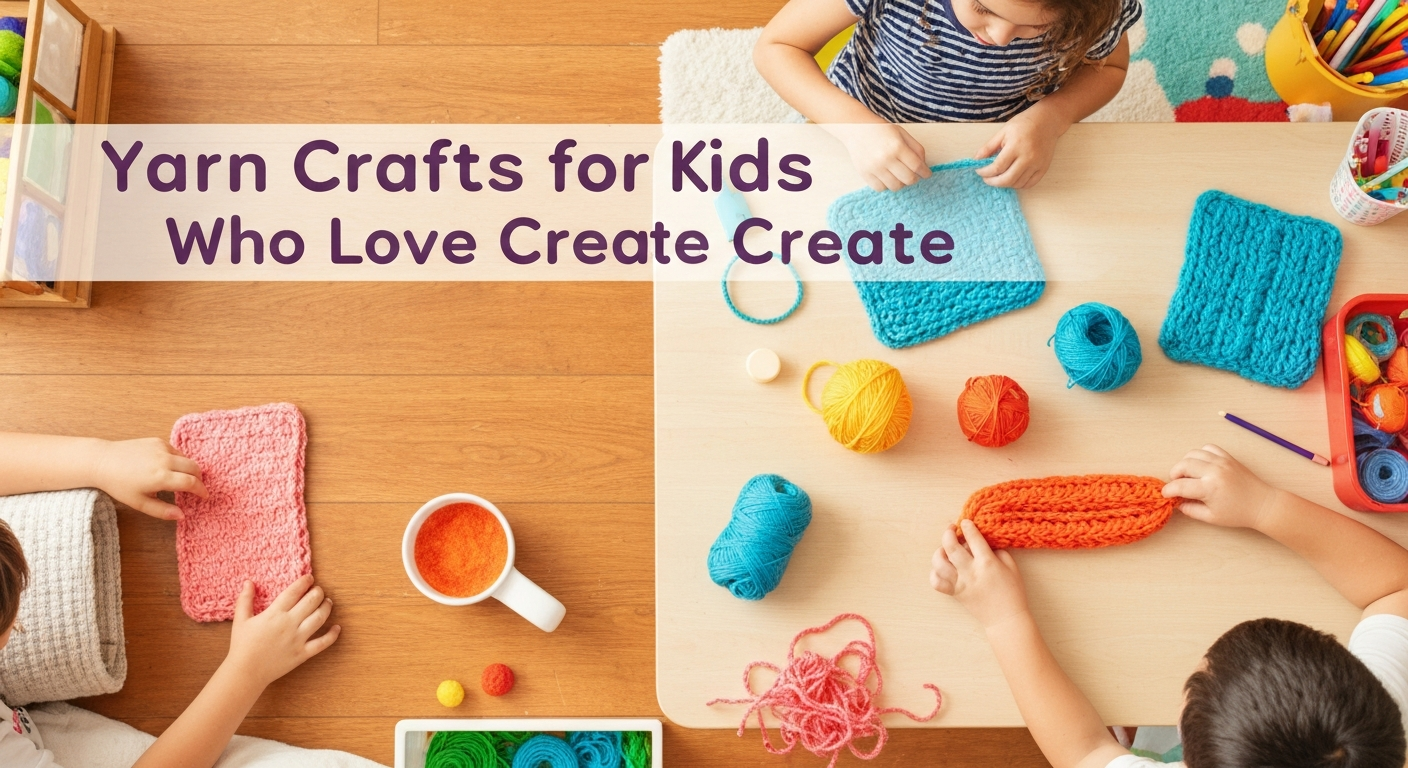
Yarn Crafts for Kids Who Love to Create
Discover how simple yarn crafts can boost your child's fine motor skills and creativity. You'll learn essential supplies and age-appropriate projects, from wrapping letters to weaving.
- Discover yarn's benefits for your child's fine motor skills and creativity.
- Stock your craft kit with affordable essentials like acrylic yarn and cardboard.
- Try simple projects for young kids: yarn-wrapped letters, collages, and nature sticks.
- Choose medium-weight acrylic yarn for easy handling by small hands.
This post contains affiliate links. As an Amazon Associate I earn from qualifying purchases.
In this article (5 sections)
The Day a Ball of Yarn Outperformed Every Fancy Art Supply in My Classroom
I had just spent forty dollars restocking our art shelf with new stamp sets, glitter glue, and fancy foam shapes. The next morning, a parent dropped off a donated bag of leftover yarn, rainbow colors tangled together in a grocery sack. I tossed it on the craft table as an afterthought. By the end of free-play, not a single child had touched the expensive new supplies. Every kid was at the yarn table, wrapping, cutting, taping, and weaving with an intensity that made me laugh out loud. That bag of tangled yarn became the most popular art material in my classroom for the rest of the year.
Yarn is one of the most underrated craft supplies for children. It is soft, colorful, inexpensive, forgiving, and incredibly versatile. From simple wrapping projects for toddlers to weaving and pom-pom making for older kids, yarn crafts build fine motor strength, hand-eye coordination, patience, and creativity in ways that few other materials can. Here are my favorite yarn projects for every age and skill level.
Essential Yarn Craft Supplies to Keep on Hand
A well-stocked yarn craft kit does not need to be expensive. Here is what I recommend keeping in a dedicated bin or basket:
- Yarn variety pack: Acrylic yarn in multiple colors is the best choice for kids. It is affordable, machine washable, and comes in vibrant colors. Medium weight (worsted) yarn is easiest for small hands to grip. Avoid fuzzy or textured yarn for beginners since it tangles easily and is hard to work with.
- Safety scissors: Children need to cut yarn frequently, so have several pairs available. Yarn can be tricky to cut with dull scissors, so keep them reasonably sharp.
- White school glue and glue sticks: Glue sticks work for tacking yarn in place, while white glue creates a stronger permanent bond once dry.
- Cardboard scraps: Save cereal boxes, shipping boxes, and cardboard tubes. Cardboard serves as the base for wrapping, weaving, and shaping projects.
- Plastic tapestry needles: These blunt, large-eyed needles are safe for children and make sewing and weaving much easier than fingers alone.
- Pom-pom makers or cardboard circles: Small, medium, and large pom-pom makers speed up the process, but two cardboard donut shapes work just as well for free.
- Embellishments: Googly eyes, wooden beads with large holes, buttons, pom-poms, and felt scraps add character to finished yarn projects.
Yarn Crafts for Young Children (Ages 3-5)
Young children are developing their pincer grasp and hand strength. These projects focus on simple wrapping, gluing, and pressing motions that build those foundational skills.
Yarn-Wrapped Cardboard Letters
Cut large block letters from thick cardboard, at least 6 inches tall. Tape the end of a piece of yarn to the back of the letter. Show your child how to wrap the yarn around and around the cardboard, covering the entire surface. Use different colors by taping the end of one piece and starting a new color. When finished, you have a beautiful textured letter perfect for bedroom decor or name displays.
Learning bonus: This project reinforces letter recognition while building the hand-crossing and wrapping motion that develops bilateral coordination.
Yarn Collage Art
Pre-cut yarn into 3 to 6-inch lengths in assorted colors. Spread glue on a piece of cardstock using a paintbrush or squeeze bottle. Children press yarn pieces into the glue to create pictures, patterns, or abstract designs. Draw a simple outline first, like a rainbow, heart, or tree, and children fill it in with corresponding colored yarn.
This is a wonderful project for children who are still developing the hand strength needed for scissors because the yarn comes pre-cut. The pressing and arranging motion strengthens finger muscles.
Yarn-Wrapped Nature Sticks
Go on a nature walk and collect sturdy sticks about 8 to 12 inches long. Back at home, wrap colorful yarn around each stick in alternating colors and patterns. Tie or tape the ends to secure. Display the finished sticks in a vase or bundle several together with a ribbon. These make lovely gifts and introduce children to pattern-making concepts like ABAB or AABB color sequences.
Yarn Spaghetti Sensory Play
Cook a pot of spaghetti, drain and cool it, then toss the noodles with a few drops of food coloring and a splash of vegetable oil. Place the colorful noodles in a large tray alongside lengths of yarn in matching colors. Children sort, compare, and play with both textures. They practice cutting the yarn with safety scissors alongside the slippery noodles. The sensory contrast between smooth cooked noodles and fuzzy yarn is fascinating for small hands.
Yarn Crafts for Older Children (Ages 6-10)
Older children are ready for projects that involve more steps, greater precision, and techniques they can build on over time.
Cardboard Loom Weaving
Materials: A piece of sturdy cardboard about 6 by 8 inches, yarn in multiple colors, scissors, a plastic tapestry needle, tape
Cut small notches every half inch along the top and bottom edges of the cardboard. Thread a long piece of yarn (the warp) back and forth through the notches from top to bottom, taping the ends to the back. Thread a plastic tapestry needle with a different color of yarn (the weft). Weave over one warp thread, under the next, over, under, across the entire row. Push each row down snugly before starting the next.
Children can change yarn colors every few rows to create stripes or patterns. When the weaving is complete, carefully slide it off the cardboard and tie the warp threads in pairs to secure the edges. This produces a real woven piece of fabric that children are incredibly proud of. Weaving builds pattern recognition, bilateral coordination, patience, and sequential thinking.
Pom-Pom Creatures
Make pom-poms by wrapping yarn around a fork, a cardboard donut, or a pom-pom maker tool 50 to 100 times. Slide the bundle off, tie it tightly in the center with a separate piece of yarn, and cut the loops. Fluff and trim into a ball shape. Create characters by gluing together different-sized pom-poms: a large one for a body, a medium one for a head. Add googly eyes, felt ears, pipe cleaner legs, and tiny bead noses.
Children can create entire pom-pom families: fuzzy chicks, caterpillars made from a chain of pom-poms, fluffy bunnies, owls, or monsters. The wrapping repetition is meditative, and the creature-building stage allows for unlimited creative expression.
Friendship Bracelets
Cut three or four strands of yarn, each about 18 inches long, in different colors. Knot them together at one end and tape the knot to a table. Teach the basic technique of tying forward knots, left strand over the next strand, pull through the loop, and repeat. Even the simplest knotting pattern produces a beautiful spiral bracelet. More advanced children can learn chevron and diamond patterns.
Friendship bracelet making is profoundly beneficial for fine motor development, pattern following, and social skills. Children make them for friends, teachers, and family members, turning a craft into an act of connection and generosity.
God’s Eye (Ojo de Dios)
Cross two craft sticks or popsicle sticks into an X shape and tie them together in the center with yarn. Wrap yarn over one stick, behind it, then move to the next stick, over and behind, rotating around the cross. Change colors by tying a new piece of yarn to the old one and continuing the wrapping pattern. The diamond pattern grows outward from the center, creating a striking geometric design.
This is a traditional craft with cultural history that opens conversations about art from different traditions. The repetitive wrapping motion is calming and the geometric result teaches children about symmetry and pattern.
Tips for Smooth Yarn Craft Sessions
Yarn crafts are wonderful, but tangled yarn and frustrated children are not. Here are the practical tips that keep sessions running smoothly:
- Pre-wind yarn balls into small rolls: Give each child their own small ball of yarn rather than having everyone pull from one large skein. This prevents tangles and territorial disputes.
- Tape yarn ends to the table: When children are wrapping or weaving, tape the starting end to the table or cardboard. This gives them a stable anchor point so the project does not unravel as they work.
- Use clothespins as yarn holders: Clip a clothespin to the working end of yarn to prevent it from unraveling or slipping through holes. This simple trick saves enormous frustration for young weavers.
- Start with short lengths: Long yarn tangles. Cut pieces no longer than arm’s length for young children. They can always add more when they run out.
- Provide a cleanup basket: Keep a small basket on the table where children drop yarn scraps as they cut. This prevents tiny yarn pieces from ending up on the floor, in mouths, or tangled in hair.
- Celebrate imperfection: Yarn crafts rarely look perfect when made by children, and that is their charm. A lopsided pom-pom creature with uneven eyes has infinitely more character than a store-bought toy. Emphasize effort, creativity, and the joy of making over the neatness of the final product.
Yarn is a material that grows with your child. A three-year-old wrapping yarn around a stick and a nine-year-old weaving on a cardboard loom are both experiencing the same satisfying combination of color, texture, and handwork at their own developmental level. Stock up on a rainbow of yarn, keep the scissors sharp, and let those creative hands get wrapping.
Crafty Mama
Crafty Mama is a former elementary art teacher turned stay-at-home parent who believes every child is creative — they just need the right invitation. She develops age-appropriate activities, crafts, and projects that spark imagination while keeping mess (and parent stress) to a minimum.