Fall Sensory Bin for Toddlers with Acorns and Pinecones
This post contains affiliate links. As an Amazon Associate I earn from qualifying purchases.
Last October I tried to make a “cozy autumn sensory bin” from a five-pound bag of rice. Forty minutes later there was rice in the heating vent and in my sock. My daughter had abandoned it to carry one dirty acorn around the house like a newborn kitten.
So I went outside and filled a canvas bag with free acorns and pinecones. This post covers safe fills by age, a free foraging checklist, bug-proof prep, 12 play ideas, and an honest take on the mess.
Safety firstSmall parts warning: children under 4 get the big-pieces bin only. Acorns, acorn caps, small cones, and short sticks are for ages 4 and up, after a mouthing check, with an adult within arm’s reach.
In this article (14 sections)
- Why a Foraged Fill Beats Rice (and When It Doesn’t)
- Safety First: Toddler Rules for a Foraged Bin
- Three Set-Ups for Three Ages: Pick Your Bin
- The Foraging Map and Checklist (Where to Find Every Fill Item for Free)
- Prep Your Haul: Clean, Bug-Proof, and Dry
- Build the Bin: Container, Tools, and Set-Up
- 12 Things to Do With Your Fall Sensory Bin
- Harvest Sensory Bin Ideas: Five Themed Variations
- What Toddlers Are Actually Learning
- Mess Reality Check (and How to Handle It)
- Troubleshooting: When the Bin Goes Sideways
- A Short Fall Foraging Weekend Plan
- Frequently Asked Questions
- Go Gather Something
Why a Foraged Fill Beats Rice (and When It Doesn’t)
Most sensory bins use dyed rice, dried beans, or oats. Those are great, and I have a guide to DIY sensory bins with 15 fill ideas and themes for year-round play if you want the full menu. (If you’re team rice, my rainbow rice sensory bin is where I’d start.) In October, a foraged fill wins in three ways:
- It costs nothing. It’s made from things lying on the sidewalk, and if it gets ruined you go for another walk.
- It’s a better sensory workout. Rice is one texture. A fall bin is crunchy, bumpy, heavy, light, scratchy, and smooth all at once.
- It gets you outside first. The gathering is half the activity, and a toddler who picked the pinecones herself treats them differently.
Rice or oats win in some situations:
| Situation | Better choice |
|---|---|
| Baby under 12 months, still mouthing everything | Skip this bin and try edible sensory play for babies instead |
| No oaks or pines nearby | Oats with large craft-store pinecones and mini pumpkins |
| You need something that stores flat and long-term | Rice or oats in a lidded tub |
| Rainy week, can’t forage | Mini pumpkins or dried corn cobs from the grocery store (strip the kernels off for under-4s) |
Safety First: Toddler Rules for a Foraged Bin
This bin is made of real nature, and real nature has opinions. Many items in it are small, so this is a sit-with-me bin. I never walk away from it, not even to grab a snack.
Safety firstIf a child is choking, can’t breathe, can’t cry or cough, or turns blue, call 911 (US) right away and start choking first aid for their age. Poison Control is not the first call for a blocked airway.
An infant and child CPR and choking class is worth taking before you set up any bin with small pieces. I’d rather know the steps and never need them.
Safety firstIf a child swallows acorn pieces or any nut or seed you can’t identify, call Poison Control at 1-800-222-1222 (US). If a pet eats acorns, call your vet or an animal poison hotline. With dogs in the house, put the bin away or in a closed room whenever it isn’t being played with.
The toilet paper tube test
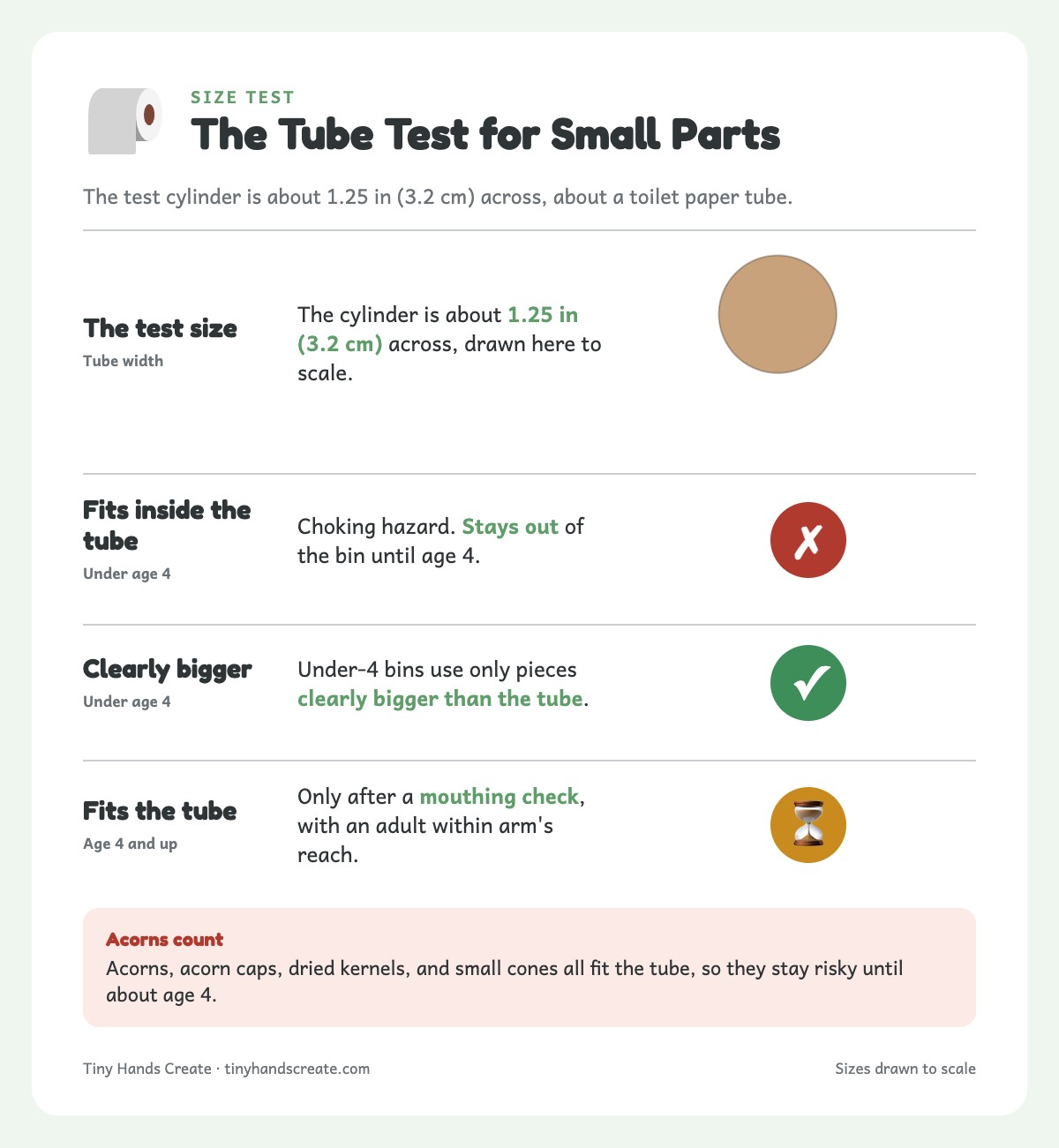
The small-parts test cylinder is about 1.25 inches (3.2 cm) across, roughly the width of a standard toilet paper tube or smaller. Anything that fits entirely inside is a choking hazard.
Small, hard, round things like acorns, acorn caps, dried kernels, and small cones stay risky until about age 4. So this post uses one rule: anything that fits the tube stays out of the bin until age 4. Under-4 bins use only pieces clearly bigger than the tube.
At 4 and up, acorns still come with conditions. Offer them only after a mouthing check (see the set-ups below), and keep an adult within arm’s reach.
Hazard and fix table
| Item | Risk | What to do |
|---|---|---|
| Acorns | Small, hard, and round, so a choking hazard under 4. Raw acorns contain tannins that can cause stomach upset if eaten. Also very toxic to dogs and horses. | Keep out of bins for children under 4. At 4 and up, offer only after a mouthing check, with an adult beside the bin. Remove any acorn that goes in a mouth. With a dog in the house, put the bin away in a closed room when play ends. |
| Acorn caps | Tiny, choking size | Ages 4 and up only, after a mouthing check. Otherwise skip them. |
| Pinecones | Scratchy, sharp scale tips; sap can be sticky | Choose softer, rounder pinecones (see the checklist). Bake to dry them and melt sap, following the oven safety steps in the prep section. Leave out any cone that is still sticky. Snip any super-pointy tips. |
| Loose dried corn kernels | Hard and small. A serious choking and aspiration hazard under 4, even for kids who rarely mouth things. | Leave them out of every set-up. Under 4, use only stripped cobs with every kernel removed, because little fingers can pick kernels off an intact cob. Cobs with kernels on are for ages 4 and up, with an adult beside the bin. Check those for loose kernels before each session and replace any cob that is shedding. |
| Pine needles | Poke fingers and eyes; get everywhere | Shake out loose needles before they go in the bin. |
| Horse chestnuts / buckeyes | Toxic if eaten. Do not use them. | Glossy brown seeds in a spiky or smooth husk. Leave them on the ground; if a child eats one, call Poison Control at 1-800-222-1222 (US). |
| Sweetgum balls | Spiky and hard | Skip them for toddlers. |
| Wild mushrooms | Some are dangerous | Never collect, never let kids touch them for the bin. |
| Berries, seeds, and unknown pods | Could be toxic | If you can’t identify it with confidence, leave it out. |
| Poison ivy (turns red in fall) | Skin reaction. The oil stays on dead leaves and vines and transfers through clothes, bags, and pets. | Leaves of three, let it be. Don’t gather leaves near vines, stay on cleared paths, and wash skin, clothes, and bags after the walk. |
| Moldy or wet items | Spores, allergy triggers | Throw out anything damp, dark, or fuzzy. Kids with asthma or a mold allergy should skip leaf-heavy bins. Keep all fill dry and check weekly. |
The “no mouth” script
I use the same calm line every time: “Acorns are for hands, not mouths. If it goes in the mouth, it goes out of the bin.” Then I remove the acorn, hand over a pinecone instead, and carry on. No drama, no scolding.
A rule helps build the habit, but it is not a safety measure. Removing hazards and sitting within arm’s reach are what keep your child safe. Toddlers won’t follow it reliably, so every child under 4 gets the big-pieces set-up in the “Three Set-Ups” section below.
Allergy and skin notes
Acorns are tree nuts. If your child has a tree-nut or oak/birch pollen allergy, ask their allergist before bringing acorns indoors. I’m not a doctor, and “probably fine” is not good enough for a kid with a known allergy. Dust and pollen are also a thing: wipe everything down before it goes inside, and skip the bin on high-pollen days if your child has a sensitive nose.
Three Set-Ups for Three Ages: Pick Your Bin
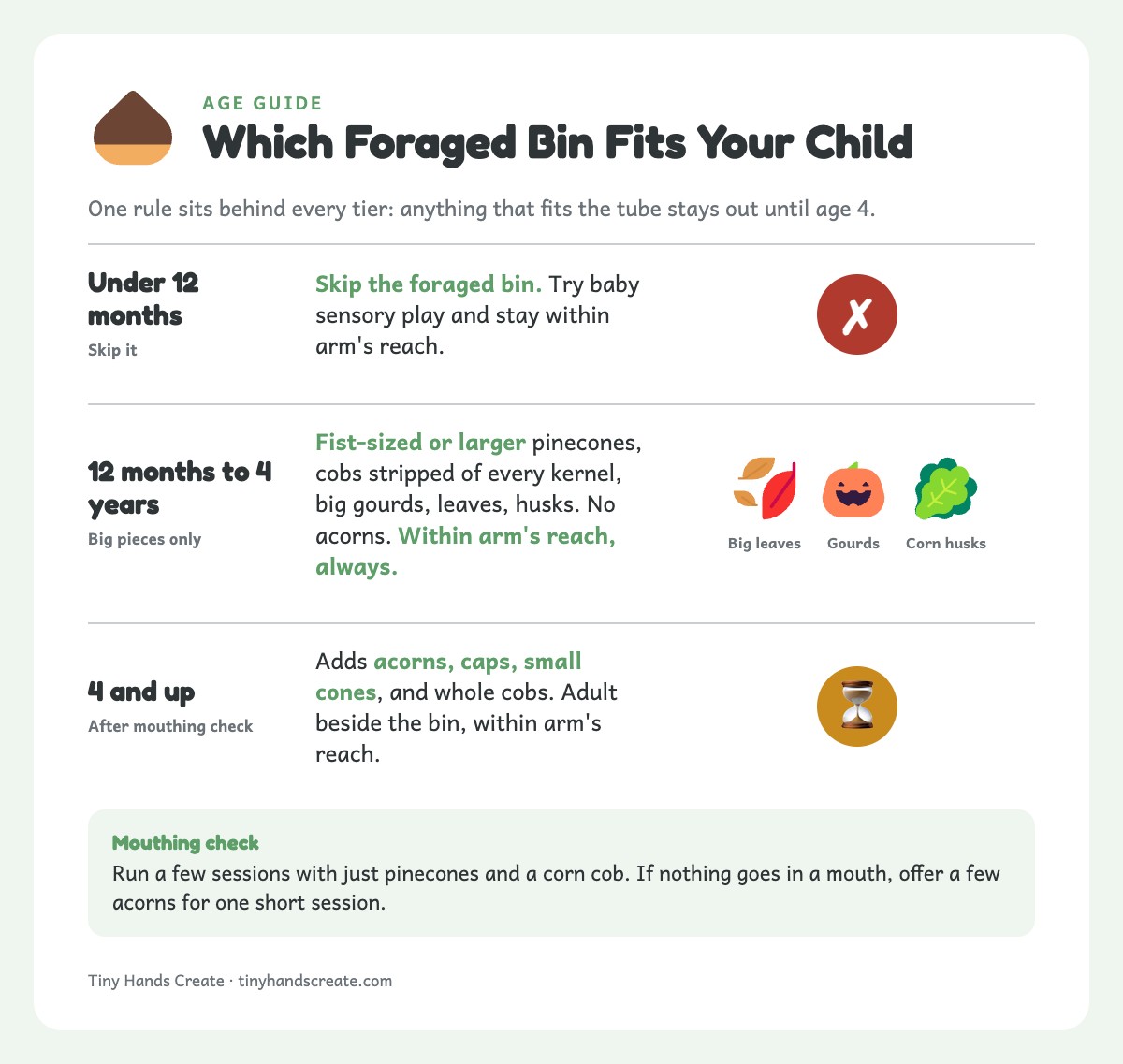
One rule sits behind every tier: anything that fits the tube stays out until age 4, and after that only once your child is past mouthing.
| Age | Safe fill | Never include | Supervision |
|---|---|---|---|
| Under 12 months | Skip the foraged bin | All foraged fill | See baby sensory play ideas and stay within arm’s reach |
| 12 months to 4 years | Fist-sized or larger pinecones, untreated dried corn cobs stripped of every kernel, mini pumpkins or gourds bigger than the tube, big dry leaves, corn husks | Acorns, caps, loose kernels, cobs with kernels still on, any pinecone smaller than a fist, sticks, seed pods | Within arm’s reach, always |
| 4 and up, after a mouthing check | Everything above, plus acorns, acorn caps, medium and small cones, whole dried corn cobs with kernels on, and short smooth sticks bigger than the tube | Loose kernels, buckeyes, cracked or holey acorns, cinnamon sticks | Adult beside the bin, within arm’s reach |
Under 12 months
Skip this bin. For babies, try edible sensory play for babies instead, and stay within arm’s reach.
12 months to 4 years: the big-pieces harvest bin
At this age, anything that fits in a mouth will end up there. So this bin has nothing that fits in a mouth.
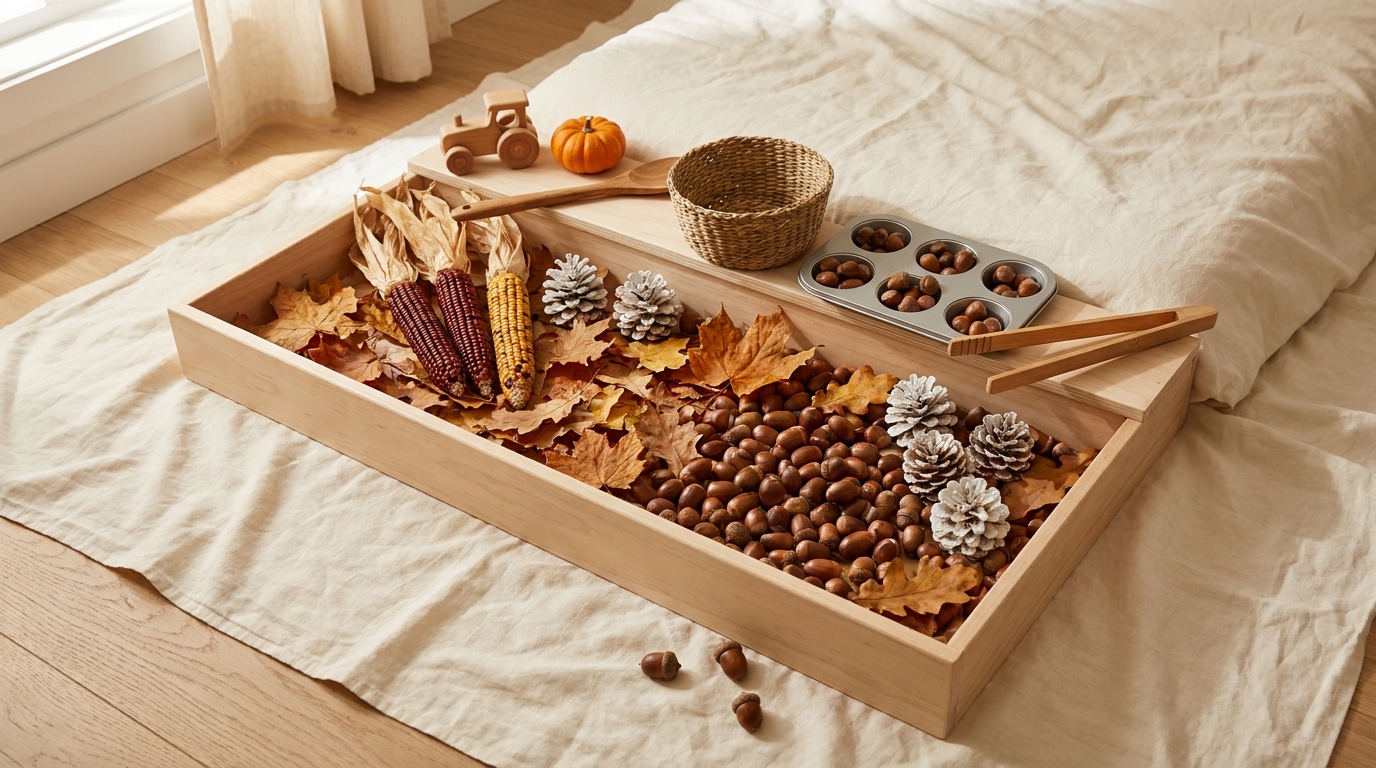
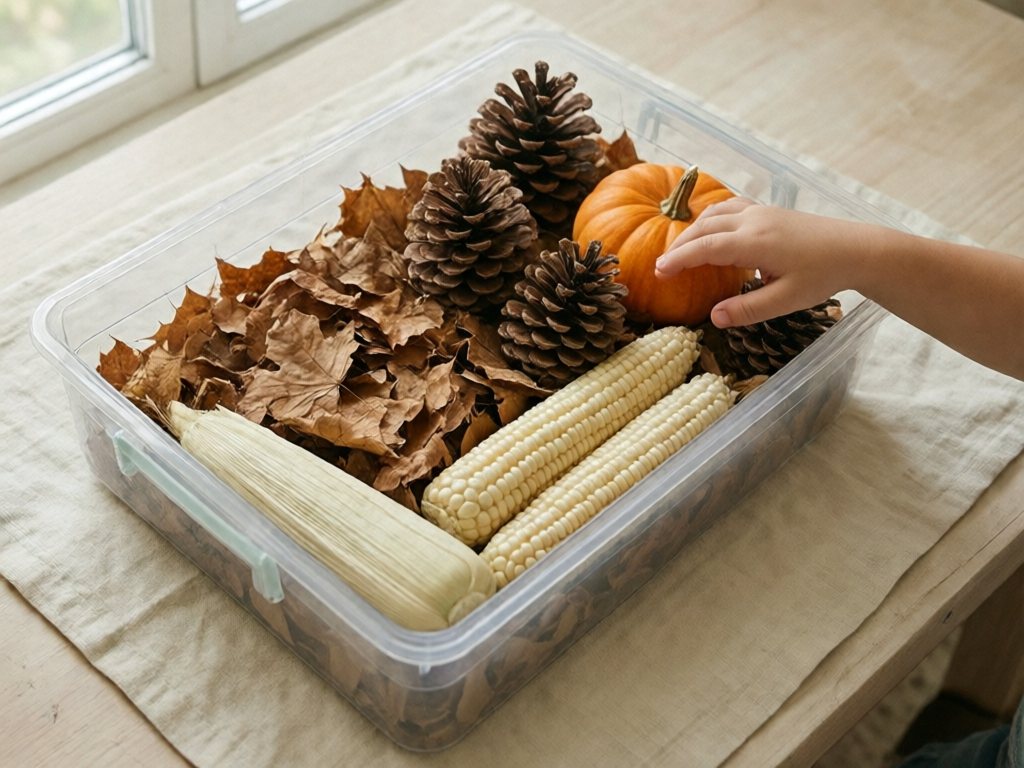
- Fill: Large pinecones (every one fist-sized or larger), untreated dried corn cobs stripped of every kernel, a few mini pumpkins or gourds bigger than the tube, big dry maple leaves, corn husks.
- Tools: One big scoop, a basket.
- Leave out: Acorns, caps, any pinecone smaller than a fist, sticks, seed pods, loose kernels, and cobs with kernels still on.
- Position: Bin on the floor, you sitting right beside it.
- Goal: Pick up, drop, carry, crunch the leaves, pat the pumpkin.
Safety firstCobs and gourds must be untreated and unsprayed. Cobs in this bin must be stripped bare, because toddlers can pry kernels off an intact cob with a pincer grasp. No cobs to strip? Skip them and use husks, pumpkins, and big pinecones. Ornamental gourds are for play, not eating, so check them for soft spots before each session. If your child bites or breaks a piece off anything, take that piece and the item out at once. Leaves and husks get mouthed too, so arm’s reach applies to every item in the bin.
Ages 4 and up: the classic acorn and pinecone bin
First, do a mouthing check. Run a few sessions with just pinecones and a corn cob. If nothing goes in a mouth, offer a few acorns for one short session. If any goes in a mouth, go back to the big-pieces bin and try again in a few weeks.
- Fill: Acorns, medium pinecones (clearly bigger than the tube), dry leaves, a couple of whole corn cobs. Check the cobs for loose kernels before each session. Add caps, small cones, and short smooth sticks bigger than the tube once acorn play is going well.
- Tools: Scoops, cups, a muffin tin, tongs, small paper bags with names drawn on (“Acorn Home,” “Pinecone Home”).
- Supervision: An adult beside the bin, within arm’s reach.
- Goal: Scoop, pour, sort, match, count, transfer with tongs, and build little “squirrel nests.”
The Foraging Map and Checklist (Where to Find Every Fill Item for Free)
Your neighborhood isn’t mine, so I can’t give you a literal GPS map. Here is a walking map instead: a loop through the kinds of places where each fill item hides.
Your walking loop in five stops
- Your own street. Look under street trees and around yard edges. Oaks drop acorns right onto sidewalks and curbs. Check the gutters where acorns collect after wind.
- The neighborhood park. Big mature oaks, pines, and spruces. Look at the base of the trunk and in the grass under the canopy.
- Your local school or church yard. These are often planted with old, large trees. Many are happy to have the litter gone. (If it’s active school hours, wait until after.)
- A walking trail or nature preserve. Great for pinecones of different sizes. Check the rules on the posted sign first.
- A farm stand or pumpkin patch. For dried corn and tiny gourds. Ask if they have a “seconds” or end-of-season bin. Many sell dried ornamental corn for a few dollars, and some will give away the husks and bruised cobs.
Foraging checklist
Screenshot this table before the walk and tick items off as you go.
| Fill item | Where and when (cost) | Toddler note |
|---|---|---|
| Acorns | Under oaks in parks, streets, yards, and trails. Late September to early November, after wind or rain. Free. | Pick whole, shiny acorns with no holes and leave cracked ones. Ages 4 and up only, after a mouthing check. |
| Acorn caps | Same spot, often scattered nearby. Free. | Choking size. Ages 4 and up only. Great for sorting. |
| Pinecones (large) | Under pines. Fall through winter. Free. | Feel each cone before you pick it. White pine cones tend to be the least prickly, while others can be sharp. Choose rounder, softer ones. For under-4 bins, every cone must be fist-sized or larger. |
| Pinecones (small) | Under spruce and other small-coned trees. Fall. Free. | Choking size. Ages 4 and up only. |
| Dried corn on the cob | Farm stands, pumpkin patches, decor sales, grocery store displays. Late September to early November. Often a couple of dollars, sometimes free. | Untreated cobs only. Under 4, strip off every kernel first (or skip cobs). Cobs with kernels on are for ages 4 and up, checked for loose kernels before each session. |
| Corn husks | Farm stands (ask for scraps) or fresh corn you shuck. Late summer to fall. Free to cheap. | Soft, papery, and quiet. A great contrast to the heavy acorns. |
| Dry leaves | Anywhere. Pick crunchy, fully brown ones off the ground in October. Free. | Maple and oak leaves are sturdy. Avoid damp, matted ones. |
| Sticks and twigs | Under any tree, year-round. Free. | Ages 4 and up only. Short, smooth, bigger than the tube, with no forked or pointed ends. |
| Seed pods (maple helicopters, etc.) | Maple trees. Late summer to fall. Free. | Ages 4 and up only. Fun to drop and watch spin. |
| Small gourds and mini pumpkins | Grocery store or farm stand in October. A few dollars. | Pick ones bigger than the tube. Ornamental gourds are for play, not eating. Check for soft spots. |
| Moss or bark chips | Fallen branches on trails, anytime. Free. | Dry completely, then check for bugs. Bark pieces must be bigger than the tube. |
What NOT to collect
Skip horse chestnuts (buckeyes), sweetgum balls, mushrooms, berries, anything that looks moldy, and anything from a plant you can’t identify. A good rule: if I can’t name it, it stays on the ground.
A quick note on foraging etiquette
Most public parks allow a small amount of fallen natural items for personal use, but some do not. Nature preserves and protected lands often have strict rules, so check the sign at the entrance or the park website.
I only take what has already fallen, never break anything off a living tree, and leave plenty behind for squirrels. (They need those acorns more than my bin does.)
I ask before collecting from private lawns. A friendly “Mind if I grab a few acorns?” has never once been refused in my experience, and neighbors often say “take all of them, please!”
Make the walk part of the activity
Hand your toddler a small paper bag or a basket and let them be the collector. For a 2-year-old, “Find me a bumpy one” is a full, thrilling quest.
For a 4-year-old, try a mini scavenger list: one big pinecone, one small pinecone, three acorns, one crunchy leaf. Count out loud as you go. With under-4s, acorns and small cones go in your bag, not theirs.
If you want more outdoor ideas to fill the walk, my guide to outdoor nature activities for kids has 25 ways to explore and learn outside.
Prep Your Haul: Clean, Bug-Proof, and Dry
This is the least glamorous section and the most important one. Foraged stuff has hitchhikers, and you do not want them living in your living room.
Safety firstBoth oven steps below follow the same rules. Keep the oven at or below 200°F, and use a rimmed pan lined with foil or parchment. Never leave the oven unattended, use oven mitts, and keep kids out of the kitchen. Pinecone sap is flammable and can burn skin when hot. Baking doesn’t always melt it all off, so leave out any cone that is still sticky once it cools.
Acorns: sort, float, then freeze or bake
Good to knowThe float test is imperfect. Sinkers can still hold larvae, so also check for exit holes, freeze or bake, and discard any acorn with a hole.
- Sort. Throw out any acorn with a tiny round hole (that’s an exit hole from an acorn weevil larva) or a cracked, moldy, or shriveled shell.
- Float test. Dump the acorns in a big bowl or bucket of water. Most of the ones that float are hollow, dried out, or infested. Skim those out and toss them.
- Scrub. Rinse in cool water. A soft brush gets the dirt out of the groove at the top.
- Kill any bugs. Freezer method (my main pick): pat dry, seal in a bag, and freeze for at least 3 days; a week is better. Oven method (for when you can’t wait on the freezer): spread in a single layer on a rimmed, lined pan and bake at 200°F for 1 to 2 hours. The long, low heat is what dries the nut all the way through. Let them cool, then cut a sample acorn open to check that it is dry inside with no larvae.
- Dry completely. Spread out on a towel for a day. Damp acorns grow mold, and a moldy bin is a sad bin.
Pinecones: the bake and tap
- Shake and tap. Knock each one against the ground or a bucket to knock loose bugs, dirt, and spiders.
- Optional soak. Soak for 20 to 30 minutes in a bucket of water with a splash of white vinegar to push out critters. The cones will close up tight. That’s normal and cool to show toddlers.
- Bake. Line a rimmed baking sheet with foil or parchment (sap will drip). Bake at 200°F or lower for 30 to 45 minutes, staying in the kitchen the whole time. They’ll dry out and pop back open, and sap will melt and ooze.
- Cool completely, then check for sap. Let them sit on the pan until fully cool. Touch each one, and leave out any cone that still feels sticky.
- Check the tips. Run your own hand over each cone. If a scale is stabby, snip it with kitchen scissors.
A fun mini science moment: pinecones open when they’re dry and close when they’re wet. Drop one in a bowl of water with your toddler and watch it slowly close up. Then set it in the sun and watch it open again. It takes hours, so do it as a “check on it later” game.
Dried corn
If you buy ornamental or dried field corn at a farm stand, give the cobs a good shake outside and check for dust or insects. Buy untreated corn and ask the vendor.
Skip any corn sprayed with a decorative sealer, throw out moldy cobs, and wash hands after play. Avoid anything labeled “not for consumption” if your child might chew on it.
No bin gets loose kernels at any age. For children under 4, I also strip the cobs bare, because a toddler can pick kernels off an intact cob one at a time. Twist the kernels off over a bowl with the kids out of the room, then sweep up any strays. The bare cob should be bigger than the tube with no kernels left on it.
Cobs with kernels on are for ages 4 and up, with an adult beside the bin. Ornamental cobs shed kernels, so check them before each session and replace any that are shedding.
Leaves and sticks
Pick them dry, shake them out, and sort out any with bugs, mold, or sharp ends. A paper bag keeps leaves dry on the way home.
Storing your prepped fill
Keep everything in a paper bag, cardboard box, or open basket so air can move. Avoid sealed plastic, which traps moisture and makes mold. Once it’s in the bin, it stays in a dry spot. Prepped fill lasts all season.
Build the Bin: Container, Tools, and Set-Up
You don’t need to buy anything special. Here’s what works.
Container options
| Container | Why it works | Mess factor |
|---|---|---|
| Under-bed storage bin | Wide and shallow. Gives room for hands and scoops. | Medium |
| Baby bath tub | Sturdy and the right size for sitting beside | Low to medium |
| Cardboard box with flaps cut off | Free and disposable. Tape cut edges smooth and remove staples. | Medium |
| Big baking sheet with raised sides | Good for the youngest, contained | Low |
| A tarp or old bedsheet under the bin | Not a container, but a mess-saver | Very helpful |
My go-to is the under-bed bin on a bedsheet, indoors on a hard floor or out on the porch.
Never leave any tub holding water unattended, including the baby bath tub, once playtime is over.
Tools and props
Toddlers adore tools. These are all things you already own or can grab from the dollar store. For children under 4, every tool and prop must also be bigger than the tube, so skip tiny bowls and small funnels:
- Big wooden spoons and plastic scoops
- Small baskets or paper bags
- Muffin tin for sorting
- Tongs (great for fine motor practice with larger pinecones)
- Plastic cups and a few small bowls
- A toy tractor or dump truck, which turns the bin into a “harvest field”
- A few felt leaves or fabric scraps for a soft contrast
- A sheet of paper and a crayon for rubbing
Layering the bin
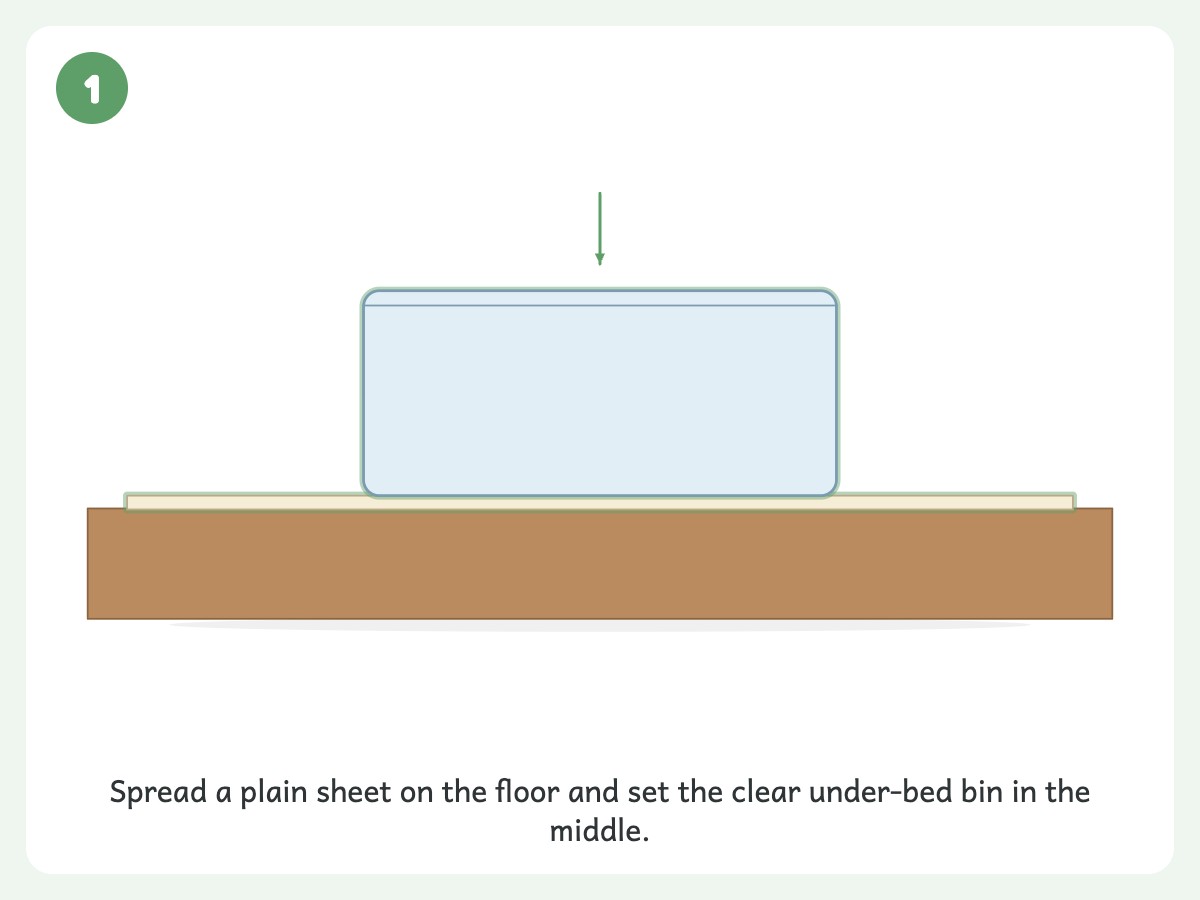
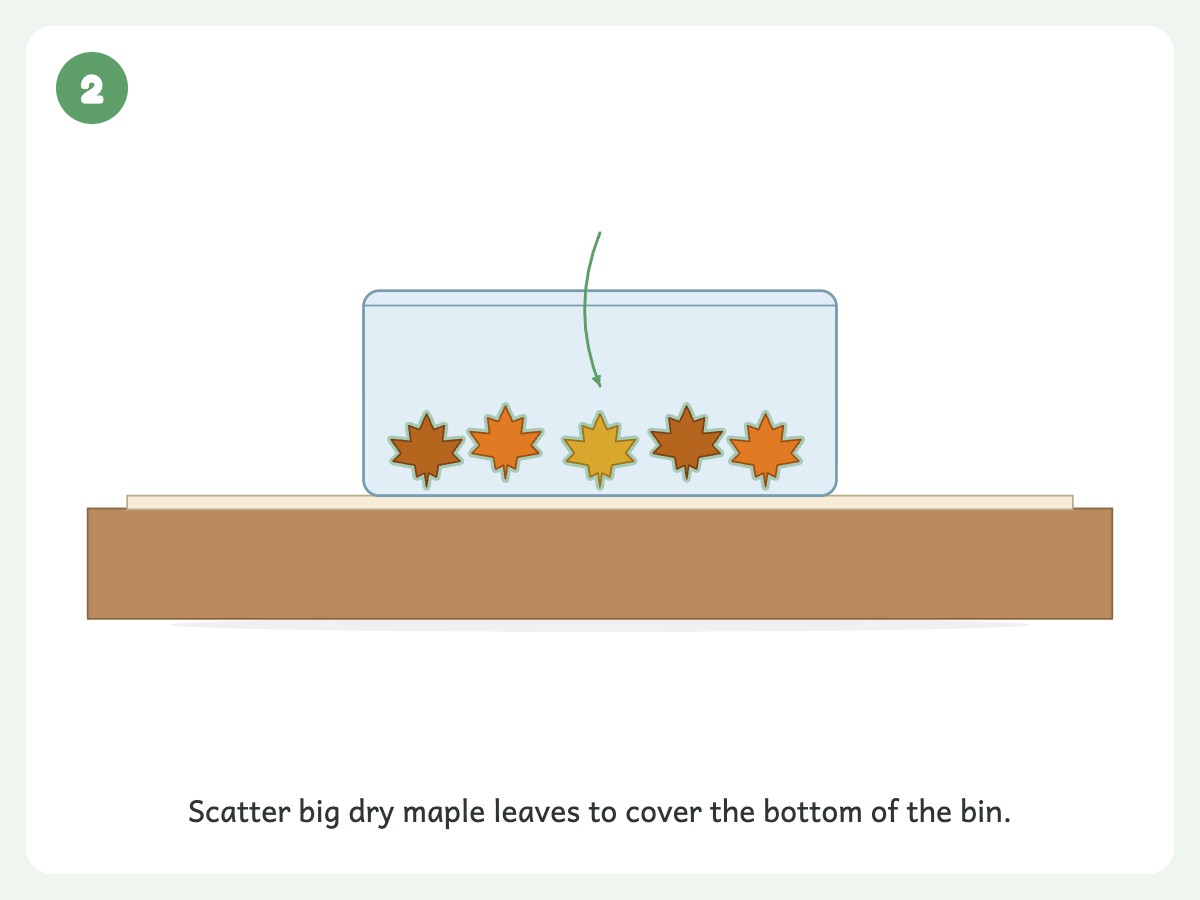
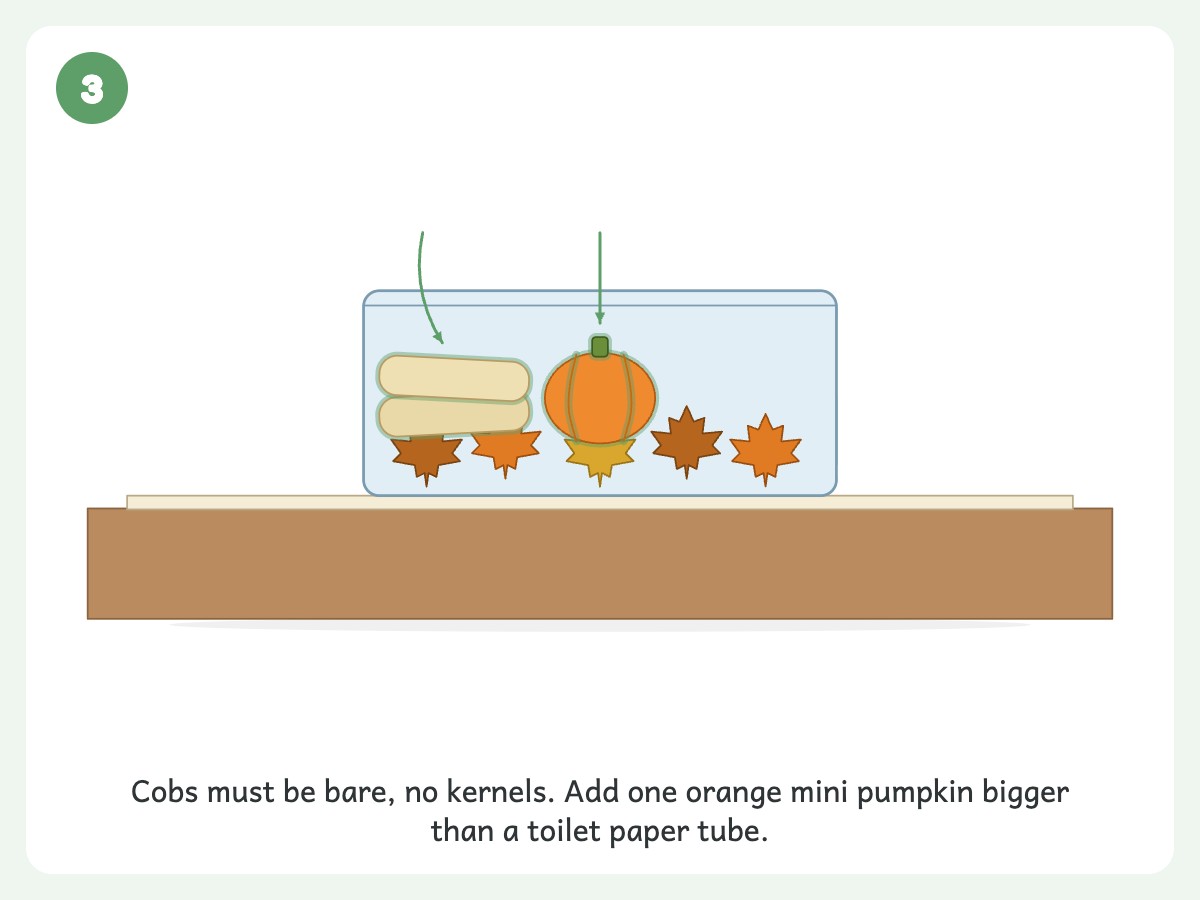
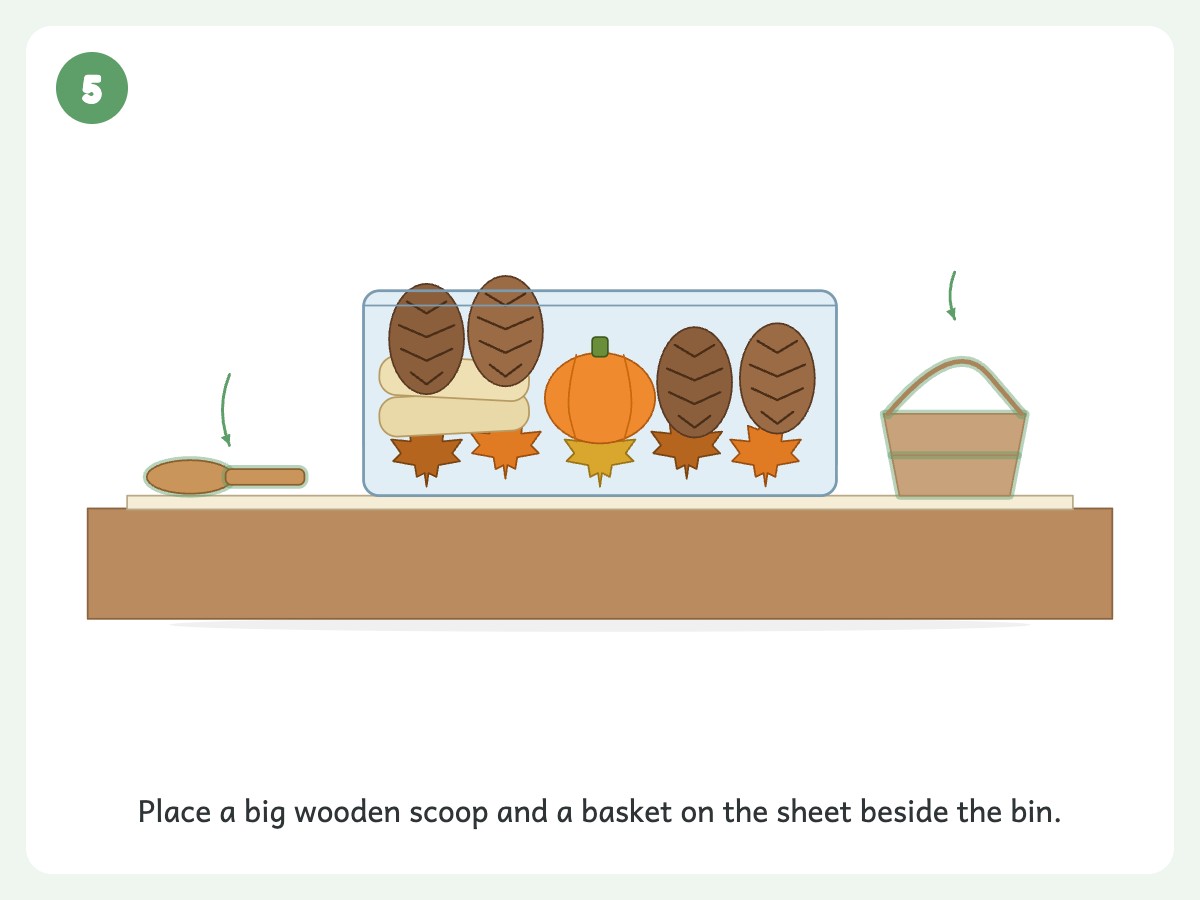
Think of it as a landscape, not a pile:
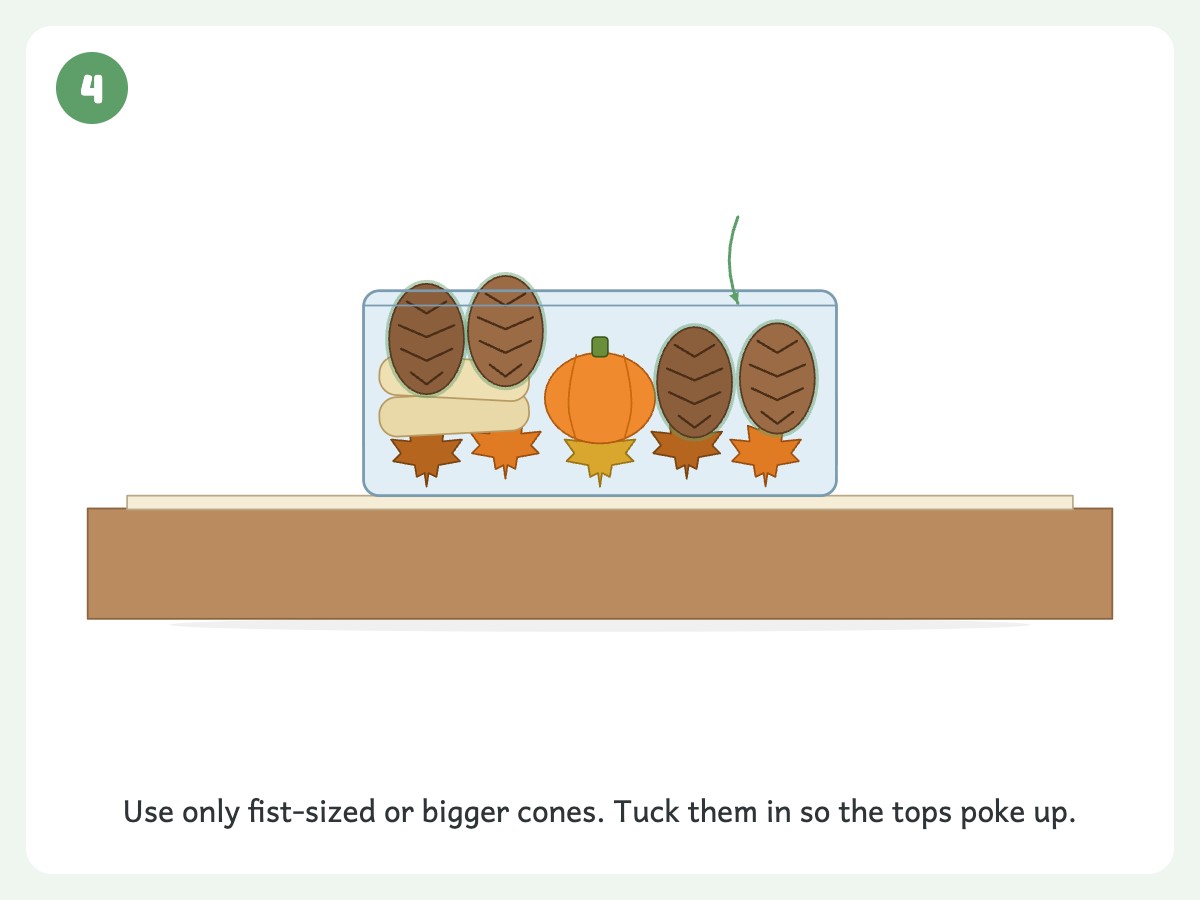
- Base layer: A handful of crunchy dry leaves covering the bottom.
- Middle layer: Two or three corn cobs along one edge, plus mini gourds. Under 4, the cobs must be stripped of every kernel. For ages 4 and up who passed the mouthing check, whole cobs are fine, and you can add a scatter of acorns.
- Top layer: Three to five pinecones, tucked so they poke out. Under 4, every pinecone must be fist-sized or larger. Mixed sizes, including small cones, are for the 4-and-up bin only.
- Hidden treasures: Bury a few interesting objects like a mini gourd or a big wooden animal for the dig-and-discover moments. For children under 4, every object must be bigger than the tube.
- Tools: Set two or three tools on the outside edge so your child can choose.
The 60-second set-up rule
I keep the bin simple enough that I can set it up in a minute: container on the tarp, fill in, tools out. If it takes longer, I won’t do it, and neither will you.
12 Things to Do With Your Fall Sensory Bin
Here are the activities that have earned their keep in our house. Pick one per session; don’t try to cram them all in. Acorn activities are for ages 4 and up, after the mouthing check. Under 4, swap in fist-sized pinecones, mini gourds, or stripped corn cobs.
1. The Squirrel Stash
Give your child a muffin tin or a few cups and say, “You’re the squirrel! Hide the acorns for winter.” They fill the cups, dump them out, and fill them again. Under 4, hide big pinecones or mini gourds instead of acorns. This can run 20 minutes, which in toddler time is basically a geological era.
2. Big and Little Sort
Put out two bowls. Label one “big” and one “little” (draw a big circle and a tiny circle on paper). Under 4, sort fist-sized pinecones from the really huge ones, so every cone is still fist-sized or larger. At 4 and up, sort large from medium, where medium means clearly bigger than the tube. It’s a first math skill disguised as scooping.
3. Acorn Pour Station
Set up two cups and a funnel (a rolled piece of paper works). At 4 and up, pour acorns from cup to cup, listening to the clunk. Younger kids can pour dry leaves or husks. This is a great pour-and-listen sensory moment, and the sound is very different from rice.
4. Pinecone Paint Roller
Roll a pinecone through washable paint on a paper plate and then across a big sheet of paper. You get a bumpy, scratchy track. This is a messier add-on, so do it outside or at the table, not in the bin. If your child loves this, my guide to process art for toddlers has 20 more ideas that focus on creating, not the final product.
5. Tong Transfer
Hand your child a pair of kitchen tongs and ask them to move pinecones from the bin into a bowl. Under 4, use fist-sized or larger cones. At 4 and up, medium cones (clearly bigger than the tube) work too. It’s tough at first. By the third try, they’ll be gripping like pros. This is a great fine-motor builder.
6. Leaf Crunch Stage
Dump a pile of dry leaves in the bin and let your toddler stomp, squish, and crunch them. The sound is the whole point. Wear socks or shoes, and stomp only on a clean leaf layer you’ve sorted through, with no sticks or acorns mixed in.
7. Harvest Truck
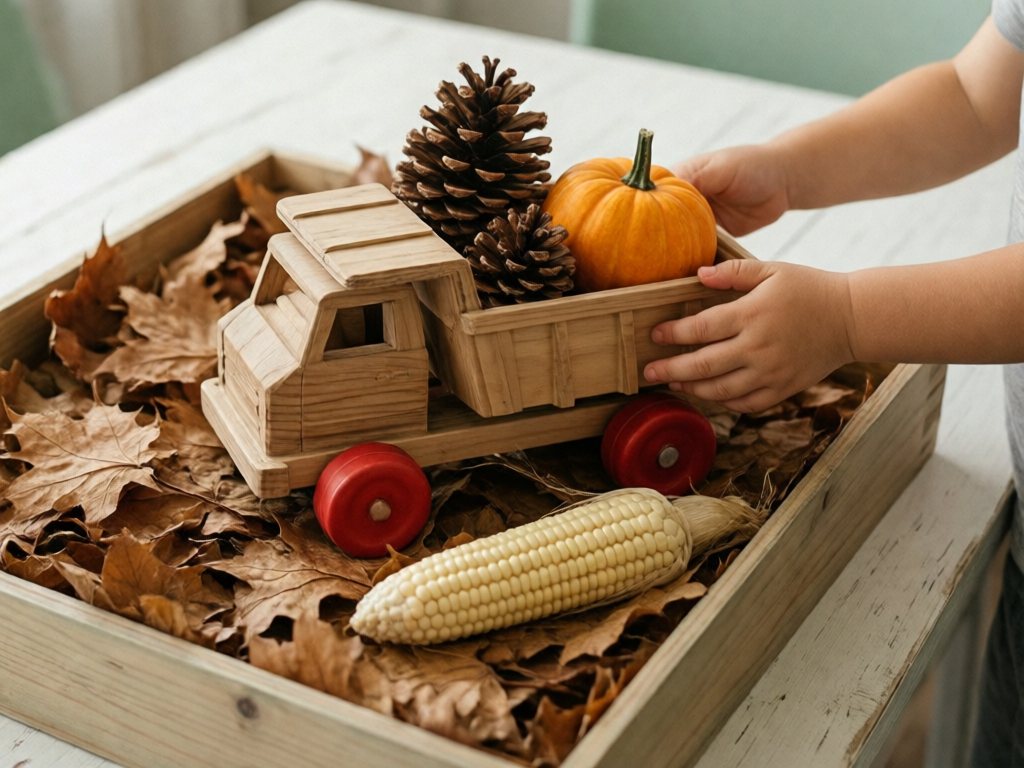
Add a toy dump truck or tractor. Your child drives the truck through the “field,” loads it with stripped corn cobs and big pinecones, and hauls them to the “barn” (a cardboard box). Narrating “Load up! Beep beep!” is highly recommended.
8. Texture Hunt
Ask, “Can you find something bumpy? Something smooth? Something scratchy?” Hand-feel the differences. This builds vocabulary like nothing else.
9. Acorn Cap Hats
This one is for ages 4 and up. Set out acorn caps and acorns. Match the right cap to the right acorn like tiny hats. It’s like a first puzzle.
10. Pinecone Open-and-Close Experiment
Set one dry pinecone and one soaked pinecone side by side. Ask, “What’s different?” Then leave the wet one by a sunny window for a few hours and check back. This is a lovely, slow science moment.
11. Bin Rubbings
Place a leaf under a sheet of paper and rub the side of a crayon over it for an instant leaf print. Toddlers think this is magic. Do the same with a corn husk or a flat piece of bark.
12. The Cozy Corner
Add a soft blanket, a flashlight, and a picture book about squirrels, acorns, or fall. Let your child tuck big pinecones into “nests” made of the blanket. It’s a calming way to end the session. If your little one tends to get overstimulated, my list of calm down activities for kids is a handy backup.
Harvest Sensory Bin Ideas: Five Themed Variations
Once you’ve got the basic bin running, you can swap in different themes to keep it fresh without foraging more. Here are my favorites.
| Theme | Fill | Props | Best for |
|---|---|---|---|
| Squirrel Pantry | Acorns, medium pinecones, dry leaves | Small baskets, a stuffed squirrel | Ages 4 and up (mouthing check first) |
| Farm Harvest | Corn cobs stripped of every kernel, husks, mini gourds | Toy tractor, plastic farm animals | Ages 12 months to 4 |
| Forest Floor | Pinecones, short smooth sticks, moss, bark slabs bigger than the tube | Toy woodland animals | Ages 4 and up |
| Cozy Cabin | Big pinecones, felt leaves, bark slabs bigger than the tube | Small blanket, toy mugs | Ages 4 and up |
| Pumpkin Patch | Mini pumpkins, gourds, leaves | Small wheelbarrow, scoops | Ages 12 months to 4 |
If you want to extend the harvest theme with a craft afterward, acorn crafts for toddlers has 5 no-mess projects. Keep the acorns for ages 4 and up, and use big pinecones or leaves for younger kids. My fall leaf crafts for kids post is a perfect companion for all those crunchy leaves you collected. For more open-ended collecting play, loose parts play ideas will give you 30+ more ways to use what you’ve gathered.
What Toddlers Are Actually Learning
Here’s what’s happening while your kid scoops, sorts, and pours.
- Fine motor skills. Pinching, scooping, and tong-squeezing can support the fine motor skills kids use for writing later.
- Language. Words like bumpy, rough, heavy, round, scratchy come to life when attached to a real object.
- Early math. Sorting, counting, comparing big and little, and understanding “more” and “less.”
- Cause and effect. If I pour, it clunks. If I drop, it rolls.
- Sensory regulation. Some kids find the weight and texture of natural objects calming. If sensory difficulties persist, raise them with your pediatrician or an occupational therapist.
- Connection to nature. A toddler who knows the oak tree on your street drops acorns is starting to see seasons as a story, not a backdrop.
Narrate gently (“That one’s heavy!”), pause, and let them lead.
Mess Reality Check (and How to Handle It)
A foraged bin is less messy than rice in some ways and more messy in others. If mess is a dealbreaker this week, my no-mess sensory play ideas are a calmer plan B.
What gets messy:
- Acorns roll. They will end up under the couch, in the hallway, and somehow in a shoe.
- Dry leaves crumble into confetti, which you’ll be vacuuming for days.
- Pine needles and bark bits migrate.
What’s easier:
- Everything is large enough to pick up by hand. No stuck-in-the-crack grains.
- Nothing stains.
- Nothing needs to be thrown away after one use.
My mess-control kit
- A bedsheet or tarp under the bin. When playtime ends, gather the corners and shake the sheet into the bin.
- A “stays on the sheet” rule. Everything stays in the bin or on the sheet. Outside the sheet is out of bounds.
- A small hand-held broom and dustpan kept in the same closet as the bin.
- A cleanup song. I sing the same silly one every time, and now my 2-year-old tidies as if it’s a game.
- Outdoor option. On warm October afternoons, do the bin on the porch or in the yard. Mess is basically a non-issue.
Cleanup and storage
- Return everything to the bin or a paper bag.
- Do a last-sweep scan on the floor for loose acorns, especially if you have a baby or pet in the house.
- Store the bin somewhere dry and out of reach.
- Once a week, check for mold, bugs, or damp spots and toss anything suspect.
Troubleshooting: When the Bin Goes Sideways
| Problem | Likely cause | Fix |
|---|---|---|
| Child keeps mouthing acorns | Not ready for small items | Switch back to the big-pieces bin. Try again in a few weeks. |
| Bin gets ignored | Too much going on, or no hook | Take out half the stuff. Add one interesting tool or a toy animal. |
| Bugs appear | Skipped the freeze or bake step | Throw out the infested pieces, redo the prep on the rest, and store dry. |
| Smell of mold | Damp fill | Toss it and start over with fully dried items. |
| Toddler throws everything | Too excited or needs a physical outlet | Offer a “throwing target” (a basket in the yard) and take the bin outside. |
| Child is overwhelmed by the scratchy pinecones | Texture sensitivity | Offer a tool (tongs, spoon) first. Add soft elements like felt or husks. Never force it. |
| Sibling conflicts | Too few scoops | Make two small bins or double the tools. |
A Short Fall Foraging Weekend Plan
If you want a simple structure for the first time, here’s how I’d do it.
- Saturday morning. Take a 30-minute walk with the foraging checklist. Collect 6 to 10 pinecones (fist-sized or larger for under-4s) and a bag of dry leaves, plus 30 to 40 acorns if your child is 4 or older.
- Saturday afternoon (nap time). Do the float test and scrub. Freeze the acorns (they need at least 3 days, so start now). Bake the pinecones, strip the kernels off the corn cobs, and set everything on a towel to dry.
- Sunday morning. Layer the big-pieces bin with fist-sized pinecones, leaves, and stripped cobs, set up the tarp, and run your first session. Keep it to 20 minutes. For ages 4 and up, this doubles as the first mouthing-check session, and the acorns join later in the week once they’ve had their 3 days in the freezer.
- Sunday afternoon. Wipe down and store. Make a note of what your child loved.
- The following week. Try a themed variation or add a new activity from the list above.
Frequently Asked Questions
Are acorns safe for toddlers to play with?
Not for children under 4. Acorns are fine to touch, but they are small, hard, and round, which makes them a choking hazard. At 4 and up, offer them only after a mouthing check, with an adult beside the bin. If a child is choking or can’t breathe, call 911 (US) right away and start choking first aid for their age. If a child swallows acorn pieces and is breathing normally, call Poison Control at 1-800-222-1222 (US). If a pet eats acorns, call your vet.
How do I get bugs out of acorns and pinecones?
For acorns, discard any with tiny round holes, then freeze them for at least 3 days or bake at 200°F for 1 to 2 hours. For pinecones, knock them out, then bake on a rimmed, foil-lined pan at 200°F for 30 to 45 minutes while you stay nearby. Leave out any cone that is still sticky, and dry everything completely before it goes in the bin. The prep section has the full steps.
Can I use dried corn kernels in a toddler sensory bin?
I’d skip loose kernels. They’re hard and small, a serious choking and aspiration hazard for children under 4. Kernels on a cob aren’t much safer for little ones, because toddlers can pick them off. Under 4, use cobs stripped of every kernel, or skip cobs. At 4 and up, whole cobs are fine with an adult beside the bin, checked for loose kernels before each session.
What if I don’t have oak or pine trees nearby?
Check parks, school grounds, cemeteries, and nature trails, since mature trees are often planted in those spots. You can also swap in other free or cheap fall fills: dry leaves, mini pumpkins, small gourds, corn husks, and maple seed pods. If you truly can’t forage, a bin of oats with large craft-store pinecones and mini pumpkins still gives you the fall feel. You can also see my rice-based option in the rainbow rice sensory bin post.
How long does a fall sensory bin last?
If everything is fully dried and stored in an open container in a dry place, a foraged bin easily lasts the whole season, from late September through November. Check it once a week for mold, bugs, or damp spots, and throw out anything suspect. Leaves will crumble over time, so refresh them with new ones when they start to turn to dust.
Is it okay to take acorns and pinecones from a park?
In most public parks, collecting a small number of fallen items for personal use is fine, but some parks and nature preserves forbid it. Check the posted rules or the park’s website first. Only take what has already fallen, never break items off living trees, and leave plenty behind for wildlife. For private property, ask the owner first. Most people are happy to share.
What age is best for an acorn and pinecone sensory bin?
The full acorn-and-pinecone bin is for ages 4 and up, after a mouthing check, with an adult beside the bin. From 12 months to 4 years, use the big-pieces set-up with fist-sized or larger pinecones, corn cobs stripped of every kernel, mini gourds, and big leaves, and skip acorns. If your 4-year-old still mouths things, stay with the big-pieces bin a while longer.
Go Gather Something
That rice-in-the-heating-vent disaster taught me something I keep relearning: kids don’t need a Pinterest-perfect bin. They need real stuff, time, and a grown-up sitting nearby saying, “Ooh, that one’s heavy!” A walk, a bag of acorns, a few pinecones, and a bedsheet on the floor is enough. You’ll probably find an acorn in your pocket for the next three weeks, and honestly, that’s part of the charm.
So grab a basket, take the checklist, and go see what the trees dropped for you. Happy foraging.