Painting Without Brushes: 25 Creative Painting Tools for Kids
Discover 25 creative, non-brush painting tools for kids, from kitchen items to nature finds. You'll spark creativity and sensory exploration through fun process art.
- Transform everyday items like kitchen tools, nature finds, and toys into unique painting implements.
- Boost creativity and sensory exploration by focusing on the painting process, not just the product.
- Set up your painting area with washable paints, large paper, and surface protection for easy cleanup.
- Use forks for textured lines, potato mashers for stamps, or bubble wrap for unique patterns.
- Even your hands and feet can become fun, original painting tools for memorable art.
This post contains affiliate links. As an Amazon Associate I earn from qualifying purchases.
Put down the paintbrush. Some of the most interesting, creative, and joyful painting happens when you explore unconventional tools. From kitchen utensils to nature finds to body parts, the world is full of things that can apply paint to paper.
This kind of process art isn’t about creating a masterpiece—it’s about experimentation, sensory exploration, and the pure fun of discovering what happens when unusual objects meet paint.
Get ready to transform everyday items into painting tools and watch your child’s creativity explode.
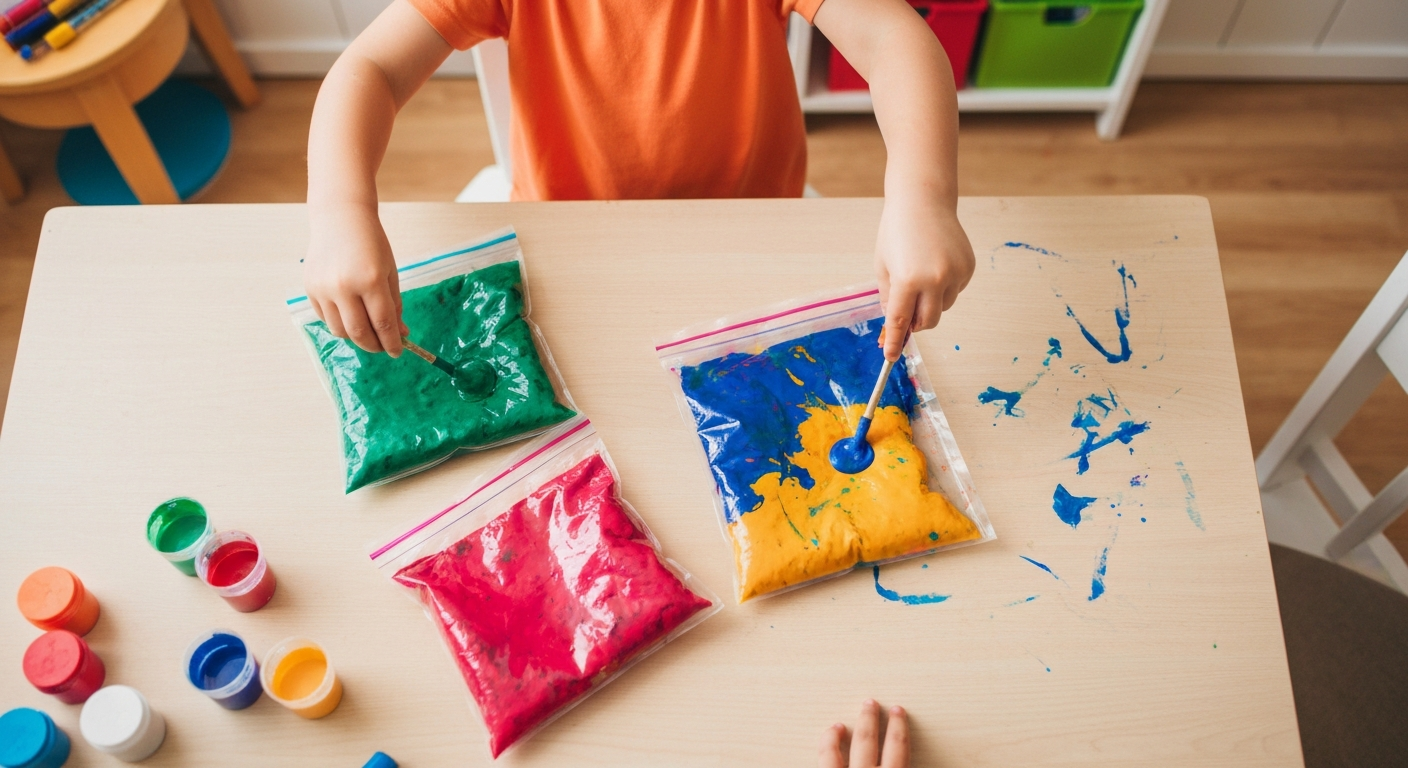
[IMAGE: Child painting with unconventional tools, surrounded by colorful art]
In this article (7 sections)
Why Paint Without Brushes?
Creativity: Unconventional tools produce unexpected results, sparking new ideas
Experimentation: Kids learn what different textures and motions create
Accessibility: No special supplies needed—use what you have
Process focus: The experience matters more than the product
Sensory input: Different tools provide different tactile experiences
Problem-solving: “What else could I paint with?” becomes a creative challenge
Setting Up for Success
Materials
Paints:
- Tempera paint (washable, affordable)
- Finger paint (thick, designed for hands)
- Acrylic paint (older kids, more permanent)
- Watercolors (lighter, different effects)
Paper:
- Large paper (more space to explore)
- Cardboard (for heavier applications)
- Newsprint (affordable for lots of experimentation)
- Canvas (for keepsakes)
Setup Tips
- Cover surfaces well (drop cloths, newspaper, plastic tablecloths)
- Use shallow trays for paint (plates, pie tins work great)
- Dress in old clothes or smocks
- Work outdoors when possible
- Have wipes and water ready for cleanup
25 Things to Paint With (That Aren’t Brushes)
Kitchen Tools
1. Forks
Drag through paint for textured lines. Create fur, grass, or abstract patterns.
Dip and stamp for circle patterns. Great for polka dots!
3. Whisks
Roll across paint, then across paper for unique swirl patterns.
4. Spatulas
Spread paint like frosting. Create smooth backgrounds or color mixing.
5. Cookie Cutters
Dip edges in paint and stamp shapes. Perfect for themed art!
[IMAGE: Kitchen utensils being used as paint tools]
—
Produce Stamps
6. Celery Hearts
Cut base off celery bunch—the bottom makes a rose-like stamp!
7. Apples
Cut in half horizontally to reveal star pattern. Stamp away!
8. Bell Peppers
Cut in half crosswise for fun organic shapes.
9. Corn on the Cob
Roll through paint, then across paper for bumpy texture.
10. Potatoes
Cut in half, carve simple shape—instant custom stamp.
Mess-Free Painting Activities for Toddlers
—
Household Items
11. Sponges
Different shapes and textures create interesting effects. Cut into shapes for stamping.
12. Cotton Balls
Dab for soft, cloudy textures. Great for snow scenes!
13. Bubble Wrap
Press into paint, stamp onto paper for amazing bubbly texture.
14. Cardboard Tubes
Press end into paint for circles. Bend into shapes (hearts, ovals).
15. Crumpled Paper
Ball up paper, dip in paint, and dab. Creates great textured backgrounds.
—
Toys and Random Objects
16. Toy Cars
Roll wheels through paint, then across paper for tire track art.
17. Lego Bricks
Stamp the bumpy bottom for dot patterns.
18. Marbles
Drop in box lid with paper, add paint, roll around by tilting. Magic!
19. Bouncy Balls
Dip in paint and bounce (gently!) on paper. Splatter effect!
20. Plastic Dinosaurs
Make footprint trails, body prints, or dinosaur paintings.
—
Nature Items
21. Leaves
Paint backs of leaves, press onto paper for detailed prints.
22. Sticks and Twigs
Dip in paint and drag, stamp, or drop for organic lines.
23. Flowers
Press painted flowers onto paper for delicate prints.
24. Pinecones
Roll through paint for unique texture. Great for tree or animal art!
—
Body Parts!
25. Hands and Feet
The original painting tools! Handprint and footprint art never gets old.
25 Nature Crafts for Kids Using Backyard Finds
Activity Ideas Using Alternative Tools
Rainbow Sponge Art
Tools: Sponge cut into arch shape
Colors: Rainbow paint colors
Process: Dip sponge in paint, stamp rainbow arcs across paper
Car Track Painting
Tools: Toy cars with textured wheels
Process: Roll through paint, create roads and tracks on large paper
Extension: Add buildings and scenery around dried tracks
Celery Rose Garden
Tools: Celery base, green paint for stems
Process: Stamp celery “roses” in various colors, paint stems and leaves
Marble Roll Art
Tools: Marbles, box lid, paper, paint
Process: Place paper in lid, add paint drops, add marbles, tilt to roll
Result: Abstract line art with unique patterns
Bubble Wrap Printing
Tools: Large bubble wrap piece, various paint colors
Process: Paint entire bubble wrap surface, press onto paper
Result: Stunning textured print
Dinosaur Footprint Fossil Art
Tools: Plastic dinosaurs
Process: Paint dinosaur feet, walk across paper to create “fossils”
Extension: Add paper cutout bones for a dig site scene
Tips for Alternative Tool Painting
Technique Guidance
Stamping: Press down, don’t drag (clearer prints)
Rolling: Even pressure, slow movement (better coverage)
Dragging: Varying pressure creates different effects
Dabbing: Light touch for subtle texture
Color Management
- Use separate plates for different colors
- Rinse tools between colors if mixing is unwanted
- Embrace color mixing—it’s part of the exploration!
- Have water and towels ready for quick tool cleaning
Encouraging Experimentation
- “What do you think will happen if…?”
- “What else could you try?”
- “What does that remind you of?”
- Don’t direct—follow their lead
Handling Frustration
- This is process art—results aren’t the point
- If they don’t like an outcome, flip paper and try other side
- Some “mistakes” become favorites
- Model a relaxed, experimental attitude
Crafty Mama
Crafty Mama is a former elementary art teacher turned stay-at-home parent who believes every child is creative — they just need the right invitation. She develops age-appropriate activities, crafts, and projects that spark imagination while keeping mess (and parent stress) to a minimum.
Frequently Asked Questions
What age is appropriate for brush-free painting?
All ages! Toddlers can stamp with vegetables. Older kids can try complex techniques. Adjust supervision and materials to the age.
This seems really messy. Any containment tips?
Work outside when possible. Use smaller amounts of paint. Contain activity on a tray or in a large box. Dress in old clothes. Accept that some mess is inevitable—and worth it!
What do we do with all this artwork?
Display favorites. Photograph others. Use as wrapping paper. Donate to relatives. Cut into smaller cards. And give yourself permission to recycle some.
My child just wants to use brushes. Should I push alternatives?
No need to force it! Offer alternatives as options, not requirements. Model using unusual tools yourself. Some kids will be curious; others prefer traditional tools—both are fine.
Can I use this at a birthday party or group setting?
Absolutely! Set up stations with different tools. Have smocks ready. Use washable paint. It’s memorable, creative party entertainment.
Conclusion
Painting without brushes opens a world of creative possibilities. Everyday items become art tools, and the focus shifts from “making something pretty” to “discovering what happens.”
Gather some unconventional painting supplies, set up a mess-friendly space, and let experimentation begin. Your child might just discover their new favorite way to create—and you’ll have a lot of fun watching.
What will you paint with today?
Rainy Day Activities for Kids: 30 Screen-Free Ideas
—