No-Prep Halloween Games for Preschoolers You Can Play Now
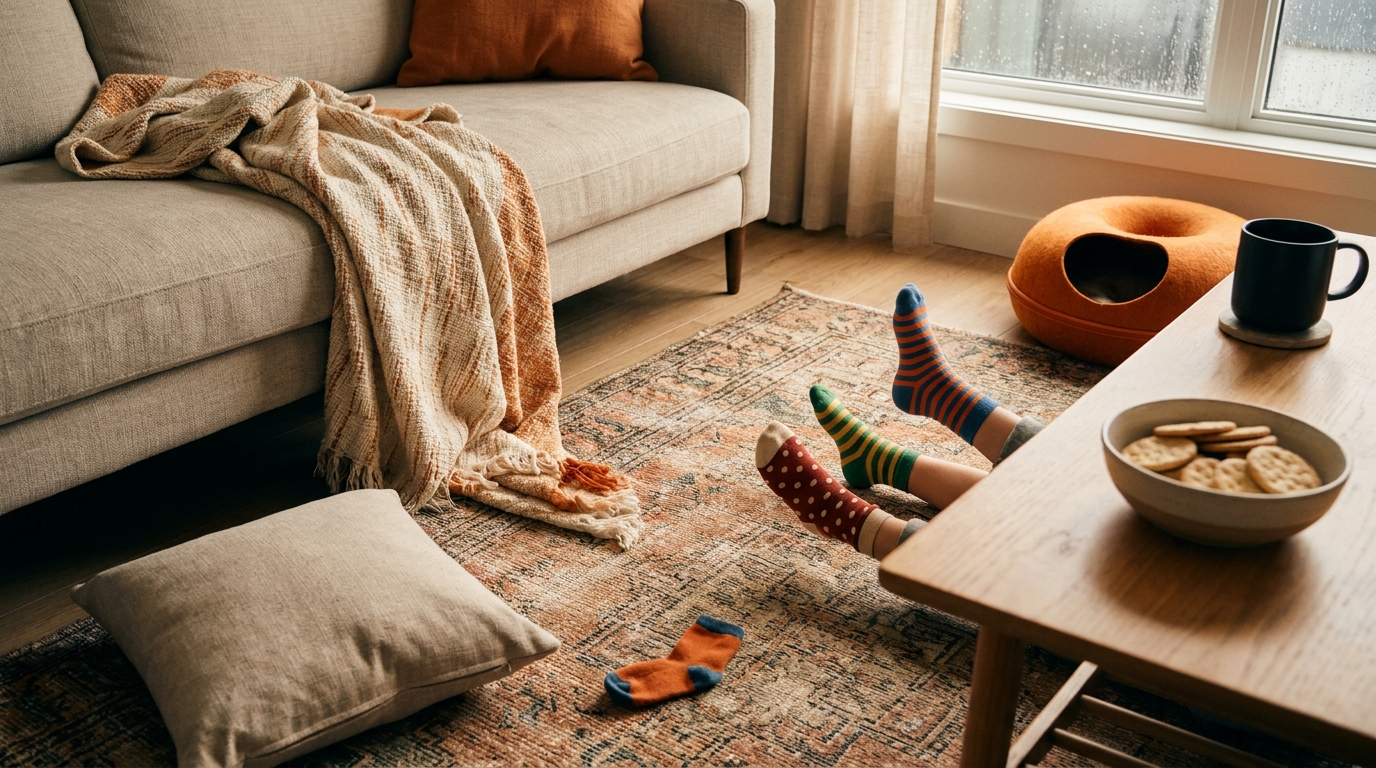
Last October a “spooky play date” landed on my living room with forty minutes’ notice. All I had was a rug, a basket of mismatched socks and my own voice. Two kids still ended up flushed and begging for “one more witch game.”
Below are 21 Halloween games for preschoolers that use only voices, bodies and the room you’re in. Pick one from the grid by space and group size, follow the 30-minute party plan, or jump to the tips for kids who get scared. Expect loud and wiggly; the mess is a rumpled rug.
In this article (12 sections)
- Ground Rules for Zero-Supply Halloween Games
- Halloween Games at a Glance
- Active Halloween Games for Preschoolers (Burn Off Energy)
- Voice-Only Halloween Games for Preschoolers (Mostly Sitting Down)
- Quiet Halloween Games for Preschoolers
- Halloween Party Games for Preschoolers (Big Groups)
- 30-Minute Halloween Party Plan for Preschoolers (No Prep)
- Adapting for Ages 3, 4, and 5 to 6 (and Mixed-Age Groups)
- What to Do If Your Child Is Scared of Halloween Games
- After the Games: Quick Craft Ideas
- Frequently Asked Questions
- Ready to Play?
Ground Rules for Zero-Supply Halloween Games
I’m strict about this definition. I’ve been burned by “no-prep” lists that quietly required a flashlight, a bag of cotton balls and a laminator.
Zero supply means you use only:
- Voices: singing, humming, whispering, silly sound effects.
- Bodies: hopping, freezing, crawling, mirroring, pretending.
- The room as it already is: the rug, the hallway, the doorway, the light switch, the couch.
- Whatever the kids are already wearing: pajamas, a costume left over from last year, mismatched socks.
If a game needs a prop, I’ve either swapped in an imaginary version or left the game out. One game (Light Switch Ghosts) uses the room’s light switch, which counts as part of the room.
Safety firstRun this sixty-second check before the first game. It’s the only prep in this whole article. It covers the basics for every game, and a few games (The Floor Is Goo, Flying Witches, Bat and Moth, Light Switch Ghosts) add their own notes.
- Clear the floor. Move toy cars, mugs and anything pointy or trippy.
- Sort out feet. Socks on hardwood are a slip hazard, so use bare feet or grippy socks.
- Keep running and chasing on rugs or carpet. On slick floors, switch to walking or crawling.
- Stay clear of the stove and hot pots. Play in another room, or only when the stove is off.
- Check costumes. Skip masks and trailing capes during movement games, and make sure costumes fit and don’t cover eyes.
Three more ground rules:
- Keep it non-scary. Many preschoolers and early elementary kids can still blur “pretend spooky” and “actually scary.” Every game here uses silly monsters, friendly ghosts, and goofy witches. More on handling a nervous kid later.
- Play in short bursts. Aim for three to six minutes per game (a few run up to eight). Stop while it’s still fun. “One more round” is a better ending than “I’m bored.”
- You’re allowed to be bad at this. Preschoolers will not grade your witch cackle.
Halloween Games at a Glance
Use this section to pick a game without scrolling. The printable No-Prep Halloween Game Cards put the same grid, the party plan and all 21 games on paper, so you can hand them to a helper or keep them in a pocket.
In the quick-pick grid, find your group size across the top and your space down the side. Your options sit where they meet.
Pick in ten seconds:
- Wiggly kids: Monster Freeze, The Floor Is Goo, Flying Witches.
- Tired kids: I Spy Orange, Spider on Your Back, Pumpkin Patch Grow.
- A crowd: Witch Says; Black Cat, Black Cat, Pumpkin; Spooky Parade.
- Stuck sitting: Mystery Sound Guess, Ghost Whisper Telephone, The Boo Story.
- Nervous kids: Pumpkin Patch Grow, Cauldron Call-Out, Pumpkin Face Charades.
Quick-Pick Grid
| Space you have | 1 child (just you and them) | 2 to 4 kids | 5+ kids (party or class) |
|---|---|---|---|
| Tiny (a rug, a kitchen corner, a waiting room) | I Spy Orange; Spider on Your Back; Mystery Sound Guess | Monster Mirror; Cauldron Call-Out; Ghost Whisper Telephone (3+ kids) | Pumpkin Face Charades; The Boo Story; Costume Charades |
| Medium (one living room, a playroom) | Monster Freeze; Pumpkin Patch Grow; Slow-Mo Zombies | Witch Says; Sleeping Ghost Sneak; Bat and Moth | Witch Says; Black Cat, Black Cat, Pumpkin; Light Switch Ghosts; Trick-or-Treat Doorbell Practice |
| Big (open floor, a hallway plus rooms, outdoors) | Flying Witches; The Floor Is Goo; Slow-Mo Zombies | The Floor Is Goo; Flying Witches; Spooky Parade (3+ kids) | Spooky Parade; Monster Freeze; Slow-Mo Zombies |
Each cell shows three or four good fits. The master index has every game, with a scare level for each.
Master Index (All 21 Games)
| # | Game | Kids | Space | Energy | Best age | Time | Scare level |
|---|---|---|---|---|---|---|---|
| 1 | Monster Freeze | 1 to 10 | Medium | High | 3 to 6 | 3 to 5 min | None |
| 2 | Witch Says | 2 to 12 | Medium | Medium | 3 to 6 | 4 to 6 min | None |
| 3 | The Floor Is Goo | 1 to 6 | Medium to big | High | 3 to 6 | 4 to 8 min | None |
| 4 | Slow-Mo Zombies | 1 to 12 | Medium to big | Low-medium | 3 to 6 | 3 to 5 min | None |
| 5 | Pumpkin Patch Grow | 1 to 8 | Medium | Low-medium | 3 to 5 | 3 to 5 min | None |
| 6 | Flying Witches | 1 to 6 | Medium to big | High | 3 to 6 | 4 to 6 min | None |
| 7 | Mystery Sound Guess | 1 to 8 | Tiny | Low | 3 to 6 | 3 to 6 min | Mild: spooky sounds |
| 8 | Cauldron Call-Out | 2 to 8 | Tiny to medium | Medium | 3 to 6 | 4 to 6 min | None |
| 9 | Ghost Whisper Telephone | 3 to 12 | Tiny | Low | 4 to 6 | 3 to 5 min | None |
| 10 | The Boo Story | 1 to 15 | Tiny | Low-medium | 3 to 6 | 4 to 7 min | None |
| 11 | Bat and Moth | 2 to 8 | Medium | Medium | 4 to 6 | 4 to 6 min | Mild: eyes closed |
| 12 | Sleeping Ghost Sneak | 2 to 8 | Medium | Low-medium | 3 to 6 | 4 to 6 min | Mild: surprise “Boo” |
| 13 | I Spy Orange (and Black) | 1 to 6 | Tiny | Low | 3 to 6 | 3 to 5 min | None |
| 14 | Spider on Your Back | 1 to 2 | Tiny | Very low | 4 to 6 | 3 to 5 min | None |
| 15 | Pumpkin Face Charades | 1 to 15 | Tiny | Low | 3 to 6 | 3 to 6 min | None |
| 16 | Monster Mirror | 2 to 6 | Tiny | Low-medium | 3 to 6 | 3 to 5 min | None |
| 17 | Black Cat, Black Cat, Pumpkin | 5 to 12 | Medium | Medium | 4 to 6 | 5 to 8 min | Mild: chasing |
| 18 | Costume Charades | 2 to 15 | Tiny to medium | Low-medium | 4 to 6 | 4 to 8 min | None |
| 19 | Trick-or-Treat Doorbell Practice | 2 to 10 | Medium | Low-medium | 3 to 5 | 4 to 6 min | None |
| 20 | Light Switch Ghosts | 2 to 10 | Medium | Medium | 3 to 6 | 3 to 6 min | Dim lights |
| 21 | Spooky Parade | 3 to 15 | Big | Medium-high | 3 to 6 | 4 to 8 min | None |
The scare level column flags anything beyond plain silly: spooky sounds, closed eyes, a surprise “Boo,” chasing or dim lights. For a nervous kid, start with the rows marked None.
Everything from here down is the detail behind each row.
Active Halloween Games for Preschoolers (Burn Off Energy)
These are the big-body games. They work best when the kids are bouncing off the walls, which on Halloween week is basically always. Start here, then settle into the quieter sections.
For more ways to burn energy indoors, see our indoor gross motor activities for toddlers and music and movement activities for kids.
1. Monster Freeze
Players: 1 to 10 | Space: medium
This is freeze dance with the music replaced by you. Hum a spooky-ish tune (the “Addams Family” snap-snap works even if you only know the snaps), clap a rhythm, or sing “Five Little Pumpkins” at double speed. The kids dance like monsters: stompy giant, floppy blob, tiptoe vampire. When you stop, everyone freezes in their best monster pose.
Make it better: Call out the kind of monster for each round. “Freeze like a sleepy ghost!” “Freeze like a monster who just stepped on a Lego!” That last one gets a scream-laugh every time, from adults too.
Make it easier: For three-year-olds, skip the “out” rule entirely. Nobody is eliminated. A wobbly freeze is still a freeze.
2. Witch Says
Players: 2 to 12 | Space: medium
It’s Simon Says in a pointy hat you don’t own. You are the Head Witch. Kids only follow commands that begin with “Witch says.”
Start with “Witch says stir the cauldron!” (big circles with both arms). Then call a cackle and a toad hop the same way.
Then comes the sneaky one. Say “Touch your nose!” and leave off the magic words. Anyone who touches their nose gets a gentle “Oh no, your nose turned into a pickle!” and laughs it off.
Tips for ages 3 to 4: Skip the trick commands for the first couple of rounds, or give a warning wink every time you’re about to trick them. They love being in on it.
Tips for ages 5 to 6: Let a kid be the Head Witch. Watching a five-year-old try to keep a straight face while tricking their parent is half the entertainment.
3. The Floor Is Goo
Players: 1 to 6 | Space: medium to big
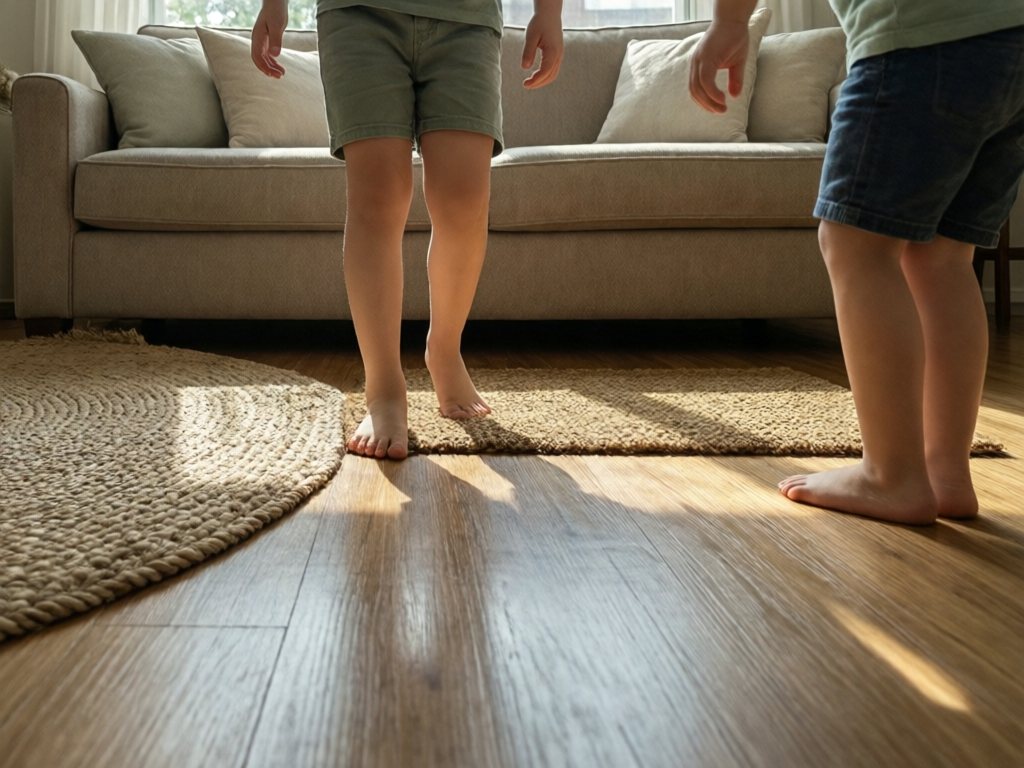
A cousin of “the floor is lava,” but with witch’s goo, which is much less alarming for a sensitive kid. The floor is sticky green goo, and you can only step on the safe islands.
Your safe islands are whatever’s already there, as long as they stay put. A rug with a grippy backing works, and so does a doormat that doesn’t budge when you step on it.
Test each island with your own foot first. If it slides, it’s goo. Keep islands a short, easy step apart.
Safety firstNo jumping off furniture. Couches and chairs are not allowed in this version (“the couch is a sleeping monster, don’t wake it up”). Kids step between islands rather than leap, so nobody lands on a slippery spot. Skip it on slick hardwood if kids are in socks, or declare the rug the only safe island and have everyone crawl.
Make it harder: Call out how to cross: “Cross like a bat (arms flapping), a toad (tiny squat-steps), a snail (so slowly).”
4. Slow-Mo Zombies
Players: 1 to 12 | Space: medium to big
Friendly zombies, not scary ones. Everyone walks in slow motion with floppy arms and a silly groan (“Snaaaacks… we need snaaaacks”). The goal is to move as slowly as humanly possible.
A slow-mo race to the kitchen doorway is weirdly hard for preschoolers, because slow control is harder than speed. It also gives wiggly bodies practice at slowing down.
Variation: “Zombie Statue.” Zombies freeze when you say “Sunrise!” and shuffle again when you say “Sunset!”
When to play it: After two or three high-energy games. It brings volume and speed back down without anyone announcing “calm down.”
5. Pumpkin Patch Grow
Players: 1 to 8 | Space: medium
Everyone curls up on the floor as a tiny seed. You narrate: “The sun comes out. A little rain falls. A tiny green sprout peeks out. The vine grows and grows. And it’s a giant pumpkin!”
For the rain, wiggle your fingers in the air, or down their backs only if they like it.
Kids slowly unfurl, stand, and puff their cheeks and arms into a big round pumpkin shape.
Then comes the best part: the pumpkin picker comes by (that’s you), and each pumpkin has to say what kind of face they have. Happy, silly, sleepy, surprised.
Hand-off to the next game: The seed-curl is naturally calm, so this is a good bridge into the quiet games below.
6. Flying Witches (and Wizards)
Players: 1 to 6 | Space: medium to big
Everyone “flies” around with arms out like a broomstick-riding witch. You call out landing spots, which are real floor-level places in your space: the rug, a doorway, the hallway corner. Kids zoom, then land with both feet on the floor. When you shout “Fly!” they take off again.
Safety firstEvery landing spot is on the floor. No climbing on furniture: the couch is still a sleeping monster, same as in The Floor Is Goo. Pick spots away from the front door and any stairs, and switch to tiptoe flying on slick floors.
Make it a story: “We’re flying to the pumpkin patch. Look, a cloud! Fly under it (duck low)! Oh no, a bat! Wave hello.” The kids supply all the sound effects.
Voice-Only Halloween Games for Preschoolers (Mostly Sitting Down)
These are the real gems for the car line, the dentist waiting room, and the stretch of the afternoon where you’re a little wiped out. Most need nothing but mouths and ears. Mystery Sound Guess, Ghost Whisper Telephone and The Boo Story work fully seated, while Cauldron Call-Out and Bat and Moth get kids on their feet.
For more ideas on the road, see our screen-free car ride activities.
Safety firstIn the car, play these only while parked, or with a second adult running the game. The driver shouldn’t be the one making sounds or guessing.
7. Mystery Sound Guess
Players: 1 to 8 | Space: tiny
You make a spooky sound with your voice (no peeking at the answer). The kids guess what it is.
Starter sounds:
- Creaky door: “eeeeeeeeeek” (stretch it out).
- A wolf howl.
- A cat hiss.
- A ghost saying “whooooo” (soft and friendly).
- Bat squeaks.
- Cauldron bubbles (“blub blub blub”).
- A witch’s cackle.
- Spider footsteps (tap fingertips lightly on your knee).
When they get comfortable, flip it: a kid makes the sound, and you guess wrong on purpose. (“A cow? A vacuum cleaner?”) A four-year-old correcting you is deeply satisfying to them.
Tip: If kids stall after two wrong guesses, give a hint (an animal, a place). If they guess instantly, make a weirder sound.
8. Cauldron Call-Out
Players: 2 to 8 | Space: tiny to medium
Pretend there’s a giant cauldron in the middle of the room. You call out an “ingredient,” and everyone acts it out while tossing it in.
Make the ingredients silly, not gross:
- A sneeze (everyone sneezes).
- Three wiggly worms (finger wiggles).
- A giant yawn.
- One pair of stinky socks (hold your nose, then toss).
- A spoonful of giggles.
After a few ingredients, everyone stirs the cauldron and you announce what the potion does. “It turns you into… a frog! Ribbit!” Then everyone hops for a few seconds.
Level up for 5 to 6 year olds: Let each kid add an ingredient. You’ll learn a lot about what they find funny. (Mine once added “one Tuesday.” I still don’t know what that means.)
9. Ghost Whisper Telephone
Players: 3 to 12 | Space: tiny
It’s classic Telephone, but everyone whispers in a ghost voice. Pass a short, silly phrase down the line: “Boo-tiful pumpkin,” “Ghosts eat toast,” “Purple spiders sneeze.” The last kid says it out loud.
Keep it preschool-proof: Use phrases of three or four words max, and sit the kids close together on the rug. Don’t worry about whether the phrase arrives intact. The garbled version (“Goats eat roast”) is the funniest part.
Good for: Seated party time, when you need the room quiet but the kids still engaged.
10. The Boo Story
Players: 1 to 15 | Space: tiny
You tell a very short, very silly story, and every time you say a certain word, the kids do a certain action. Pick one trigger word at the start. For example, whenever you say “pumpkin,” everyone says “Boo!” and throws their arms up.
Here’s a sample you can lift straight off the page:
“Once upon a time, there was a little pumpkin who lived on a very big hill. Every morning, the little pumpkin rolled down the hill to say hello to the cow. ‘Moo!’ said the cow. ‘Good morning, pumpkin!‘ One day the pumpkin got a little too rollie and rolled right into the farmer’s boot…”
You can ramble forever, because the story is really a listening game. Kids practice waiting for their cue while it feels like pure silliness. For older kids, add a second trigger word, such as a cackle every time you say witch.
11. Bat and Moth
Players: 2 to 8 | Space: medium
This is Marco Polo for preschoolers, inspired by how bats use sound to find moths.
One child is the bat and closes their eyes (or covers them with their hands). The other kids are moths, spread around the room.
The bat says “squeak!” and the moths all answer “flutter!” (more fun to say than “moth”). The bat follows the sound and gently tags a moth. The tagged moth becomes the next bat.
Safety firstMoths stay on their feet and walk. Fluttering means slow-motion hand-wing flaps. No sprinting, since the bat can’t see. Clear anything hard-cornered out of the room before you start.
If a child won’t close their eyes: That’s fine. “Blinky bat” with eyes open still works. Don’t push it.
Quiet Halloween Games for Preschoolers
Every good game session needs a cool-down. These are the ones I use right before snack, bath, or the dreaded pre-trick-or-treat nap attempt.
12. Sleeping Ghost Sneak
Players: 2 to 8 | Space: medium
One person is the Sleeping Ghost, lying on the floor with their eyes closed. That’s you at first, if you’re brave enough to lie on the floor.
The other kids tiptoe from one side of the room to the other. If the ghost “wakes up” (sits up and says “Boo!”), everyone freezes, then tiptoes or hops back to the start, laughing.
Before you start: Tell kids the ghost might say “Boo,” and remind them to use walking feet. For kids who startle easily, skip the “Boo” and just sit up and wave.
The secret: Wake up rarely at first, so the kids learn the rhythm and don’t feel like they’re being “caught” too often. A friendly ghost who is sleepy and a bit forgetful (“Wait, did I hear something? Nope, back to sleep!”) keeps it light for kids who get anxious.
Mess level: Zero. Possibly one parent now asleep on the floor.
13. I Spy Orange (and Black)
Players: 1 to 6 | Space: tiny
Classic I Spy, with a Halloween color theme. “I spy something orange.” (The cat bed. The basketball. The goldfish crackers. Your cooking spoon.) Switch to black: “I spy something black.” (The TV, the remote, a shoe, the dog.)
Why it’s useful: Every home has plenty of orange and black stuff, so your own house becomes the Halloween decoration. It’s also the perfect game for a kid who’s too tired to move but too wired to nap.
Make it harder: “I spy something orange and round.”
14. Spider on Your Back
Players: 1 to 2 | Space: tiny
Draw a shape on your child’s back with one finger. They guess what it is. Start with an easy one (a circle, a star, a heart), then do Halloween shapes: a pumpkin, a moon, a ghost, a bat, a spider with eight legs. Then swap. Their drawings will be abstract in the best possible way.
Why it’s calming: Light touch and a slow guessing pace feel settling to many kids. It’s also a gentle way to connect with a kid who’s been out of sorts all day.
Note: Always check that your child is okay with back touch. If they’re not feeling it, draw on their hand or in the air instead.
15. Pumpkin Face Charades
Players: 1 to 15 | Space: tiny
Everyone makes a face, and the others guess the feeling. Happy pumpkin. Grumpy pumpkin. Sleepy pumpkin. Surprised pumpkin. Silly pumpkin. A pumpkin who just smelled a stinky sock.
This is a quiet game that builds feelings vocabulary, which is something we spend a lot of time on at our house. If you’d like to go deeper on helping kids name big feelings, our calm-down activities for kids post is a good follow-up.
For party groups: Go around in a circle, each kid choosing a feeling pumpkin face. The rest of the group copies it. It’s a very quick way to get fifteen kids looking at each other and giggling.
16. Monster Mirror
Players: 2 to 6 | Space: tiny
Pair up (or go parent-and-kid). One person is the Monster, one is the Mirror. The monster makes slow, silly movements, such as stretching long arms, shaking a stompy foot, or making a big silly face, and the mirror copies exactly. Then swap.
Tip: Start with big, slow moves. Little kids need time to process what they see. A fast monster will quickly turn into a laughing, flailing heap, which is also fine.
Why it’s useful: Mirroring gives kids practice at watching closely and copying what they see.
Halloween Party Games for Preschoolers (Big Groups)
These are last-minute Halloween party games for kids, and they handle a crowd without any supplies. They suit a small birthday, a classroom, a neighborhood meet-up, or a “wait, the party is now” situation.
17. Black Cat, Black Cat, Pumpkin
Players: 5 to 12 | Space: medium
It’s Duck Duck Goose with a Halloween twist. Everyone sits in a circle. One kid walks around the outside tapping heads and saying “Black cat… black cat… black cat… PUMPKIN!” The kid tapped as “pumpkin” jumps up and chases them around the circle. The tapper tries to get to the empty spot and sit.
Preschool modification: For three- and four-year-olds, skip the chasing and have the “pumpkin” and the tapper just skip or hop around the circle together, then switch. Fewer collisions, same joy.
Mess level: One lost sock if it’s a socks day.
18. Costume Charades
Players: 2 to 15 | Space: tiny to medium
This game uses whatever the kids are wearing, which makes it great for a party or a school day. A kid acts out their own costume without words, and the others guess. A dinosaur stomps. A firefighter hoses. A bunny hops. A very confused superhero flaps an imaginary cape.
Costume check: Masks and trailing capes come off before anyone moves around, and nothing should cover a child’s eyes.
No costume yet? Each kid acts out what they want to be for Halloween.
Still figuring out what they’ll wear? Our post on last-minute Halloween costumes for toddlers using home items has ideas built from stuff you already own, so the game and the costume can both be zero-cost.
Tip for shy kids: Let them whisper their costume to you, and then you act it out with them. A shared performance takes the pressure off.
19. Trick-or-Treat Doorbell Practice
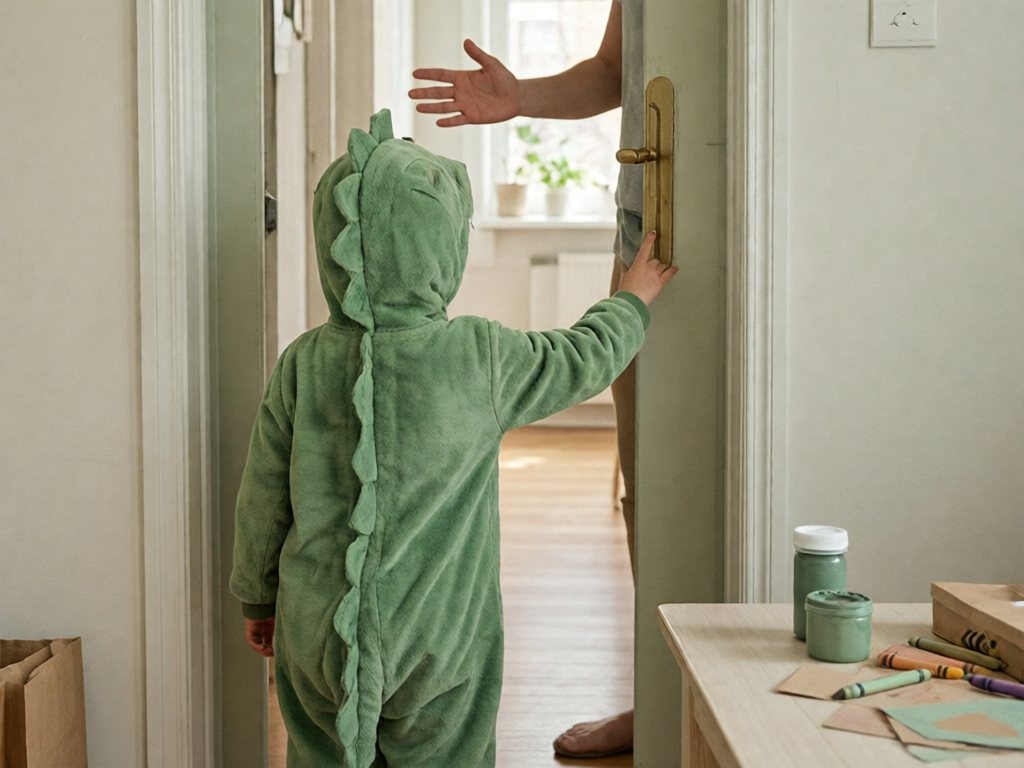
Players: 2 to 10 | Space: medium
This one has a real-world payoff. Pick a doorway as your “house.” One kid at a time (or in pairs) walks up and pretends to ring the doorbell with a finger-poke to the air or the doorframe. Then they say “Trick or treat!”
You open the “door” with a big, silly greeting: “Oh my goodness, a tiny dragon! Happy Halloween! Take one!” Pretend to hand out candy. The kid says “Thank you!” and walks away.
What you’re really practicing:
- Saying “trick or treat” out loud. It’s harder than it sounds when a shy kid is facing a real stranger on the porch.
- Saying “thank you” afterward.
- Waiting for a turn.
- Taking just one. (Playfully exaggerate: “Oh no, one! Not forty!”)
If your kid is nervous about the real thing (a common feeling for three-year-olds), this rehearsal can make Halloween night a lot smoother. Take turns being the house, too. A kid who hands out pretend candy gets a real feel for the other side of the doorway.
20. Light Switch Ghosts
Players: 2 to 10 | Space: medium
You need a room with a light switch, and ideally some daylight so it isn’t pitch black. This game works best in the afternoon with the shades half-open. Skip it if your child is nervous about dimness (see the scared-kids section below).
Here’s how it goes: when the lights are on, everyone is a regular kid, just wandering and chatting. When you flick the lights off, everyone becomes a ghost, floating slowly with arms out and saying “whooo.” When the lights come back on, everyone freezes. Anyone who’s still moving gets a gentle “Ooh, a wobbly ghost!” and keeps playing.
Safety firstGhosts float at a slow walk, never a run. Re-check the floor for toys before the lights go off, and keep enough daylight in the room that kids can still see each other.
To keep it kind: Always say “lights going off in three, two, one” so no kid gets startled, and keep the off-time to five or ten seconds.
21. Spooky Parade
Players: 3 to 15 | Space: big
A friendly follow-the-leader. You’re the parade leader, and the kids line up behind you as you march through the house, up and down the hallway, around the kitchen island, around the living room. Change your movement every few steps: tiptoe like a ghost, stomp like a giant, wiggle like a worm, flap like a bat. Then pick a new leader.
Add a chant: “Spooky, spooky, parade, parade, who’s in front? You’re in front!” and you tap the next leader.
Perfect for: The end of a play date, when you need to herd everyone toward the door, the bath, or the snack. A parade with a destination is much easier than “time to go.”
30-Minute Halloween Party Plan for Preschoolers (No Prep)
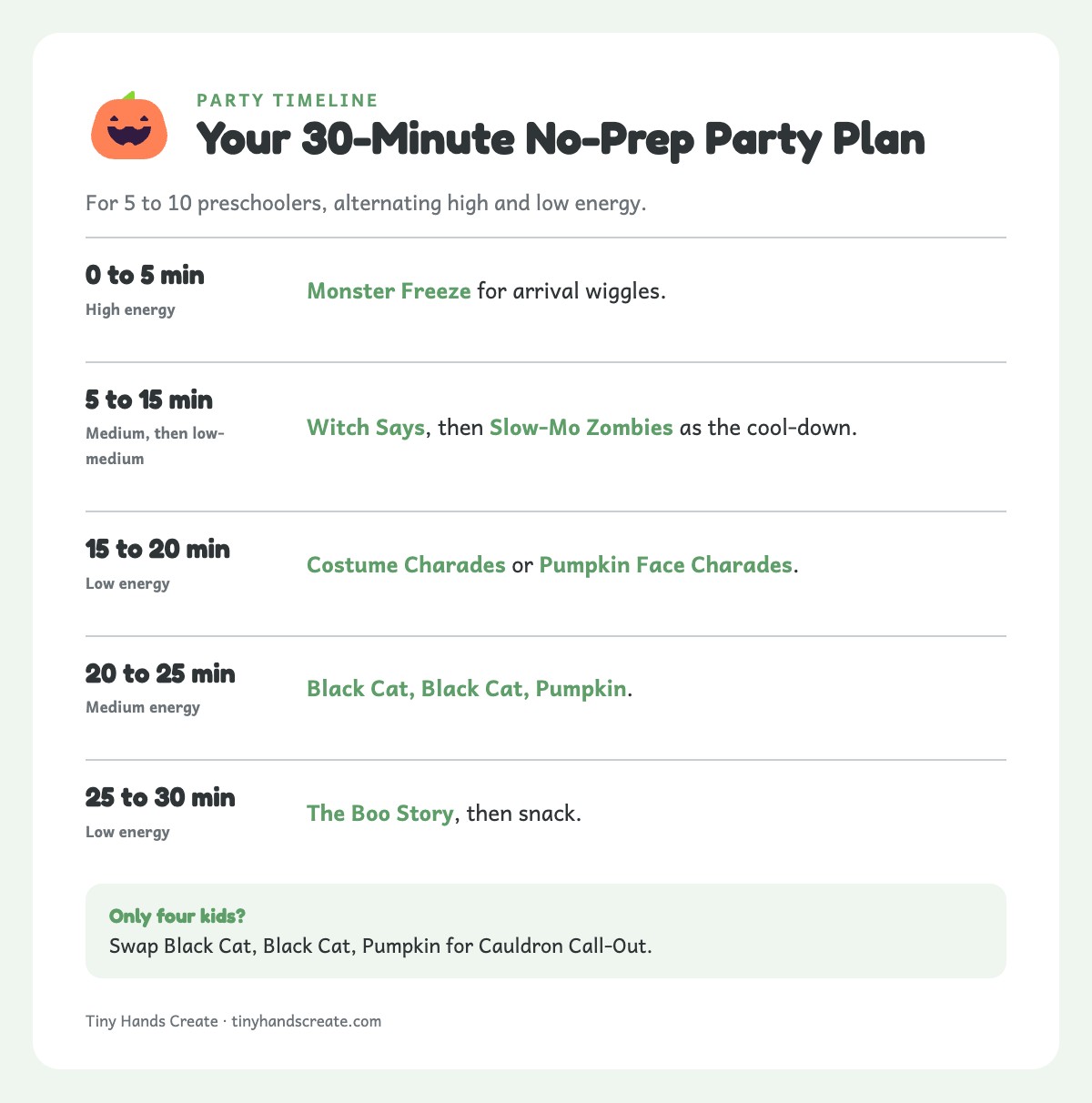
If you want a plan rather than a menu, here’s one for 5 to 10 preschoolers. It alternates high and low energy so no one melts down, and it builds to a quiet ending.
TipOnly four kids? Swap Black Cat, Black Cat, Pumpkin for Cauldron Call-Out.
| Minutes | What to play | Energy |
|---|---|---|
| 0 to 5 | Monster Freeze (arrival wiggles) | High |
| 5 to 10 | Witch Says | Medium |
| 10 to 15 | Slow-Mo Zombies (cool-down) | Low-medium |
| 15 to 20 | Costume Charades or Pumpkin Face Charades | Low |
| 20 to 25 | Black Cat, Black Cat, Pumpkin | Medium |
| 25 to 30 | The Boo Story, then snack | Low |
A few host notes:
- Keep a spare game in your pocket. If a game falls flat in two minutes, move on without apology. You can come back to it later, or never.
- Let kids lead. A four-year-old who becomes the Head Witch is more committed than any parent.
- Plan for at least one meltdown. Someone will be too tired, too excited, or too sure that they were the winner. A quick lap around the room, a drink of water, or a snuggle on your lap usually does it.
- Don’t keep score. For this age group, no winners and no losers is the easiest policy and prevents most of the tears.
Shorter Plans: 15 Minutes or Sitting Only
Short on time, or stuck in chairs? Run one of these instead. The class version suits up to 12 kids.
| Minutes | 15-minute class version | Sitting-only version (waiting room, car line) |
|---|---|---|
| 0 to 5 | Witch Says | Mystery Sound Guess |
| 5 to 10 | Pumpkin Face Charades | I Spy Orange |
| 10 to 15 | The Boo Story | Pumpkin Face Charades |
Adapting for Ages 3, 4, and 5 to 6 (and Mixed-Age Groups)
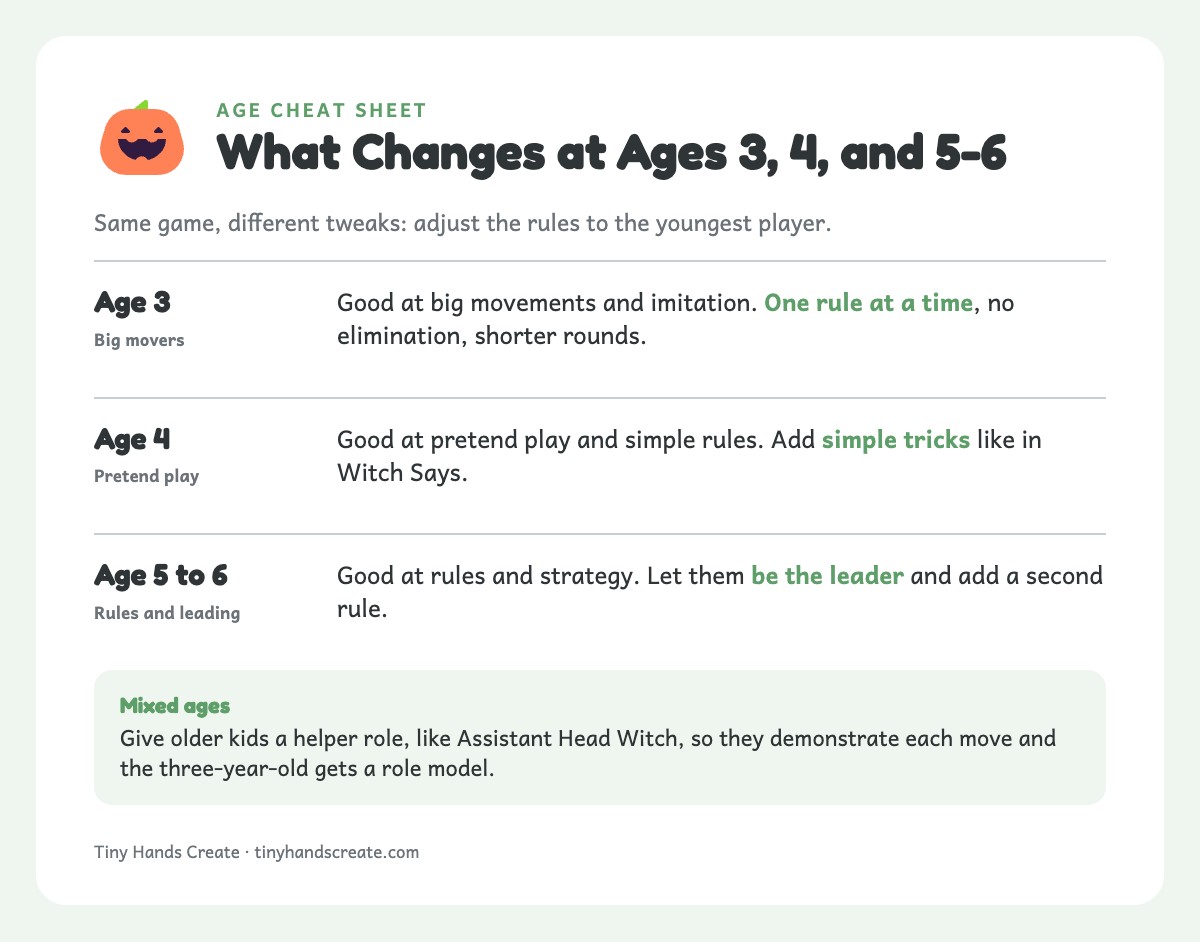
A three-year-old and a six-year-old can be in the same game, but they need different things. Here’s a quick cheat sheet.
| Age | What they’re good at | What to adjust |
|---|---|---|
| 3 | Big movements, repeating sounds, imitation | Short rules (one at a time), no elimination, lots of demonstration, shorter rounds |
| 4 | Pretend play, simple rules, taking turns (mostly) | Add simple “tricks” (like in Witch Says), let them choose silly options |
| 5 to 6 | Rules, strategy, leading, reading the room | Let them be the leader, add a second rule, try harder versions of guessing games |
Mixed ages: Give the older kids a “helper” role. A six-year-old who gets to be “Assistant Head Witch” and demonstrate each move is far less likely to be bored by the little ones. Meanwhile the three-year-old gets a built-in role model.
Good to knowThese games are a loose fit for under-3s, so play alongside them and give one rule at a time. Try Monster Freeze, Pumpkin Patch Grow, Mystery Sound Guess and Slow-Mo Zombies, and let them wander in and out. Success for a two-year-old means they stayed in the room for thirty seconds of it, and that counts.
What to Do If Your Child Is Scared of Halloween Games
Even a silly Halloween game can tip into too much for some kids. I’d rather pause a game than have a kid carry the feeling for the rest of the night.
TipDim lights and surprise “Boo” moments are the two things to skip first.
Signs a kid is overwhelmed: going quiet, clinging, covering their ears or eyes, refusing to join, or suddenly getting silly in a way that looks more like nerves than fun.
What I do:
- Pause the game and name it. “That ghost got a little too whooo-y, huh? Want to be the ghost-catcher instead?”
- Offer a choice of roles. The scared kid can call the freeze or lead the parade.
- Make the monster visibly silly. A monster who sneezes, trips, or wants snacks is a lot less intimidating than a monster who “gets you.”
- Never force it. A kid who watches from the couch for ten minutes is still participating.
- Check the scare level column. Skip Light Switch Ghosts (dim lights). In Sleeping Ghost Sneak, warn kids before the ghost’s “Boo” or leave it out. In Bat and Moth, let the bat keep their eyes open.
The goal is to make Halloween feel fun and manageable, not to prove anything about bravery.
After the Games: Quick Craft Ideas
Everything above is truly zero-supply. If the day opens up and your kids want to make something afterward, these low-effort options fit the same spirit.
- After the wiggles: A quiet craft makes a soft landing. Our non-scary Halloween crafts for preschoolers and toddlers roundup has projects with friendly ghosts and gentle pumpkins that keep the same don’t-scare-the-three-year-olds tone as these games.
- After a pumpkin game: If your kids got fired up about pumpkins during Pumpkin Patch Grow, follow it with no-carve pumpkin decorating ideas. They’re mess-light and knife-free, and the post includes a printable No-Carve Pumpkin Decorating Kit.
- Before dinner: Costume Charades pairs naturally with trying on costumes, so let kids play it while they get dressed.
Most of the best preschool Halloween moments in our house were not crafts. They were a hallway full of tiny zombies and a very loud parade, with no prep, no props and a rug.
Frequently Asked Questions
What are the easiest Halloween games for preschoolers with no supplies?
The easiest ones use only your voice and body: Monster Freeze (freeze dance where you hum or clap instead of playing music), Witch Says (Simon Says with a spooky twist), Mystery Sound Guess, and Slow-Mo Zombies. You can explain any of them in under thirty seconds and start playing right away. If you only remember two, make them Monster Freeze and Witch Says, since both work for one kid or a dozen.
How do I play Halloween games with toddlers and preschoolers together?
Pick games with simple, repeatable actions, and give the older kids a leader or helper role. In Witch Says, a five-year-old can be the Head Witch while a two-year-old copies. Skip elimination and scoring so nobody feels left out, and expect toddlers to wander in and out. A younger child who watches for a minute and then joins in is playing exactly as intended.
What indoor Halloween games work best in a small space?
For a tiny room, a kitchen, or a waiting room, choose seated or low-movement games: Mystery Sound Guess, I Spy Orange, Pumpkin Face Charades, Ghost Whisper Telephone, The Boo Story, and Spider on Your Back. None need more than a rug-sized patch of floor. If you have a little more room, Pumpkin Patch Grow and Monster Mirror stay fairly contained.
My child is afraid of anything spooky. Can we still play?
Yes. Stick to the silly side: Pumpkin Patch Grow, Cauldron Call-Out, Pumpkin Face Charades, and the Boo Story, where the “scary” parts are mostly giggles. Skip anything with dim lighting or surprise “boo” moments, and give the nervous child a role with control, like calling the freeze or leading the parade. Following your child’s pace matters more than finishing a game.
How long should each Halloween game last for this age group?
Three to six minutes is a good target, though a few games run up to eight. Preschoolers tend to peak in the first few rounds and then fade, so stopping while they still want “one more” keeps the fun intact. If a game isn’t landing within two minutes, switch to another one without worrying about it. You can always bring the first one back later.
Do I need to keep score or pick winners?
No, and I’d recommend skipping it. At ages 3 to 6, competition often turns into tears, while cooperative play keeps the giggles going. Games like Monster Freeze and Slow-Mo Zombies can be played without elimination. If your older kids want a challenge, let them try to beat their own record, such as holding a freeze longer or moving even more slowly.
What’s the best game for a big group at a last-minute party?
Witch Says and Black Cat, Black Cat, Pumpkin both scale well for groups of eight or more. Spooky Parade is great for moving a crowd from room to room, and Costume Charades gets everyone watching each other. Plan to alternate high-energy and low-energy games, and finish with something seated like The Boo Story right before snacks.
Ready to Play?
You don’t need a bag of plastic spiders or a craft-store run to give a preschooler a great Halloween afternoon. You already have a voice that can cackle, a body that can freeze like a pumpkin, and a rug that can be a pond of witch goo.
Pick a game from the index at the top, clear a little floor, and let the silliness take it from there. If the mess is a lonely sock and a couch cushion that has migrated across the room, call it a win. When Halloween is over, our boredom busters for kids list has more ideas for the rest of the year.