Easy STEM Activities for Preschoolers: Science Made Fun
Easy STEM Activities for Preschoolers: Science Made Fun
You don’t need a lab coat or a degree in chemistry to do STEM with preschoolers. At this age, science is about wonder, questions, and hands-on exploration. The best STEM activities feel like play—because that’s exactly how young children learn best.
These activities use simple household materials, require minimal prep, and tap into what preschoolers naturally love: making messes, asking “why,” and watching cool things happen. Each one builds foundational STEM skills while keeping little hands (and minds) engaged.
[Image placeholder: Preschooler watching color mixing experiment with wonder]
What Is STEM for Preschoolers?
STEM stands for Science, Technology, Engineering, and Mathematics. For preschoolers, this looks like:
Science: Observing, asking questions, making predictions, experimenting
Technology: Using tools, understanding cause and effect
Engineering: Building, creating, problem-solving
Mathematics: Counting, sorting, patterns, comparing sizes
At this age, formal instruction isn’t the goal. The goal is nurturing curiosity and showing kids that exploring how things work is fun.
Tips for STEM Success with Preschoolers
Ask questions, don’t give answers: “What do you think will happen?” “Why do you think that happened?” Questions build thinking skills.
Embrace mess and “failure”: Experiments that don’t “work” are still learning. Discuss what happened and try again.
Follow their lead: If they want to keep mixing colors instead of moving on, let them. Deep exploration beats checking off activities.
Use real vocabulary: Say “hypothesis,” “experiment,” and “observe.” Kids rise to the language we use.
Connect to their world: Relate activities to things they already know and care about.
Science Experiments (10 Activities)
1. Baking Soda Volcano
Materials: Baking soda, vinegar, food coloring, container
What to do: Build a “volcano” from playdough around a container. Add baking soda and a few drops of food coloring. Pour in vinegar and watch the eruption!
The science: Acid-base reaction creates carbon dioxide gas
Mess level: Medium
2. Color Mixing Magic
Materials: Clear cups, water, food coloring, paper towels
What to do: Fill cups with colored water. Connect cups with paper towels. Watch colors “walk” and mix as water travels up the paper towels.
The science: Capillary action, color mixing
Mess level: Low
3. Sink or Float
Materials: Basin of water, various household items
What to do: Gather items and predict: will it sink or float? Test each one and sort into piles.
The science: Density and buoyancy
Mess level: Medium (water)
4. Magic Milk
Materials: Milk, food coloring, dish soap, cotton swab
What to do: Pour milk in a shallow dish. Add drops of food coloring. Touch the center with a soapy cotton swab and watch colors explode!
The science: Surface tension disruption
Mess level: Low-medium
5. Growing Crystals
Materials: Borax, water, pipe cleaners, jar
What to do: Bend pipe cleaner into a shape. Dissolve borax in hot water. Suspend pipe cleaner in solution overnight.
The science: Supersaturation and crystallization
Mess level: Low
[Image placeholder: Child doing sink or float experiment with various objects]
6. Invisible Ink
Materials: Lemon juice, white paper, cotton swab, heat source (lamp or iron)
What to do: Write or draw with lemon juice. Let dry. Hold near heat to reveal the message!
The science: Oxidation from heat
Mess level: Low
7. Dancing Raisins
Materials: Clear soda (Sprite or club soda), raisins, clear glass
What to do: Drop raisins into the soda. Watch them sink, rise, and “dance.”
The science: Carbon dioxide bubbles and density
Mess level: Low
8. Static Electricity Fun
Materials: Balloon, small paper pieces or cereal
What to do: Rub balloon on hair. Use static to pick up paper pieces or move cereal across a table.
The science: Electrical charges
Mess level: None
9. Plant Growth Observation
Materials: Seeds, clear container, wet paper towel
What to do: Place seeds between wet paper towel and container side. Watch roots and sprouts grow over days.
The science: Germination and plant biology
Mess level: None
10. Rain Cloud in a Jar
Materials: Jar, water, shaving cream, food coloring
What to do: Fill jar with water. Top with shaving cream “cloud.” Drip food coloring on top. Watch it “rain” through.
The science: Water saturation, weather demonstration
Mess level: Low
Engineering Challenges (8 Activities)
11. Bridge Building
Materials: Blocks, books, or cardboard; small toys for testing
Challenge: Build a bridge that spans a gap and holds weight
Skills: Structural engineering, problem-solving
Mess level: None
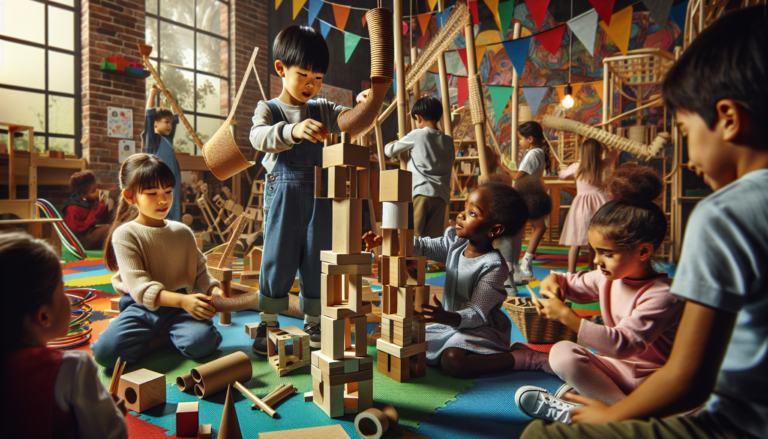
12. Tallest Tower
Materials: Blocks, LEGO, cardboard boxes, or cups
Challenge: Build the tallest tower that stands on its own
Skills: Balance, stability, spatial reasoning
Mess level: None
13. Marble Run
Materials: Paper towel tubes, tape, cardboard, marble
Challenge: Create a track for a marble to travel from high to low
Skills: Gravity, angles, sequential thinking
Mess level: Low
14. Egg Drop Challenge
Materials: Egg, various cushioning materials (cotton, bubble wrap, fabric)
Challenge: Protect an egg from breaking when dropped
Skills: Material properties, impact absorption
Mess level: Potentially high (but worth it)
15. Boat Building
Materials: Foil, straws, tape, small tub of water, pennies
Challenge: Build a boat that floats and holds the most pennies
Skills: Buoyancy, weight distribution
Mess level: Medium (water)
[Image placeholder: Child building marble run from cardboard tubes]
16. Cardboard Box House
Materials: Large cardboard box, markers, scissors (adult help)
Challenge: Design and decorate a house with doors and windows
Skills: Spatial planning, design
Mess level: Low
17. Ramp Races
Materials: Flat surface (cardboard, board), blocks to prop, cars
Challenge: What angle makes cars go fastest? What surface?
Skills: Variables, slopes, friction
Mess level: None
18. Paper Airplane Testing
Materials: Paper, open space
Challenge: Which fold design flies farthest? Straightest?
Skills: Aerodynamics, testing variables
Mess level: None
Math Activities (6 Activities)
19. Pattern Making
Materials: Colored blocks, beads, LEGO, or snacks
What to do: Create patterns (ABAB, AABB, ABC) and have kids continue them
Skills: Pattern recognition, sequencing
Mess level: None
20. Sorting Collections
Materials: Buttons, shells, leaves, toys—anything with variety
What to do: Sort by color, size, shape, or any attribute. Count groups.
Skills: Classification, counting, comparing
Mess level: None
21. Measuring Everything
Materials: Rulers, measuring tape, blocks (as non-standard units)
What to do: Measure furniture, toys, family members. Compare: longer, shorter
Skills: Measurement, comparison, number sense
Mess level: None
22. Shape Hunt
Materials: Paper shapes or shape cutouts
What to do: Find shapes around the house. Circle? Rectangle? Triangle? Count how many of each.
Skills: Shape recognition, observation
Mess level: None
23. Counting Games
Materials: Small objects, cups, dice
What to do: Roll dice, count out that many objects. Compare amounts. Add groups together.
Skills: One-to-one correspondence, addition basics
Mess level: None
24. Graphing Favorites
Materials: Paper, stickers or stamps
What to do: Survey family about favorites (color, food, animal). Create a picture graph.
Skills: Data collection, visual representation
Mess level: None
Nature-Based STEM (6 Activities)
25. Bug Hunt and Observation
Materials: Magnifying glass, bug jar, notebook
What to do: Find bugs outside. Observe closely. Draw what you see. Count legs, look at colors.
Skills: Observation, documentation, entomology basics
Mess level: None
26. Weather Watching
Materials: Simple weather chart, thermometer
What to do: Check weather daily. Record observations. Notice patterns over time.
Skills: Observation, data tracking, meteorology
Mess level: None
27. Shadow Play
Materials: Sunny day, chalk, various objects
What to do: Trace shadows at different times. Notice how they change. Make shadow puppets.
Skills: Light and shadow concepts, earth rotation
Mess level: None
28. Nature Collections
Materials: Container, natural items found outside
What to do: Collect leaves, rocks, sticks. Sort and categorize. Create nature art.
Skills: Classification, observation
Mess level: Low
29. Bird Watching
Materials: Bird guide or app, binoculars (optional)
What to do: Watch birds in your yard or park. Identify species. Count visitors.
Skills: Observation, identification, counting
Mess level: None
30. Water Cycle in a Bag
Materials: Ziplock bag, water, blue food coloring, tape
What to do: Add water and coloring to bag. Seal and tape to sunny window. Watch evaporation and condensation.
Skills: Water cycle, observation over time
Mess level: None
[Image placeholder: Child examining bug with magnifying glass]
Creating a STEM-Friendly Environment
Ask lots of questions:
- What do you think will happen?
- Why did that happen?
- What would happen if we tried…?
- What do you notice?
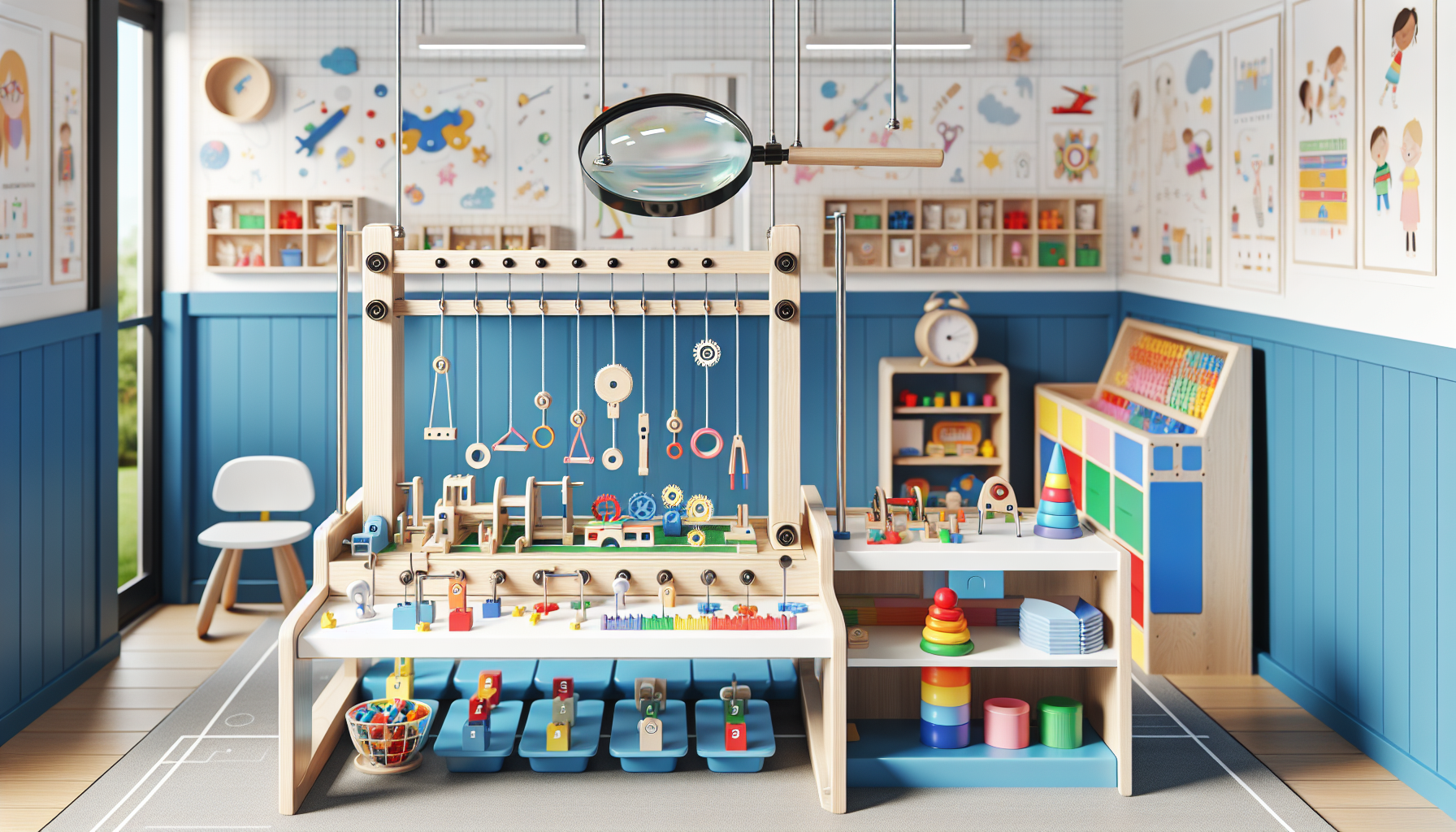
Stock simple supplies:
- Magnifying glasses
- Measuring cups and spoons
- Funnels and containers
- Building materials (blocks, cardboard, tape)
- Basic science supplies (baking soda, vinegar, food coloring)
Make exploration normal:
- Wonder aloud about things together
- Say “I don’t know—let’s find out!”
- Celebrate questions as much as answers
FAQ
Is my preschooler too young for STEM?
Absolutely not! Preschoolers are natural scientists. They’re constantly experimenting, even if it looks like “making a mess.” These activities channel that curiosity productively.
What if experiments don’t work as expected?
That’s actually valuable! Talk about what happened and why. Real scientists’ experiments often don’t go as planned. The learning is in the process.
How do I explain the science without getting too complicated?
Keep explanations simple and concrete. “The bubbles are pushing the raisins up!” is perfect for preschoolers. Save detailed explanations for when they ask more questions.
Do I need to buy special materials?
Most activities use common household items. A few specialty items (magnifying glass, magnets) are worth having but aren’t required to start.
Conclusion
STEM for preschoolers is about fostering curiosity, not creating the next Einstein. The wonder in your child’s eyes when the volcano erupts or the colors “walk” across paper towels—that’s the foundation of scientific thinking.
Start with one activity this week. Ask questions, make predictions together, and see where their curiosity leads. You’re raising a little scientist, one experiment at a time.