Simple Science Experiments with Kitchen Ingredients
Simple Science Experiments with Kitchen Ingredients
The best science lab is probably already in your house—it’s your kitchen. Pantry staples like baking soda, vinegar, and food coloring can teach kids about chemical reactions, physics, and biology in ways that feel like magic.
These kitchen science experiments are perfect for rainy days, curious kids, or whenever you hear “I’m bored!” They require minimal prep, use ingredients you likely have on hand, and create memorable learning moments.
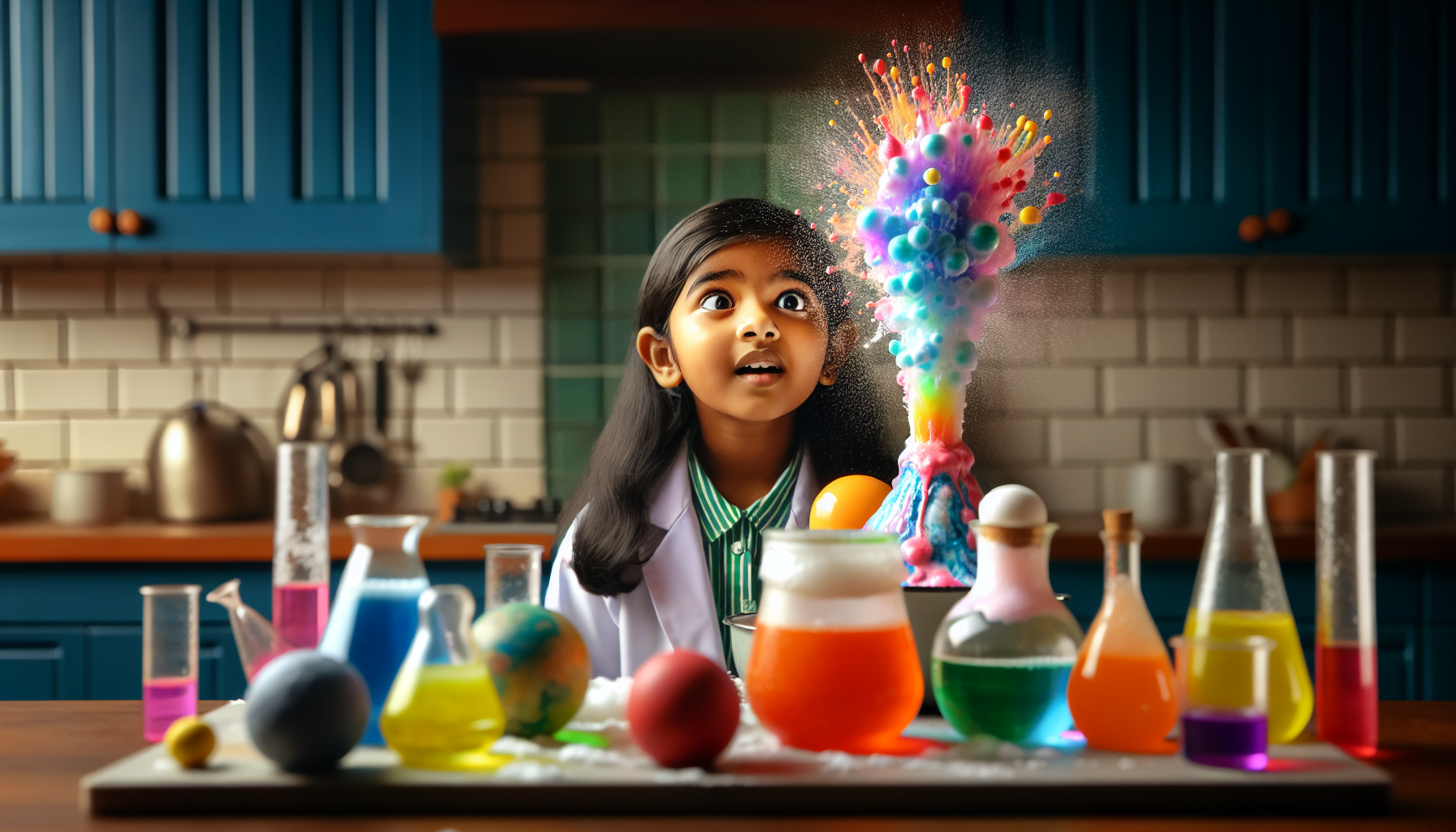
[Image placeholder: Child watching colorful chemical reaction in kitchen]
Why Kitchen Science Works
Accessible: No special equipment or supplies to buy.
Relatable: Kids eat these ingredients, making science feel relevant.
Safe: Kitchen items are generally non-toxic (though always supervise).
Quick results: Most experiments show results in minutes, perfect for young attention spans.
Repeatable: Kids can do them again and again, testing variables.
Before You Begin: Science Mindset
Turn these experiments into real learning by using the scientific method (kid-friendly version):
- Ask a question: What will happen if…?
- Make a guess (hypothesis): I think… because…
- Do the experiment: Let’s find out!
- Observe: What’s happening? What do you see?
- Discuss: Why did that happen?
Even toddlers can participate: “What do you think will happen when we add the vinegar?”
Related: STEM Activities for Preschoolers
Baking Soda Experiments (5 Ideas)
Baking soda (sodium bicarbonate) reacts with acids to produce carbon dioxide gas—creating bubbles, fizzing, and eruptions kids love.
1. Classic Volcano
Materials: Baking soda, vinegar, dish soap, food coloring, container (volcano shape optional)
What to do:
- Place 3-4 tablespoons baking soda in container
- Add a squirt of dish soap and food coloring
- Pour in vinegar and watch the eruption!
The science: Acid (vinegar) + base (baking soda) = carbon dioxide gas. The soap traps gas in bubbles.
Age: 2+ | Mess: Medium
2. Fizzing Colors
Materials: Ice cube tray, baking soda, vinegar, food coloring, droppers
What to do:
- Fill ice cube tray compartments with baking soda
- Add different food colors to each
- Use dropper to add vinegar and watch colors fizz
The science: Same reaction, but with color mixing!
Age: 2+ | Mess: Low-Medium
3. Inflating a Balloon
Materials: Empty bottle, balloon, baking soda, vinegar
What to do:
- Pour vinegar into bottle (about 1/4 full)
- Put baking soda inside balloon using a funnel
- Stretch balloon over bottle opening
- Lift balloon to dump baking soda into vinegar
- Watch balloon inflate!
The science: Carbon dioxide gas fills the balloon.
Age: 4+ | Mess: Low
4. Fizzy Treasure Hunt
Materials: Baking soda, water, small toys, muffin tin, vinegar, dropper
What to do:
- Mix baking soda with water to form paste
- Hide small toys in baking soda “rocks” in muffin tin
- Freeze or let dry
- Use dropper with vinegar to fizz away the soda and find treasures
The science: Controlled reaction reveals hidden objects.
Age: 3+ | Mess: Medium
5. Lemon Volcano
Materials: Lemon, baking soda, food coloring, dish soap
What to do:
- Cut lemon in half, poke with fork to release juice
- Add food coloring and dish soap to cut surface
- Sprinkle baking soda on top
- Squeeze lemon gently for more eruption!
The science: Citric acid in lemon reacts with baking soda.
Age: 3+ | Mess: Medium
[Image placeholder: Colorful baking soda volcano erupting]
Density and Layering Experiments (3 Ideas)
6. Density Tower
Materials: Tall glass, honey, corn syrup, dish soap, water, vegetable oil, rubbing alcohol (optional), food coloring
What to do:
- Slowly pour liquids into glass in order: honey, corn syrup, dish soap, water (colored), vegetable oil
- Watch liquids layer based on density!
- Try dropping small objects to see where they float
The science: Different liquids have different densities. Denser liquids sink below lighter ones.
Age: 4+ | Mess: Low
7. Lava Lamp
Materials: Clear bottle, water, vegetable oil, food coloring, Alka-Seltzer or salt
What to do:
- Fill bottle 1/4 with water, add food coloring
- Fill rest with vegetable oil
- Drop in Alka-Seltzer pieces (or salt)
- Watch colored bubbles rise and fall!
The science: Gas bubbles carry water droplets up through oil. When bubbles pop, water sinks back down.
Age: 3+ | Mess: Low
8. Oil and Water Color Mix
Materials: Baby oil, water, food coloring, clear container
What to do:
- Fill container with baby oil
- In separate cup, mix water with food coloring
- Drop colored water into oil using dropper
- Watch colored drops move through oil
The science: Oil and water don’t mix because of different molecular properties.
Age: 2+ | Mess: Low
Milk and Food Science (3 Ideas)
9. Magic Milk
Materials: Shallow dish, whole milk, food coloring, dish soap, cotton swab
What to do:
- Pour milk into shallow dish
- Add drops of different food colors
- Dip cotton swab in dish soap
- Touch soapy swab to milk center
- Watch colors explode outward!
The science: Soap breaks surface tension and dissolves fat molecules, creating movement.
Age: 2+ | Mess: Low
10. Invisible Ink
Materials: Lemon juice, water, white paper, paintbrush, heat source (lamp or adult with iron)
What to do:
- Mix equal parts lemon juice and water
- Paint a message or picture on white paper
- Let dry (message disappears!)
- Apply heat to reveal the message
The science: Lemon juice oxidizes (reacts with oxygen) when heated, turning brown.
Age: 4+ | Mess: Low
11. Grow a Gummy Bear
Materials: Gummy bears, water, various liquids (salt water, vinegar, oil), cups
What to do:
- Place gummy bears in different liquids
- Wait 12-24 hours
- Compare sizes—water bear should be much bigger!
The science: Osmosis—water moves through the gummy bear’s membrane.
Age: 3+ | Mess: None
Water and Ice Experiments (4 Ideas)
12. Walking Water
Materials: Clear cups, paper towels, water, food coloring
What to do:
- Arrange 7 cups in a row
- Fill cups 1, 3, 5, 7 with water (add different colors)
- Leave cups 2, 4, 6 empty
- Fold paper towels and place between cups (bridging full to empty)
- Wait and watch water “walk” up paper towels and fill empty cups
The science: Capillary action—water moves through tiny spaces in paper towels.
Age: 3+ | Mess: Low (if careful)
13. Ice Fishing
Materials: Ice cubes, bowl of water, string, salt
What to do:
- Float ice cubes in water
- Lay string across ice cube
- Sprinkle salt on ice where string touches
- Wait 30 seconds, then lift string—ice should stick!
The science: Salt lowers water’s freezing point, melting ice slightly. When salt dilutes, water refreezes around string.
Age: 3+ | Mess: Low (water)
14. Ice Excavation
Materials: Container, small toys, water
What to do:
- Place small toys in container
- Fill with water and freeze overnight
- Give kids tools (warm water, salt, spoons) to excavate toys
The science: How do different methods affect ice melting speed?
Age: 2+ | Mess: Medium (water)
15. Cloud in a Jar
Materials: Jar with lid, warm water, ice, hairspray
What to do:
- Pour warm water into jar (about 1 inch)
- Spray hairspray into jar (quick spray)
- Place lid with ice cubes on top
- Watch a cloud form inside!
The science: Warm moist air rises, meets cold air, and water vapor condenses on hairspray particles.
Age: 4+ | Mess: Low
[Image placeholder: Colorful walking water experiment with paper towels]
Plant and Food Science (3 Ideas)
16. Color-Changing Celery
Materials: Celery stalks with leaves, clear glasses, water, food coloring
What to do:
- Fill glasses with water, add different food colors
- Place celery stalks in each
- Wait a few hours to overnight
- Observe color changes in leaves and stalks
The science: Plants draw water up through tiny tubes (xylem). The colored water shows this pathway.
Age: 3+ | Mess: None
17. Regrow Vegetables
Materials: Vegetable scraps (lettuce base, celery bottom, green onion roots), water, shallow dish
What to do:
- Place vegetable scraps in shallow water
- Put in sunny window
- Change water every few days
- Watch new growth over 1-2 weeks!
The science: Plants can regenerate from cells in the base.
Age: 3+ | Mess: None
18. Dancing Raisins
Materials: Clear soda (Sprite or club soda), raisins, clear glass
What to do:
- Pour soda into glass
- Drop in several raisins
- Watch them sink, rise, and “dance”!
The science: Carbon dioxide bubbles attach to raisin wrinkles, making them buoyant. At surface, bubbles pop and raisins sink again.
Age: 2+ | Mess: None
Setting Up Your Kitchen Lab
Gather supplies in advance:
- Baking soda (buy a big box!)
- White vinegar
- Food coloring
- Dish soap
- Droppers/pipettes
- Clear containers
- Measuring cups
Create experiment-friendly space:
- Cover table with plastic tablecloth
- Have towels ready
- Keep a “science box” with supplies
Document experiments:
- Take photos
- Keep a simple science journal
- Draw pictures of what happened
FAQ
Are these experiments safe for toddlers?
Most are safe with supervision. Avoid experiments with rubbing alcohol for young children. Always supervise, and don’t let them drink experiment liquids even if ingredients are edible.
What if the experiment doesn’t work?
That’s actually great for learning! Discuss why it might have failed. Was something measured wrong? Try again with adjustments.
My child wants to do the same experiment over and over. Is that okay?
Absolutely! Repetition builds understanding. Encourage them to change one variable: “What happens if we use more baking soda?”
How do I explain the science to young kids?
Keep it simple. “The bubbly stuff (gas) is trying to escape!” is perfect for toddlers. Add more detail as they get older.
Conclusion
Your kitchen is a science lab waiting to happen. With simple pantry ingredients, you can spark curiosity, teach real scientific concepts, and create memories that might just inspire a future scientist.
Pick one experiment to try today. Your kids will be hooked—and you might find yourself having just as much fun as they are.
Related: Rainy Day Activities for Kids