Building and Construction Activities for Kids
Building and Construction Activities for Kids
There’s something magical about watching a child’s face as their tower grows taller, their bridge holds weight, or their creation takes shape. Building and construction play is where imagination meets engineering—and kids learn powerful lessons about physics, problem-solving, and persistence.
You don’t need expensive kits to foster this kind of play. Many of the best building activities use simple household materials that challenge kids to think creatively and literally construct their ideas into reality.
These activities range from simple stacking for toddlers to engineering challenges that will make older kids think hard. Get ready to build!
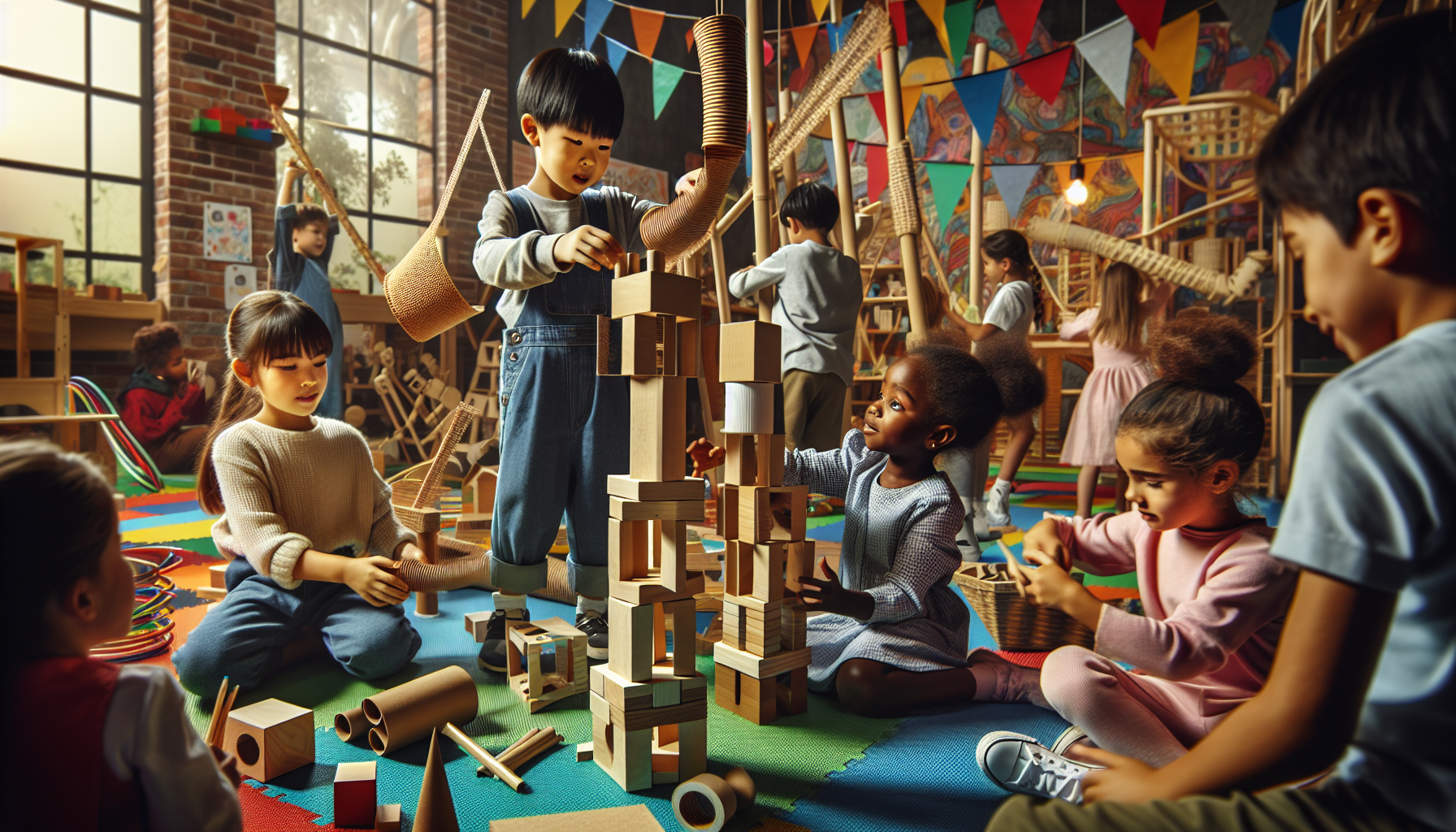
[Image placeholder: Child focused on building a tall tower from blocks]
Why Building Activities Matter
Engineering mindset:
Building teaches trial and error. Structures fall, and kids rebuild—developing persistence and problem-solving skills.
Spatial awareness:
Understanding how shapes fit together, what provides stability, and how to balance develops critical spatial reasoning.
Math concepts:
Building naturally introduces measurement, symmetry, patterns, and basic geometry.
Fine motor development:
Handling small pieces, stacking precisely, and connecting materials strengthens hand muscles and coordination.
Creativity:
Open-ended building has no right answer—just endless possibilities to explore.
Building Activities by Age
Ages 2-3: Stacking and Basic Building
Simple Block Towers
Stack blocks as high as possible. Celebrate the crash! Rebuild.
Skills: Balance, cause and effect, fine motor
Cardboard Box Building
Collect boxes of various sizes. Stack, nest, and arrange.
Skills: Size comparison, balance, creativity
Duplo Free Play
Large interlocking blocks perfect for little hands.
Skills: Connection, basic engineering, creativity
Ages 4-5: Guided Building
Building by Picture
Provide a simple photo or drawing. Challenge them to recreate it.
Skills: Visual interpretation, planning, sequencing
Playdough and Sticks
Use playdough as connectors, sticks or straws as beams.
Skills: 3D construction, structural thinking
Cup Stacking Challenges
How high can you stack plastic cups? Can you build a pyramid?
Skills: Balance, symmetry, patience
Ages 6-8: Engineering Challenges
Building with Constraints
“Build the tallest tower using only 10 blocks” or “Make a bridge using only paper.”
Skills: Working within limits, creative problem-solving
Weight-Bearing Structures
Build a structure, then test how much weight it can hold before failing.
Skills: Structural engineering concepts, hypothesis testing
Recreate Landmarks
Look at pictures of famous structures. Try to build simplified versions.
Skills: Observation, planning, scaled construction
Related: STEM Activities for Preschoolers
Building Challenges
Tower Challenges
Tallest Tower
Goal: Build the tallest freestanding tower possible
Materials: Blocks, Legos, or other building materials
Variations: Time limit, limited pieces, specific materials only
Earthquake Tower
Goal: Build a tower that survives shaking
Test: Place on tray and gently shake. Which design lasts longest?
One-Minute Tower
Goal: Build the tallest tower in 60 seconds
Learning: Speed vs. stability trade-offs
Bridge Challenges
Paper Bridge
Goal: Create a bridge from paper that spans a gap between two books
Test: How many pennies can it hold before collapsing?
Materials: Paper, tape (optional)
Popsicle Stick Bridge
Goal: Build a bridge using popsicle sticks and glue
Test: Weight capacity
Learning: Truss designs, weight distribution
Spaghetti Bridge
Goal: Build a bridge using dry spaghetti and marshmallows
Challenge: Span at least 6 inches, hold a small toy
[Image placeholder: Child testing weight on popsicle stick bridge]
House and Shelter Challenges
Three Little Pigs
Goal: Build three houses—straw (paper), sticks, bricks (blocks)
Test: Blow on each. Which survives?
Learning: Material properties, structural integrity
Earthquake-Proof House
Goal: Build a structure that protects a small toy figure during shaking
Test: Shake the surface and check if toy survives
Tiny House
Goal: Build a house for a specific toy (Lego figure, small animal)
Requirements: Must have roof, door, and fit the toy inside
Marble Run Challenges
Cardboard Tube Run
Goal: Create a path for a marble using toilet paper tubes
Materials: Tubes, tape, wall or cardboard backing
Challenge: Longest run time
Ramp Engineering
Goal: Design a ramp system where marble reaches a target
Learning: Angles, gravity, momentum
Miscellaneous Challenges
Cup Tower House
Goal: Build a structure entirely from plastic cups that you can sit inside
Skills: Large-scale engineering, planning
Magnetic Tile Creations
Goal: Free-build or follow pattern cards with magnetic building tiles
Skills: 3D visualization, geometry
Foam Block City
Goal: Create an entire city with different buildings, roads, and spaces
Skills: Urban planning concepts, creativity
Building Materials to Have on Hand
Classic Building Toys
- Wooden blocks: Timeless, open-ended
- LEGO/Duplo: Precise connection, endless possibilities
- Magna-Tiles: Magnetic, satisfying connection
- Lincoln Logs: Classic cabin building
- K’nex: Connection-based engineering
Household Materials
- Cardboard boxes: Free and versatile
- Toilet paper/paper towel tubes: Towers, marble runs
- Popsicle sticks: Bridges, structures
- Paper/cardstock: Folding, rolling, cutting
- Plastic cups: Stacking, towers
- Straws: Connectors with tape or playdough
- Egg cartons: Modular building base
Connectors
- Playdough: Soft, forgiving connector
- Marshmallows: Works with toothpicks and spaghetti
- Tape: Masking tape works best with paper
- Rubber bands: For bundling materials
- Paper clips: For connecting paper pieces
Related: Kitchen Science Experiments
Tips for Successful Building Play
For Parents
Resist the urge to fix it. Let towers fall. Let designs fail. That’s where learning happens.
Ask questions, don’t give answers. “What do you think would make it stronger?” rather than “Put that piece there.”
Celebrate process over product. The thinking and trying matters more than the final result.
Build alongside them. Model persistence, experimentation, and the joy of creating.
For Kids
It’s okay to fail. Real engineers test and fail many times before success.
Try different ways. If one approach doesn’t work, try another.
Take breaks. Walk away and come back with fresh eyes.
Observe and learn. Look at how buildings, bridges, and structures work in the real world.
Setting Up for Success
Dedicated space: A table or floor area where projects can stay in progress
Visible storage: Materials kids can see and access independently
Enough time: Building play needs unhurried time to unfold
Low pressure: No assignment to complete, just invitation to explore
FAQ
My child gets frustrated when towers fall. How do I help?
Normalize failure: “All towers fall eventually! That’s how we learn what makes them stronger.” Build together and model calm responses to falling structures.
What if they just knock things down instead of building?
Knocking down is developmentally appropriate, especially for young toddlers! Provide separate “knock down” materials (foam blocks, pillows) and building materials for constructing.
How do I challenge older kids who’ve outgrown basic building?
Add constraints (limited pieces, specific goals), introduce engineering challenges with testing components, or try new materials that require different techniques.
Are building toys better than household materials?
Both have value! Quality building toys offer precision and endless configurations. Household materials encourage creativity and are more “real world.” A mix is ideal.
My child only follows instructions (like LEGO sets). Is that bad?
Instruction-following builds important skills! But also encourage free-building time alongside kit building. Try “now build something using those same pieces without instructions.”
Conclusion
Building and construction activities develop crucial skills—engineering thinking, spatial awareness, persistence, and creativity—while providing deep satisfaction and endless fun.
Set out materials, offer challenges, and let your child build. Towers will rise and fall. Bridges will be tested. Designs will evolve. And through it all, your little engineer will be learning powerful lessons about how the world works.
Now… what will they build today?
Related: Fine Motor Activities for Toddlers