Outdoor Nature Activities for Kids: 25 Ways to Explore and Learn Outside
This guide provides 25 outdoor nature activities to help your kids explore and learn, showing you how to boost their physical health, attention, and emotional well-being through intentional outdoor play in any setting.
- Understand the vital physical, mental, and emotional benefits of outdoor play for your child.
- Discover 25 easy outdoor nature activities you can do with your kids anywhere, even without a yard.
- Focus on intentional engagement to transform simple outdoor time into genuine adventure and learning.
- Manage expectations: start small, follow your child's interests, and embrace mess as a sign of success.
- Equip your family with basic gear like layers, water, and a magnifying glass for enhanced exploration.
This post contains affiliate links. As an Amazon Associate I earn from qualifying purchases.
The average American child spends 4-7 minutes a day in unstructured outdoor play. Meanwhile, they’re logging 4-7 hours of screen time. These numbers aren’t just concerning—they represent a fundamental shift in childhood that’s affecting everything from physical health to attention spans to emotional well-being.
Here’s the good news: getting kids outside doesn’t require hiking gear, expensive equipment, or living near wilderness. The nature connection children crave is available in your backyard, local park, or even a patch of grass between buildings. The key isn’t exotic locations—it’s intentional engagement.
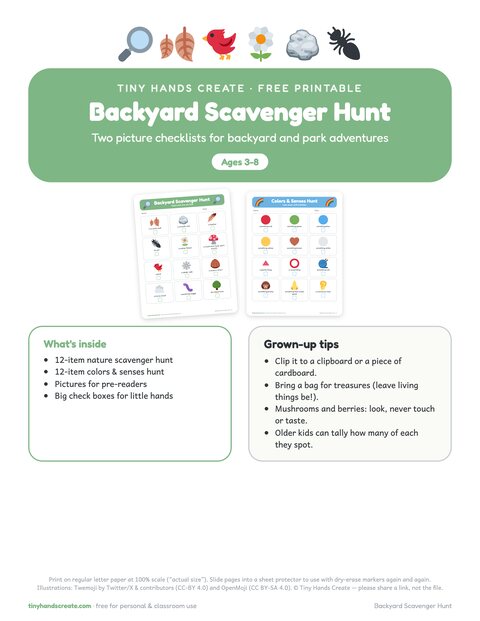
Free printable · 3 pages
Backyard Scavenger Hunt
Two picture checklists: a nature hunt and a colors-and-senses hunt.
Free. Your download link appears right here. You'll also join the Daily Printable Drop. Unsubscribe anytime. Privacy
This guide contains 25 outdoor nature activities that transform “go play outside” into genuine adventure, learning, and connection. Whether you have five minutes or five hours, a sprawling yard or a tiny balcony, there’s something here for your family.
In this article (6 sections)
The Case for Getting Kids Outside
Before diving into activities, let’s understand why nature matters so much for children.
Physical Benefits
Movement and motor development:
- Uneven terrain builds balance and coordination
- Climbing strengthens muscles and spatial awareness
- Running on grass versus pavement reduces joint impact
- Natural play burns more calories than structured exercise
Immune system support:
- Exposure to diverse microbes strengthens immunity
- Sunlight provides essential Vitamin D
- Fresh air reduces transmission of respiratory illnesses
- Natural environments lower cortisol and inflammation
Mental and Emotional Benefits
Attention restoration:
Research shows that time in nature reduces ADHD symptoms, improves focus, and restores mental fatigue. Green spaces literally help brains recover from overstimulation.
Stress reduction:
Nature exposure lowers cortisol levels, reduces anxiety, and improves mood in both children and adults. Even 20 minutes in a natural setting makes measurable differences.
Creativity boost:
Unstructured outdoor play stimulates imagination in ways screens cannot. Natural materials become infinite possibilities.
Social and Educational Benefits
Risk assessment skills:
Climbing trees and balancing on logs teaches children to assess and manage appropriate risk—skills that transfer to other life situations.
Environmental stewardship:
Children who connect with nature become adults who protect it. Early experiences build lifelong environmental values.
Scientific thinking:
Nature is a living laboratory. Observation, questioning, and experimentation happen naturally outdoors.
Setting Up for Outdoor Success
Managing Expectations
For you:
- Nature play looks different from structured activities
- Children might not engage how you expect
- Weather discomfort is usually temporary
- The goal is connection and exploration, not achievement
For your children:
- Start small if they’re used to indoor play
- Follow their interests rather than directing
- Accept mess and dirty clothes as success indicators
- Allow unstructured time alongside guided activities
Essential Outdoor Gear
For any weather:
- Weather-appropriate clothing (layers are key)
- Closed-toe shoes for protection
- Sunscreen and hats for sunny days
- Water bottles
For exploration:
- Magnifying glass
- Small bucket or bag for collecting
- Field guides or nature identification apps
- Notebook and pencil for observations
For extended adventures:
- First aid kit
- Snacks
- Extra clothing layers
- Bug spray (natural options available)
Finding Nature Near You
If you have a yard:
- You have more nature than you realize
- Insects, birds, plants, and soil ecosystems await
- Even “boring” yards host complex ecological communities
If you don’t have a yard:
- Local parks (even small ones)
- Schoolyard playgrounds after hours
- Community gardens
- Urban nature pockets (vacant lots, tree-lined streets)
- Balcony container gardens
Going further:
- Nature preserves
- State and national parks
- Beaches and waterways
- Hiking trails
25 Outdoor Nature Activities
Exploration and Discovery Activities
1. Nature Scavenger Hunt
Setup:
Create a list of items to find: something rough, something smooth, something red, something that makes noise, animal evidence, three different leaf shapes.
How to do it:
Head outside with your list. Check off items as you find them. Take photos or collect (ethically) when appropriate.
Learning opportunities:
- Observation skills
- Classification and categorization
- Vocabulary development
- Ecological awareness
Variations:
- Photo scavenger hunt (leave nature, take pictures)
- Seasonal scavenger hunts (spring flowers, fall colors)
- Alphabet hunt (find something for each letter)
- Senses hunt (something you can hear, smell, see, touch)
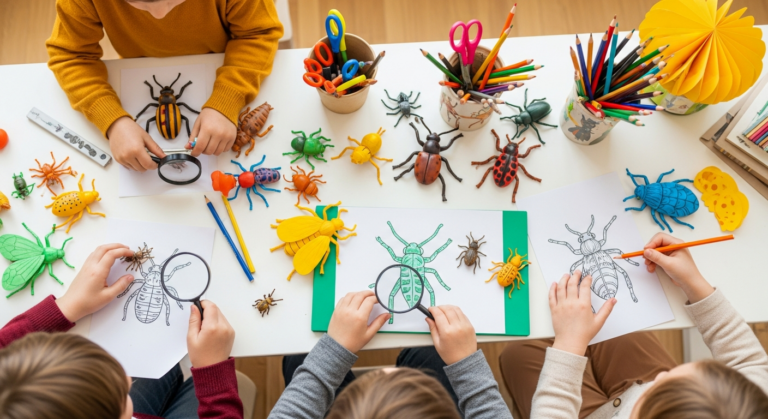
2. Bug Safari
What you need:
- Magnifying glass
- Clear container for temporary observation
- Bug identification guide or app
How to do it:
Turn over rocks, look under leaves, examine tree bark, search in grass. When you find insects, observe without harming. Identify if possible, then release.
Key rules:
- Look, don’t squish
- Return insects to where you found them
- Replace rocks and logs as they were
- Wash hands after
Learning opportunities:
- Insect life cycles
- Habitats and adaptations
- Respectful observation
- Overcoming fear of bugs
3. Bird Watching Basics
What you need:
- Bird identification book or app
- Optional: binoculars
- Patience and quiet voices
How to do it:
Find a comfortable spot with visible birds. Sit quietly and watch. Notice colors, sizes, behaviors, and sounds. Try to identify species.
Starter observations:
- What color is the bird?
- Is it larger or smaller than a robin?
- What is it doing? (eating, singing, building)
- Where is it? (ground, bush, tree)
Learning opportunities:
- Patience and stillness
- Scientific observation
- Habitat awareness
- Migration patterns (seasonal)
4. Cloud Gazing
What you need:
- A blanket
- A day with clouds
- Imagination
How to do it:
Lie on your backs and watch the sky. Name shapes you see in clouds. Learn to identify cloud types: fluffy cumulus, wispy cirrus, flat stratus.
Extension activities:
- Draw the clouds you see
- Predict weather based on cloud types
- Time how fast clouds move
- Create stories about cloud shapes
Learning opportunities:
- Meteorology basics
- Imagination and creativity
- Relaxation and mindfulness
- Vocabulary development
5. Nature Detective Walk
What you need:
- Observation skills
- Optional: notebook and pencil
How to do it:
Walk slowly and look for evidence of animals: tracks, scat, feathers, chewed leaves, spider webs, nests, burrows. Try to identify who left the evidence.
Questions to ask:
- What animal might have made this?
- What were they doing here?
- How long ago do you think they were here?
- What might they eat? Where might they sleep?
Learning opportunities:
- Deductive reasoning
- Animal behavior
- Ecosystem understanding
- Track and sign identification
Creative Nature Activities
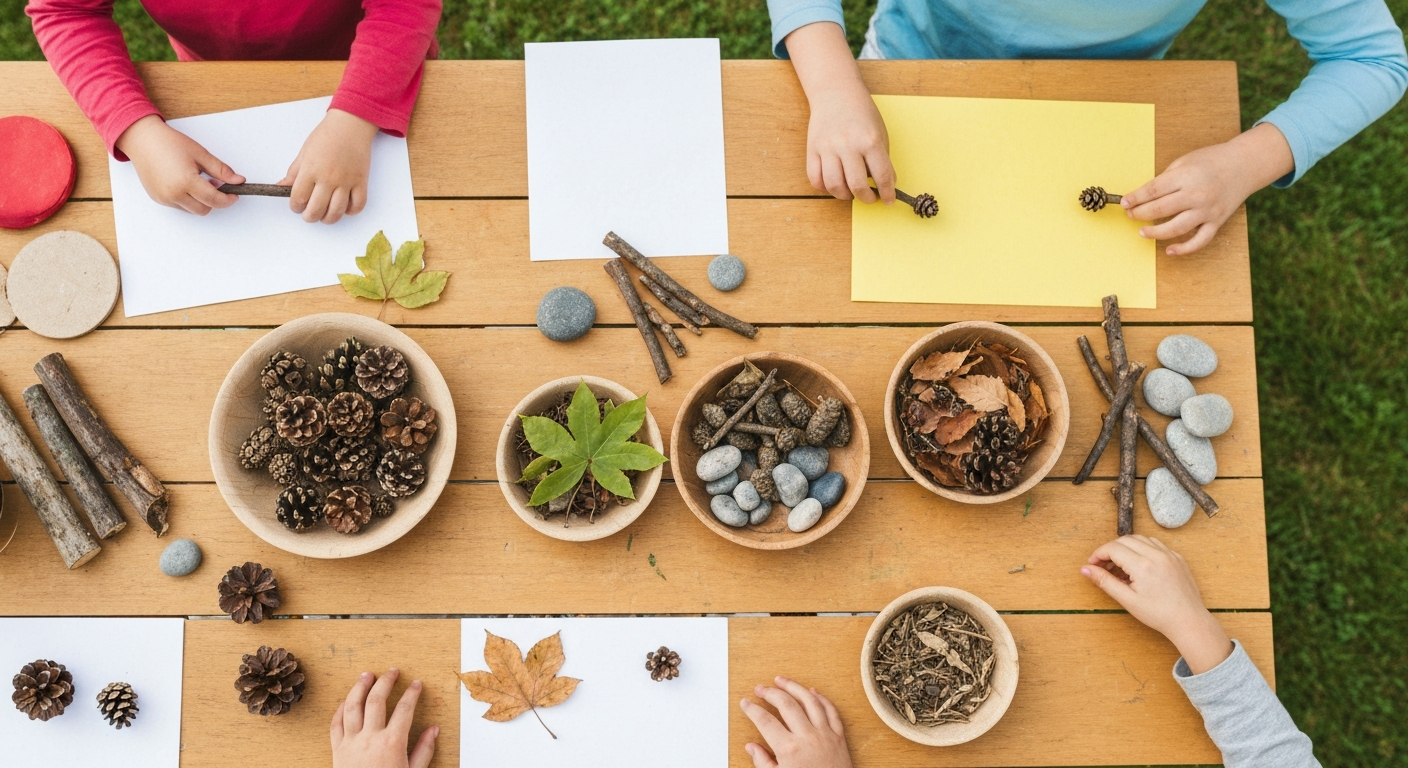
6. Nature Art and Mandalas
What you need:
- Collected natural materials: leaves, sticks, stones, petals, seeds
- A flat surface to work on
How to do it:
Arrange found items into patterns, pictures, or circular mandala designs. Create, photograph, and leave for others to discover or let nature reclaim.
Why it works:
- Process-focused creativity
- Pattern recognition
- No materials to buy or clean up
- Impermanence teaches non-attachment
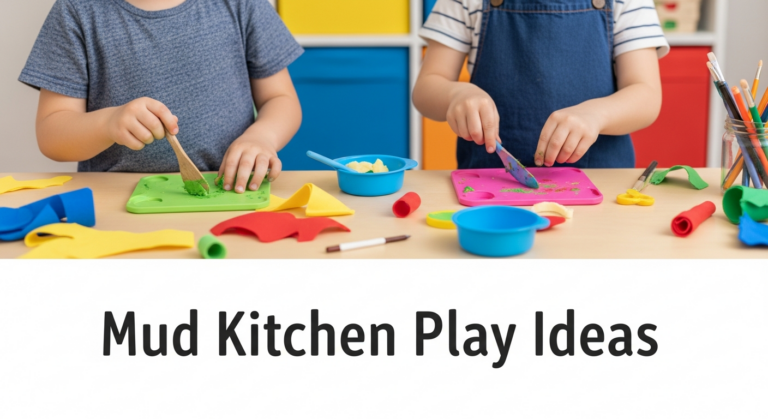
7. Mud Kitchen
What you need:
- A dirt area
- Water source
- Old pots, pans, utensils
- Optional: herbs, petals, grass for “ingredients”
How to do it:
Set up outdoor “kitchen” area. Children create mud pies, soups, cakes, and other creations. Add water to change consistency. “Serve” creations.
Learning opportunities:
- Sensory exploration
- Imaginative play
- Early chemistry (mixing, consistency)
- Fine motor skills
Tips:
- Designate “mud clothes”
- Rinse off with hose before going inside
- Change water in containers daily to prevent mosquitoes
8. Stick Construction
What you need:
- Sticks and branches of various sizes
- String, yarn, or rubber bands (optional)
- Natural connectors: mud, grass, long leaves
How to do it:
Build structures: forts, teepees, dens, bridges, towers. Start simple and increase complexity as skills build.
Progression:
- Leaning sticks against tree (simple)
- Teepee structure (medium)
- Woven stick walls (advanced)
- A-frame shelter (challenging)
Learning opportunities:
- Engineering concepts
- Problem-solving
- Persistence and patience
- Cooperation (group builds)
9. Nature Paintbrushes
What you need:
- Natural items: pine needles, leaves, feathers, grass bundles, flower heads
- Rubber bands or string to attach to stick handles
- Paint and paper
How to do it:
Create brushes from natural materials. Use them to paint and see what different textures create.
Learning opportunities:
- Creative tool-making
- Texture exploration
- Nature appreciation
- Artistic experimentation
10. Natural Dye Exploration
What you need:
- Natural materials: berries, beets, turmeric, onion skins, grass
- White fabric or paper
- Bowls and water
- Adult supervision for boiling (optional for stronger dyes)
How to do it:
Crush and soak materials to extract color. Dip fabric or paper. Observe which items create which colors.
Learning opportunities:
- Chemistry basics
- Traditional craft techniques
- Color theory
- Where pigments come from
Active Outdoor Activities
11. Nature Obstacle Course
What you need:
- Natural environment with variety
- Clear boundaries
- Creativity
How to do it:
Use nature as an obstacle course: balance on this log, jump over that puddle, crawl under those branches, hop between these rocks, touch that tree and run back.
Design tips:
- Include balancing, jumping, crawling, climbing
- Match difficulty to child’s abilities
- Create challenges they can achieve with effort
- Change the course to keep it fresh
Learning opportunities:
- Gross motor development
- Risk assessment
- Body awareness
- Spatial navigation
12. Hide and Seek (Nature Edition)
What you need:
- Outdoor area with hiding spots
- Clear boundaries
- Multiple players
How to do it:
Play classic hide and seek using natural hiding spots: behind trees, in bushes, under playground equipment. Set clear boundaries for safety.
Variations:
- Sardines (one person hides, everyone seeks, finders join the hider)
- Camouflage (hiders try to blend into environment)
- Tracking (seeker must follow trail hider leaves)
Learning opportunities:
- Spatial awareness
- Problem-solving
- Patience
- Observation skills
13. Barefoot Exploration
What you need:
- Safe area free of sharp objects
- Various natural surfaces: grass, sand, smooth rocks, mud
How to do it:
Remove shoes and walk slowly across different surfaces. Notice how each feels. Which is coolest? Warmest? Softest? Bumpiest?
Safety first:
- Check area for glass, thorns, or sharp rocks
- Supervise closely
- Start with obviously safe surfaces
- Wash feet thoroughly after
Learning opportunities:
- Sensory integration
- Mindfulness and body awareness
- Grounding and calm
- Vocabulary development (texture words)
14. Shadow Play
What you need:
- Sunny day
- Open space
- Your bodies
How to do it:
Notice your shadows. Make them big, small, funny shapes. Try to step on each other’s shadows. Create shadow monsters. Trace shadows with chalk on pavement.
Science extension:
- Observe shadows at different times of day
- Mark shadow position hourly to track sun movement
- Learn why shadows change size and direction
Learning opportunities:
- Light and shadow concepts
- Movement and creativity
- Scientific observation
- Spatial awareness
15. Outdoor Yoga
What you need:
- Comfortable outdoor space
- Optional: yoga mat or blanket
How to do it:
Practice nature-themed yoga poses: tree pose, frog pose, butterfly pose, flower pose. Breathe fresh air. Listen to nature sounds.
Kid-friendly poses:
- Tree (balance on one foot, arms overhead)
- Butterfly (seated, soles together, knees out)
- Frog (squat with hands between feet)
- Snake (lying down, pushing chest up)
- Flower (seated, balanced on bottom, legs and arms up like petals)
Learning opportunities:
- Body awareness
- Balance and flexibility
- Mindfulness
- Nature connection
Scientific Nature Activities
16. Backyard Weather Station
What you need:
- Simple weather tools (rain gauge, thermometer, wind indicator)
- Weather journal
- Consistent observation times
How to do it:
Check and record weather observations daily: temperature, precipitation, cloud cover, wind. Note changes and patterns over time.
DIY tools:
- Rain gauge: clear container with ruler measurements
- Wind direction: pinwheel or ribbon on stick
- Wind speed: describe as calm, light, moderate, strong
Learning opportunities:
- Data collection and recording
- Pattern recognition
- Meteorology basics
- Scientific method introduction
17. Water Exploration
What you need:
- Safe water source: puddles, streams, buckets, or hose
- Containers of various sizes
- Natural objects to float or sink
How to do it:
Explore water properties. Pour between containers. Float leaves and sticks. Test what sinks and what floats. Make leaf boats. Create dams in streams (then dismantle).
Questions to explore:
- Why do some things float?
- Where does water go when it soaks into ground?
- How does water move?
- What lives in water?
Learning opportunities:
- Physics concepts (buoyancy, flow)
- Volume and measurement
- Ecology of water habitats
- Cause and effect
18. Plant Life Cycle Observation
What you need:
- Garden plot, container garden, or wild area
- Seeds to plant (radishes and beans grow fast)
- Journal for recording observations
How to do it:
Plant seeds and observe their growth over time. Document with drawings and measurements. Learn about what plants need.
Observation schedule:
- Daily during sprouting phase
- Every few days during growth
- Weekly for long-term observation
Learning opportunities:
- Plant biology
- Life cycles
- Patience and long-term observation
- Scientific documentation
19. Decomposition Station
What you need:
- Small plot of ground or large container with soil
- Various items: fruit scraps, leaves, cardboard, plastic (to show what doesn’t decompose)
- Observation tools
How to do it:
Bury items at known locations. Check periodically to observe decomposition progress. Notice what breaks down and what doesn’t.
Timeline:
- Check weekly for first month
- Monthly thereafter
- Some items take months; plastic stays indefinitely
Learning opportunities:
- Decomposition process
- Nutrient cycling
- Environmental impact of materials
- Scientific patience
20. Sound Mapping
What you need:
- Paper and pencil
- Quiet outdoor spot
- Ears and patience
How to do it:
Sit quietly with paper. Draw an X in the center (representing yourself). For 5-10 minutes, mark on the paper where sounds come from. Use symbols or words: bird, car, wind, voices.
Reflection questions:
- What sounds were from nature?
- What sounds were human-made?
- Were sounds near or far?
- How did the sounds make you feel?
Learning opportunities:
- Active listening
- Directional awareness
- Sound source identification
- Environmental awareness
Seasonal Nature Activities
21. Fall Leaf Activities
When: Autumn (or whenever leaves fall in your area)
Activities:
- Leaf collection and identification
- Leaf rubbings with crayons
- Leaf pressing in books
- Leaf piles for jumping
- Sorting by color, shape, or size
Learning opportunities:
- Tree identification
- Seasonal changes
- Color and classification
- Fine motor (rubbings)
22. Winter Nature Exploration
When: Cold months
Activities:
- Animal track identification in snow
- Ice experiments (freeze objects, make ice ornaments)
- Winter bird feeding and watching
- Observing how plants and animals prepare for cold
- Frost and icicle observation
Safety note:
- Dress in layers
- Shorter outings in extreme cold
- Watch for signs of discomfort
Learning opportunities:
- Animal adaptations
- States of matter
- Seasonal survival strategies
- Weather patterns
23. Spring Nature Watch
When: Spring
Activities:
- Bird nest observation (from a distance)
- Flower and bud identification
- Tadpole and frog watching
- Bug emergence documentation
- Planting seeds
Learning opportunities:
- Life cycles and reproduction
- Seasonal change
- New growth and development
- Migration patterns
24. Summer Water Play
When: Warm months
Activities:
- Stream and pond exploration
- Water balloon experiments
- Sprinkler play
- Beach or lake investigation
- Water table nature play
Learning opportunities:
- Water properties
- Aquatic habitats
- Temperature regulation
- Physical activity
25. Year-Round Nature Journal
When: All seasons
What you need:
- Bound notebook or sketchbook
- Drawing and writing tools
- Consistent observation times
How to do it:
Regularly record observations through drawings, descriptions, and collections (pressed items). Document the same location across seasons to notice change.
Entry ideas:
- Draw one plant or animal in detail
- List everything you observed today
- Describe the weather and how it felt
- Paste in a pressed leaf or flower
- Write about a question nature raised
Learning opportunities:
- Scientific documentation
- Drawing skills
- Seasonal awareness
- Long-term observation
Making Outdoor Time a Habit
Overcoming Common Barriers
“We don’t have time”
- Start with 10 minutes—it counts
- Combine with existing outdoor needs (walking the dog, waiting at bus stop)
- Nature time often replaces need for other interventions (screen time, conflict resolution)
“The weather is bad”
- “There’s no bad weather, only bad clothing”
- Rain, snow, and wind offer unique experiences
- Save extreme weather days for indoor activities; most days work for outdoor play
“My kids don’t want to go outside”
- Start with their interests (sports, collecting, art)
- Go with them—don’t just send them
- Make it special (bring snacks, invite friends)
- Reduce competing indoor attractions
“I don’t know enough about nature”
- Learn alongside your children
- Use apps and field guides
- Ask questions without knowing answers
- “I don’t know—let’s find out” is a great response
Building Routine
Daily nature goal:
Aim for some outdoor time every day, even if brief. After school, before dinner, weekend mornings—find what works for your family.
Weekly adventure:
Once a week, plan a longer nature outing. Hike, park visit, exploration of new area. Mark it on the calendar.
Seasonal traditions:
Create nature traditions for each season: fall leaf collecting, winter bird counting, spring flower walks, summer creek adventures.
Crafty Mama
Crafty Mama is a former elementary art teacher turned stay-at-home parent who believes every child is creative — they just need the right invitation. She develops age-appropriate activities, crafts, and projects that spark imagination while keeping mess (and parent stress) to a minimum.
Frequently Asked Questions
What if I live in an urban area with little nature?
Urban nature counts. Parks, tree-lined streets, container gardens, bird watching from windows—all connect children to the natural world. Many cities also have nature preserves, botanical gardens, and urban wildlife surprisingly close by.
My child is afraid of bugs/dirt/outdoors. How do I help?
Start small and don’t force. Begin with activities that feel safe (cloud watching, flower looking). Model calm curiosity about insects and dirt. Never mock fears. Gradual exposure with positive experiences builds comfort over time.
How do I keep kids safe outside?
Supervision appropriate to age and environment. Clear boundaries about where they can go. Teach them about hazards (poison ivy, water safety, stranger awareness). Check for ticks after wooded areas. Start with lower-risk activities and build skills.
What age should children start these activities?
Most activities work for children 2 and up with modifications. Toddlers need closer supervision and simpler versions. Elementary age children can do more complex activities with increasing independence. Adapt any activity to your child’s developmental level.
How do I get my kids off screens and outside?
Gradual transition works better than sudden restriction. Introduce outdoor activities that capture similar feelings (adventure, discovery, social connection). Set clear screen limits and fill that time with outdoor options. Make outdoor time appealing rather than framing it as punishment.
Can one parent make a difference if the other isn’t interested?
Absolutely. Even one parent providing regular nature experiences creates lasting impact. Children benefit from whatever connection they get. Model your own love of nature without criticizing your partner’s preferences.
What about allergies?
Check pollen counts on high-symptom days. Time outdoor activities for lower-pollen hours (often morning or after rain). Keep medication available. Work with your allergist for management strategies. Many families find that regular outdoor exposure actually helps reduce symptoms over time.
How do I motivate a reluctant teenager?
Connect outdoor time to their interests (photography, fitness, stress relief). Give them autonomy over the activity. Avoid lecturing about benefits—just offer opportunities. Some teens reconnect through outdoor activities with friends or solo adventures.
The Gift of a Nature-Connected Childhood
In a world of increasing indoor isolation, giving your children outdoor nature experiences is a countercultural act. It’s also one of the most important gifts you can offer.
Children who grow up connected to nature develop differently. They’re calmer, more focused, physically healthier, and emotionally resilient. They understand their place in a larger ecosystem. They have memories of wind, sunshine, mud, and discovery that no screen can replicate.
You don’t need to live in the wilderness. You don’t need extensive knowledge of ecology. You don’t need perfect weather or elaborate equipment.
You just need to go outside.
Start today. Pick one activity from this list. Open the door. Step into whatever nature awaits—backyard, park, or patch of sky between buildings.
The outside is waiting, and your children are ready to explore it.
—