Mess-Free Painting Activities for Toddlers
Discover 10 mess-free painting activities for your toddler (12-36 months), complete with age guidelines, prep times, and safety notes to keep art time clean and fun. You'll also find a free printable pack to help you get started.
- Explore 10 mess-free painting activities for toddlers aged 12 months to 3 years.
- Choose activities based on your child's age, mess tolerance, and prep time.
- Always use non-toxic paint and ensure constant adult supervision for safety.
- Download your free printable pack for activity cards and a tracker.
This post contains affiliate links. As an Amazon Associate I earn from qualifying purchases.
Toddlers love to paint, and parents love clean floors. These mess-free painting activities for toddlers (about 12 months to 3 years) keep the color contained, with a comparison table, step-by-step directions and safety notes for each idea.
Most need things you already own: paper, a bag, a bin. “Mess-free” is relative, so expect the occasional leaky seam or stray handprint. Keep a towel nearby and your floors will be fine.
Free printable · 6 pages
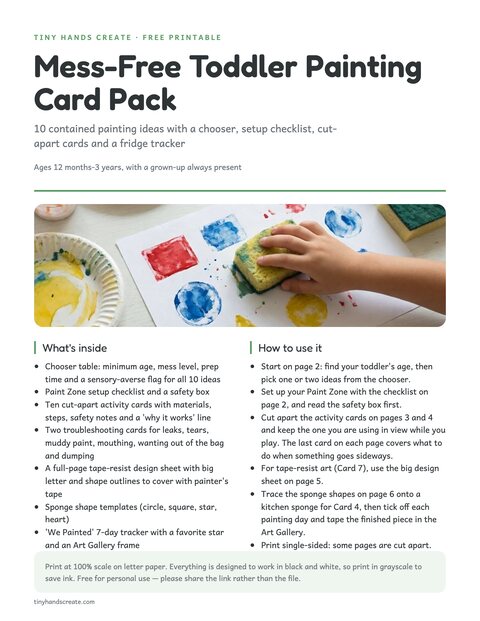
Mess-Free Toddler Painting Card Pack
A chooser table for all 10 mess-free painting ideas, a Paint Zone checklist with safety box, ten cut-apart activity cards with troubleshooting cards, sponge shape templates, a big tape-resist design sheet, and a 7-day 'We Painted' tracker with an Art Gallery frame.
Free. Your download link appears right here. You'll also join the Daily Printable Drop. Unsubscribe anytime. Privacy
Safety firstAges are guidelines, and an adult should be present for every activity. Nothing goes in mouths. Choose paint labeled non-toxic and conforming to ASTM D-4236 (look for the ACMI AP, or Approved Product, seal). If a child swallows a significant amount of paint, call Poison Control at 1-800-222-1222.
In this article (7 sections)
Why Mess-Free Painting Matters
Messy painting has real value, and I’m all for it on a good day. Mess-free earns its place when:
- You’re in a space that can’t get messy
- You have five minutes, not forty-five
- The activity needs to be portable (restaurants, grandma’s house).
Mild sensory preferences are common. These activities offer a gentle way into art without paint on hands. If the aversion is intense or affects eating, dressing or daily life, talk with your child’s pediatrician or an occupational therapist.
Toddler Painting Ideas Without the Mess (10 Activities)
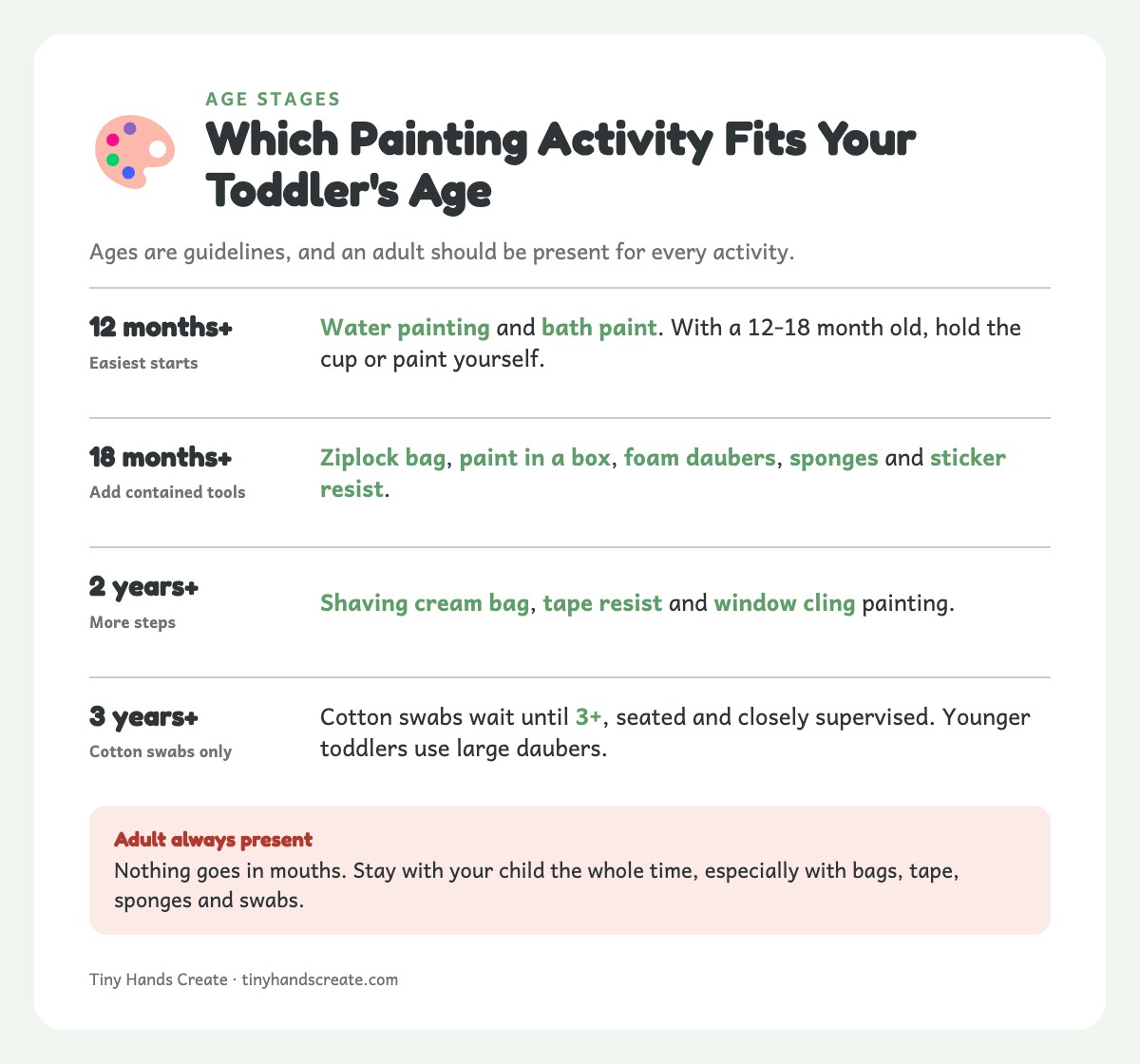
| Activity | Min age | Mess level | Prep time | Supervision | Best for |
|---|---|---|---|---|---|
| 1. Ziplock bag painting | 18 months | Very low (bags can leak) | 5 min | Constant; double-bag | Restaurants, travel |
| 2. Paint in a box | 18 months | Low | 5 min | Close; large ball only | Kids who love rolling and tilting |
| 3. Dauber dot painting | 18 months (cotton swabs 3+) | Low to medium | 5 min | Close; seated only | Toddlers who like to dab |
| 4. Sponge painting | 18 months | Medium | 5 min | Close; large pieces | Texture lovers |
| 5. Shaving cream bag art | 2 years | Very low (bags can leak) | 5 min | Constant; double-bag; skip if still mouthing | Sensory-averse toddlers |
| 6. Water painting | 12 months | Minimal | 2 min | Adult present; away from traffic | Outdoor days, zero prep |
| 7. Tape resist art | 2 years | Medium | 10 min | Close; bin all tape | Rainy days, framing |
| 8. Bath paint | 12 months (check product label) | Low (rinses away) | 5 min | Within arm’s reach | Bath time |
| 9. Window cling painting | 3 years (check label) | Low | 10 min plus drying | Close; closed window, cords out of reach, large shapes only | Window decorating |
| 10. Sticker + watercolor resist | 18 months | Low | 5 min | Close; large stickers | Short attention spans |
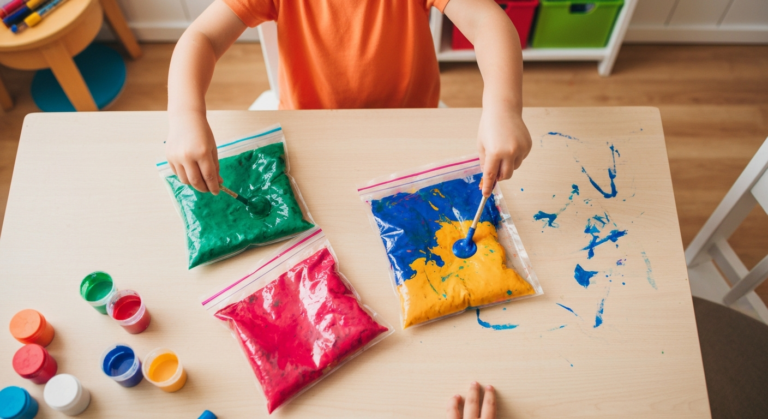
1. Ziplock Bag Painting
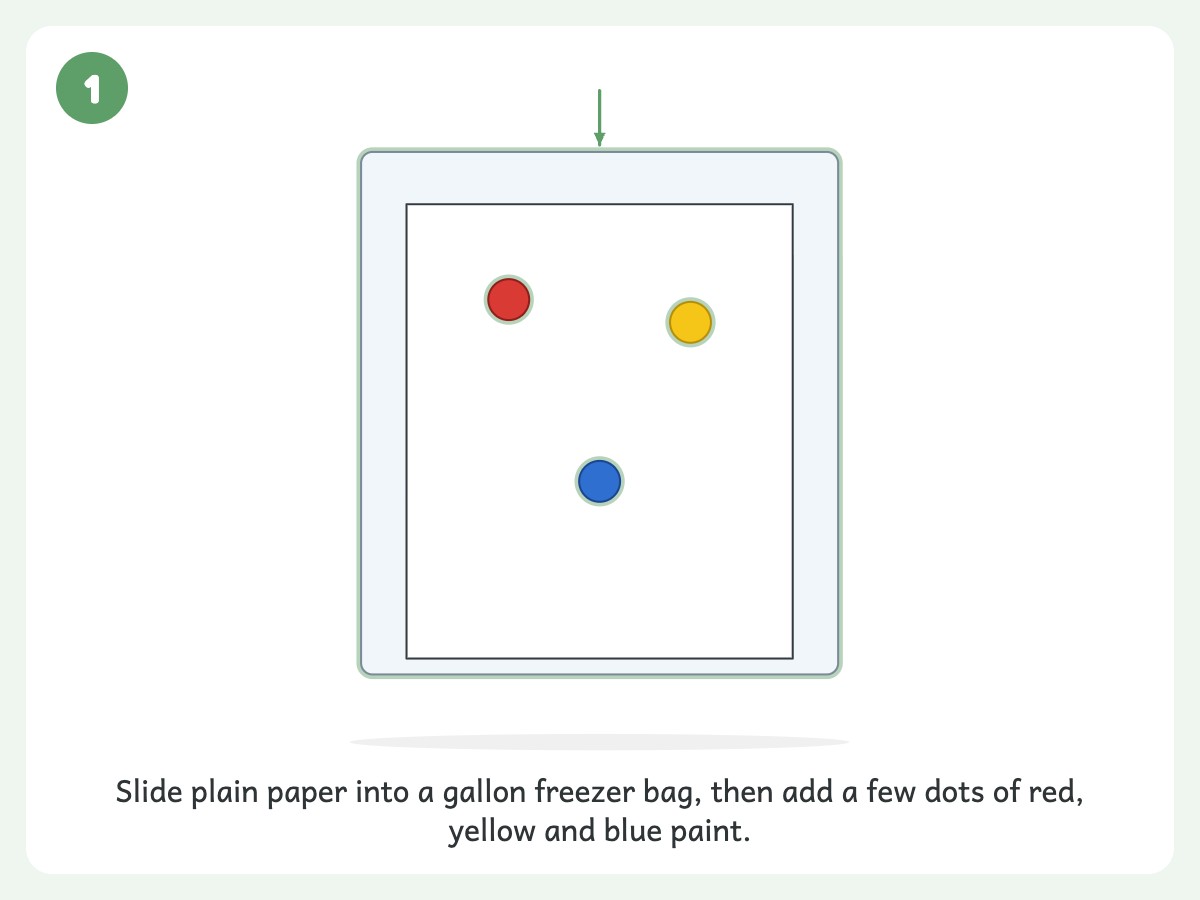
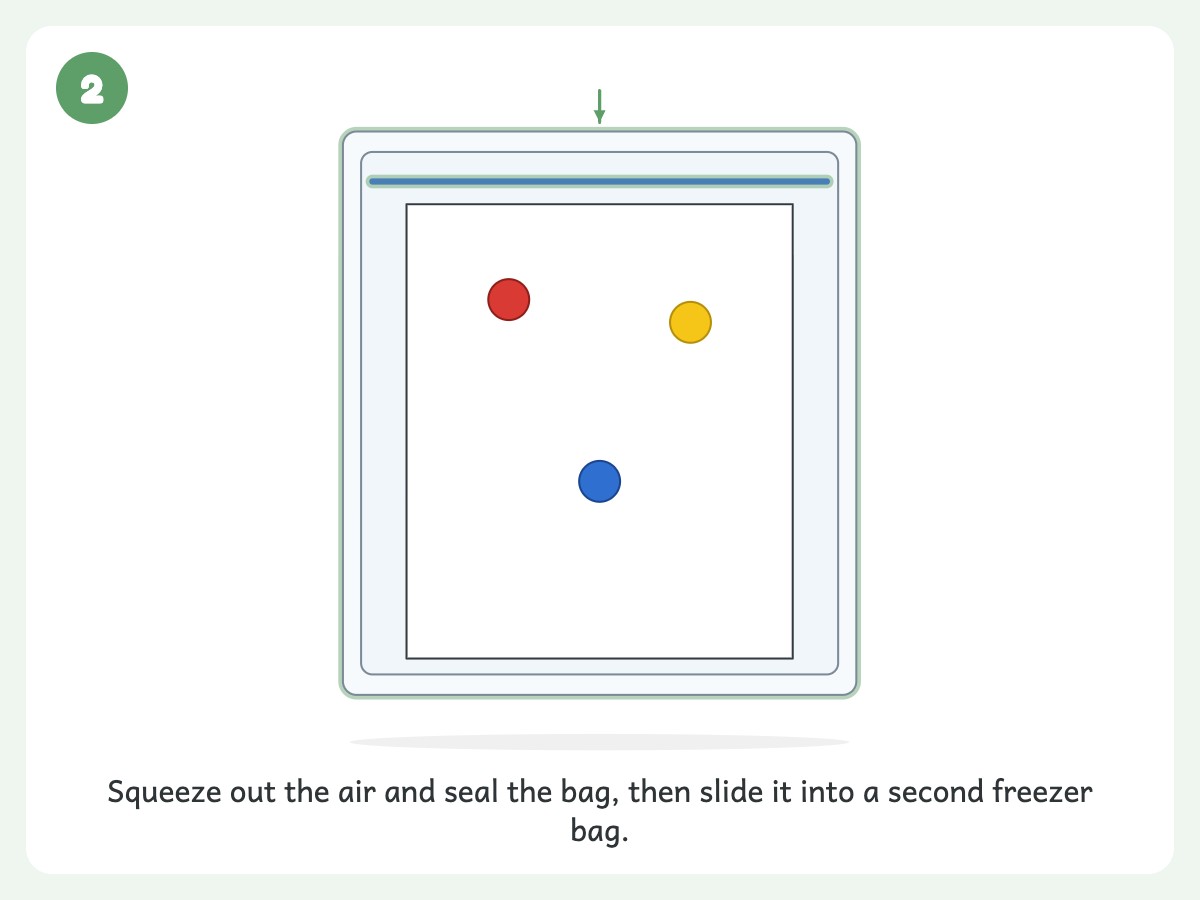
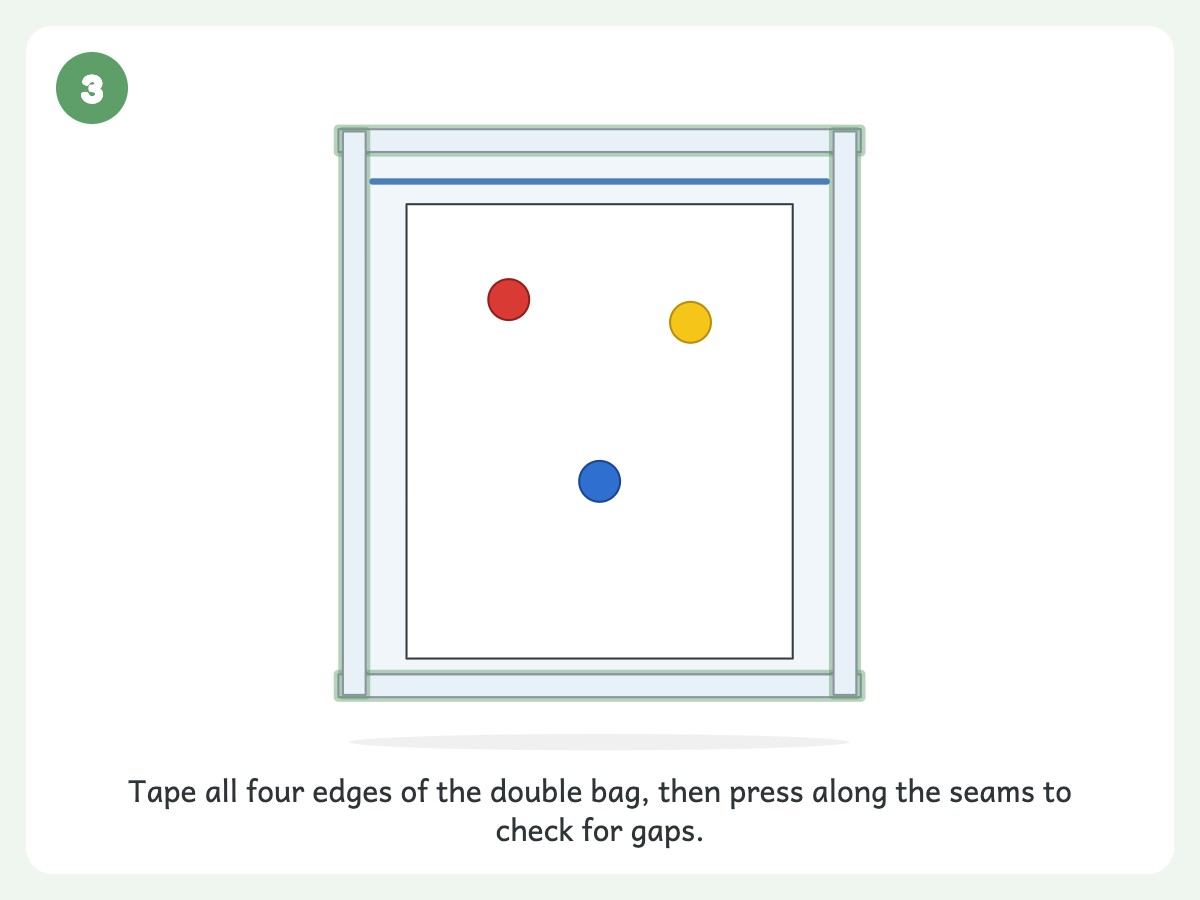
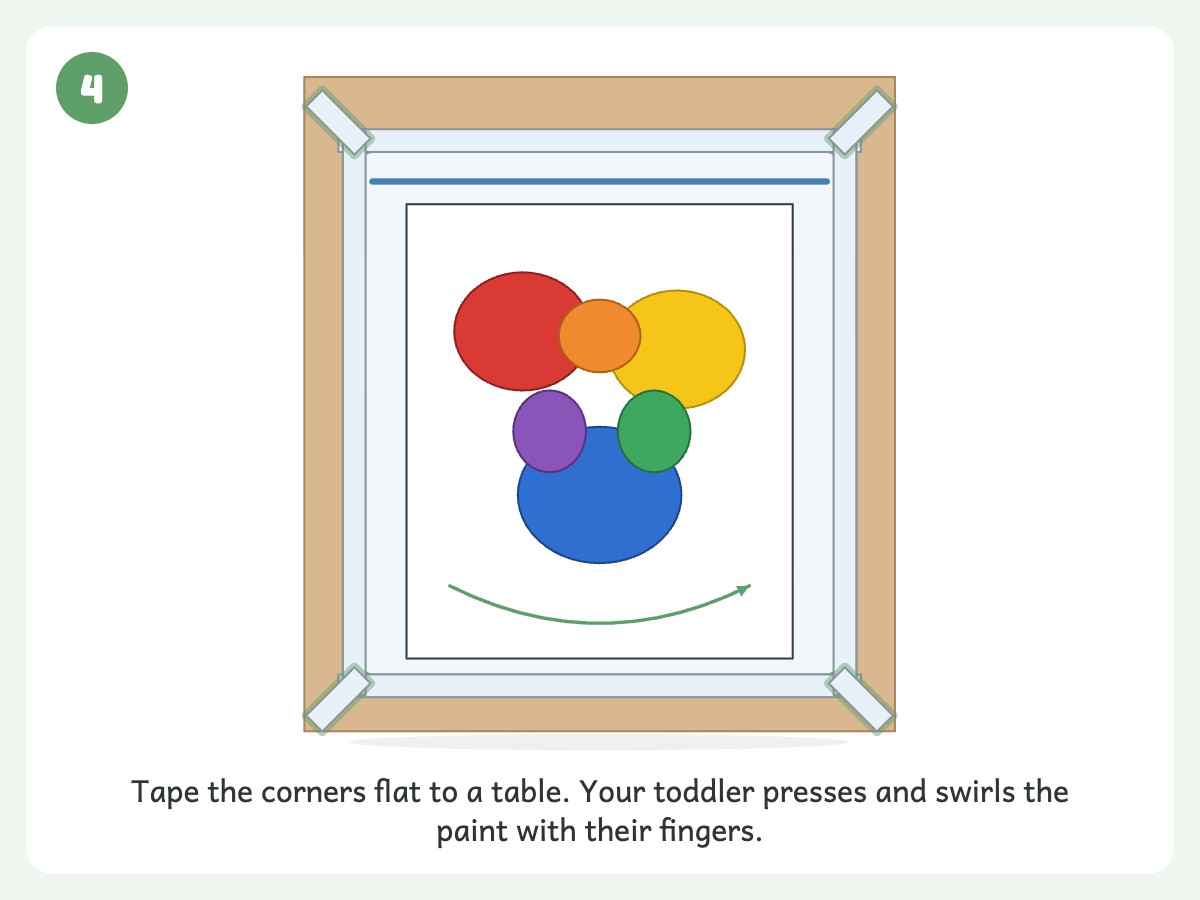
Materials: Two gallon freezer bags, paper, washable non-toxic paint, packing tape
- Load the bag. Slide a sheet of paper into one bag and squirt on a few dots of paint.
- Seal it. Press out the air, seal, then slide it into the second bag.
- Tape all edges. Use packing tape on every edge and check the seal.
- Squish. Check the bag for pinholes before you hand it over. Tape it flat to a table, not a tray your child can pull toward their face, and let your toddler spread the color. Cut off and throw away any torn or peeling tape, and keep scissors, spare tape and torn pieces out of reach.
Why toddlers love it: You get the color mixing and spreading with no paint on hands. Some toddlers lose interest within a few minutes, and that’s normal.
Age range: 18 months+
Safety firstPlastic bags are a suffocation hazard, so stay with your child the whole time. Keep bags away from the face, and never in a crib, car seat or stroller unattended. Never leave a bag with a baby or toddler. Remove the bag the moment play ends, and stop if it splits or your child starts chewing it.
2. Paint in a Box
Materials: Box or storage bin with sides at least 4-6 inches high, paper, washable non-toxic paint, a large ball or toy car
- Line it. Fit paper into the bottom of the bin.
- Add paint. Squirt a few dots on the paper.
- Pick a roller. Use a ball or car too big to fit through a toilet paper tube (about 1.75 in / 4.4 cm).
- Tilt. Let your toddler tilt the bin so the ball rolls through the paint.
Best part: Tall sides keep the paint and the ball in. Hands stay clean and abstract art emerges. Stay close, and keep small items out of reach.
Age range: 18 months+
3. Dot Painting with Foam Daubers (or Cotton Swabs)
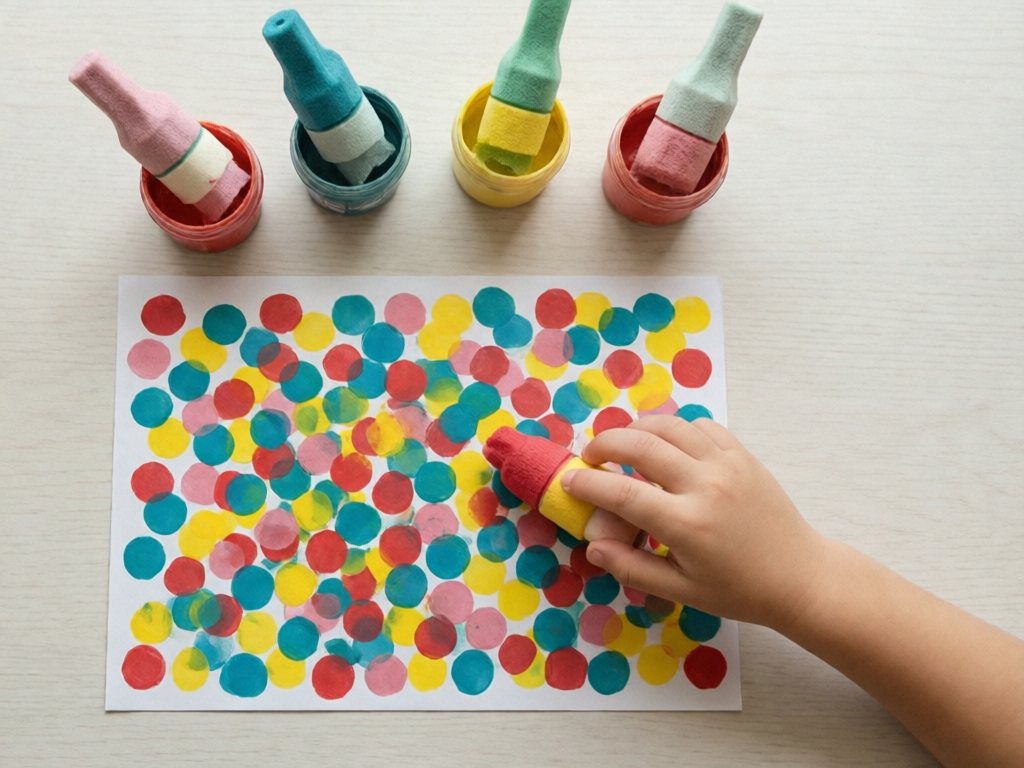
Materials: Large craft daubers or foam-tipped brushes, washable non-toxic paint in small containers, paper
- Set up. Put a little paint in each small container.
- Seat your toddler. Keep them seated for the whole activity.
- Dot. Dip a dauber and make dots or lines. Use a fresh one for each color.
Best part: Daubers are easy to grip and keep the painting controlled, with little hand contact with paint.
Age range: 18 months+ for large daubers or foam brushes; 3+ for cotton swabs
Safety firstCotton swab tips can come off and be choked on, and the sticks can hurt a mouth or eye. Use swabs only with older children, seated and closely supervised. Never let anyone walk or run holding one.
4. Painting with Sponges
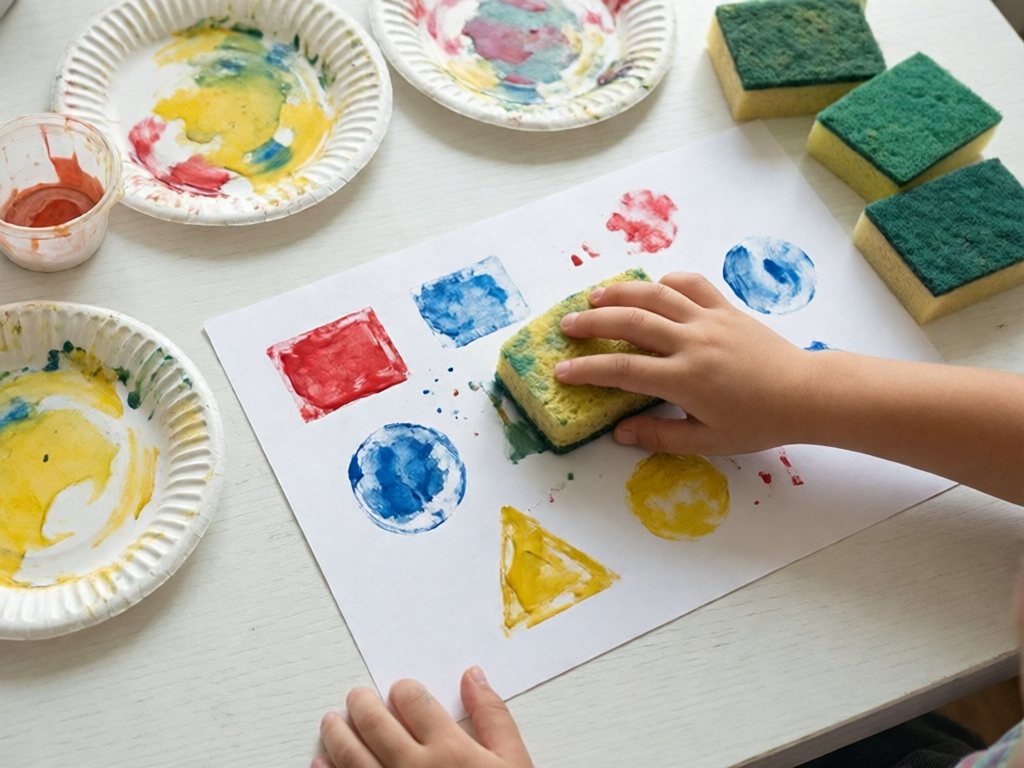
Materials: Large kitchen sponge pieces (clothespin handles are optional), washable non-toxic paint, paper
- Prep the sponges. Cut large pieces and clip a clothespin on for an easy grip if you like.
- Dip. Press a sponge into a shallow dish of paint.
- Stamp. Press it onto paper. The sponge soaks up extra paint, so stamping is less messy than brushing.
Best part: Sponges make fun textures with contained mess.
Watch for: Small bits are a choking hazard, so discard any sponge that tears or crumbles and supervise closely.
Age range: 18 months+
5. Shaving Cream Bag Art
Materials: Two gallon freezer bags, menthol-free, fragrance-free foam shaving cream, a few drops of food coloring, packing tape
- Fill. Squirt a generous handful of foam into one bag.
- Color. Add a few drops of food coloring. It stains, so go easy.
- Double-bag and tape. Seal, slide into the second bag, then tape every seam.
- Swirl. Let your toddler squish and watch the colors mix.
Best part: It’s mesmerizing color mixing with a good sensory squish. Bags can still burst, so keep a towel handy. For more foam play, see our shaving cream sensory activities.
Age range: 2 years+
Safety firstShaving cream is not for mouths or eyes and can irritate skin. Skip this for children who still mouth things or chew bags. Use menthol-free, fragrance-free foam. Supervise constantly, check the seal, and remove the bag when play ends.
If the bag bursts, take it away, wipe hands, and wash any foam off skin with water. If foam gets in an eye, rinse gently with lukewarm running water for several minutes (about 15). Call Poison Control (1-800-222-1222) or your doctor if irritation persists, or if more than a taste is swallowed.
6. Water Painting
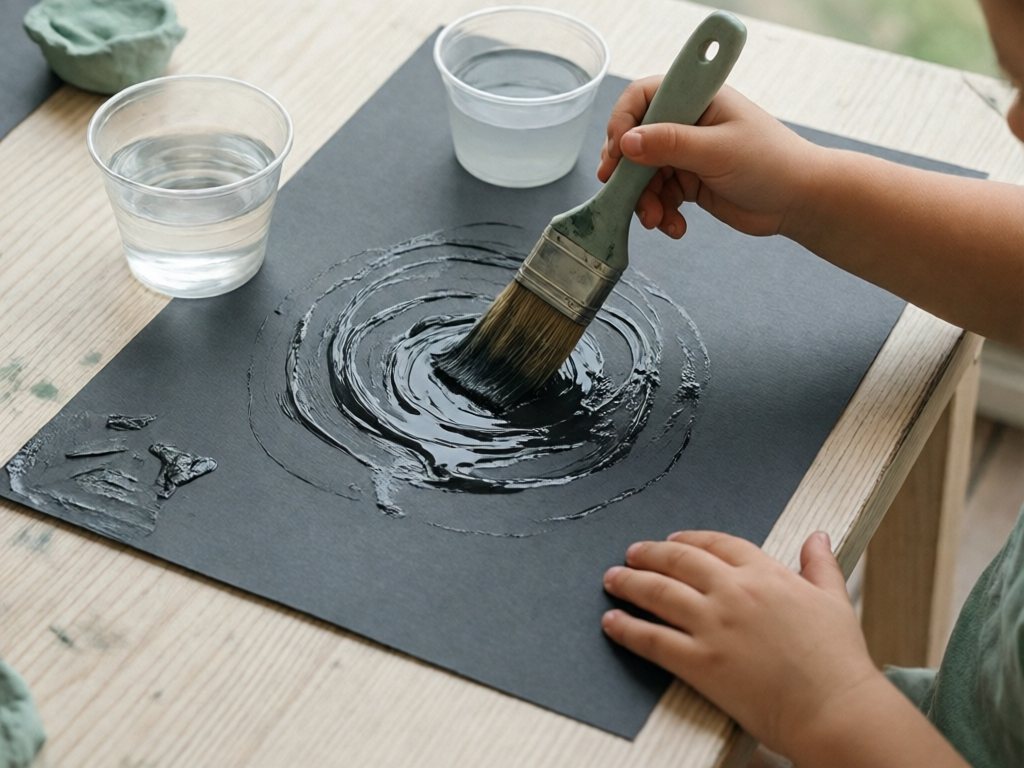
Materials: Cup of water, thick paintbrush, dark heavy cardstock or a fenced patio or sidewalk
- Pick a surface. Use heavy cardstock, which holds up when wet, or a patio or sidewalk away from driveways and streets.
- Paint with water. Let your toddler brush it on.
- Watch it vanish. The dark color shows up, then disappears as it dries.
Why it works: Minimal mess and endless replay value. Water spills happen, but they dry. Stay with your child outdoors, and with a 12-18 month old, hold the cup yourself so the brush is the only thing in their hands.
Age range: 12 months+
7. Tape Resist Art
Materials: Painter’s tape, watercolors or watered-down washable paint, paper, large sponge or wide brush
- Tape the design. Stick tape on the paper in letters, shapes or random lines, and tape the paper down yourself.
- Paint over it. Let your toddler cover everything with a sponge or brush.
- Peel. Pull the tape to reveal the design, and bin all tape pieces right away.
Why it works: The tape limits where paint goes, and the results look impressive. Supervise, since loose tape can end up in mouths.
Age range: 2 years+
8. Bath Paint
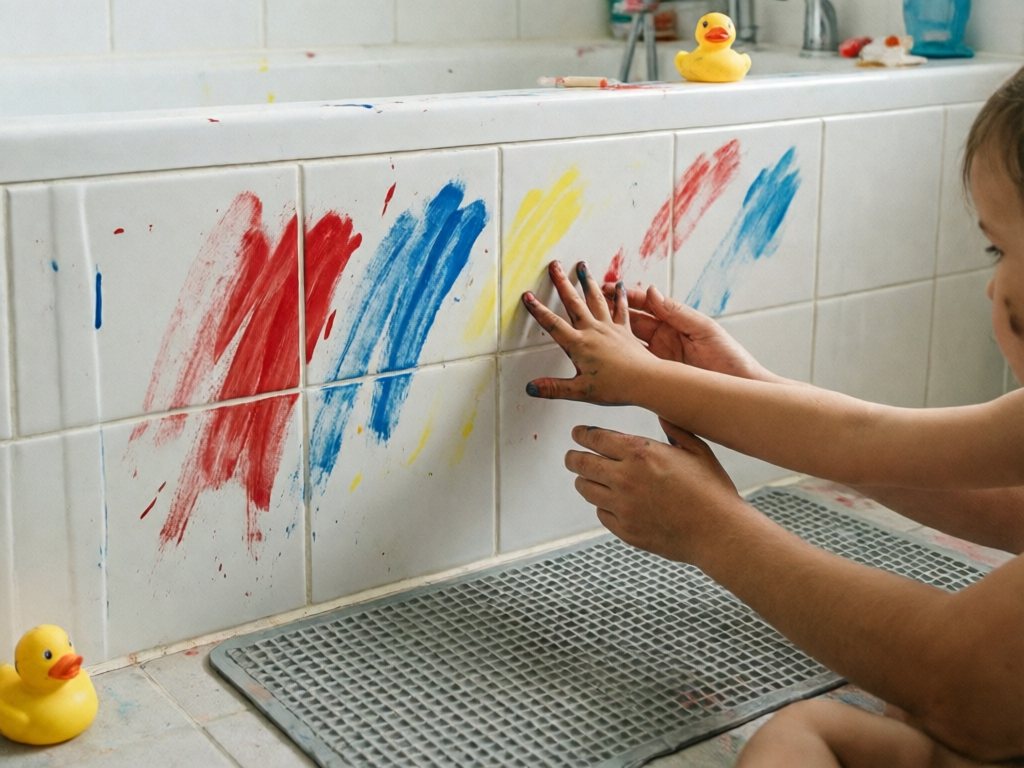
Materials: Bathtub, non-slip mat, commercial bath paint or baby-safe foaming body wash
- Prep the tub. Put a non-slip mat down and patch-test the product on a small patch of skin first.
- Paint the walls. Let your toddler paint the tub walls and bath toys, keeping paint away from eyes and mouth. With a 12-18 month old, hold the paint yourself and hand over a little at a time.
- Rinse. Rinse everything down the drain at the end.
Why it works: The mess is the cleanup, in a space built to get wet and be rinsed.
Age range: 12 months+
Safety firstNever leave a child alone in the bath, even for a moment. Check the product’s age label first, since it overrides this post. If the bath paint is rated older than your child, use plain baby-safe foaming wash instead. Bath paint and body wash are not for mouths and shouldn’t be swallowed, so redirect if either heads that way. Stay within arm’s reach. Be cautious with sensitive or eczema-prone skin, and skip food coloring, which can stain tubs and grout.
9. Window Cling Painting
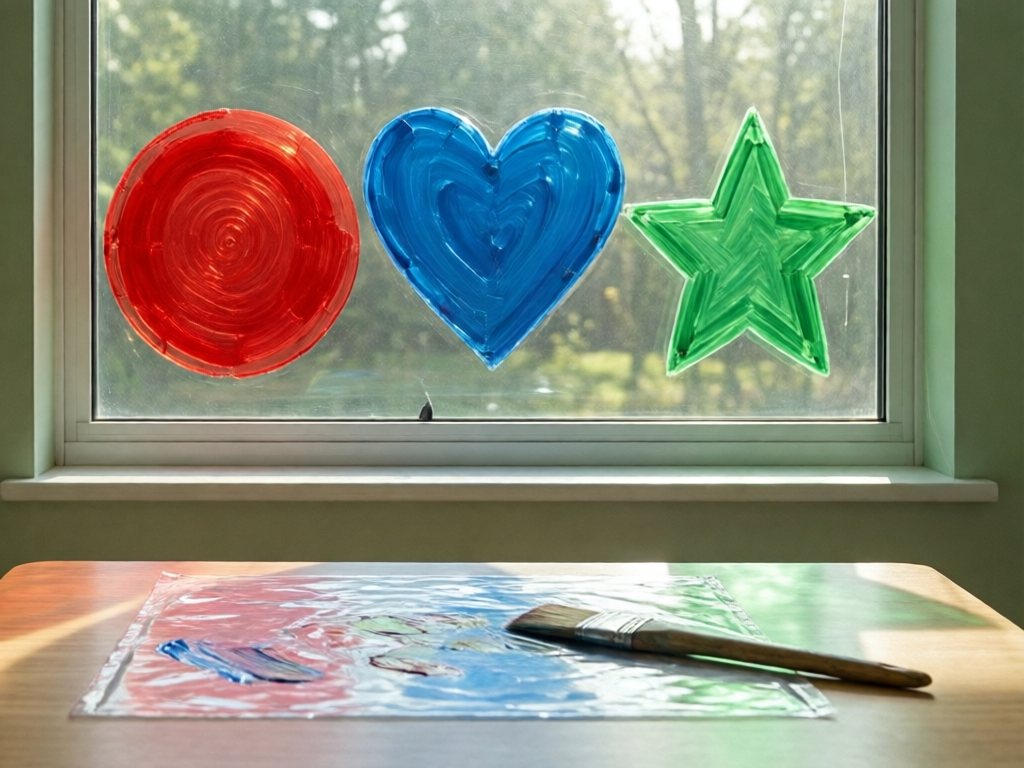
Materials: Window cling paint, a plastic sheet protector or acetate sheet, a paintbrush, a closed window or glass door
- Squeeze. Put window cling paint onto the sheet protector.
- Spread. Let your toddler brush it around.
- Dry. Let it dry as directed on the bottle.
- Peel and stick. Peel off the shapes and press them onto the window.
Why it works: Light shining through makes lovely effects, and the paint stays on the sheet. Supervise the peeled shapes, since small pieces can go in mouths.
Age range: 3 years+ (some products 2+; follow the label)
Safety firstCheck the age on the bottle, since many window cling paints are labeled 3+ and the label overrides this post. Dried shapes are a choking risk, so make each one larger than a toilet paper tube opening (about 1.75 in / 4.4 cm). Skip this activity for children who still mouth things.
Keep cords out of reach, move climbable furniture away, and use a closed window or glass door. Use window stops or guards on any window that opens. Screens do not prevent falls.
10. Sticker + Watercolor Resist
Materials: Large stickers, watercolor paint, paper
- Stick. Let your toddler place stickers on paper in any pattern.
- Paint. Brush watercolors over the whole page.
- Peel. Once dry, peel the stickers off to reveal the shapes.
Why it works: Stickers give little hands a focus, and watercolors are light and wash easily. Use large stickers and supervise so none get mouthed.
Age range: 18 months+
How to Contain Regular Toddler Painting
When you do want traditional painting, these tips cut the mess. Start with this set-up kit. A shower curtain works as well as a splat mat.
- Splat mat or shower curtain
- Muffin tin for paint
- Smock or old t-shirt
- Wet wipes and a damp towel
- Non-toxic washable paint
- Paint at a table or high-chair tray with open paint only (never bags), with your child buckled in and you within arm’s reach. Or go outside when weather permits.
- Offer just 1-2 colors at a time.
- Choose paint labeled non-toxic and conforming to ASTM D-4236 (look for the ACMI AP seal). Washable does not mean edible, so avoid adult-grade acrylic and craft paints.
- Plan to go straight to the bath if needed, and wash paint off skin afterward.
Benefits of Process Art for Toddlers
Good to knowPainting teaches cause and effect (“I move this, and this happens!”). Sealed-bag ideas offer less gripping practice, so mix in brushes and sponges. For more, see our guide to process art for toddlers.
Setting Up for Success
Here’s what usually goes wrong: a bag leaks, or your toddler is done within a few minutes. Expect short attention spans and call it a win either way.
TipKeep a towel under the bag. Keep a second roll of tape for leaks with you, out of your child’s reach. Offer just one or two activities, since too many choices overwhelms toddlers.
Crafty Mama
Crafty Mama is a former elementary art teacher turned stay-at-home parent who believes every child is creative — they just need the right invitation. She develops age-appropriate activities, crafts, and projects that spark imagination while keeping mess (and parent stress) to a minimum.
Frequently Asked Questions
My toddler won’t keep their hands out of the paint. How is this mess-free?
Sealed-bag activities keep paint out of reach, but stay close since toddlers can chew bags. For older toddlers, set clear expectations and choose naturally contained activities like foam daubers and sponges.
What paint is safest for toddlers?
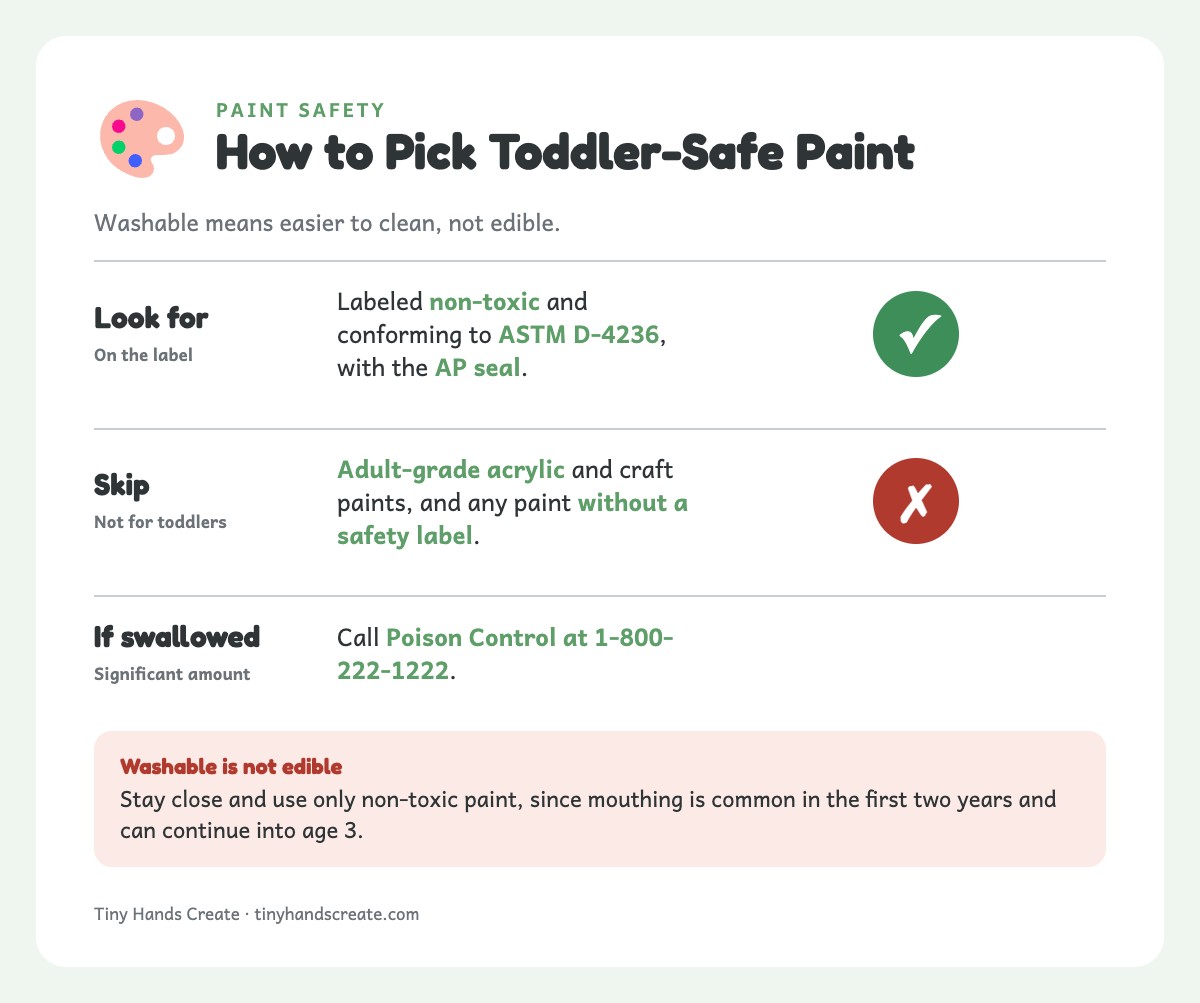
Choose paint labeled non-toxic and conforming to ASTM D-4236 (look for the AP seal). Washable means easier to clean, not edible. Skip adult-grade acrylic and craft paints, and any paint without a safety label.
My toddler just wants to eat the paint. What do I do?
Mouthing is very common in the first two years and can continue into age 3, so supervise closely and use only non-toxic paint. For 12-18 month olds, hold or guide the activity yourself and never leave paint or materials within reach. Calmly redirect, and if your child swallows a significant amount of paint, call Poison Control at 1-800-222-1222. If your child keeps going for it, switch to a different activity for the day rather than making edible paint.
Can I frame mess-free art?
Absolutely. For the paint bag (not the shaving cream bag), cut it open away from your child as soon as play ends and lift the paper out. Dry the paper flat, out of reach, and bin the bags and any scraps right away. Tape-resist and sticker-resist paintings frame especially well.
Conclusion
Mess-free painting isn’t spotless, since bags leak and some toddlers lose interest fast, but it lets you say yes to art on a tired day. Pick one idea this week, and grab the free Mess-Free Toddler Painting Card Pack to keep the steps handy.
More toddler activities
- 50 Easy Sensory Bin Ideas for Toddlers (By Season) for your next low-mess sensory play session
- Sensory play without the mess for more contained ideas
- Shaving cream sensory activities for closely supervised foam play