Printable Color By Number Worksheets
Discover how color by number worksheets build essential skills like number recognition, fine motor control, and focus in young learners. Learn to choose the right difficulty level and tools to ensure your child's success and enjoyment.
- Use color by number to build your child's number recognition, fine motor skills, and focus.
- Leverage the structured guidance of color by number for satisfying learning outcomes.
- Match worksheet difficulty to your child's age and skill level to prevent frustration.
- For beginners (3-4), choose 3-5 colors, large sections, and jumbo crayons or chunky markers.
- For intermediate (5-6), use 6-8 colors, medium sections, and standard crayons or markers.
The Quiet Magic of Color By Number
Picture this: your kitchen table scattered with crayons, your child bent over a page with their tongue poking out in fierce concentration, carefully filling in each numbered section. No instructions needed from you. No YouTube tutorial playing in the background. Just a child, some colors, and a puzzle that reveals a beautiful picture one section at a time. That is the quiet magic of color by number worksheets, and there is a reason teachers have relied on them for decades.
I spent twelve years watching preschoolers and kindergarteners transform from hesitant scribblers into confident artists through color by number activities. These worksheets are so much more than busy work. They build number recognition, color identification, fine motor control, and the kind of sustained focus that parents tell me is getting harder to find. Today I am sharing everything you need to know about using color by number worksheets effectively, plus tips for making them work at every skill level.
Why Color By Number Works So Well for Young Learners
Color by number worksheets sit at a beautiful intersection of structured guidance and creative accomplishment. Unlike free coloring, where a child might scribble for two minutes and declare themselves done, color by number gives children a clear task with a satisfying payoff. They follow the key, fill in each section, and a recognizable image emerges. That reveal moment is genuinely thrilling for young kids.
Here is what these worksheets quietly teach while children think they are just having fun:
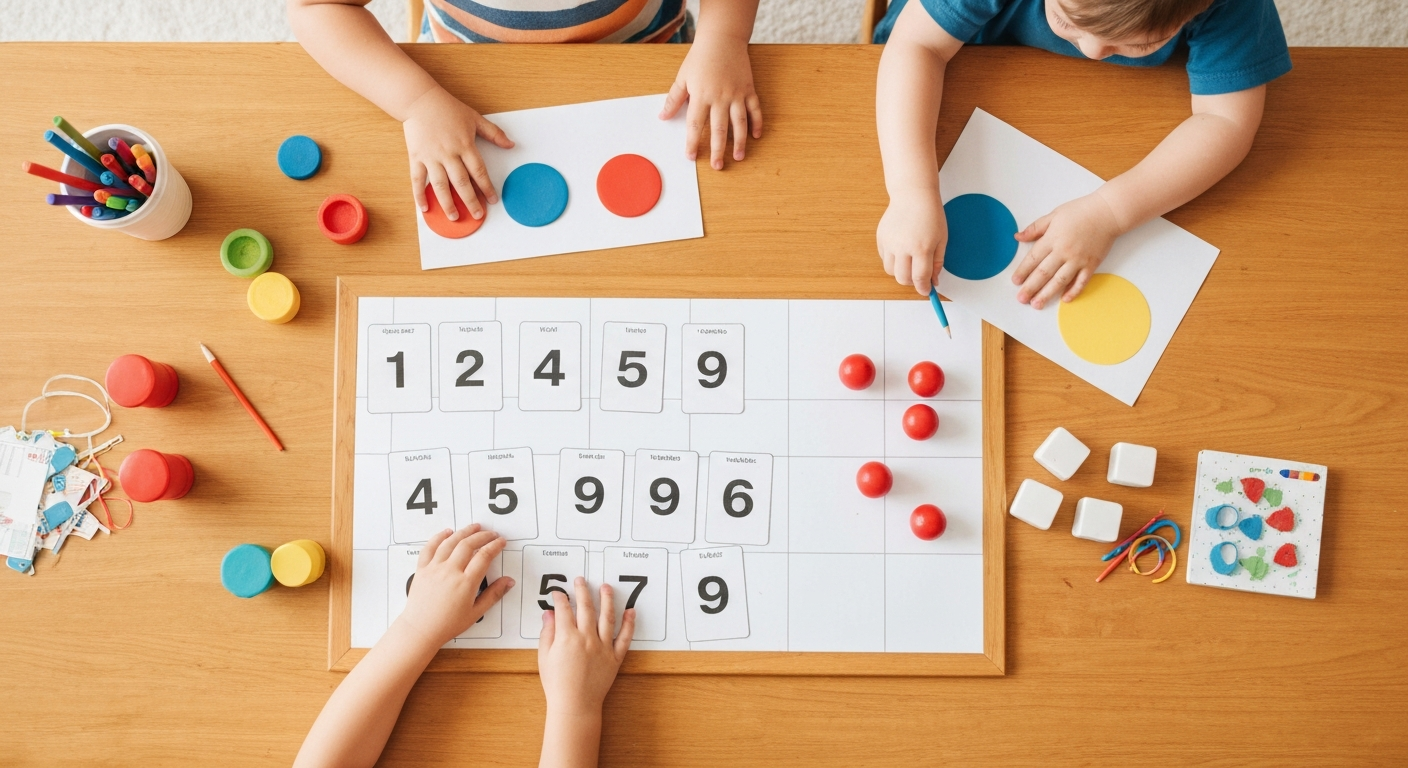
- Number recognition: Children must identify the number in each section and match it to the color key. For preschoolers learning numbers 1 through 10, this is powerful, low-pressure practice.
- Color word reading: Many worksheets include the color name alongside the number, reinforcing early literacy skills like word-to-meaning connection.
- Fine motor precision: Staying inside small, irregularly shaped sections requires far more hand control than coloring a large open picture. This directly prepares the hand muscles for handwriting.
- Following multi-step directions: Children must read the key, find the matching number, select the right color, and apply it carefully. This sequencing skill is fundamental for academic success.
- Patience and persistence: Completing a color by number page takes time. Children learn to stick with a task and experience the reward of finishing something that required sustained effort.
Research in early childhood education consistently shows that activities combining visual processing, number skills, and fine motor work create stronger neural connections than activities targeting only one area. Color by number naturally integrates all three.
Choosing the Right Difficulty Level
One of the biggest mistakes I see parents make is handing a complex color by number sheet to a child who is not ready for it. The result is frustration, crumpled paper, and a child who decides they hate coloring. Matching difficulty to your child’s current skill level is essential.
Beginner Level (Ages 3-4)
Look for worksheets with these features:
- Only 3 to 5 colors in the key
- Large, clearly defined sections
- Simple, recognizable images like a sun, fish, or flower
- Numbers 1 through 5 only
- Thick black outlines between sections
Best coloring tools for beginners: Jumbo crayons, large triangular crayons, or chunky washable markers. These are easier for small hands to grip and control. Avoid thin colored pencils at this stage since the light color payoff can frustrate young children who press lightly.
Intermediate Level (Ages 5-6)
Step up to worksheets that include:
- 6 to 8 colors in the key
- Medium-sized sections with more detail
- Images with recognizable themes like animals, vehicles, or seasonal scenes
- Numbers 1 through 10
- Some sections that require careful attention to boundaries
Best coloring tools for intermediate: Standard crayons, washable markers, or thick colored pencils. At this stage, children can handle regular-sized tools and benefit from the precision practice.
Advanced Level (Ages 7+)
Challenge older children with worksheets that feature:
- 10 to 15 or more colors
- Small, intricate sections
- Complex images like detailed landscapes, mandalas, or mosaics
- Double-digit numbers or even simple math equations as the key (for example, 3+2 equals blue)
- Blending challenges where adjacent sections use similar shades
Best coloring tools for advanced: Colored pencils, fine-tip markers, or even gel pens. These tools reward precision and give older children the detailed results they find satisfying.
Creative Ways to Use Color By Number Beyond the Worksheet
While printable worksheets are wonderful, there are so many ways to extend the color-by-number concept into hands-on activities that get kids moving and creating in three dimensions.
Giant Floor Color By Number
Use a large roll of butcher paper or tape together several sheets of poster board. Draw a simple large-scale picture divided into sections and number each one. Give your child washable tempera paints, foam brushes, and a color key taped to the wall. This turns a sitting activity into a full-body experience as children crouch, stretch, and move around the floor mural.
Sticker Color By Number
Instead of coloring, children place colored dot stickers (the round office supply kind) into each section. Buy a multi-pack of colored dot stickers, assign each color a number, and let children fill in the sections with stickers. This is phenomenal for fine motor development because peeling and placing stickers uses the pincer grasp.
Nature Color By Number
Draw a simple grid on cardboard and number each square. Create a key that maps numbers to natural materials: 1 equals green leaves, 2 equals brown sticks, 3 equals yellow flowers, 4 equals gray pebbles. Send children outside to collect materials and glue them into the correct squares. This combines nature exploration, sorting, number skills, and art.
Playdough Color By Number
Print a color by number worksheet and slip it into a plastic page protector or laminate it. Children press small balls of colored playdough into each section instead of coloring. When finished, they peel the playdough off and can do it again. This adds a wonderful tactile and sensory element while still building all the same skills.
Setting Up a Color By Number Station at Home
Having a dedicated, accessible coloring station makes it easy for children to choose this activity independently, which is especially valuable during those tricky transition times like after school or while you are preparing dinner.
Here is what I recommend for a well-stocked station:
- A folder or binder with 10 to 15 printed worksheets in plastic sleeves, organized from easy to challenging
- A caddy or cup holder with sorted crayons, colored pencils, and markers
- A color reference chart showing the name and swatch of each color for children still learning color names
- A finished example folder where children store their completed works, this becomes a portfolio they love to flip through
- A clipboard so children can take their worksheet anywhere, the couch, the car, the backyard
Mess management tip: If using markers, always place a large placemat or old placemat under the work area. Keep a damp cloth nearby for marker-stained fingers. For paint-based color by number activities, lay down an old shower curtain or plastic tablecloth first.
Making Your Own Color By Number Worksheets
Creating custom worksheets lets you personalize the experience for your child’s interests. If your child loves dinosaurs, you make a dinosaur. If they are obsessed with unicorns, you make a unicorn. Here is a simple method:
- Find or draw a simple outline image on white paper
- Use a black marker to divide the image into sections, think of it like a stained glass window
- Decide on your color palette and number each color (for example, 1 equals red, 2 equals blue, 3 equals yellow)
- Write the corresponding number inside each section
- Create a color key box in the corner of the page
- Photocopy or scan your original so you can print multiple copies
For a math twist, replace simple numbers with addition or subtraction problems. Instead of writing 5 in a section, write 2+3. The child must solve the problem to determine the color. This is an incredible way to sneak math practice into art time, and children rarely complain because the coloring reward motivates them through the math.
You can also create sight word color by number sheets where each section contains a sight word instead of a number, and the key maps words to colors. This is one of the most effective sight word practice methods I have ever used in a classroom setting.
Tips for Getting the Most Out of Every Page
A few small adjustments to how you present color by number activities can dramatically increase engagement and learning:
- Talk through the key first: Before your child starts, review the color key together. Point to each number and say the color name out loud. This front-loads the learning and prevents mid-page frustration.
- Start with one color at a time: Teach children to find ALL the sections labeled with one number and color them all before moving to the next number. This is faster, more organized, and teaches systematic thinking.
- Celebrate the reveal: When the page is done, make a big deal of it. Hold it up, name what the picture turned out to be, and display it on the refrigerator or a dedicated art wall. That moment of pride fuels motivation for the next page.
- Pair with a story: If the color by number reveals a butterfly, read a butterfly book afterward. If it reveals an ocean scene, talk about sea creatures. Connecting the art to broader learning makes the activity more meaningful.
- Use a timer for fun, not pressure: For children who enjoy a challenge, set a gentle timer and let them try to beat their own previous time. Emphasize beating their own record, never competing against siblings or friends.
Color by number worksheets are one of those rare activities that children genuinely enjoy while building a wide range of academic and developmental skills. Keep a stash of printed pages ready, rotate the themes to match your child’s evolving interests, and watch their confidence with colors, numbers, and careful hand control grow page by page.