How to Reduce Screen Time Without Tantrums
You can reduce your child's screen time without tantrums by gradually replacing screen sessions with engaging, hands-on activities and preparing irresistible activity stations. This method helps your child transition smoothly and makes the real world more interesting.
- Replace screen time with engaging, hands-on activities.
- Avoid cold turkey; gradually replace screen sessions over weeks.
- Follow a 4-week plan to introduce specific non-screen activities.
- Prepare irresistible activity stations *before* turning screens off.
This post contains affiliate links. As an Amazon Associate I earn from qualifying purchases.
In this article (7 sections)
The Moment Everything Clicked About Screen Time
Last Tuesday, I watched a three-year-old in my craft group walk away from a tablet mid-cartoon to join his friends at the playdough table. His mom looked at me in shock. Six weeks earlier, that same little guy had a full-blown meltdown every time screens were turned off. What changed? Not willpower. Not punishment. Just a few strategic swaps that made the real world more interesting than the digital one.
After twelve years teaching preschool and running hundreds of parent workshops, I can tell you this with certainty: reducing screen time does not have to involve tears, battles, or guilt. The secret is not about taking something away. It is about filling that space with activities so engaging that your child barely notices the screen is off. And today, I am giving you the exact playbook that has worked for thousands of families I have coached.
Why Cold Turkey Fails and What Works Instead
Here is what most parents do: they read an article about screen time limits, feel a surge of motivation, and announce that starting tomorrow there will be no more tablets. By noon, the house is in chaos. The child is inconsolable. The parent caves. Sound familiar?
The reason cold turkey fails is neurological. Screens deliver a rapid dopamine hit that developing brains crave. When you remove that stimulation abruptly, children experience genuine discomfort, similar to how adults feel when their phone dies unexpectedly. The frustration is real, not just a behavior problem.
The gradual replacement method works far better. Instead of eliminating screen time, you slowly replace screen segments with high-stimulation hands-on activities. Here is a practical timeline:
- Week 1: Replace one 20-minute screen session with a sensory bin activity
- Week 2: Add a second replacement using art or craft supplies
- Week 3: Introduce a physical play option for a third slot
- Week 4: Create a visual choice board so your child picks their own non-screen activity
This approach respects your child’s need for stimulation while gradually rewiring their expectations. Most families see dramatic improvement within three to four weeks.
Irresistible Activity Stations That Beat Any Screen
The key to making this transition smooth is having activity stations ready to go before you turn the screen off. Children need to see the alternative, not just hear about it. Here are my five most successful station setups:
The Sensory Discovery Station
Fill a large plastic bin with rainbow-dyed rice (use food coloring and vinegar to dye white rice), hide small toys and treasures inside, and provide scoops, funnels, tweezers, and small cups. This single station can keep a child engaged for 30 to 45 minutes. Add themed items like plastic dinosaurs, letter beads, or tiny vehicles to extend the play.
Materials needed: plastic bin, 5 pounds of rice, food coloring, white vinegar, measuring cups, plastic tweezers, small funnels, and 10-15 hidden treasures.
The Creative Art Cart
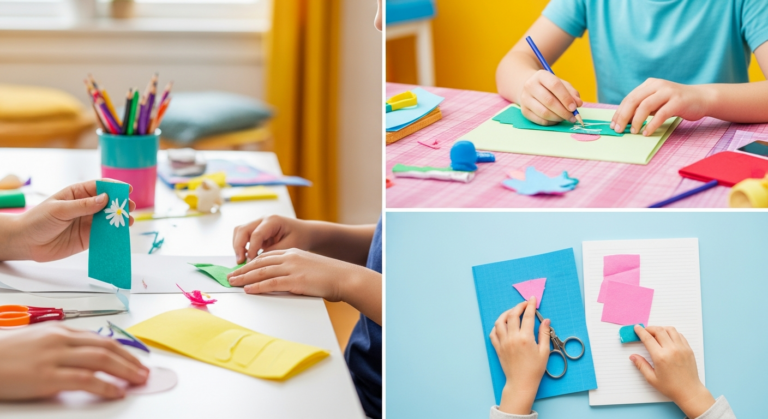
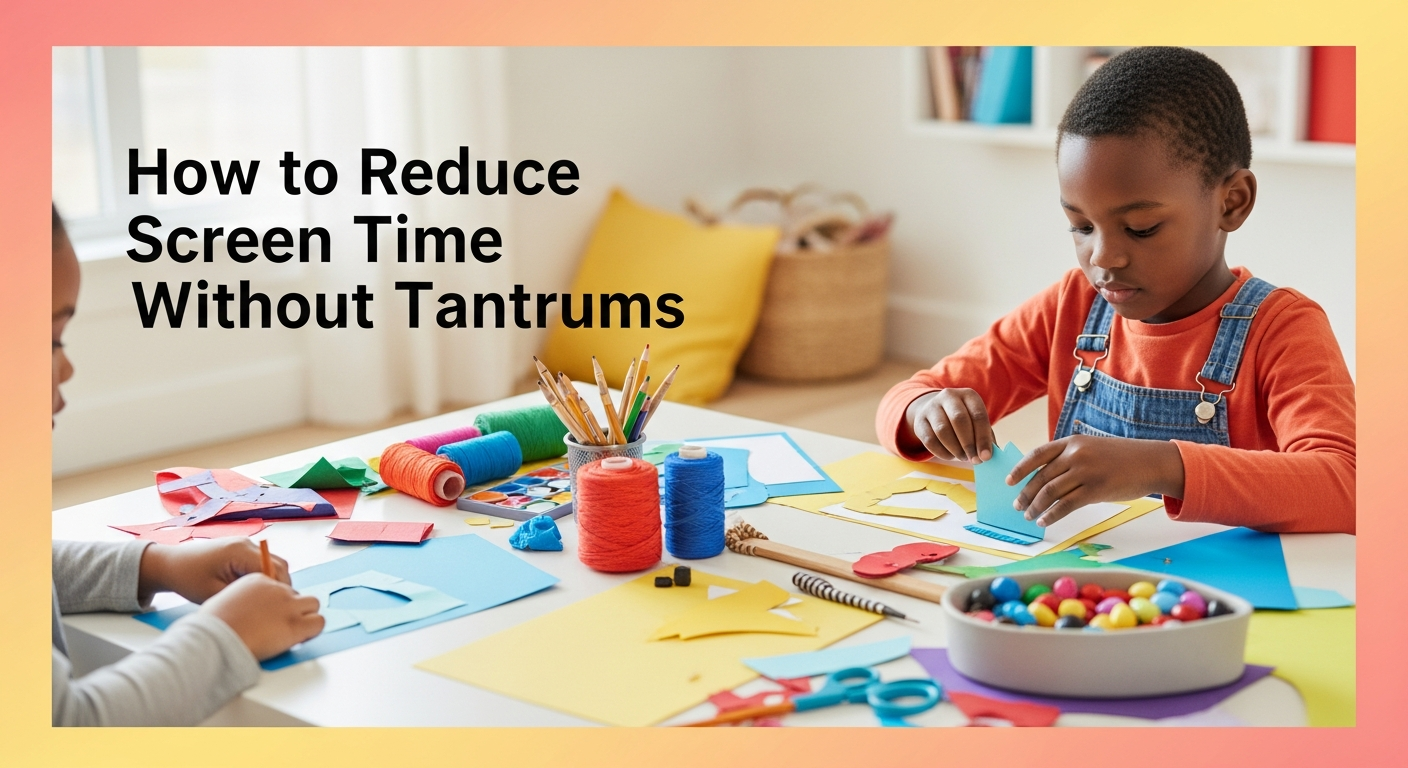
Stock a rolling cart or caddy with washable markers, crayons, watercolor paints, glue sticks, safety scissors, construction paper, foam stickers, googly eyes, and pom-poms. Keep it accessible so your child can grab it independently. The magic of a well-stocked art cart is that it gives children autonomy, which is exactly what screen time provides in a passive way.
The Building and Engineering Zone
Magnetic tiles, wooden blocks, LEGO DUPLO sets, and recycled cardboard boxes create an irresistible building area. Add painter’s tape and your child can create roads, bridges, and cities on the floor. This type of open-ended play develops spatial reasoning, problem-solving, and fine motor control in ways that screen-based building games simply cannot replicate.
The Dramatic Play Corner
A small bin of dress-up clothes, a play kitchen set, or even a cardboard box turned into a spaceship gives children the narrative play they crave. Dramatic play is where children process their daily experiences and build emotional intelligence. Stock this area with costumes, a toy cash register, play food, and simple props.
The Nature and Science Table
Set up a magnifying glass, a collection jar, a simple balance scale, and rotating natural items like pinecones, shells, rocks, and leaves. Add a kids nature journal and some colored pencils, and you have a science exploration station that sparks genuine wonder.
The Visual Choice Board Strategy
One of the most powerful tools I have ever used in my classroom and now recommend to every family is the visual choice board. This is a simple board, it can be a piece of poster board, a cookie sheet with magnets, or even a laminated sheet, that displays photos of 8 to 12 activity options.
Here is how to make one:
- Take photos of your child doing each activity or use simple clip art images
- Print and laminate each image as a card roughly 3 by 3 inches
- Attach Velcro dots to the back of each card and to your board
- When screen time would normally happen, present the board and say: “Which activity would you like to choose?”
- Let your child physically remove their chosen card and bring it to the activity area
This works because it gives children a sense of control and ownership over their time. The number one trigger for screen-time tantrums is the feeling that something was taken away. When children choose an alternative themselves, the power dynamic shifts entirely.
Rotate new activity cards onto the board every week or two to keep things fresh. Some excellent additions include: water play, cloud dough, sticker scenes, marble runs, threading beads, finger painting, and obstacle courses.
Managing Transition Moments Without Meltdowns
Even with amazing alternatives ready, the transition moment itself can be tricky. Here are the exact phrases and techniques I used with over 200 preschoolers that work beautifully at home too:
The countdown technique: Give a 5-minute warning, then a 2-minute warning, then a 30-second warning before turning the screen off. Use a visual timer if possible so your child can see the time passing. This builds the critical executive function skill of transitioning between activities.
The bridge activity: Instead of going straight from screen to no screen, have a brief sensory bridge activity. Offer a small snack with an interesting texture, hand them a fidget toy, or do 30 seconds of jumping jacks together. This physical input helps regulate the nervous system during the transition.
The language swap: Replace phrases like “Screen time is over” with “It is time for our next adventure.” Replace “No more tablet” with “The art station is waiting for you.” Children respond dramatically differently to addition language versus subtraction language.
The routine anchor: Tie screen time to specific, predictable moments rather than using it as an on-demand pacifier. For example, one episode after lunch while you clean up. When screens happen at the same time each day, children develop expectations and the end point feels less arbitrary.
Developmental Benefits Your Child Gains
When you replace passive screen consumption with hands-on activities, the developmental payoff is enormous. Here is what the research and my classroom observations consistently show:
- Fine motor development: Threading beads, cutting with scissors, and manipulating playdough strengthen the small muscles in hands and fingers that children need for writing. Screens require only swiping motions that do not build these muscles.
- Language skills: Open-ended play generates 3 to 5 times more verbal interaction than screen watching. When a child builds a block tower, they narrate, negotiate, question, and describe. This is where real vocabulary growth happens.
- Emotional regulation: Children who engage in sensory play and dramatic play develop better tools for managing big emotions. The tactile input from activities like water play, kinetic sand, and finger painting is genuinely calming to the nervous system.
- Attention span: Screens train the brain to expect rapid scene changes every few seconds. Hands-on activities require sustained focus, gradually lengthening your child’s ability to concentrate on a single task.
- Social skills: Collaborative crafts, cooperative building, and pretend play teach turn-taking, sharing, and perspective-taking in ways that solo screen time cannot.
The goal is not screen-time perfection. Most families find a healthy balance that includes some carefully chosen screen content alongside plenty of hands-on play. The goal is making sure that screens are not the default and that your child has a rich toolkit of engaging alternatives they genuinely enjoy.
Your First Week Action Plan
Ready to start? Here is exactly what to do this week:
- Monday: Observe your current screen habits without changing anything. Note when and why screens come on.
- Tuesday: Set up one activity station, the sensory bin is the easiest starting point. Dye your rice, fill the bin, add tools and treasures.
- Wednesday: Replace one screen session with the sensory bin. Use the countdown technique and bridge activity.
- Thursday: Add a second station, the art cart. Stock it fully and place it where your child can see it.
- Friday: Create your visual choice board with at least 6 activity photos.
- Weekend: Present the choice board during a typical screen time slot and let your child pick their activity.
Celebrate every small win. If your child plays independently for 10 minutes with a non-screen activity who previously could not last 2 minutes, that is genuine progress worth acknowledging. Tell them: “Look at the incredible thing you made with your own hands.”
This journey is not about being anti-screen. It is about being pro-childhood, pro-creativity, and pro-connection. Your tiny hands were made to create, explore, and discover, and with these strategies, they will.
Crafty Mama
Crafty Mama is a former elementary art teacher turned stay-at-home parent who believes every child is creative — they just need the right invitation. She develops age-appropriate activities, crafts, and projects that spark imagination while keeping mess (and parent stress) to a minimum.