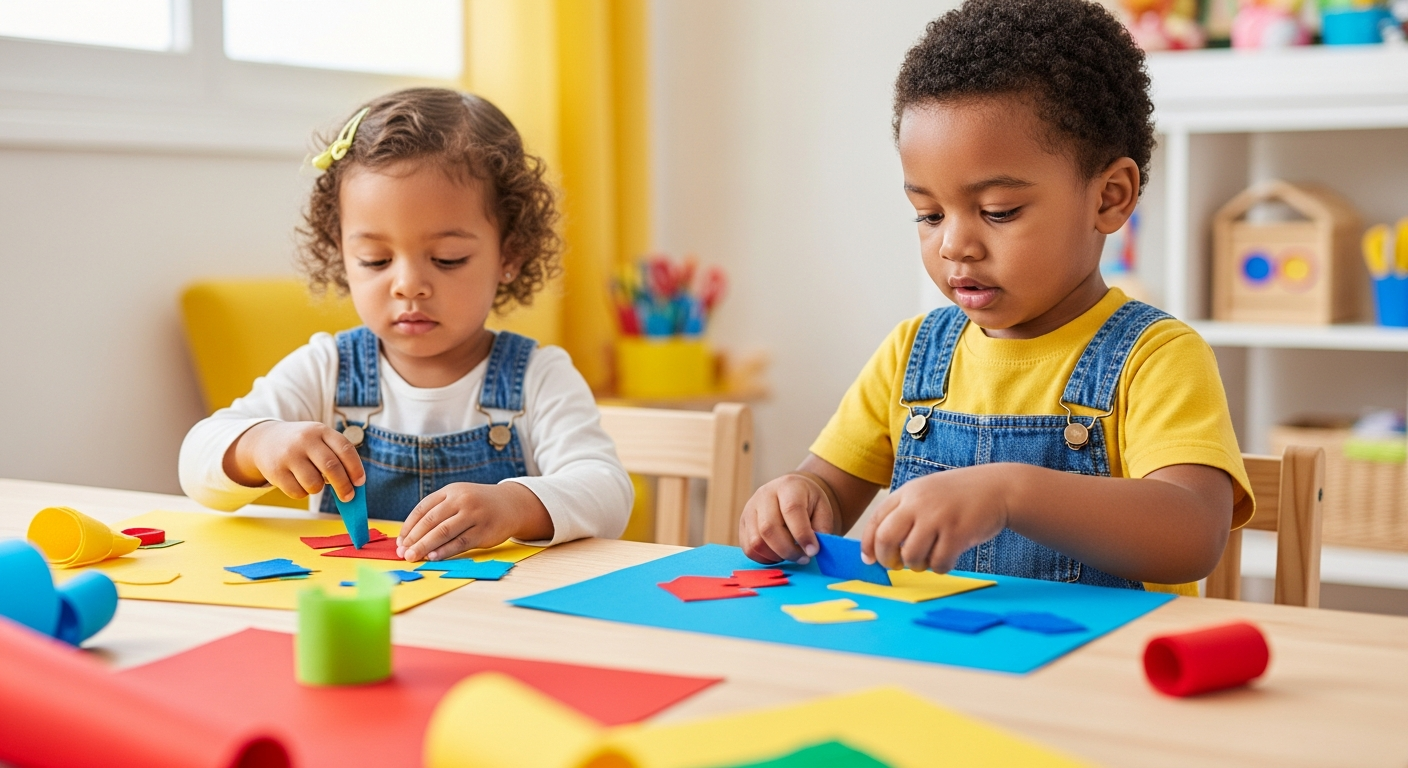
Play-Based Learning Activities for 2-Year-Olds
Discover play-based learning activities for your 2-year-old, categorized by skill, with details on safety, mess, and setup time, focusing on open-ended and sensory-rich play.
- Always prioritize safety; use the toilet-paper-tube test for choking hazards.
- Find activities categorized by skill, with notes on mess, setup, and supervision.
- Plan open-ended, sensory-rich, and short activities to match your child's attention.
- Understand supervision levels: constant, arm's reach, or close, always stay present.
- Use everyday items; follow your child's lead for engaging, simple play.
This post contains affiliate links. As an Amazon Associate I earn from qualifying purchases.
Picture your two-year-old on the kitchen floor with a wooden spoon and a pile of pots, banging away. It sounds like noise, but it’s play-based learning. They’re testing cause and effect, volume, and hand coordination.
Below are play-based learning activities for 2-year-olds, sorted by skill: sensory, fine motor, gross motor, and language play. Each one lists its safety notes, mess level, and setup time. You don’t need fancy toys, just a realistic plan for the mess.
Safety firstStay with your child for every activity here. Use the toilet-paper-tube test: anything that fits through a tube (about 1.75 in across) is a choking hazard for kids under 3. Offer only oversized pieces (aim for 2 in or more) and keep smaller items out of reach. The tube is a minimum check. Soft foam, felt, or sponge that can be bitten into pieces needs a tear check, whatever its size. Keep cords, wire, and sharp edges away. Check for allergies (dairy, wheat) before food-based play. Anything chewed, bitten, or broken goes in the trash.
In this article (8 sections)
- Activity cheat sheet: mess, setup and supervision
- How 2-year-olds learn through play
- Sensory play activities for 2-year-olds
- Fine motor and hand-strength activities for 2-year-olds
- Gross motor play activities for 2-year-olds
- Language play activities for 2-year-olds
- Tips for setting up play with a 2-year-old
- FAQ: play for 2-year-olds
Activity cheat sheet: mess, setup and supervision
| Activity | Skill built | Mess | Setup | Supervision |
|---|---|---|---|---|
| Rainbow Rice Dig | Fine motor, vocabulary | Medium-high | Overnight drying | Constant |
| Edible Finger Paint | Color, hand-eye coordination | High | 5 min | Constant |
| Water Transfer Station | Hand strength | Medium | 5 min | Arm’s reach |
| Playdough Squish Station | Fine motor | Low | 2 min | Arm’s reach |
| Sticker Peel and Stick | Pincer grasp | Low | 3 min | Arm’s reach |
| Threading and Lacing | Bilateral coordination | Low | 5 min | Constant |
| Indoor Obstacle Course | Gross motor planning | Low | 10 min | Constant |
| Ball Play Bonanza | Throwing, kicking | Low | 2 min | Close |
| Pretend Kitchen and Food Play | Language | Low | 2 min | Close |
| Book-Extension Activities | Comprehension | Varies | 5-10 min | Close |
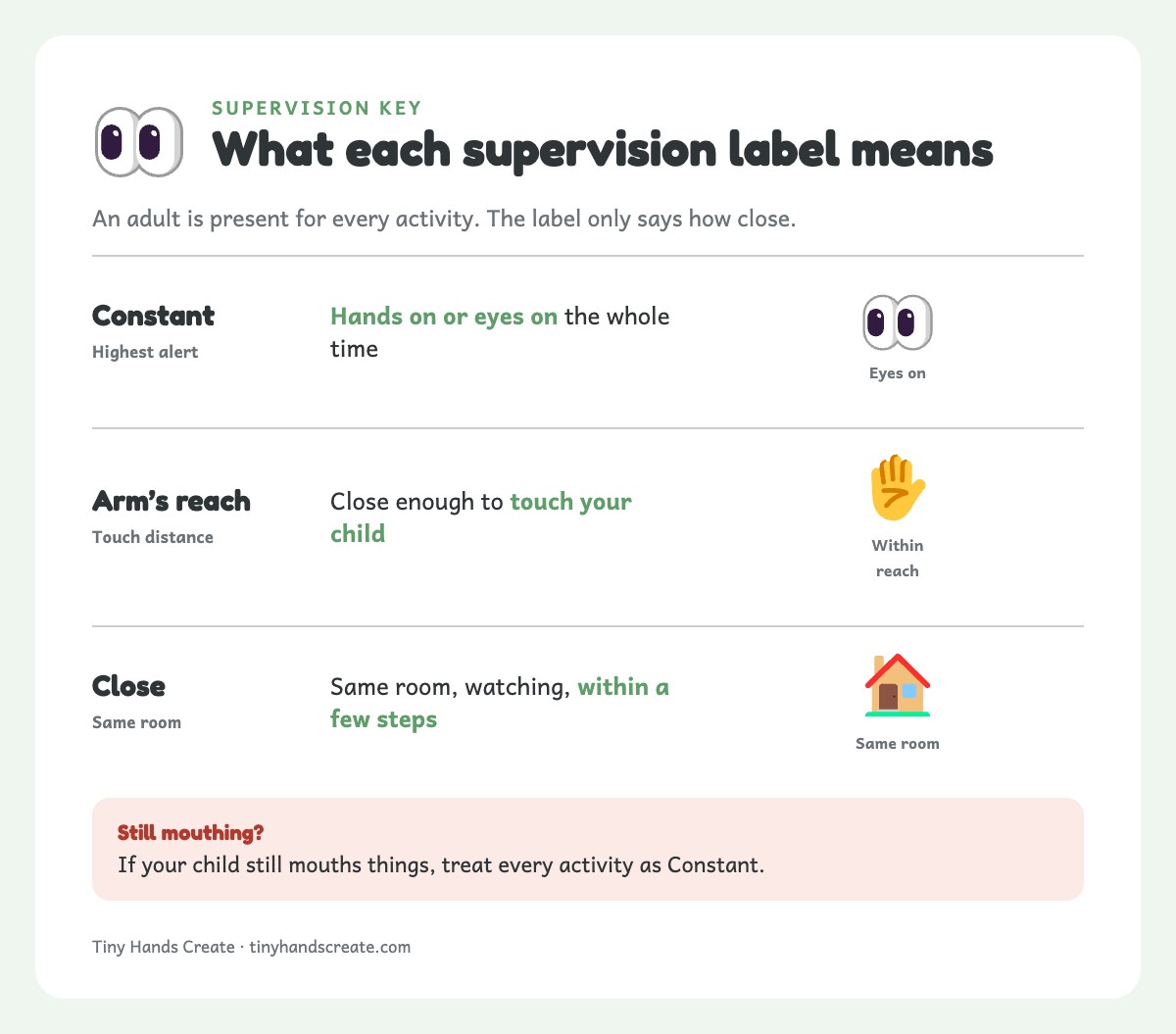
Supervision key: An adult is present for every activity, and the label only says how close. Constant means hands on or eyes on the whole time. Arm’s reach means close enough to touch your child. Close means in the same room and watching, within a few steps. If your child still mouths things, treat every activity as Constant.
Ages: Every activity here suits roughly ages 2-3.
How 2-year-olds learn through play
At two, kids are shifting from learning through their bodies (touching, mouthing, banging) toward imagination, like pretending a block is a phone or “feeding” a stuffed bear.
Many two-year-olds still mouth objects, so choking precautions still apply.
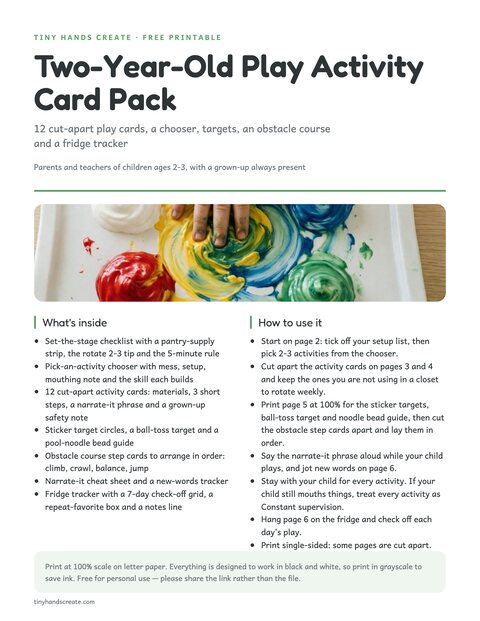
Free printable · 6 pages
Two-Year-Old Play Activity Card Pack
A set-the-stage checklist with a pantry strip, a pick-an-activity chooser, 12 cut-apart activity cards with narrate-it phrases and grown-up safety notes, sticker, ball-toss and pool-noodle guides, obstacle course step cards, a narrate-it cheat sheet with a new-words tracker, and a weekly 'Today we played' fridge tracker.
Free. Your download link appears right here. You'll also join the Daily Printable Drop. Unsubscribe anytime. Privacy
Several skills are growing at once:
- Movement: running, climbing, and jumping, plus small-hand work like pinching, stacking, and pouring. Many two-year-olds kick a ball, climb onto low furniture, and stack a few blocks, though timing varies.
- Language: by about 2 years, many children use two-word phrases like “more milk.” Many understand far more than they can say. Talk to your pediatrician if your two-year-old has few words or isn’t combining them.
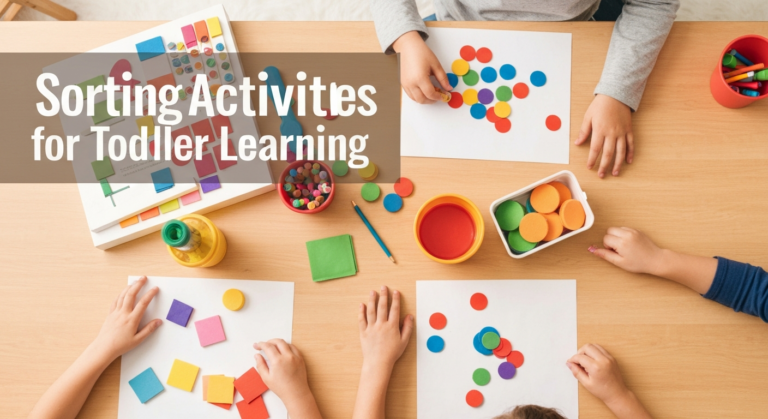
- Thinking and feelings: sorting, matching, cause and effect, playing alongside other kids, and wanting to do it themselves. Many start simple pretend play, like feeding a doll, and can sort by color with a little help.
The golden rule at this age: keep activities open-ended, sensory-rich, and short. Attention often lasts just a few minutes, so plan several quick setups instead of one elaborate project. Follow your child’s lead. If they’d rather stack the crayons than color with them, that is the activity.
Sensory play activities for 2-year-olds
Sensory play is one valuable way toddlers explore and learn. They squish, pour, splash, and squeeze, and you get to narrate it. Here are sensory setups that are quick to prepare, and the Two-Year-Old Play Activity Card Pack puts them on printable cards. For more, see our sensory bin ideas for toddlers.
Rainbow Rice Dig
Materials:
- 2-3 cups of white rice
- 1 tsp white vinegar and 10-15 drops of food coloring
- A zip-top bag for mixing and a baking sheet for drying
- A large, shallow bin or baking pan
- Measuring cups, small scoops, funnels, and spoons
- Chunky toys or plastic animals that pass the tube test, hidden in the rice
- Dye. Put the rice, vinegar, and food coloring in the zip-top bag. Seal it and squish until the color is even.
- Dry. Spread the rice on a baking sheet. Leave it overnight or longer, until completely dry.
- Spread. Pour the rice into the bin.
- Hide. Bury a few chunky objects underneath.
- Dig and narrate. Let your toddler scoop and pour while you talk: “You found a red dinosaur! Can you scoop more rice to find another one?”
This builds vocabulary, fine motor control, and early counting as you count the hidden objects together. Our rainbow rice sensory bin guide has more ideas. Rice will travel. I still find stray grains under the couch days later, so park the bin on a sheet or flattened box.
Safety firstThis activity suits children who no longer put things in their mouths. Rice is a play material, not food, and dry rice can be mouthed or inhaled. Stay with your child the whole time. If they still mouth things, skip the rice. Use an oversized non-food filler instead, such as jumbo pom-poms 2 in or more across. Store the rice in a sealed container. Throw it out if it smells musty, looks off, or gets wet from spills or saliva.
Edible Finger Paint
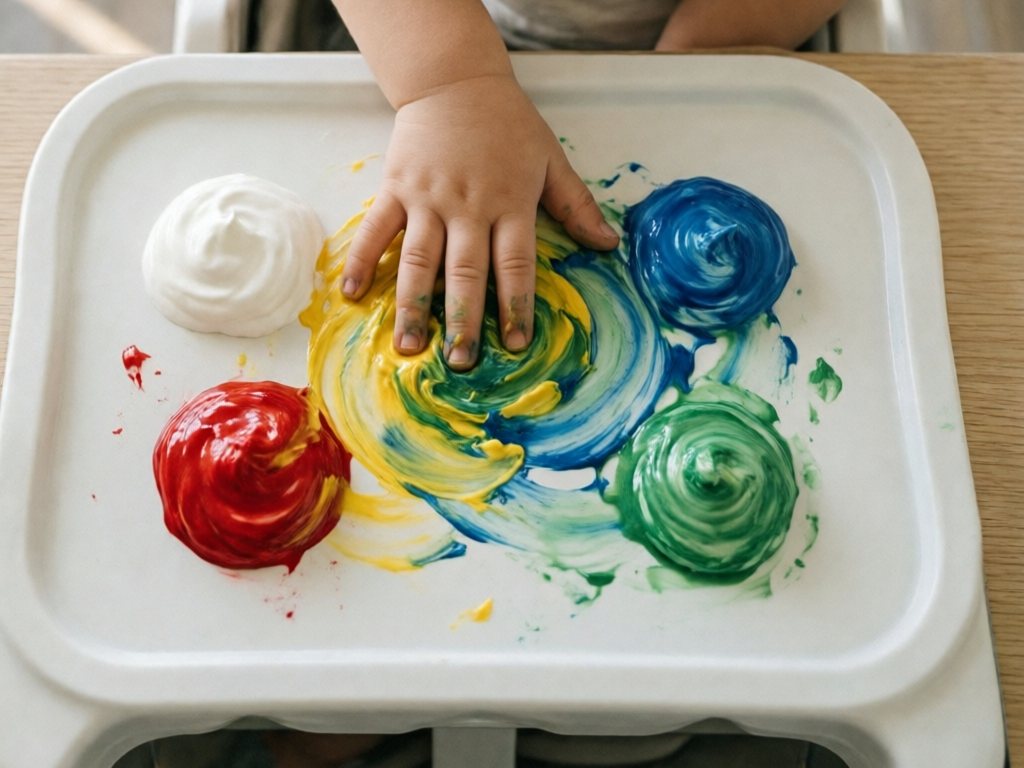
Materials:
- Plain Greek yogurt
- Food coloring (gel works best; use it sparingly)
- A highchair tray, baking sheet, or large piece of wax paper taped to the table
Mix a little food coloring into small dollops of yogurt and let your toddler go wild. Yogurt paint is food-based, so it is fine if fingers reach mouths, but it is still messy play, not a snack. They’ll practice color mixing as they swirl: “Look, your yellow and blue made green!”
Strip them down to a diaper for easy cleanup, or use a smock. I keep a damp washcloth within reach, because the paint ends up in hair, ears, and eyebrows.
Safety firstYogurt is a dairy allergen, so check for dairy allergy first, or use a dairy-free yogurt. Mix a fresh batch each time. Don’t let it sit out more than about an hour, and throw leftovers away. Go light on gel coloring, because concentrated color can stain mouths, skin, and clothes. It can also irritate sensitive skin, so patch-test if your child has eczema.
Water Transfer Station
Materials:
- Two bowls or containers (one filled with water)
- A large sponge
- A one-piece turkey baster, a ladle, and cups and scoops too big to swallow
- Food coloring (optional; it can stain clothes and grout)
- Towel underneath for spills
Challenge your toddler to move water from one bowl to the other with different tools. Squeezing a sponge builds the hand strength used later for writing. The baster adds a squeeze-and-release step many toddlers love.
On a good day this can hold a child for 15-20 minutes, which is an eternity in toddler time. Our toddler water play ideas have more setups.
Safety firstToddlers can drown in very little water, so stay within arm’s reach for all water play and empty every container afterward. Change the water often and discourage drinking it. Check the sponge for crumbling bits and toss it if pieces tear off. Wash the baster afterward and let it air-dry so mold doesn’t grow inside.
Fine motor and hand-strength activities for 2-year-olds
Long before a child picks up a pencil, their hands need strength and coordination. These activities build both. For more, see our fine motor activities for toddlers.
Playdough Squish Station
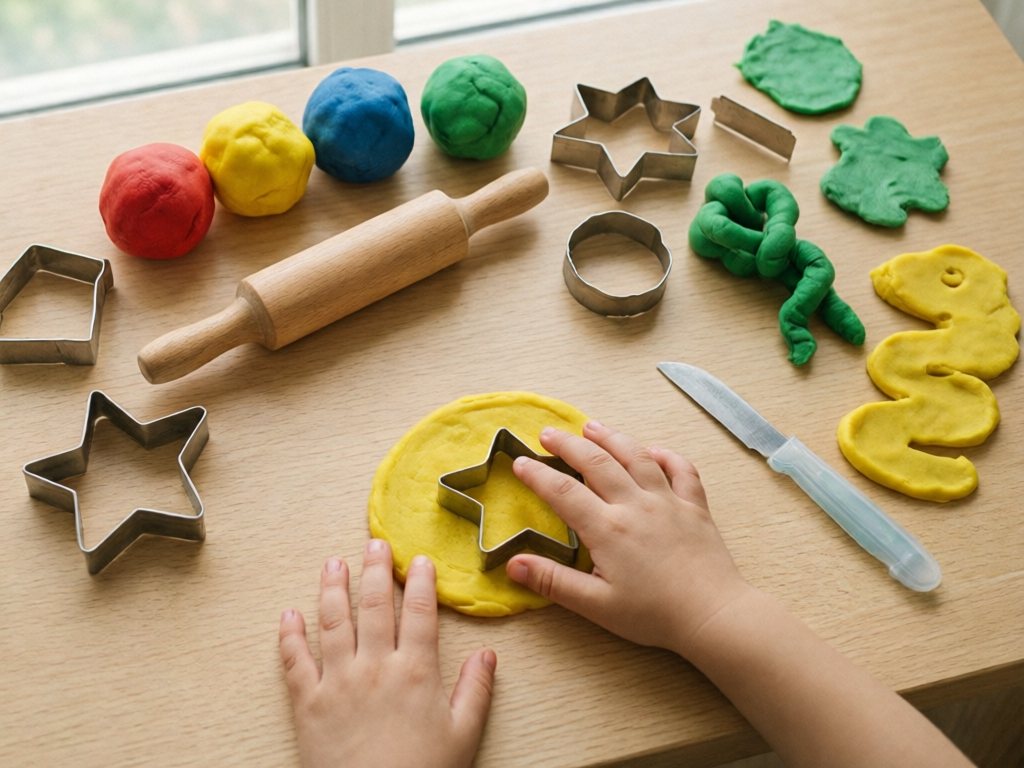
Materials:
- Homemade or store-bought playdough (homemade is softer and easier for tiny hands)
- Smooth-edged plastic cutters, rolling pins, and blunt toddler-safe tools
- One blunt, chunky craft stick at a time, kept in the dough (take it away if chewed)
- Large pre-cut felt shapes or chunky foam pieces for making creatures
Squeezing, rolling, pinching, and poking playdough all build the hand strength that supports pencil grip later. With your toddler seated, push one craft stick into a playdough “cake” and let them pull it out. Need a batch? Try our soft homemade playdough recipe.
- Roll. Make snakes and balls.
- Pinch and press. Add felt shapes or craft sticks.
- Coil. Spiral a snake into a shape.
- Wash hands. Every time, when play is done.
Keep it safe: Playdough is for hands only. It’s salty and often contains wheat, so check for a wheat allergy first. Stay within arm’s reach, keep the stick in the dough and your child seated, and toss any felt or foam that gets bitten or torn.
Sticker Peel and Stick
Materials:
- Large dot or foam stickers, big enough to pass the tube test
- A piece of paper with circles drawn on it (targets for the stickers)
Peeling stickers off a sheet works the pincer grasp, the thumb-and-finger pinch. Placing them on target circles adds hand-eye coordination and early matching. It also travels well to waiting rooms. More ideas in our toddler sticker activities.
TipPartly peel the corners for new peelers, then let them take over. Stay within arm’s reach, and remove any sticker that goes in the mouth.
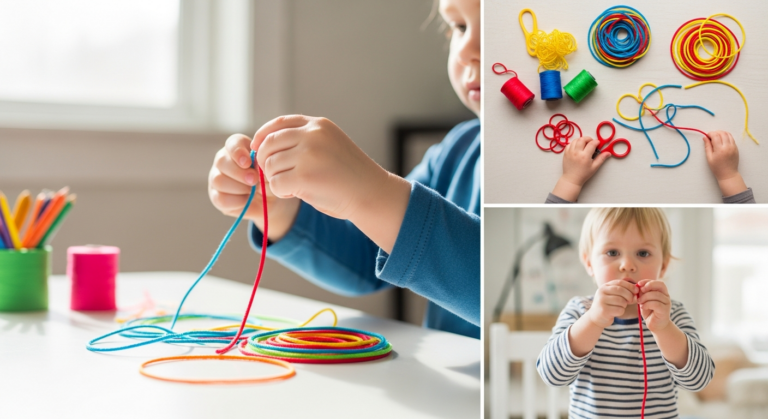
Threading and Lacing
Materials:
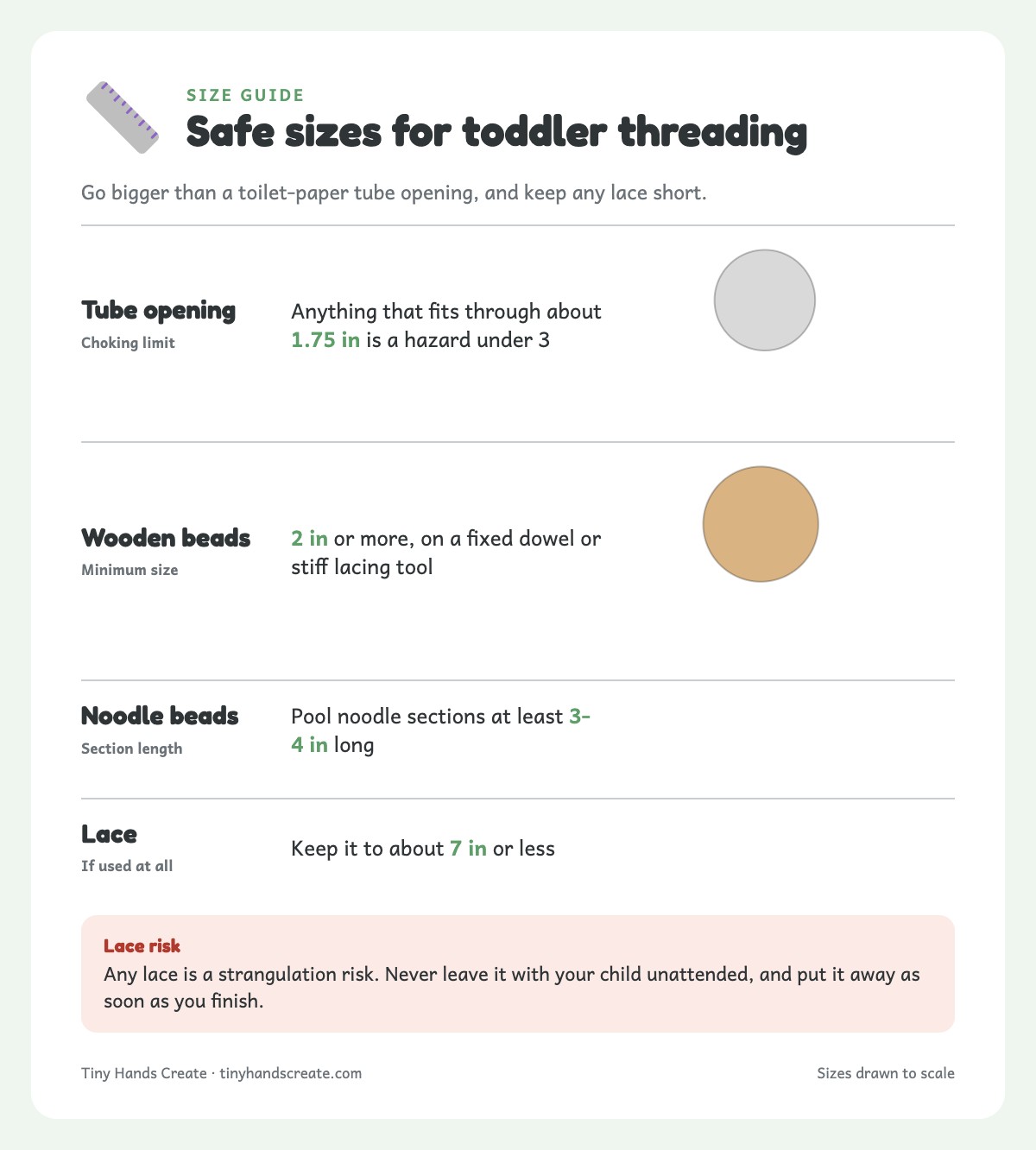
- Pool noodle cut into sections at least 3-4 in long (the “beads”)
- A blunt, sanded short dowel fixed in a base, or a stiff blunt plastic lacing tool (the “string”)
- Alternatively: large wooden beads (2 in or more) on the same fixed dowel or stiff lacing tool. If you use a lace at all, keep it to about 7 in or less
Traditional lacing cards are often too hard at this age because the holes are small and the laces floppy. Use chunky noodle pieces that slide onto a fixed, blunt dowel instead. The oversized materials still practice the hand-eye coordination and two-handed teamwork (one hand holds, one slides) that threading needs. See more in our toddler threading activities.
Safety firstKeep your child seated and stay hands-on the whole time. Never let them walk or run holding the dowel. Any lace is a strangulation risk, so keep it to about 7 in or less and never leave it with your child unattended. Put it away as soon as you finish, and toss any foam with bite marks.
Gross motor play activities for 2-year-olds
Two-year-olds have a lot of energy. Giving it somewhere to go helps when they’re bored and start climbing the bookshelf. For more, see our indoor gross motor activities.
Indoor Obstacle Course
Materials:
- Firm floor cushions or foam mats for climbing over (keep it low and stable)
- A tunnel made from a large cardboard box with both ends cut open (tape or smooth the cut edges)
- Painter’s tape lines on the floor for balance walking
- A firm mat for low jumps
- A laundry basket to climb in and out of
Safety firstKeep the course low, avoid tall furniture (or anchor it), and clear cords and hard edges. Use firm mats instead of loose pillows, and supervise the whole time.
Set up a simple course and show your toddler each part. “First we climb over the mountain. Then we crawl through the tunnel. Then we walk the tightrope and jump into the marshmallow pit!”
The course helps with body awareness, planning the next move, and following simple sequences.
Rearrange it every few days to keep it fresh. Fair warning: in my house the “marshmallow pit” gets jumped into about thirty times before anyone tries the tunnel.
TipIf your toddler refuses, do the course together first. Hold a hand or crawl through the tunnel yourself, then let them try one piece at a time.
Ball Play Bonanza
Materials:
- Balls of various sizes and textures, like beach balls, soft sensory balls, and larger foam balls
- Every ball should pass the tube test and stay in one piece when bitten
- A laundry basket or box for a target
- A cardboard tube for a ball ramp
Two-year-olds are refining their throwing, kicking, and catching (usually with their whole body). Try these four games:
- Basket toss. Set a laundry basket a few feet away and toss balls in.
- Roll back and forth. Sit on the floor and roll a ball to each other.
- Kick the beach ball. Send it across the room.
- Line them up. Order the balls from smallest to largest.
Ball play works on hand-eye coordination, turn-taking, and early math ideas like size comparison. Plus, it’s nearly impossible for a toddler not to laugh when chasing a bouncing ball.
TipIf balls start flying at people, switch to rolling. Sit on the floor and roll one back and forth until things calm down.
Language play activities for 2-year-olds
Vocabulary often grows rapidly at this age, though the pace varies widely from child to child. Everyday play is a good place to pile on the words.
Pretend Kitchen and Food Play
Materials:
- Play food for sorting (real food belongs at the table, not in roaming play)
- Cool, unplugged pots, pans, bowls, and spoons
- A stuffed animal “guest” who needs to be fed
Pretend cooking gives you plenty to talk about. As your toddler stirs, pours, and serves, narrate: “You’re stirring the soup! Is it hot? Let’s blow on it. Now you’re pouring the juice into the cup — careful, pour slowly!” Pretend play also builds executive function, which is just planning and remembering the steps: first stir, then pour, then serve.
Expect the stuffed guest to be fed about forty times in a row. That repetition is the learning.
A word bank to narrate with:
- Verbs: stir, pour, chop, mix
- Adjectives: hot, cold, yummy, crunchy
- Social phrases: “Would you like some?” and “More, please!”
Keep it safe: Play away from the stove and hot liquids. Real food stays at the table, with grapes quartered lengthwise.
Book-Extension Activities
After reading a favorite book, pull out materials that extend the story into hands-on play. Connecting stories to tangible experiences deepens comprehension and makes abstract ideas concrete.
| Book theme | Play setup | Safety note |
|---|---|---|
| Trucks (try Goodnight, Goodnight Construction Site) | Construction site: dry oats and toy trucks in a shallow bin. Say “The truck is digging!” as it scoops. | For children who no longer mouth things. Oats can carry wheat cross-contact, so skip them if allergies are a concern. Skip rocks, wash hands afterward. |
| Ocean (try Commotion in the Ocean) | Playdough sea animals: roll a snake for an eel, flatten a circle for a jellyfish, and name each one together | Playdough is for hands only. Wash hands afterward. |
| Colors (try Brown Bear, Brown Bear, What Do You See?) | Color hunt around the house: “Can you find something red?” | Nothing small picked up along the way |
Keep it safe: Dry oats can be mouthed or inhaled, so stay close, and save them for children who no longer mouth things. Check for wheat allergies too, since oats may be cross-contaminated. If you use play sand instead, dampen it to keep the dust down, and save it for children who no longer mouth things. If your child eats the material or loses interest, stop and switch to something else.
Tips for setting up play with a 2-year-old
Small setup choices make the biggest difference.
- Rotate, don’t overwhelm. Offer 2-3 options at a time and keep the rest in a closet, rotating weekly.
- Contain the mess. Use a plastic tablecloth, shower curtain, or flattened cardboard box under the activity.
- Follow the child’s lead. If your toddler walks away after about five minutes, that’s normal. Have a second activity ready.
- Narrate everything. Describe what they’re doing rather than quizzing: “You picked up the blue block. You’re putting it on top of the red one. Oh, it fell down! You’re trying again.” This kind of descriptive talk gives them words for what they’re doing.
- Embrace the repeat. If they want the same bin for the fourteenth day, let them. Repetition is how toddlers practice.
Safety firstThe bathtub works for water play and yogurt paint because the walls wipe clean. Use a non-slip mat, stay within arm’s reach whenever there’s water, and empty the tub afterward. Go light on food coloring in the tub, since it can stain grout. Skip the tub for rice or dough, which clog drains.
Good to knowA few minutes of focus is normal at this age. If you’re worried about language, bring it to your pediatrician.
FAQ: play for 2-year-olds
How long can a 2-year-old play with one activity?
Often just a few minutes per activity, longer if your child is deeply absorbed. Follow their lead and have a second option ready.
How many activities a day?
There’s no set number. Offer two or three options at a time and let your toddler choose, repeating favorites as often as they like.
What are signs of a language delay?
Pace varies widely. Having few words, or not combining words at around two, is worth mentioning to your pediatrician.
What are the best play-based learning activities for a 2-year-old?
Mostly how their body, hands, and words work: moving, pouring and pinching, naming things, and pretending. Play covers all of it, so no worksheets are needed.
How do you entertain a 2-year-old at home with screen-free activities?
Set out two or three simple setups and swap them when interest fades. Sticker peeling, playdough, pretend kitchen play, and a low indoor obstacle course all work with things you already own. Our indoor activities for rainy days have more.
For open-ended, no-instructions fun, try our process art ideas for toddlers next.
Expect mess, short attention spans, and the same bin again tomorrow. Offer safe materials, sit nearby, and let your toddler take it from there.
Crafty Mama
Crafty Mama is a former elementary art teacher turned stay-at-home parent who believes every child is creative — they just need the right invitation. She develops age-appropriate activities, crafts, and projects that spark imagination while keeping mess (and parent stress) to a minimum.